Fowler’s role with the St. Louis Cardinals is complicated by decline vs. contract
Perhaps the strongest lightning rod for criticism on the St. Louis Cardinals roster in the last three years is struggling through spring training games at a pace which creates an open question regarding his role with the team in 2020.
Outfielder Dexter Fowler, who rebounded from a lost 2018 season to post career highs in home runs and runs batted in in 2019, is 2-for-29 thus far this spring, with both hits being singles. His 12 strikeouts have been paired with only three walks, leaving the Cardinals in a difficult position when it comes to doling out playing time in a crowded outfield with very few established roles.
To date, the Cardinals have treated Fowler as an incumbent player who isn’t yet facing a risk of losing significant playing time. Attention has instead been focused on a race for playing time in left field between Tyler O’Neill, Lane Thomas, and top prospect Dylan Carlson, with Harrison Bader seemingly having the edge to resume his spot in center.
Last year’s bounce back was somewhat blunted by a 2-for-33 performance in the postseason, which followed a September in which he batted .183 with nearly a 30% strikeout rate.
Those results dragged down what was otherwise a successful season for a player in Fowler’s position on the natural aging curve, and instead left a concerning impression which carried over into the offseason and recalled the struggles of 2018.
Carlson’s presence adds a layer to a delicate situation which is, in part, about money. Fowler has two years remaining on a contract signed before the 2017 season which guarantees him $16.5 million per season. That substantial investment represented the largest amount of guaranteed money to which the Cardinals had ever committed for a player who had yet to appear in a regular season game for them until Paul Goldschmidt shattered that record last spring.
It’s still the largest free agent contract ever signed by an organization which has, in recent years, largely sat out of chases on the open market. The perception that the Cardinals are seeking to squeeze any remaining value from that deal is heightened by the reality that, by delaying Carlson’s major league debut a matter of weeks, the team would gain an extra year of team contractual control over the young outfielder.
The extent to which the financial factor influences playing time is difficult to quantify. The Cardinals, bound to their contractual obligations regardless of a player’s performance, would be prudent in seeking some sort of return on dollars which are required to be spent. For a team whose sputtering offense contributed to their ignominious sweep in the NLCS, though, it’s difficult to justify putting the brakes on a player in Carlson who looks to be an immediate difference maker.
Ultimately, the extent to which the Cardinals lean on Fowler is likely to be determined by the performances of the other outfielders in the running for playing time. The only two players to record more strikeouts this spring than Fowler have been Bader (13) and O’Neill (14), and the historical volatility of the offensive performances of that duo may leave the Cardinals preferring a degree of certainty.
The Cardinals under Mike Shildt have shown a willingness to scale back the playing time of a struggling veteran if his performance falters. Matt Carpenter spent most of the second half of the 2019 season and the majority of the postseason on the bench after Tommy Edman proved to be a superior option at third base. John Gant was left off the postseason roster despite a dependable regular season performance. Fowler himself was seeing his playing time scaled back in 2018 before a broken foot ended his season.
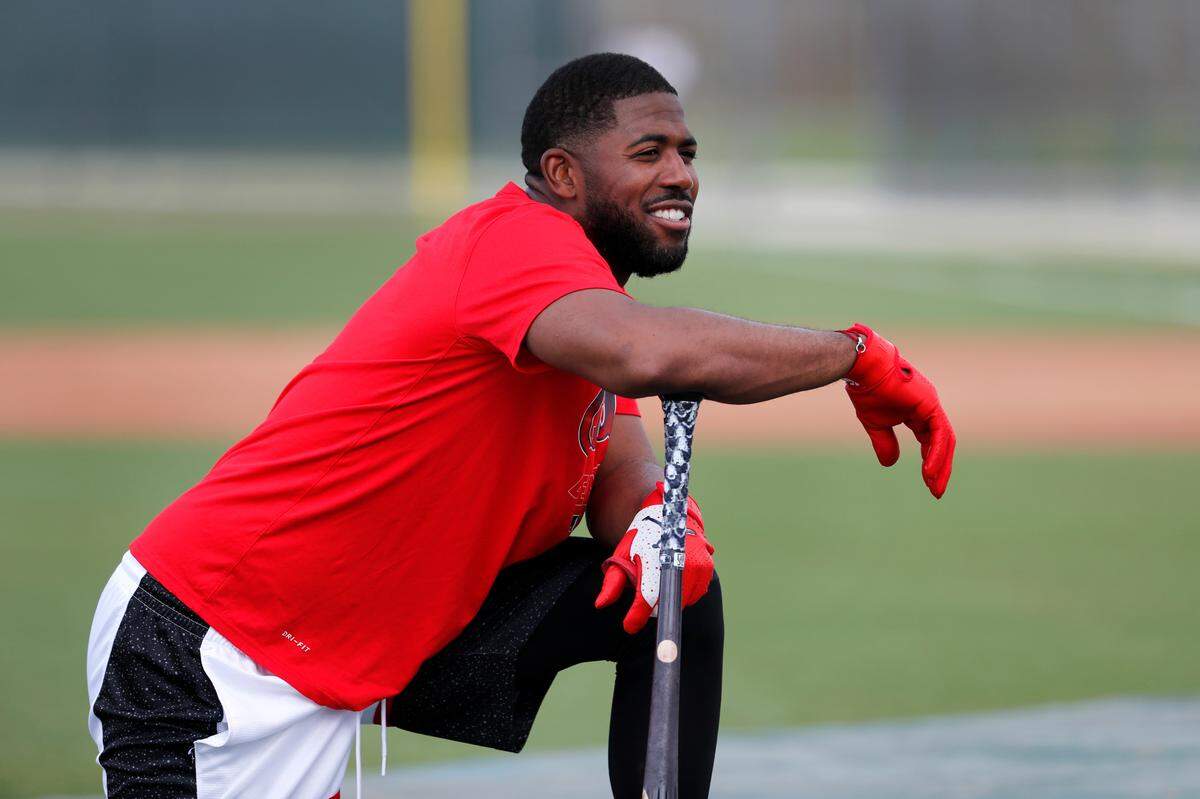
Though Shildt has cautioned against reading too far into lineup decisions until the closing week of spring training, constructions so far suggest that Fowler is likely to bat closer to the bottom of the order than the top. Dislodging him from the leadoff spot in which he finished last year may be the first step in re-examining his role moving forward.
The veracity of spring training statistics is also reasonable to call into question. Many veterans use spring games to work through new routines; Fowler has indicated to reporters in Florida that he has made attempts to maximize the number of pitches he’s seen in his at bats. A cynical analysis would suggest that poor numbers are played down and strong numbers are played up, and Fowler and Carlson find themselves on each end of that spectrum.
Fowler’s also a respected veteran with a strong clubhouse presence and a solid relationship with key figures in the team’s front office. To say there are variables affecting his playing time outside of pure performance is not to be critical, but rather to acknowledge the delicacy of handling a veteran showing signs of decline.
Without guaranteed solutions at any outfield position, it should not come as a surprise that the Cardinals will, to start the season, lean on the most experienced and (should be) certain of the bunch.
A shift in that thinking is certain to be more a factor of time than money.