Frustrated with Major League Baseball? Minor league ball offers nice substitute
Despite the unending existential dread hovering around all things Major League Baseball, there is in fact ball being played in Arizona and Florida, just as there is every spring.
Baseball’s crisis is bad. Its solutions, they hope, lie in the future.
The official start of minor league spring training for the St. Louis Cardinals was Monday, bringing it with it the excitement and opportunities that accompany the start of every season.
Top prospect hitters Nolan Gorman and Jordan Walker have spent the week facing off in live batting practice against top prospect pitchers Matt Liberatore and Zack Thompson.
Veteran pitcher Aaron Brooks, returning to the United States from Korea on a minor league deal, is making an early pitch for a prominent placement in the organization’s plans.
Slugger Luken Baker, who may yet be selected by another club in a Rule 5 draft which has not yet been scheduled, is doing his best to impress his current as well as future employers, though scouts of those employers may have to blend in incognito among the fans gathered around the fences in Jupiter.
The gears of the game may be grinding to an unfamiliar rhythm, and yet still they move. Affiliated baseball will open within the next month. Triple-A Memphis has its opener at home on April 5 and the other affiliates all open on April 8 — Double-A Springfield at home, High-A Peoria in Wisconsin, and Low-A Palm Beach at home.
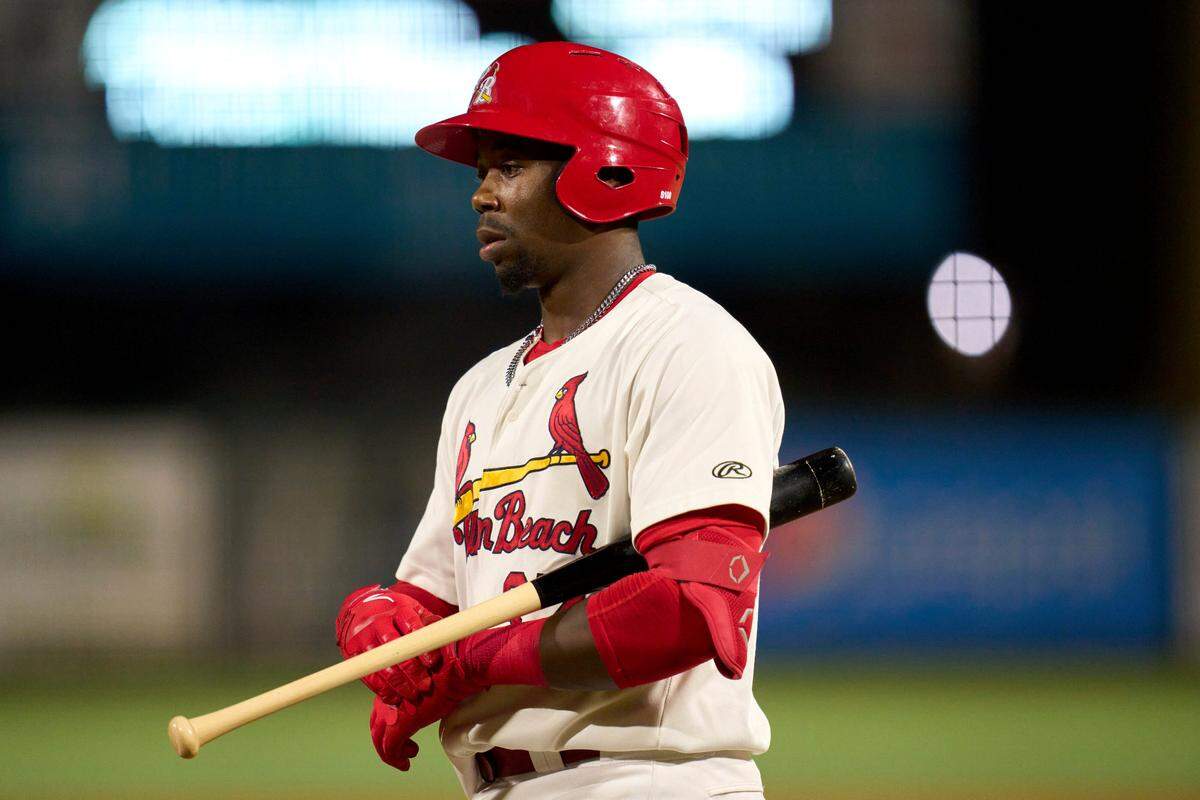
If you can afford it, visit a minor league park
Traveling to any or all of these parks is well worth the time and effort, if it’s within your means to do so. Peoria, especially, is a tempting trip; from the metro east, you can be at the ballpark in two and a half hours, and with a more briskly paced minor league game, home the same night. And with Walker, one of baseball’s fastest rising prospects, likely to start the year there, you may be best served to move quickly before he’s promoted to slightly further Springfield.
Fans who have looked at MLB’s labor strife with frustration and who have thrown up their hands in frustration with both parties might be especially well served to take in a minor league game to rediscover what attracted them to the sport in the first place.
A huge percentage of the players appearing in the system for the Cardinals this year will make less than $20,000 in salary. Among the heralded and heavily promoted prospects will be the glue guys and future bench fixtures who fill out teams and who have the potential to provide the kinds of magical moments that bring fans into the sport forever.
Not all the players will struggle, and not all struggles are the kind which build character. Many players you might see at a minor league game will advance no further than the level where you see them. Some may well be gone, released from the organization never to return to affiliated ball, within days or weeks. Some might get hurt. Some might burn out.
Humble beginnings
Reaching the Major Leagues is impossibly, unfathomably hard. That doesn’t mean other jobs aren’t challenging or other people in society don’t deserve the same adulation, but the heroism which we collectively impart upon athletes springs from these humble beginnings.
It’s a one level park with a grass berm in the outfield and bad ice cream served in a cheap plastic helmet that allows the titans of the game to blossom into who they become, and that remains true even if you find yourself struggling to comprehend the minutiae of a labor negotiation.
That, ultimately, is the summation of the public relations advantage that ownership has and which players will never truly be able to match. To be a fan is to cheer for laundry; your team is made up of the people wearing the same shirts, the people in the other shirts are the bad people, and more than anything else, your goal is to watch them in order to be sure you’re right.
Minor league ball brings the humanity back. Fans in St. Louis have what others may call unreasonable attachments to Yadier Molina and Adam Wainwright because they have so thoroughly defined two decades of the franchise and they are in many ways embedded in its fabric, but the time is coming (and soon) when neither will still be around.
Frustration is understandable
Minor league fans don’t have nearly the same time to get wrapped up in individual players, and so instead they see the glory in the collective struggle, and celebrate each movement up each level for each player almost as thoroughly as they would a championship.
Frustration is understandable. Everyone in the game feels it, whether or not they’re keen to admit it, and finding a solution will be among the biggest challenges facing the league when opening day happens for real.
We know, though, when it will happen throughout the system. It’s real. It’s coming. And as a baseball fan, you owe it to yourself to check it out.