
Pallante turns painful lesson into enormous opportunity with St. Louis Cardinals
Andre Pallante had a really bad day.
The Double-A Springfield Cardinals hosted the Tulsa Drillers on August 4, 2021, and Pallante allowed 10 earned runs on 12 hits to inflate his season earned run average to 4.62. That he recorded 11 outs in the game was its own sort of minor miracle; Pallante knew from the beginning that it wasn’t going to be his night.
“I remember how defeated I was,” Pallante said Wednesday night after providing 2 2/3 innings of shutout relief work in a win against the Colorado Rockies. “After the second pitch, I was like, ‘I don’t have today.’ I convinced myself about me.”
That sort of discouragement which feeds a poor performance is something that could, in many cases, go overlooked. It’s not uncommon for prospects to have rough outings, but the reaction to those outings is an important part of player development. Good organizations seek out reasons for what went wrong. Organizations that struggle tend to view those games as write offs.
Pallante was approached immediately by a mental skills coach, who challenged him to identify the moment on the mound when his mindset shifted.
“I feel like that was a big stepping stone,” he explained.
Even for the Cardinals, a model of consistency in baseball, dramatic turnover is the nature of the beast. Thursday’s matinee matchup with Colorado included nine players on St. Louis’s active roster who did not appear for the Cardinals in 2021, in addition to two coaches added from the outside and, of course, a different manager.
It’s the consistent systems built in throughout the levels, in manager Oliver Marmol’s estimation, that provides for consistency of execution even if not consistency of personnel.
“My hope is someone got on his (rear end) for it,” he cracked when told about Pallante’s recounting of his checked out outing.
“Those are the systems, the accountability,” Marmol explained. “There’s so many conversations that take place within a staff, and then down there (in the minors) and up here.
“When it comes to what those feedback loops need to look like. the timing of it, the accountability that goes with it, my hope is ... that as soon as that happens, somebody’s on it, and is pointing out, one, that it took place, and two, why it can’t. And then how to actually do something about it next time.”
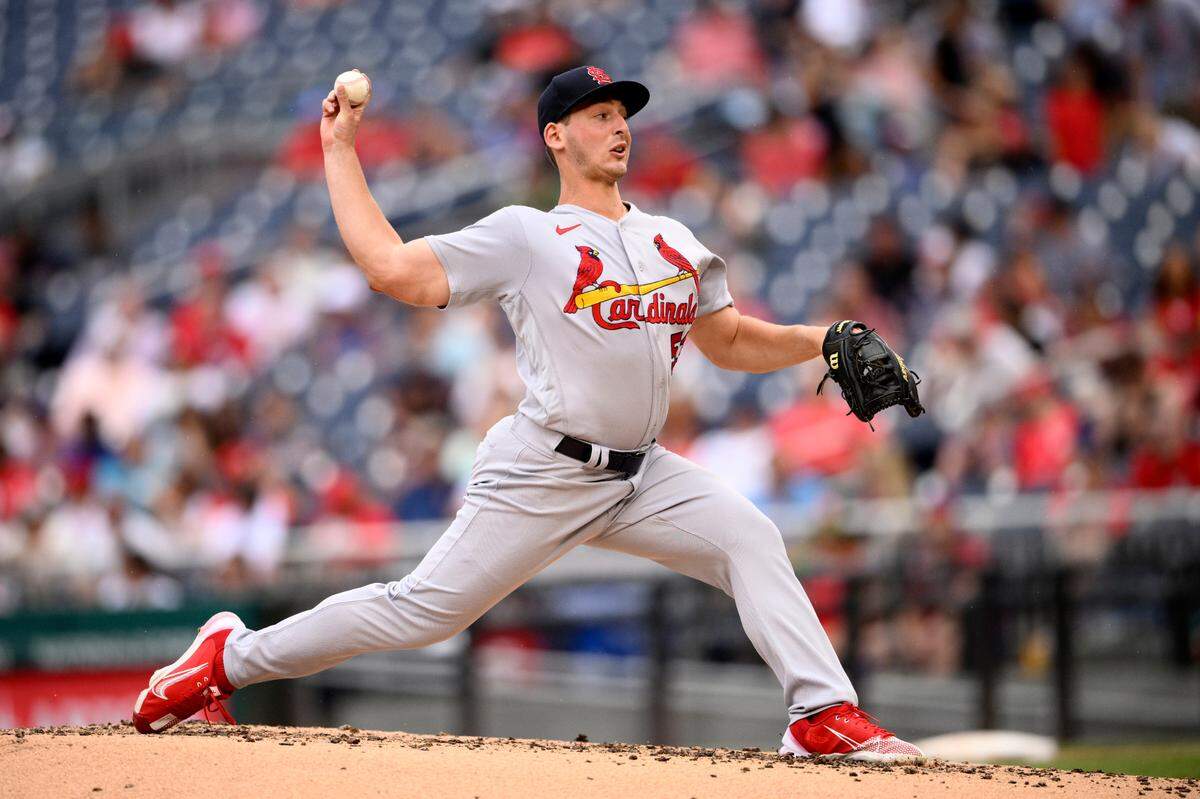
‘Cardinal baseball’
Brendan Donovan played third base and batted third for Springfield in that game, and would eventually climb (along with Pallante) to Triple-A Memphis before the season concluded. It was there that Redbirds manager Ben Johnson, who Donovan said is “awesome, does a great job,” worked with the ascendant players on the finer details that would shape them into professionals.
Donovan called it “NL baseball,” and then refined his description: “Cardinal baseball.”
That next link in the development chain is what allows the Cardinals to find positive results in the constant turnover and develop a system of accountability that supports players even as they climb through multiple minor league levels in a given year.
It’s how a pitcher like Pallante can become one of the most valuable rookie pitchers in the majors one year after his August doldrums resulted in a nightmare start that could’ve been discouraging to even the highest-pedigree pitching prospects.
Pallante perseveres again
It also helps to grease the skids when roster limitations create some disappointment. Pallante, after all, had been effective as a starter, and pitched eight shutout innings in Washington in the lead up to the deadline, which saw the Cardinals acquire Jordan Montgomery and José Quintana.
With those two additions and both Jack Flaherty and Steven Matz on the comeback trail, Pallante again hit a roadblock that could’ve caused a stumble. Instead, he eased past it.
“We got two really good pitchers, and they’re gonna help us win a lot of games,” Pallante said. “I understand my role on the team right now. We’re going to try and make a push in the playoffs. It was kind of like seeing it as more of a challenge.”
That role — length as a reliever when needed, high leverage innings when appropriate, overall fireman duties — speaks to his value, and guarantees his place on any potential playoff rosters.
‘I’m trying to do the best I can’
One year ago, his postseason consisted of an assignment to the Arizona Fall League, and an opportunity to make an impression on decision makers ahead of an offseason of work. That fed directly into his largely creating his own opportunity in spring training, and from there, continuing his ascent without taking a step back.
That tough start against Tulsa would be the last time he would allow an earned run in Double-A.
“You’re going to be in the situation, and you should be ready for it,” he said. “I’m trying to do the best I can.”
On another team, in another situation, he might not have the tools. Instead, one small lesson grew into one enormous opportunity.