
St. Louis manager looks to shepherd his bullpen down the stretch toward playoffs
Rebuilding large chunks of the bullpen during the season is hardly anything new to the St. Louis Cardinals, but this year’s method has significantly increased the degree of difficulty. With the elimination of the waiver trade deadline, Aug. 2 represented the last chance to bring in substantive help from outside the organization, leaving St. Louis to creatively shuffle the deck they have rather than drawing new cards.
JoJo Romero’s acquisition from the Philadelphia Phillies on July 30 was designed more to create roster space than to provide him with a new opportunity. Eager to provide Paul DeJong with a second chance in the big leagues and without the ability to option Edmundo Sosa to Memphis, the Cardinals flipped Sosa to the Phillies for Romero, assigning the latter directly to Triple-A.
When fellow new dad Ryan Helsley departed for paternity leave, Romero arrived. In short order, he became the team’s most trusted option from the left side. In his first four appearances and five innings pitched, he’s allowed only one hit and no walks and has struck out six.
A permanent spot for Romero was open after the club released TJ McFarland, a critical part of their 2021 bullpen, on Aug. 12. Unable to find the biting sinker which was crucial to his success last season, McFarland’s ERA ballooned to 6.61 before he was cut loose. He’s since re-signed a minor league deal with Memphis, but has shown very little in the way of success.
Cabrera’s struggles
Perhaps the most surprising and concerning fall has been that of Génesis Cabrera, who finished second on the team in appearances by a pitcher in both 2020 and 2021. He provided a 3.41 ERA across 90 games in those two seasons, pairing high velocity with a wipeout breaking ball that made him one of the most dangerous bullpen southpaws in the league.
The line in his 2022 numbers, however, is clear. Cabrera was placed on the injured list on June 25 for reasons which to date have not been specified by either the player or the team, but management of the club’s 40-man roster around his absence confirms his placement on the COVID-related injured list. Since returning, Cabrera allowed a ghastly 15 earned runs and 18 hits in only 13 innings, managing to strike out only six hitters — two fewer than he walked.
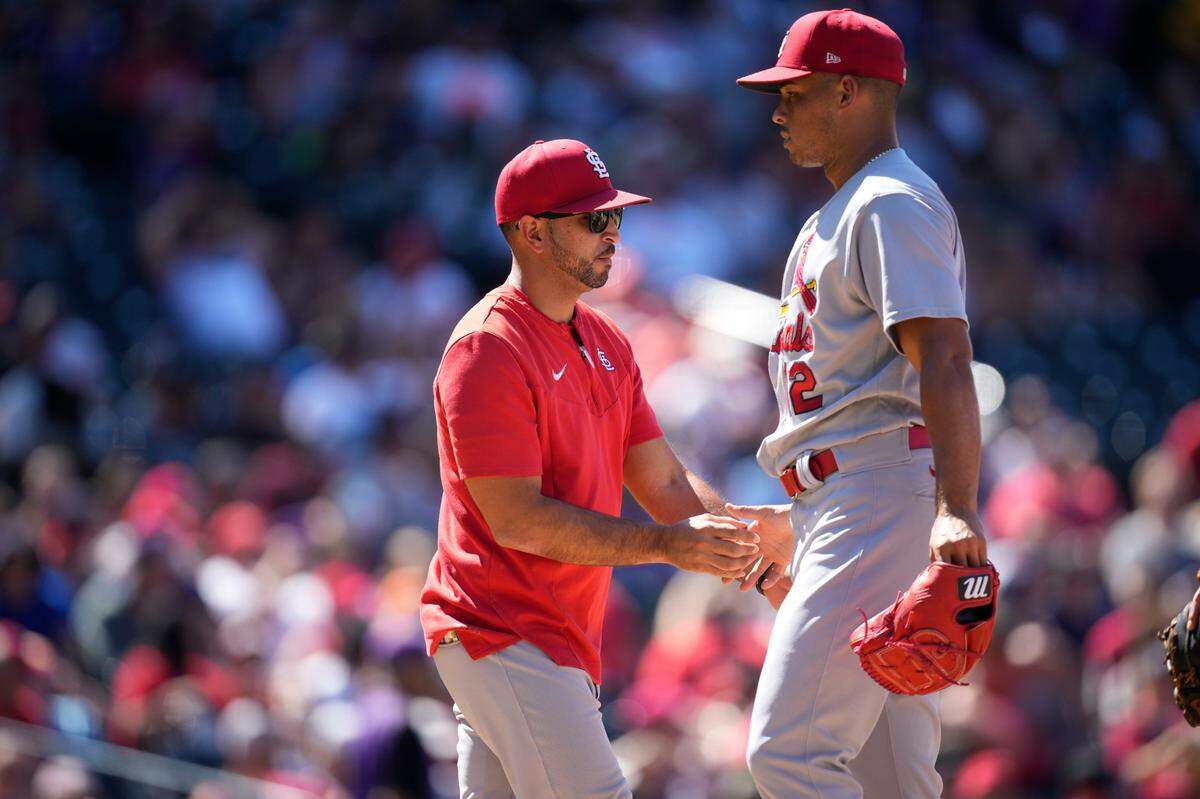
“I think early on (after Cabrera’s return), we saw some stuff in his overall recovery and velo and ability to bounce back,” Cardinals manager Oliver Marmol said after Cabrera’s demotion. “But we’re removed from that now by a pretty good amount. We were patient in allowing it to get back to normal.”
It didn’t, and Zack Thompson was recalled to take Cabrera’s place. Almost exclusively a starter in his college and minor league career, Thompson has allowed only six earned runs in his first 24 innings in the majors, making only one start. His repertoire is largely a mirror of Cabrera’s, and since he’s been able to maintain his velocity and sharpness on his breaking ball, he offers a more effective weapon.
‘I don’t see it as an issue at all’
What he doesn’t offer, however, is the ability to pitch on back-to-back days. The Cardinals attempted to work that into his skill set during his most recent stint in the minors, but had limited success. Marmol, asked if he had a lefty on the roster who could pitch on consecutive days — as both Cabrera and McFarland could, with limited effectiveness — conceded he did not.
“We’re just gonna have to navigate it,” he said with a shrug. “You can rotate through in a way where it shouldn’t be — I don’t see it as an issue at all.”
Andre Pallante’s effectiveness against lefties is also a factor. His splits are reversed, with righties approximately 250 points of OPS better than lefties, owing in large part to the cutting shape of his fastball. And with Jake Woodford finally provided the opportunity to show his effectiveness as a swing man, Pallante is freed up for more precisely tailored assignments.
The pending return of Jack Flaherty, too, could change the equation. This year’s compacted postseason schedule notwithstanding, a team typically only needs its four top starters in the postseason. For the Cardinals, in an ideal world, they would include Flaherty in that group with Miles Mikolas, Jordan Montgomery and Adam Wainwright, freeing up deadline acquisition José Quintana to provide another left side bullpen look.
Additional twists and turns?
Steven Matz, on the rehab trail after apparently dodging having his season ended by a torn MCL, is also being prepared as a reliever. And the Cardinals yet hold out hope that Cabrera, eligible to return from option on Sept. 11, could still be a factor if he can reclaim his previously dominating stuff.
No team has ever had too much pitching headed into the postseason, and there are always more innings to cover than provides comfort. And yet the Cardinals, by virtue of stocking up ahead of the deadline and being willing to be creative with their deployments in its wake, have managed to reboot half of their relievers and change the look of the back end of games even as September arrives.
Whether the same names will receive high-leverage chances in October remains to be seen, but it’s fair to assume there will be additional twists in the road before that time arrives.