
While fans want to spend-spend-spend, St. Louis Cardinals stick to guiding principles
Even as a winter with the largest outside free agent contract in team history reveals itself to be a winter of fan discontent, the goals of those making the most important decisions for the St. Louis Cardinals haven’t shifted — just get in, and anything can happen. That is where the model points.
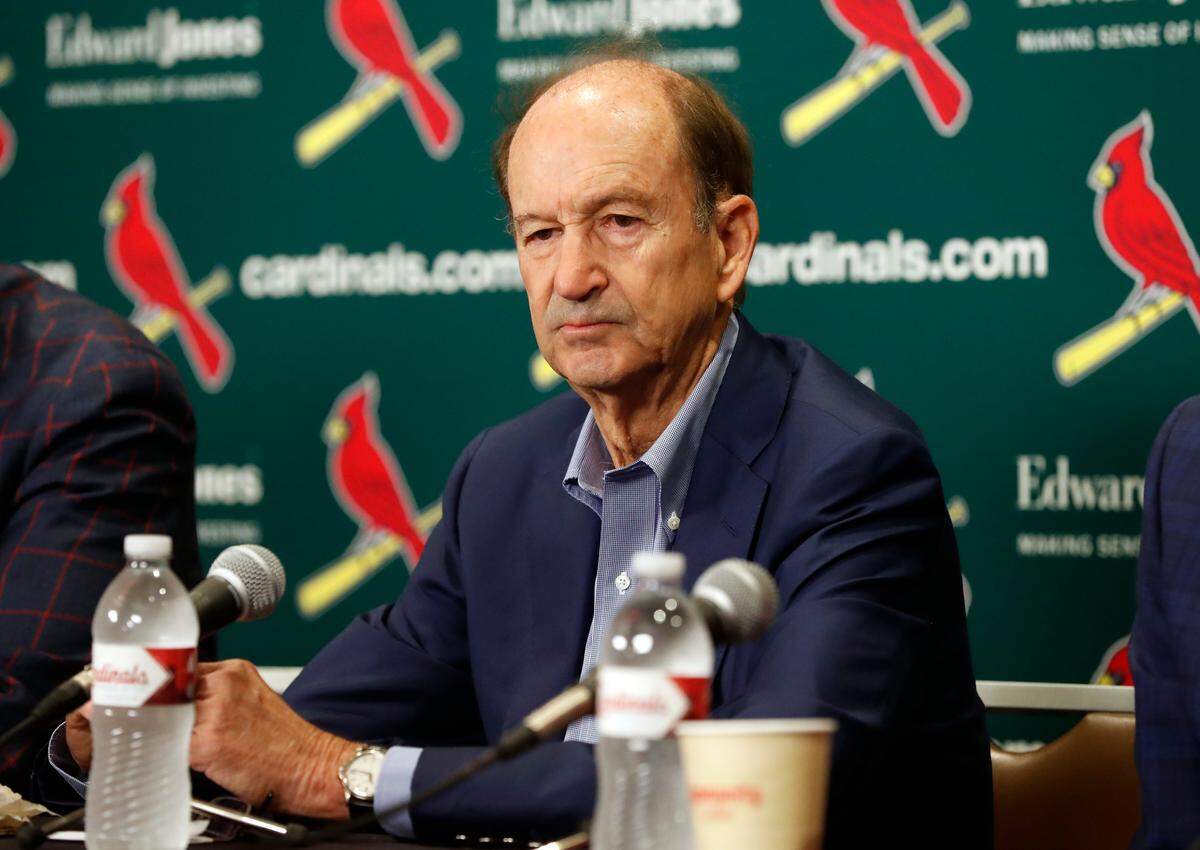
“I think the key is to get into the playoffs,” chairman Bill DeWitt, Jr. said Monday, the closing day of Winter Warm-Up. “I think of the really good teams that went far, we caught our breaks. In ‘04, ‘05, ‘06, we had a great team, but I don’t think too hard about that. I mean, the key is to get there and anybody can win.”
The chairman and his son, team president Bill DeWitt III, came to the assembled media with a vision of continued stability, even as some of baseball’s most central financial underpinnings begin to shift.
Diamond Sports, the Sinclair Broadcasting-owned entity which operates the Bally Sports regional sports networks, is reportedly teetering on the edge of bankruptcy. The Cardinals, amid a 15-year deal for more than $1 billion which took effect in 2018, rely on their rights partner for a significant revenue stream. That stream is seemingly now at risk.
“The bottom line is the overall economics of RSNs have been in decline,” DeWitt III said, “and that’s concerning to us and all of sports.
“It’s a risk factor for us going forward. But I think MLB is on the case and has a lot of contingency planning in place that, should something happen there, we feel good that there’s a game plan.”
DeWitt, Jr. called the issue, “a concern, a fluid situation, there’s no question about it. Something’s going to happen sooner rather than later, and it’s a concern. It’s a big part of our revenue stream.”
Asked if the club was planning for an immediate future where checks from the rightsholder simply stopped coming, DeWitt, Jr. said, “we’re operating like no, it’s going to stay, but the reality is there’s going to be change.”
One model that’s been suggested for the future is a direct-to-consumer, streaming-based service under control of the league and teams directly. DeWitt III said that the Cardinals’ share in Bally Sports Midwest makes their situation already somewhat comparable to that of the Cubs (Marquee), Yankees (YES), and others with their own networks, though still beholden to the territorial restrictions governing terrestrial broadcasts.
Those territories, which DeWitt III estimated to be approximately a century old, are frequently discussed topics at meetings of owners, and baked in to the uncertain future of the broadcasts is an expectation that a shift in the landscape could also greatly reduce the scope of blackouts which affect fans who are eager to pay to see baseball but simply unable due to either their geographic location or choices made by their television provider.
The gathering storm of that economic challenge was insufficient to beat back the winds of free agent dollars which came rushing to the forefront this winter. In the face of rebounding revenue streams with a full season of full stadiums and buoyed by the relief of labor peace, free agent spending exploded, especially in the National League.
Nine free agent contracts of at least $100 million guaranteed were signed this winter. Five of the nine were signed by National League teams, and a sixth would have been had doctors for either the Giants or Mets seen fit to medically clear Carlos Correa.
In addition, Justin Verlander signed a deal which ties Max Scherzer’s record for largest average annual value. Both deals were with the Mets.
‘I’m not concerned about it’
DeWitt, Jr. said the Cardinals are “not in a position to be the biggest of the spenders,” even as others in the National League push in that direction. He explained the Cardinals finished the 2022 season 12th in payroll and 12th in revenue; the latter number is impossible to verify, given the club’s private holding and lack of detailed financial disclosure.
“You get into the bigger markets and they have other revenue sources, their prices are higher,” he said. “They generate way, way more revenue, particularly at the top six or seven teams.
“It’s a competitive game. If we do the right things — and so far I feel like we’ve done a pretty good job — we can compete with them. I’m not concerned about it.”
Other concerns await. Discussions with John Mozeliak about the future of his role as the head of baseball operations are set to kick off when the club reaches Florida next month. The hiring of a new television play-by-play voice, spearheaded by Bally’s, should be resolved in the coming weeks. Even City Connect uniforms came up; they’re on the agenda for 2024.
Spend, spend, spend
For fans, though, the song remains the same. There is a desire to spend, always a desire for more, and feelings between incredulity and frustration that the club hasn’t displayed more urgency to that end.
There should not, however, be surprise. The model remains, ever thus to mid-markets.
“We look at today’s game, and we look at next year’s team, and hopefully we can continue to have winning teams year in, year out,” DeWitt, Jr. said. “Playoff-type teams that have a chance to win a World Championship.”
There’s always a chance.