Through trade, the Cardinals need players in return who can contribute sooner than later
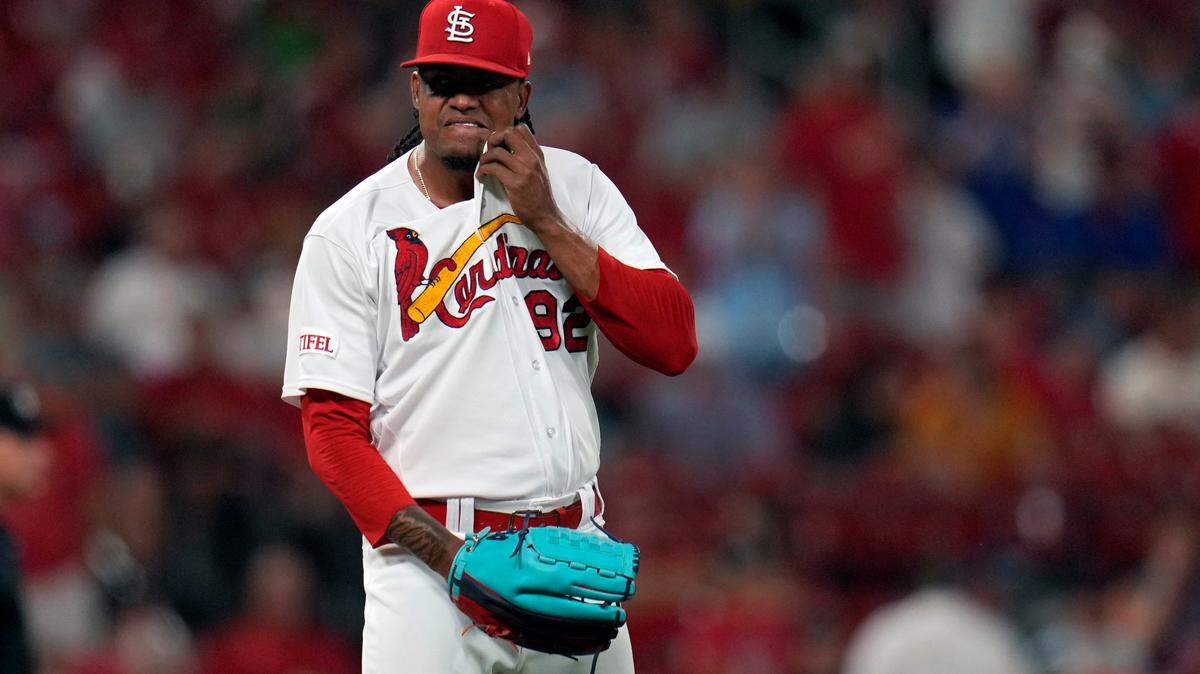
One week after declaring on television that the Cardinals hadn’t yet waved the white flag on the 2023 season, President of Baseball Operations John Mozeliak hauled it out of its mid-90s mothballs on Monday and performed a full-fledged color guard routine in the lobby of the team’s clubhouse.
During a wide-ranging conversation in which he announced that the team has signed veteran righty reliever Ryan Tepera for the rest of this season and designated left-hander Génesis Cabrera for assignment, Mozeliak declared that the team’s performance on the field between now and the Aug. 1 trade deadline will not change the organization’s outlook.
With an eye on contending in 2024, the remainder of 2023 will be focused on shuttling out talent on expiring contracts and bringing in arms to reinforce coming seasons.
Or, simply, a focus on, “pitching, pitching and pitching.”
“I feel like where this club’s at right now, we just know it’s not working intact,” Mozeliak said. “We do know we have to make some changes.”
Asked if he would attempt to extend players approaching free agency – starters Jack Flaherty and Jordan Montgomery and relievers Jordan Hicks and Chris Stratton chief among them – Mozeliak demurred.
“I don’t want to speculate on that,” he said. “I think for our standpoint, right now, it’s going to be how we can improve and get more talented in the future.”
The future, though, is coming quickly. Mozeliak said the team is not looking for “A-ball depth” in its trade returns.
“If we can find talent that we think can help emerge in 2024, that’d be great,” he said. “(In) 2025? I wouldn’t rule that out either. But 2026 seems a long way away.”
That timeline further reinforces the necessity of trading especially Flaherty and Montgomery, either or both of whom could otherwise be candidates to receive a qualifying offer from the Cardinals in free agency. Doing so would award the team an additional draft pick next season should they sign elsewhere, but drafting and developing players takes time.
Those picks, for a team like the Cardinals which does not receive revenue sharing, would be following the second competitive balance round, in the range of 80th overall. Those are valuable picks in the long term, but they are not picks that can help at the Major League level in the timeframe laid out.
That means trading players for players, not waiting for the winter.
Still, the winter will itself be busy. Monday’s acknowledgements laid bare what’s been clear for a number of weeks – Flaherty and Montgomery will be traded to contenders, and the Cardinals will have to fill their rotation spots as well as that of the retiring Adam Wainwright. Without much confidence in their internal options and with an eye on revamping their pitching evaluations, outside additions will be mandatory.
“It would be impossible,” Mozeliak said, to fill the 2024 rotation without turning to the free agent market. “Unless we make incredible trades to somehow address that, but I don’t even see that when I squint.”
That, ultimately, will be the point of inflection that requires the Cardinals to reconceive the model which has carried them through 15 consecutive winning seasons up to this year’s disappointment. Mozeliak said that the money coming off the books this winter should be sufficient to address the pitching market without making any pure salary dump trades, but the Cardinals have been always hesitant to dive into the deepest dollar waters.
Their worries that they may drown there have led them instead to repeatedly stub their toes in the shallow end and come up sputtering regardless. The team, seemingly, is overdue for those particular swimming lessons.
Deep commitments to Nolan Arenado and Paul Goldschmidt remain. Mozeliak stopped just short of a full guarantee that neither would be traded, but stressed that both hold a full no-trade clause, and that, “I don’t have any intentions of trading anybody like them,” while providing an obligatory nod to the necessity of being open to all possibilities.
One player who did not receive that same level of commitment was Willson Contreras, who less than 10 months ago signed the largest free agent contract in team history for a player who hadn’t previously been a Cardinal.
Within a month of the season’s start, Contreras had his catching duties publicly stripped, and then returned within 10 days. His offensive contributions have grown as the weather has warmed, but the team remains somewhat less than enamored by his work behind the plate.
Coupled with the re-emergence of Iván Herrera – significant enough that the team is again carrying three catchers – Mozeliak sounded more ambivalent on Contreras’s future than committed to it, despite the four guaranteed years remaining on his contract.
“I think we’ll table that until the offseason,” he said when asked about how he views the team’s catching situation. “When we look back at it in the short term now, there’s some things that need to change. Short view is kind of nice with what we’re seeing out of Herrera right now, which is good.
“Ultimately, when we start thinking about 2024, some of those things will have to be more addressed in the offseason.”
For Mozeliak, who is limitlessly skilled in presenting the front of a well-functioning front office with a stalwart short- and long-term plan, Monday represented an acknowledgment of uncertainty. The number of players on today’s roster who can comfortably say they will be in the same position a year from now may not fit on one hand, but could certainly be counted on two.
This declaration marked a point of no return and an end to all speculation. Change is coming, it will cut deep, and it will rewrite the preferred path of the Cardinals in both the immediate and long term future. A failure to achieve that will require a much more serious surrender than Monday’s detente.
This story was originally published July 17, 2023 at 6:20 PM.