It’s looking more and more like there will be zero MLB games played this year
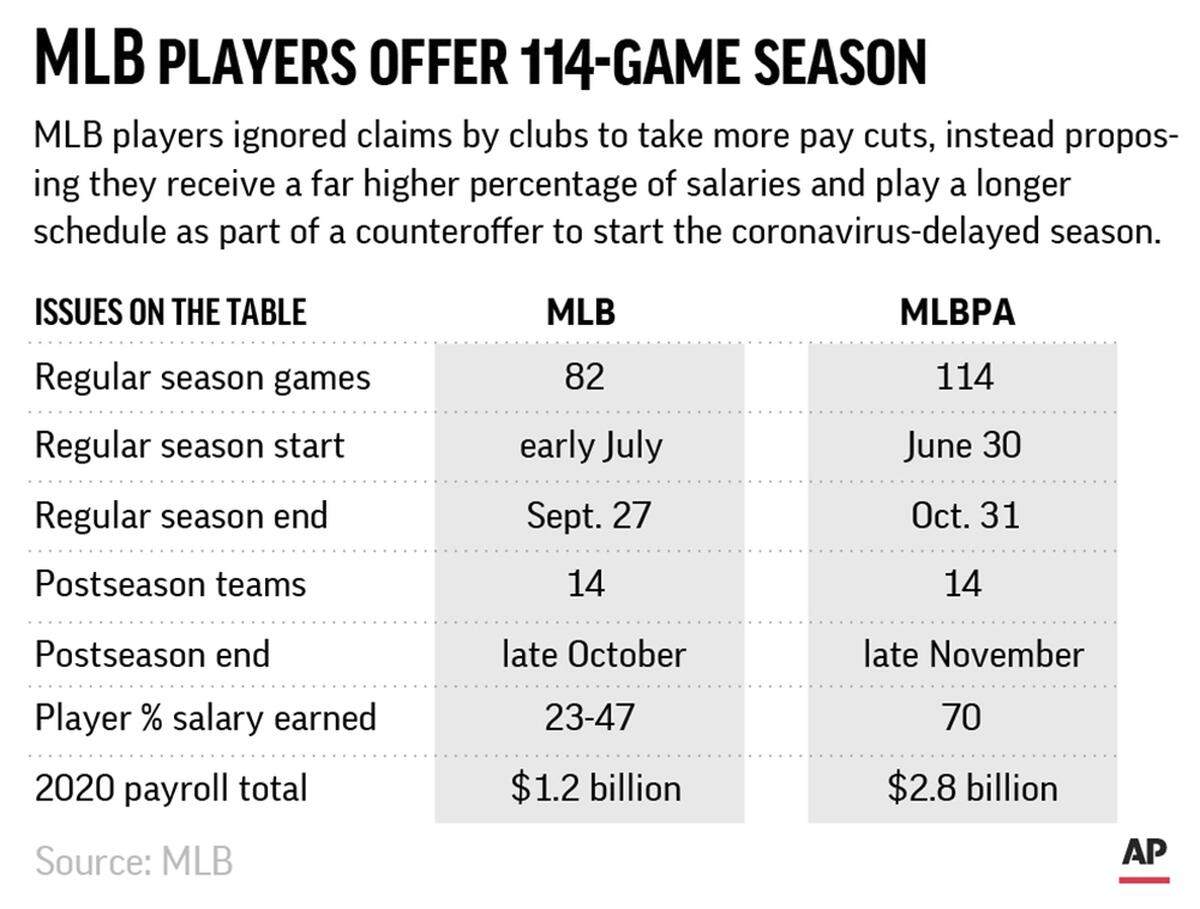
I got pretty excited when a few days ago Major League Baseball players launched an idea to play 114 games in a schedule that would run from the beginning of July through the end of June.
But it seems the idea has fallen of deaf ears as baseball owners said they considered only playing 50 games, far fewer than what they originally proposed. What looked like a possible break in the log jam — an idea that would allow teams to broadcast more games and make more money — now makes it seem as if the two sides are headed in opposite directions instead of getting closer together.
I was lukewarm to the idea of playing an 80-game season. It seems to cheapen the path to the World Series to see teams play half the games they would usually play to qualify for a larger than usual playoff field. In baseball, it used to be that the teams that made it to the World Series were unarguably the best teams in each league. After 154, and later 162, games, the teams that won the marathon couldn’t possibly be a fluke. Especially in the days before divisional play began in 1969. After that, MLB has watered down the field again and again, dividing into two divisions that doubled the field, then three divisions with a wild card and later two wild cards. Now they want to add even more clubs to the field. Where does it end?
This is turning into the National Hockey League of the 1980s when three-quarters of the teams made the post-season tournament and the season was basically only relevant for seeding purposes. So why bother with the 50 games. Put the names of all the teams in a hopper and draw to see who plays who. Then have a big tournament, pass out the trophies and call it a year.
Not having a legitimate season creates another dreaded asterisk situation that baseball doesn’t need. That’s what happens when you have an anomaly in your standards. Suddenly a team that has no business being in the playoffs wins a totally illegitimate championship that no one respects. In the meantime, players are concerned that they’re resumes will be damaged by outlier statistics, limiting their earning power in 2021 and beyond.
St. Louis Cardinals would be hurt by short season
St. Louis Cardinals slugger Matt Carpenter was struggling to keep his batting average over the .200 mark through game 49 in 2019 before rallying to a degree after that. It would be awfully tough for a player — even one who had a guaranteed contract for the next year — to sit at home the whole winter and process the fact over and over again that you had a potential career breaker of a season as your only baseball from October of 2019 until the beginning of the season in 2021.
On the other hand, in 2019 Cardinals shortstop Paul DeJong ended the year with a .233 batting average, a .318 on-base percentage and a .444 slugging percentage. Had last season ended at only 50 games, DeJong would have registered a .305 final batting average with a .399 on-base percentage and a .488 slugging percentage. So, I guess the flukes can go in either direction.
No matter which proposal they go with, the players and owners need to get together on something soon. They had a soft deadline of coming up with an agreement by June 1 and we’re already past that. If they can’t bridge these significant gaps soon, the only option for the number of baseball games that will be played in 2020 is zero.
BEHIND THE STORY
MOREWhat is this blog?
Scott Wuerz is a lifelong St. Louis Cardinals fan. The Cheap Seats blog is written from his perspective as a fan and is designed to spark discussion among fans of the Cardinals and other MLB teams. Sources supporting his views and opinions are linked. If you’re looking for Cardinals news and features, check out the BND’s Cardinals section.