
Statewide body camera rules come with strings
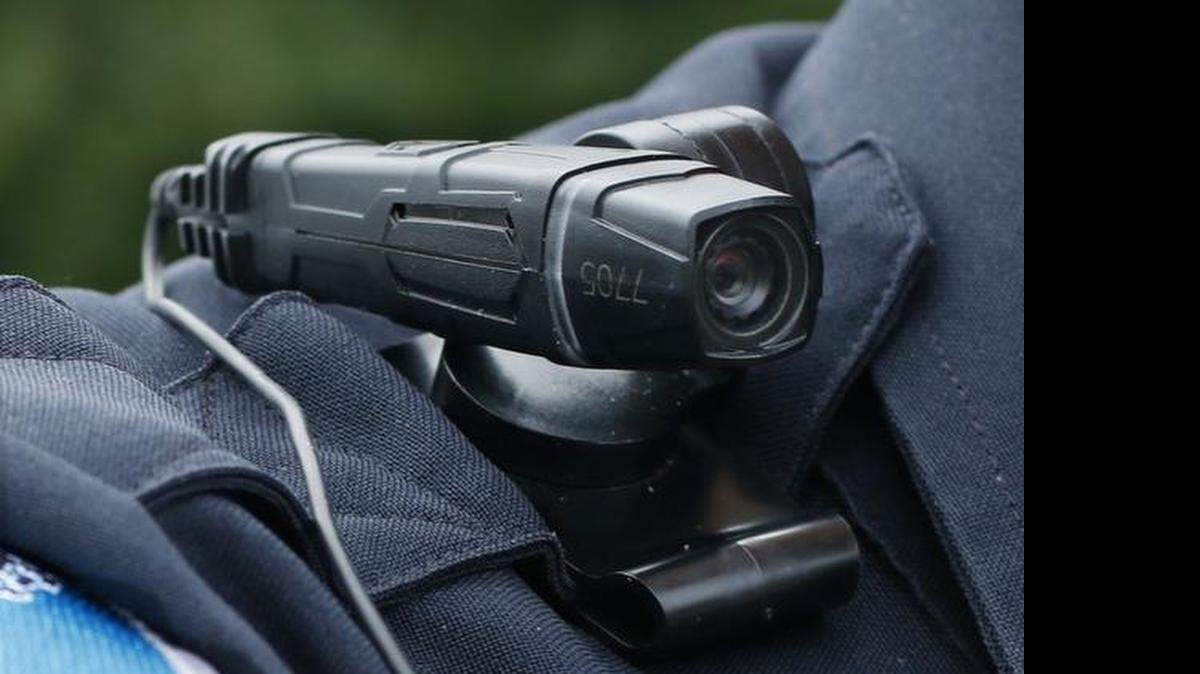
Police body cameras, a hotly debated subject in the aftermath of the Ferguson, Mo., unrest, have some local law enforcement officers weary.
It’s not that they don’t like the technology; they don’t like all the red tape that may come with them under proposed legislation sitting on Gov. Bruce Rauner’s desk.
“There are some parts of the law that will make implementation of this program burdensome for us and other departments,” Collinsville Police Chief Steve Evans said.
The proposed law would give an Illinois State Police training board power to craft guidelines for the use of body cameras and more. Area law enforcement leaders worry that their departments don’t have the personnel or resources to comply with those provisions.
Rauner has yet to sign Senate Bill 1304, which reached his desk June 26 after it earned overwhelming passage from both the Illinois House and Senate. Under the proposal dubbed the Illinois Police and Community Relations Improvement Act, police departments are not required to use body cameras, but departments that choose to use them would be required to follow a maze of rules set by the Illinois Law Enforcement Training Standards and Review Board.
The law also would increase the cost of traffic tickets to form a pot of money the state can distribute in the form of grants to police departments to purchase the cameras, which normally cost around $400 each. Currently, an additional $10 is tacked onto every $40 traffic ticket and sent to the state. Under the proposed law, that ratio would increase to $15 for every $40.
“For the same reasons we have dash cameras, we’d like to have body cameras,” Evans said. But what makes Evans and other chiefs weary is the possibility that departments won’t be able to comply with some of the law’s mandates because they don’t have enough time, staff or cash.
The following provisions in the bill deal with body camera usage:
▪ Body cameras must be turned on and recording while officers are performing their duties. However, victims of crimes and witnesses can ask officers to stop recording during interviews. Officers also may stop recording when talking to confidential informants.
▪ Police departments must retain body camera footage for 90 days before it’s deleted. Footage that’s flagged as part of an investigation or a complaint against an officer must be kept indefinitely.
▪ The Illinois Law Enforcement Training Standards and Review Board would be responsible for setting additional, more specific rules that local departments must incorporate into their individual body camera policies.
▪ When responding to Freedom of Information Act requests for video footage, police departments must digitally redact images of people not directly involved in an incident by manually blurring their faces or other identifying information.
‘Burdensome’
Shiloh Police Chief Jim Stover took delivery of 12 body cameras in May as part of a package deal. For every new dashboard camera the department ordered, the vendor tossed in a body camera for free. But that was before the proposed statewide rules came along. The new body cameras are still in their boxes.
“So now all of a sudden we’re supposed to blot out faces on film that we don’t have the software for,” Stover said as an example. “(Lawmakers) put things in the law they don’t think about. It’s rather burdensome.”
And that’s just part of the proposal. Departments choosing to implement body camera programs also must comply with provisions of the bill that don’t have anything to do with cameras at all. Those provisions include:
▪ Officer-involved death investigations must be carried out independently.
▪ The Illinois State Police is to manage a statewide repository for crime statistics.
▪ Beginning in January 2016, departments must file monthly reports to ISP documenting any arrest-related deaths. In July 2016, they must begin filing reports detailing criminal homicides. Starting in January 2017, departments will have to file reports detailing any officer-involved shootings that result in an injury.
▪ The act would create a state board that keeps track of police officers who have resigned or have been terminated due to a misconduct investigation.
▪ All officers would be required to receive use-of-force training once a year and receive constitutional authority, civil rights and cultural competency training every three years.
▪ Officers would be newly required to distribute receipts, called “stop cards,” to any pedestrians they stop and frisk. Those cards must include the officer’s name, badge number and a reason why the frisk was made.
‘Just stuck things in there’
Stover said the contents of the proposed law smack of legislators kow-towing to special interests. So while he said he understood that’s sometimes the only way laws can pass, he won’t let this law get in the way of his job.
“They just stuck things in there to appease special interests, I think. We’re going to do our job, that’s all there is to it. The Legislature worries about special interest groups. I have my own special interest group, that’s the village of Shiloh,” he said.
St. Clair County Sheriff Rick Watson said, “With this new legislation, there are so many requirements with the reporting and the storage of the film that there’s no reason for us to get into it.”
Watson added that the call for the use of body cameras and the adoption of other reforms came as citizens and police clashed in areas where they’ve long been at odds. He said that’s not a problem in the county.
“We don’t have any issues with numerous people making complaints against officers,” Watson said.
‘We wanted them’
According to Ed Wojcicki, executive director of the Illinois Association of Chiefs of Police, crafting rules for the use of body cameras “was the No. 1 priority of our association this session because we wanted them.”
“We see it as good for the police and good for the community. It helps everybody,” Wojcicki said. “But there are some issues with the bill.”
For one thing, Wojcicki said the cost of storing huge amounts of footage would require staff additions that many departments can’t afford. For another, spending time filing extra reports means that “all the time you spend on that is time you’re not spending doing other kinds of law enforcement. It’s too bad in a way because we are hearing the call of communities to do community policing.”
What’s more, the body camera legislation and the other portions of the bill used to be separate. And according to Evans, that’s how they should have stayed. “I think these two laws that are being merged together would be better off standing alone and separated,” he said. “To run with this right away (now) will be difficult with the burdens in the act.”
But in the waning days of the regular session, for some reason, that changed. The lawmakers spearheading the legislation — Sen. Kwame Raoul and Rep. Elgie Sims, both Chicago Democrats — told everyone involved that it was all or nothing. The two bills would become a single package.
“That was news to everybody. That was very disappointing,” Wojcicki said.
With little time to digest the bigger, broader bill, Wojcicki’s organization wrote a letter to Rauner asking that he carefully consider the portions of the bill that looked good on paper but were “unworkable on the street.”
What will Rauner do?
House members approved the bill by a 107-3-4 vote. The Senate approved the measure 45-5-6.
Since the bill passed so handily from both chambers, a veto from Rauner is unlikely. But no one knows for sure what he’ll do because he hasn’t said much about his intentions.
In an emailed response, Rauner spokeswoman Catherine Kelly wrote only that “the governor will carefully consider any legislation that crosses his desk.”
In the meantime, Evans will keep waiting. Maybe, later on, the cost of the cameras and the software needed to maintain the footage will go down. Currently, body cameras cost about $400. If that happens, body cameras may come to Collinsville.
“Technology will dictate when we move,” he said.
The same goes for Watson. A few years down the road, the law may get some tweaks and the costs won’t be so high. “I might decide at that time that (body cameras) might be beneficial to us,” he said.
Stover will keep waiting, too. “If I can comply with (the law) and it’s in the best interest of my department and my community, I will,” he said, referring to his department’s still-unused body cameras.
Contact reporter Tobias Wall at twall@bnd.com or 618-239-2501. Follow him on Twitter: @Wall_BND.
How they voted
Senate Bill 1304
Rep. Charlie Meier, 108th District: Yes
Rep. Daniel Beiser, 111th District: Yes
Rep. Dwight Kay, 112th District: Yes
Rep. Jay Hoffman, 113th District: Yes
Rep. Eddie Lee Jackson, 114th District: Yes
Rep. Jerry Costello II, 116th District: Yes
Sen. Kyle McCarter, 51st District: Yes
Sen. Bill Haine, 56th District: Yes
Sen. James Clayborne, 57th District: Yes
Sen. Dave Luechtefeld, 58th District: No