Metro-East Living

Most of the nation’s horseradish is grown in southwest Illinois. What makes area special?
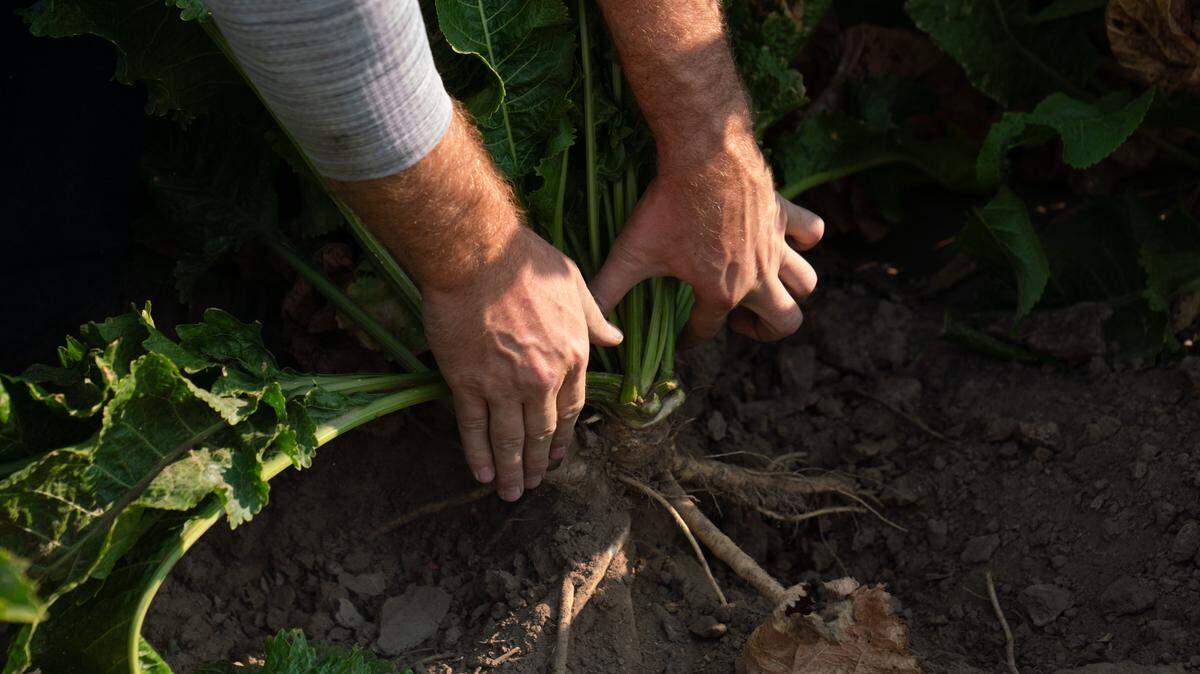
Matt McMillin pulls back the leaves on a horseradish plant to show off the roots below, the main staple of the crop. These plants grow taproots and secondary roots. It’s the taproots that are usually sold as produce grade or are more valued for their size and quality.
Matt McMillin pulls back the leaves on a horseradish plant to show off the roots below, the main staple of the crop. These plants grow taproots and secondary roots. It’s the taproots that are usually sold as produce grade or are more valued for their size and quality. Belleville News-Democrat

You know it as the spicy sauce you put on prime rib or for the wasabi for sushi. Maybe you’ve never tried the pungent, sinus-clearing root.

But in the fertile plains of the Mississippi River Valley, farmers call it their livelihood.

The plant is horseradish, and the metro-east is its favorite place to grow. Illinois grows more than two thirds of the country’s supply — about 16 million pounds annually — with St. Clair, Monroe, and Madison County holding the title of largest producers, according to Illinois Farm Bureau Partners.

Like the name implies, horseradish comes from the radish family, and thus grows underground with a large, leafy head. Roots, the commercially valuable part of the plant, sprout smaller roots from a long, “primary” taproot that typically grow to be 12-16 inches long.

J.R. Kelly is the largest horseradish supplier in the United States and is responsible for distributing horseradish from metro-east farms to the rest of the world, according to company representative Matt McMillin. He says the plant is a rather unique crop that requires a lot of moving parts to make it grow.

“We basically have to use repurposed potato harvesters because the market is so niche,” McMIllin said. “I think there are only 10-15 growers in the region.”

While being in the Mississippi floodplain makes the soil perfect for cultivation, it also provides its own unique challenges. The plants require rain to harvest and suffer in droughts, as they did during a dry spell last year. But too much rain can delay harvest and make the environment unsafe for trucks and tractors.

“You kind of have to have good luck with weather,” McMillin said.

So, with so many factors involved, how much is actually produced?
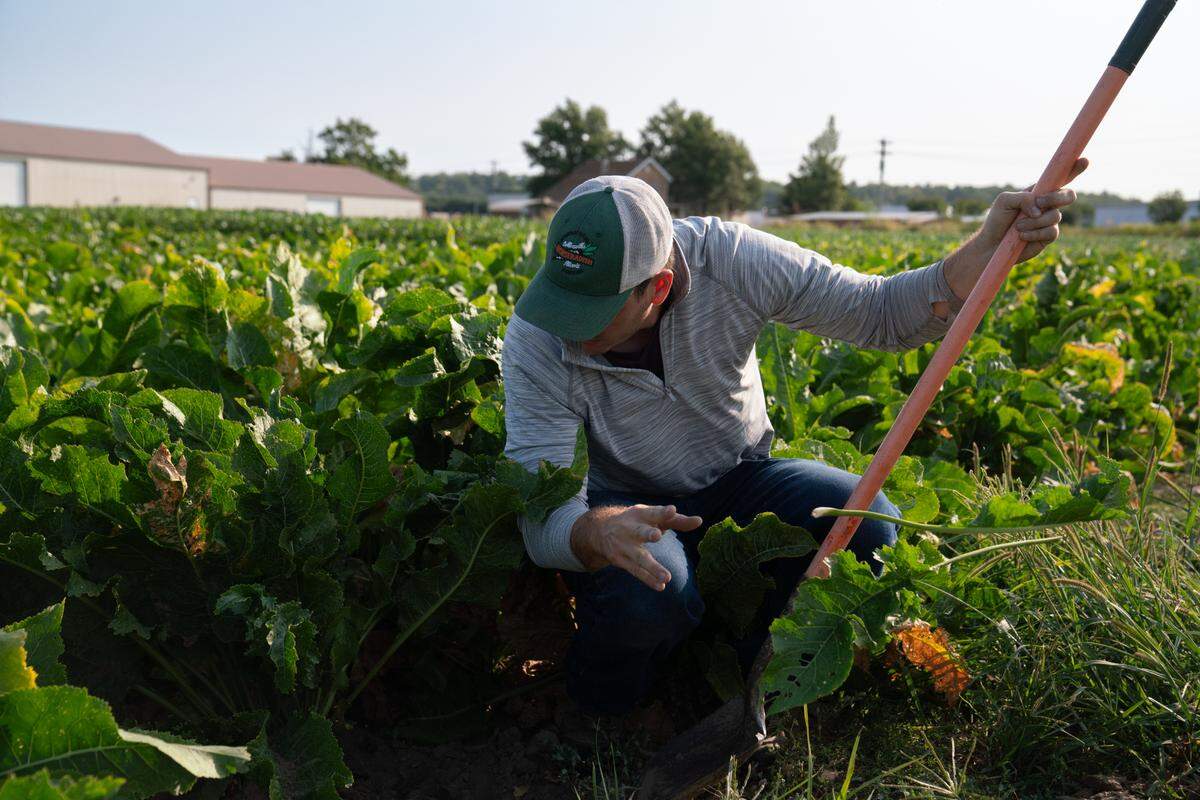
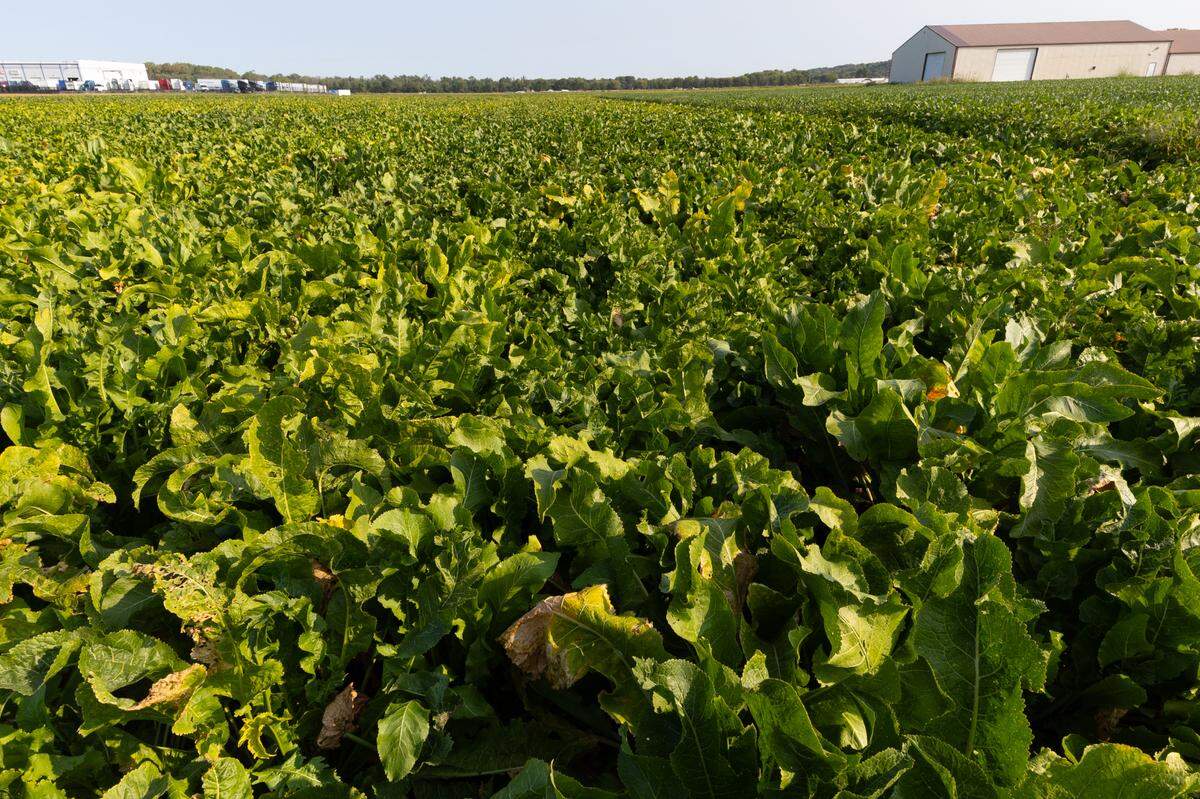
Horseradishes takes almost six months to grow. In September the plants are tall and leafy, and navigating the fields to weed is difficult. Here, J.R. Kelly representative Matt McMillin pulls leaves aside to inspect the quality of a root.
Horseradishes takes almost six months to grow. In September the plants are tall and leafy, and navigating the fields to weed is difficult. Here, J.R. Kelly representative Matt McMillin pulls leaves aside to inspect the quality of a root. Joshua Carter Belleville News-Democrat
A horseradish field in Collinsville, Ill. on Sept. 10, 2024. Matt McMillin of the J.R. Kelly distribution company says there is an estimated 2,000 acres dedicated to horseradish production in the metro-east.
A horseradish field in Collinsville, Ill. on Sept. 10, 2024. Matt McMillin of the J.R. Kelly distribution company says there is an estimated 2,000 acres dedicated to horseradish production in the metro-east. Joshua Carter Belleville News-Democrat

By the numbers

J.R. Kelly Company says “about 2,000” acres of horseradish are farmed in the metro-east. From those farms comes 70% of the United States’ supply, the other 30% coming from California and Wisconsin.

That means roughly 16 million pounds of horseradish comes from the metro-east each year.

J.R. Kelly consistently exports the plant to Canada, but in the past has exported to Asia, Africa, South America, and Europe. Shipments to Canada are “almost always” shipped via truck, McMillin said, while others are shipped via ocean freight.

A full truck typically hauls 40,000 pounds of horseradish, while a full shipping container holds 38,000. Each of these massive containers needs to maintain a temperature of 30 degrees in order to prevent spoilage.
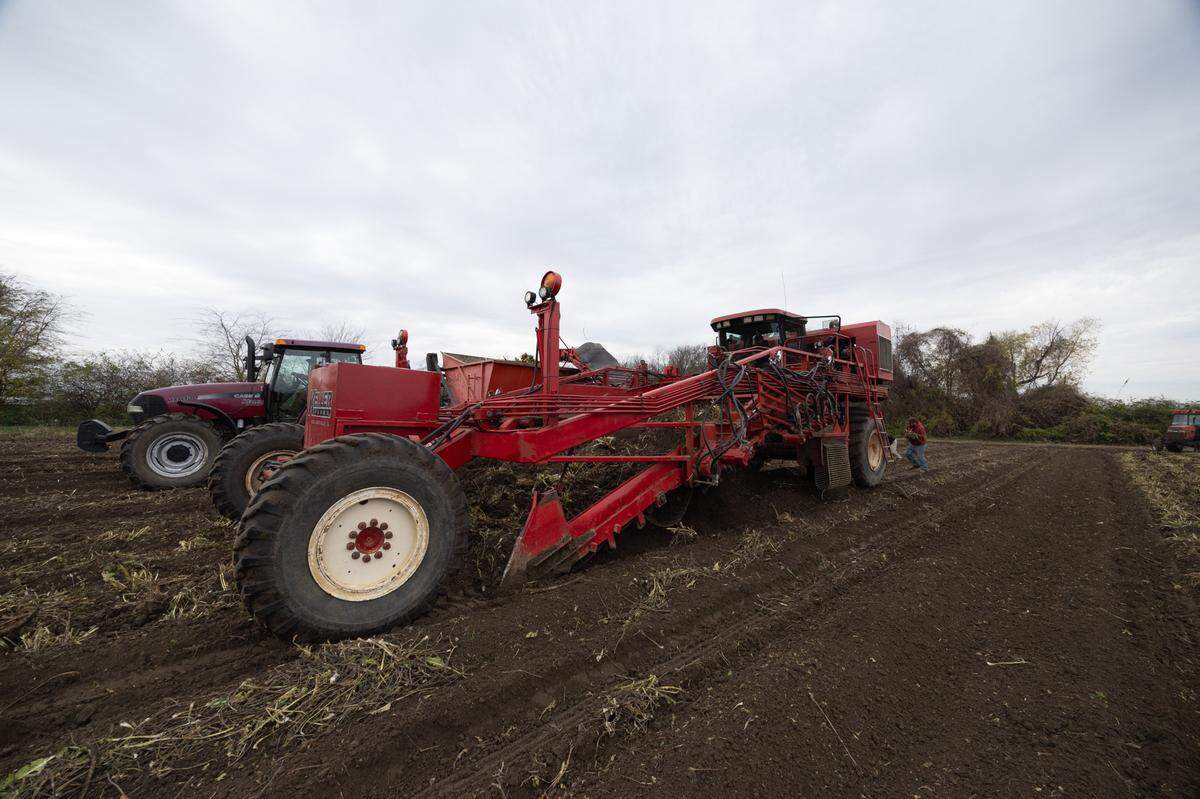
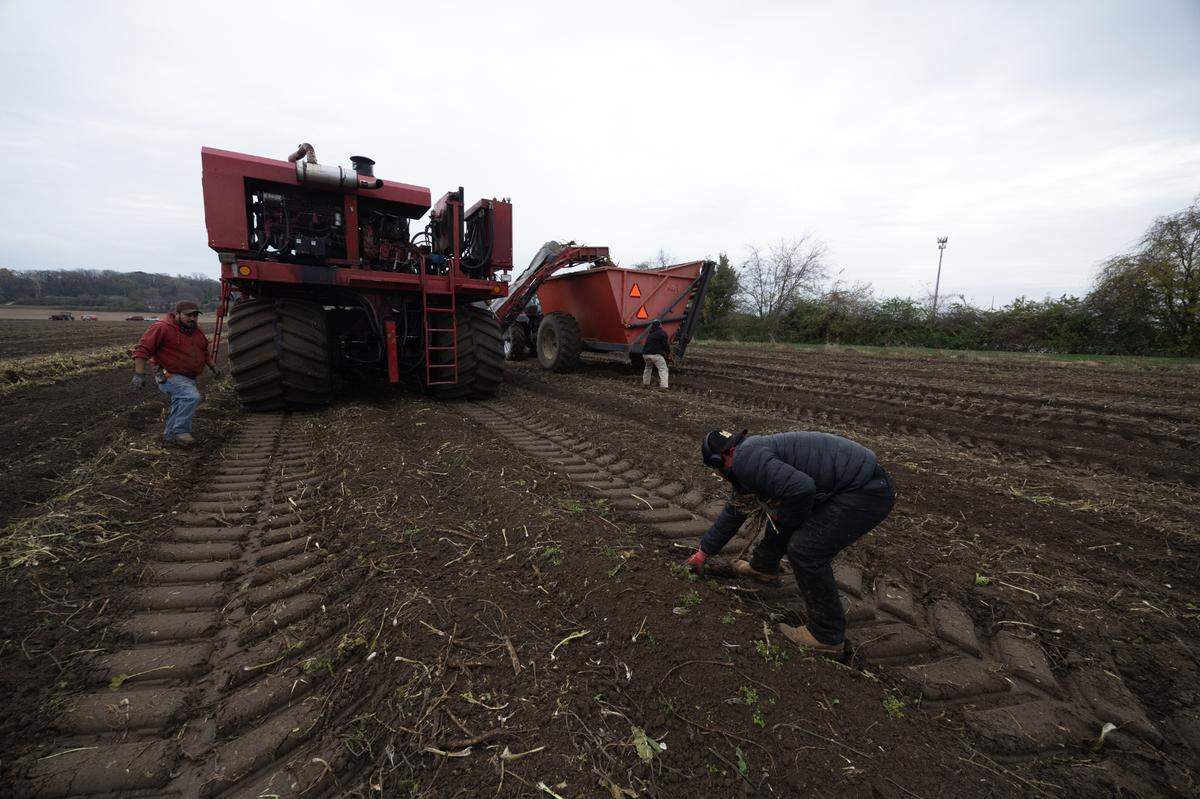
A massive tractor, essentially a repurposed potato harvester, is needed to harvest the horseradish roots on an acceptable timeline.
A massive tractor, essentially a repurposed potato harvester, is needed to harvest the horseradish roots on an acceptable timeline. Joshua Carter Belleville News-Democrat
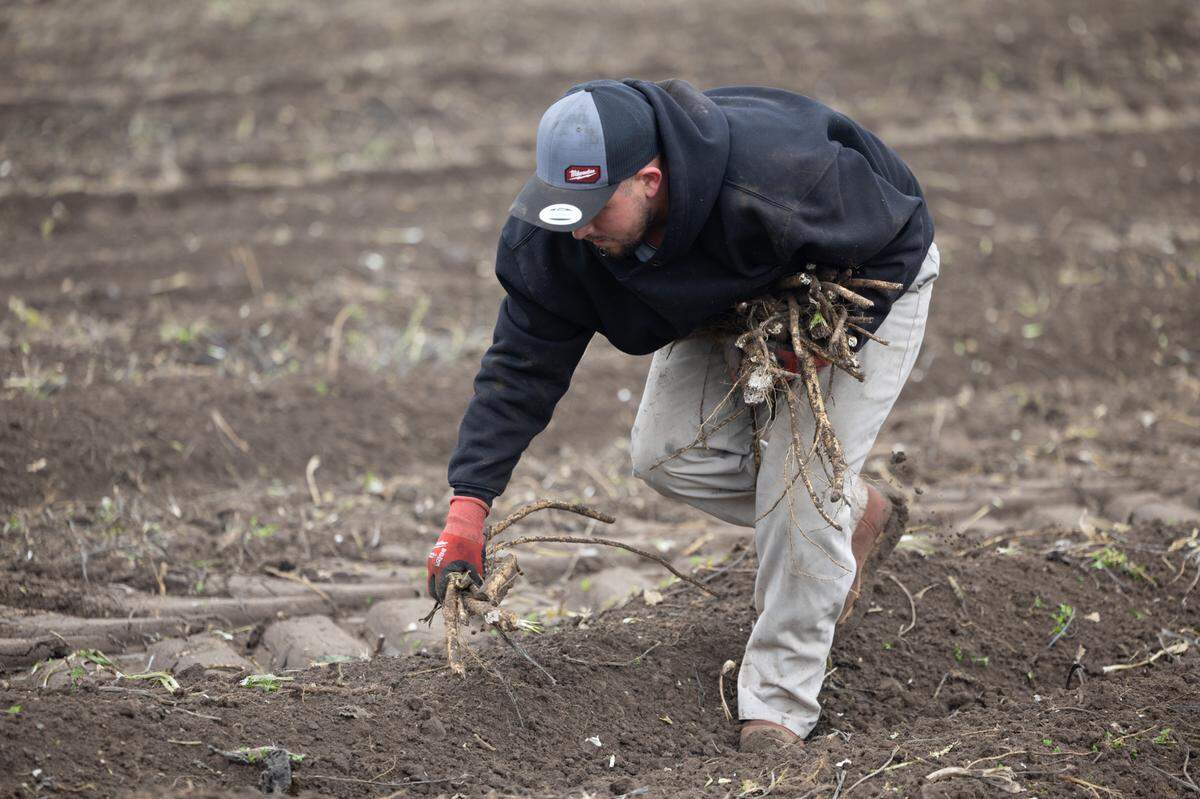
The tractor harvests multiple tons of horseradish, but a significant portion is still missed by the machine. This Collinsville farm hand is picking roots up along the tracks and tossing them into the cargo hold at the back of the tractor.
The tractor harvests multiple tons of horseradish, but a significant portion is still missed by the machine. This Collinsville farm hand is picking roots up along the tracks and tossing them into the cargo hold at the back of the tractor. Joshua Carter Belleville News-Democrat
Due to the difficulty in harvesting the leafy roots, manual laborers are needed to follow behind the tractor and pick up any roots that may have been discarded or neglected. This ensures the product is completely accounted for and contributes significantly to the 16 million pounds of horseradish harvested in the metro-east each year.
Due to the difficulty in harvesting the leafy roots, manual laborers are needed to follow behind the tractor and pick up any roots that may have been discarded or neglected. This ensures the product is completely accounted for and contributes significantly to the 16 million pounds of horseradish harvested in the metro-east each year. Joshua Carter Belleville News-Democrat
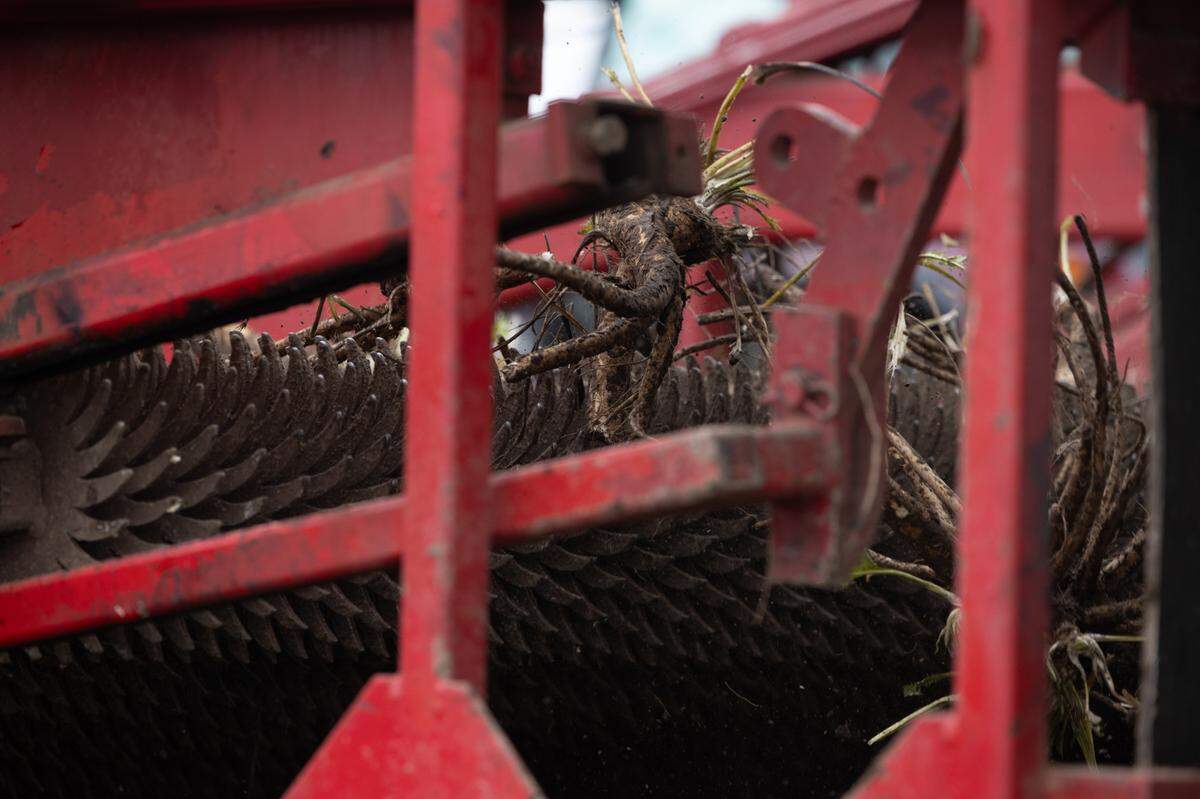
When the roots are picked up into the harvester, their stems are removed along a sort of conveyer belt and the root is pushed into a cargo hold.
When the roots are picked up into the harvester, their stems are removed along a sort of conveyer belt and the root is pushed into a cargo hold. Joshua Carter Belleville News-Democrat

Pretty plants, ugly plants

Lauren Eck, whose family owns Keller Farms in Collinsville, a significant horseradish supplier, points out that not all horseradish is created equal.

The roots are placed in two main grades — processor and produce. Produce grade is “pretty,” and sells in grocery stores as a whole produce. Processor grade is “ugly,” and is packed into 1,200-pound blocks on a pallet to be processed into sauces such as wasabi and horseradish sauce.

“Produce grade is what you see in grocery stores in the produce aisle,” Eck said. “Processor grade are shipped in full tractor trailer loads from coast to coast and some internationally.”

The plant is harvested by a specialty combine that rolls slowly over the fields while workers follow and pick up any roots that were missed. A dump truck then drives alongside and takes the crops to distribution.

It is a particularly tedious process, especially considering the specially-formatted equipment required for its production. Because of the difficulty in harvesting “pretty” plants, more than 90% of horseradish is deemed production grade.
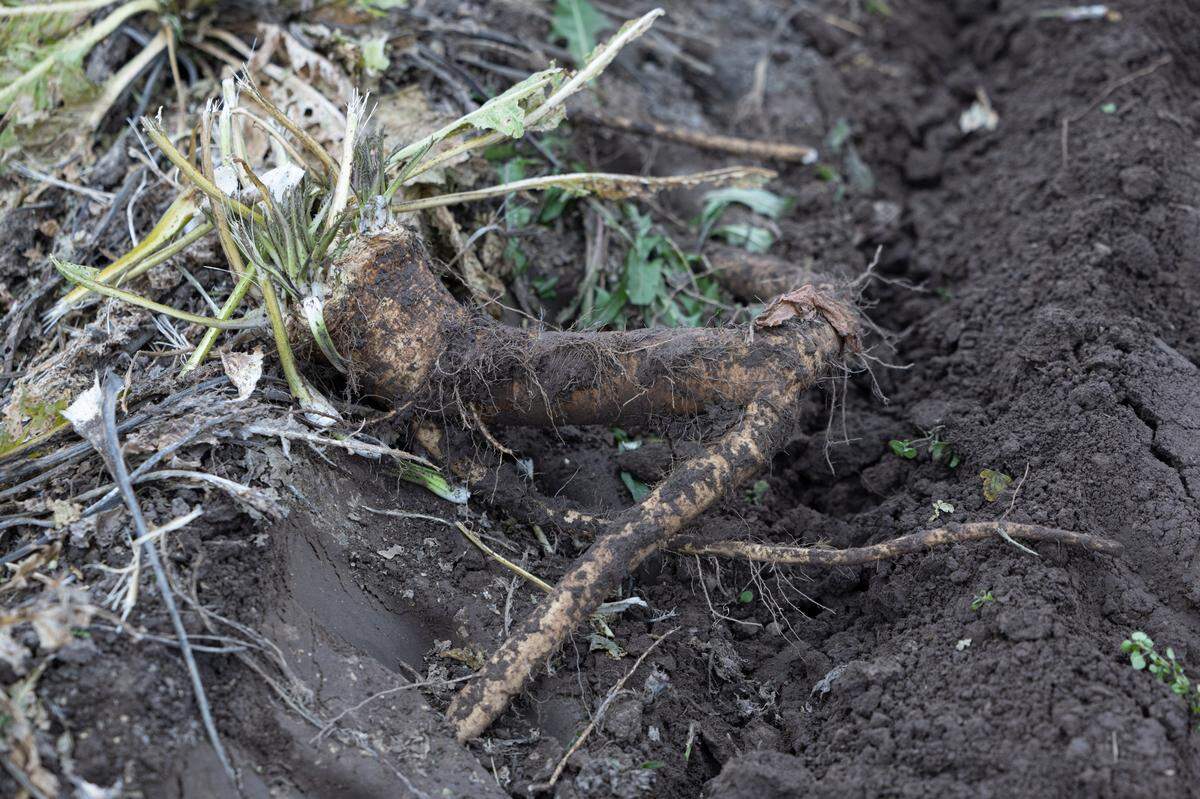
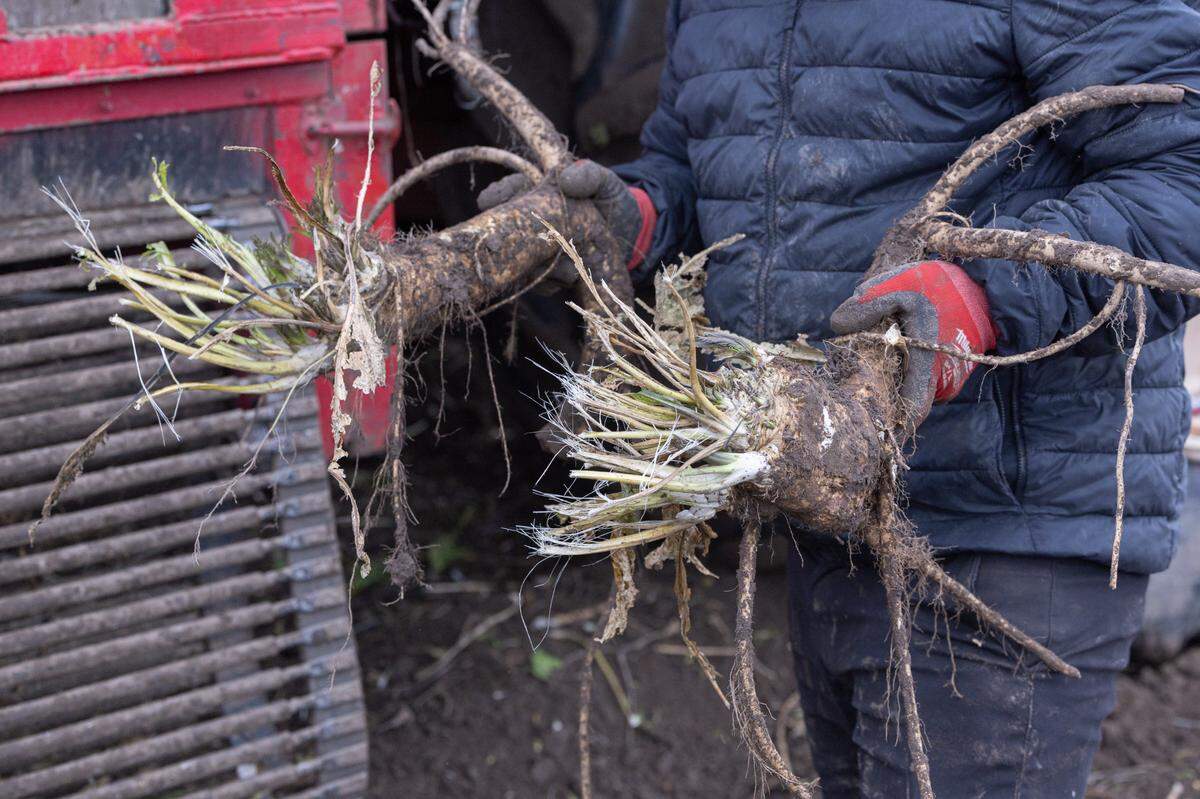
During harvest, these horseradishes are often missed by the tractor and manual laborers are needed to find the ones that were passed over.
During harvest, these horseradishes are often missed by the tractor and manual laborers are needed to find the ones that were passed over. Joshua Carter Belleville News-Democrat
A farm hand holds out two horseradish roots neglected by the harvester. These are likely process grade plants and will eventually find their way into a horseradish or wasabi sauce.
A farm hand holds out two horseradish roots neglected by the harvester. These are likely process grade plants and will eventually find their way into a horseradish or wasabi sauce. Joshua Carter Belleville News-Democrat

This story was originally published December 12, 2024 at 6:00 AM.

Follow More of Our Reporting on Uniquely Belleville

Get unlimited digital access
#ReadLocal

Try 1 month for $1

CLAIM OFFER