
Federal flood assistance denied for residents, businesses in Illinois. Here’s why.
The federal government will not make flood assistance available for residents and businesses in 22 Illinois counties, including the metro-east.
The Federal Emergency Management Agency has denied the state’s request for federal assistance to help individual homeowners and businesses in Madison, Monroe, Calhoun and Jersey counties, plus 18 others.
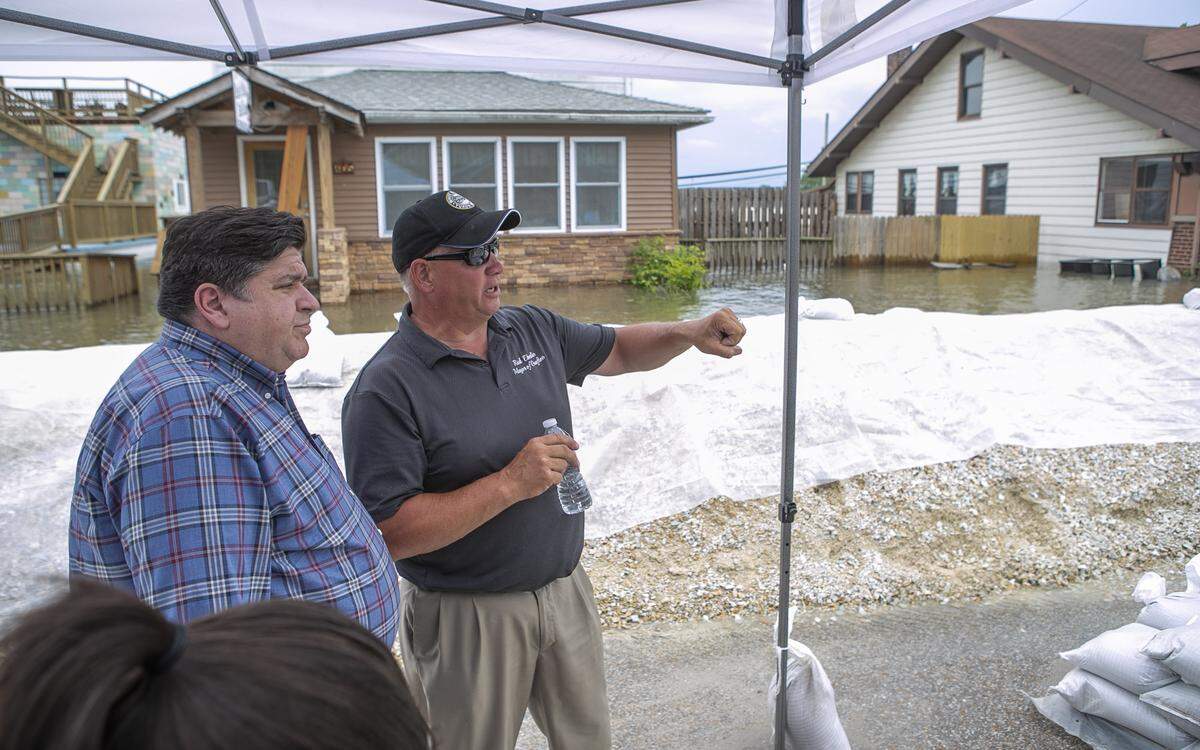
Asked whether the decision will hurt his city, Grafton Mayor Rick Eberlin said, “It has the potential to do exactly that.” He said for some residents and business owners in Grafton, the future is unclear.
“I don’t know how long they can hold on,” he said of Grafton residents he said need assistance to rebuild and repair their damaged homes and businesses.
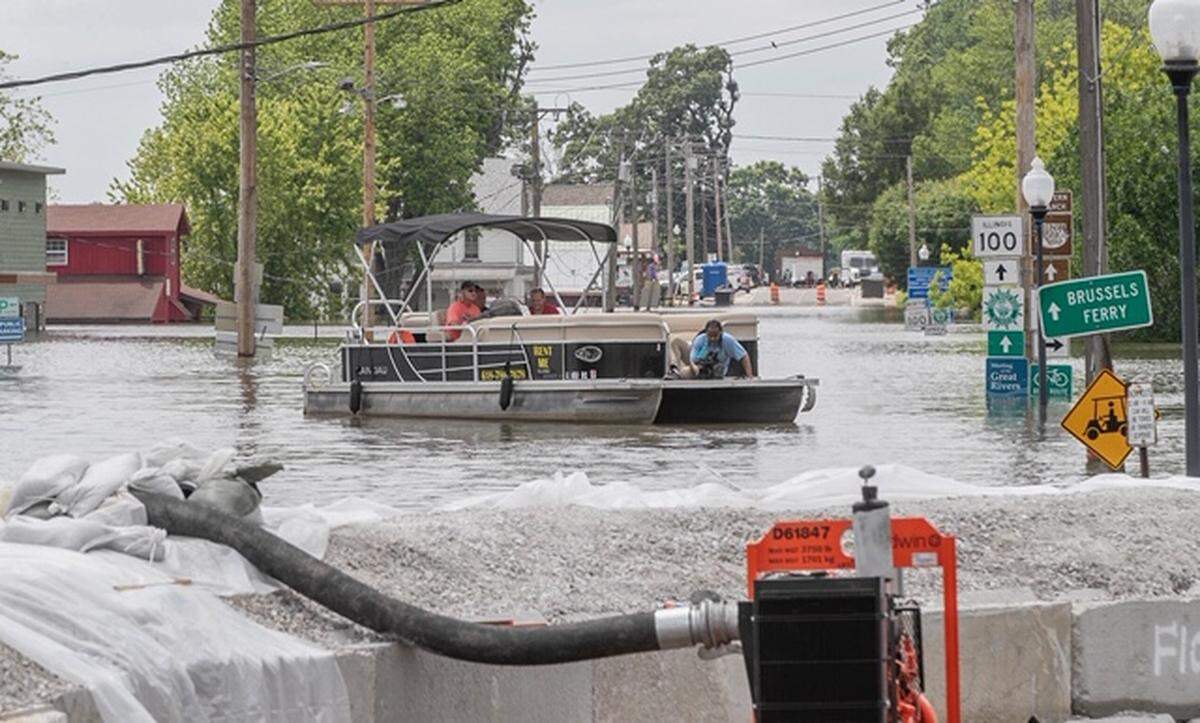
Grafton, which is in Jersey County, was one of the hardest-hit areas by this spring’s floods, considered the second-worst in recent years only behind the Great Flood of 1993. Grafton suffered severe flood damage, leaving many businesses closed for months and homes abandoned. After this year’s 127 days of flooding, some homeowners and businesses said they may not rebuild.
FEMA Associate Administrator Jeff Byard said federal officials determined the impact of this spring’s flooding wasn’t severe enough to make FEMA funds necessary.
“The impact to individuals and households from this event is not of such severity and magnitude to warrant the designation of individual assistance,” he said in a press release.
The state says it plans to appeal.
When an area is declared a federal disaster area, individuals and businesses that experienced damage are eligible for low-interest loans.
The state submitted requests for two types of federal assistance for counties worst affected by flooding: individual assistance and public assistance.
Of the 22 counties for which the state requested individual aid, all were denied. That means no FEMA funds will be awarded to individuals or businesses in the state.
A total of 27 counties were declared disaster areas for public assistance to local governments and public agencies. St. Clair County was among those counties. St. Clair did not seek assistance for individuals because there was not enough flood damage to homes and businesses.
Individual assistance is aimed at helping people and businesses recover, while public assistance provides reimbursement to local governments for disaster-related expenses.
Public assistance is aimed toward reimbursing local governments for funds spent fighting floods or spent on repairs to infrastructure from flood damage.
Requests from local governments must be approved
The federal government approved the state’s request to grant FEMA funds to local governments in mid-September. However, that funding is only granted after a vetting process. FEMA teams are currently in the metro-east working on hundreds of public assistance claims.
In its original request in August, the state put damages to individuals at $8.2 million with damage to more than 1,400 homes and a total of 2.1 million people impacted by springtime flooding.
Madison County Emergency Management Agency interim Director Tony Falconio said roughly a dozen homes and a just a few businesses applied for individual assistance from FEMA, meaning the denial wouldn’t have a massive impact on the county.
He said the levees along the Mississippi River played a large part in that low number.
Illinois Emergency Management Agency Acting Director Alicia Tate-Nadeau said the state is planning to fight “aggressively” on behalf of flooding victims.
“Illinois’ proud and cherished river communities have experienced an unprecedented tragedy at the hands of Mother Nature. They deserve the resources that will allow them to rebuild and thrive,” Tate-Nadeau said. “On behalf of the families of the seven people that died, the individuals who were forced from their homes, and the business owners who have feared for their economic viability, the state of Illinois will aggressively fight on your behalf.”
Falconio said he’s looking forward to the state’s appeal, even though Madison County didn’t have many applications for individual assistance. He said when the federal government makes these decisions, it sets a standard for future disasters and how FEMA assistance is handled.
“I do look forward to the appeal that the state is going for. I look forward to that,” he said. “When something like this gets denied that lays a history for us and gives us a benchmark for future disasters. So it is concerning to us.”
Counties outside of the metro-east included in the state’s request for federal assistance for people and businesses that was denied were Adams, Alexander, Carroll, Hancock, Henderson, Henry, Jackson, Knox, Mercer, Peoria, Pike, Randolph, Rock Island, Stephenson, Union, Whiteside, Winnebago and Woodford.
BEHIND THE STORY
MOREWhy we did this story
The Belleville News-Democrat reported on 2019’s springtime flooding from beginning to end and is committed to continuing that reporting by covering the lasting effects left by 127 days of flooding in the metro-east. This story chronicles the road to recovery for communities and agencies affected.
This story was originally published October 1, 2019 at 10:36 AM.