Magnesium plant and Madison residents expected to settle 10-year-old lawsuit over fire
It’s been 10 years since three Madison residents filed a class-action lawsuit against Magnesium Elektron North America for property damage related to a 2010 fire and explosion at its metal casting plant and rolling mill.
As of this spring, the two parties have reached tentative agreement on a settlement. It’s expected to receive final approval in Madison County Circuit Court on June 25.
The plaintiffs’ attorneys are now posting legal notices, inviting other Madison and Venice residents who suffered damage to join the lawsuit and share in an expected $950,000 award.
“Anyone affected can file a claim,” said Seth Crompton, of Holland Law Firm in St. Louis and Granite City. “There could be up to 30,000 residents affected.”
Covered damages could range from broken windows or foundation cracks caused by the explosion to the cost of cleaning homes or vehicles after magnesium-oxide particulates and other contaminants were released into the air during the fire, according to Crompton.
The lawsuit only addresses property damage, not personal injury.
“This is just a great example of why class actions work,” Crompton said. “No person would be able to take their smaller-size losses to a big company to clean up their house, car, yard or anything like that. But banding together, people can get some sort of compensation if they were affected.”
Both the 2010 explosion and another fire at the plant last year resulted in violation notices from the Illinois Environmental Protection Agency.
In the first case, the company paid a $50,000 fine in 2014 after the Illinois attorney general’s office filed a lawsuit. The IEPA enforcement process is still ongoing in the second case.
Officials at Magnesium Elektron, which now does business as Luxfer Graphic Arts, didn’t respond to a request for comment, nor did attorneys at Gunty & McCarthy in Edwardsville and Chicago who are representing the company in the class-action lawsuit.
John Williams, Monica Harris-Williams and Ramona Sykes, the three original plaintiffs, could not be reached for comment.
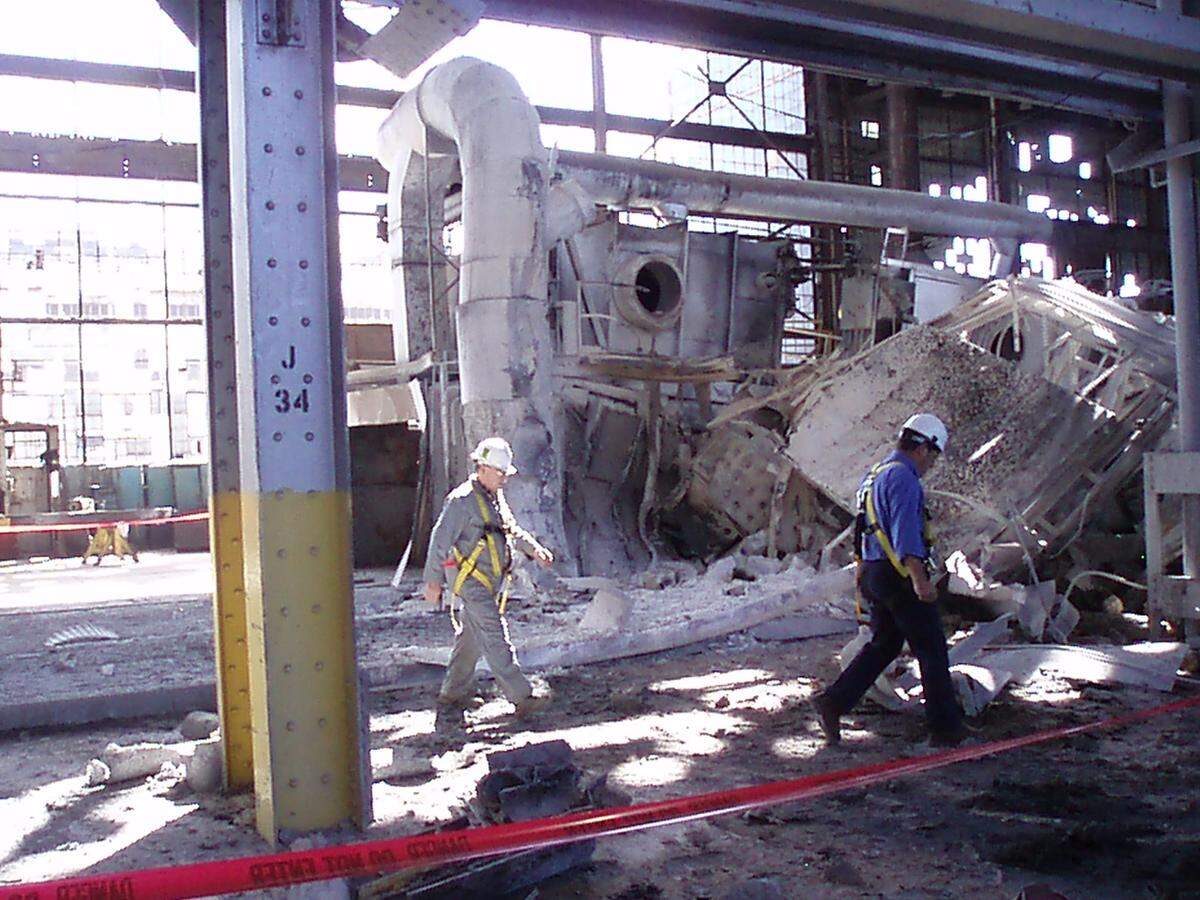
First fire started with furnace
Magnesium Elektron North America is part of the England-based Luxfer Group. Its U.S. operations are headquartered in New Jersey.
In 2003, the company bought the metro-east plant, which casts and rolls magnesium alloy, a type of metal that’s used for everything from cellphones and batteries to automobile parts. The address is 1001 College St. in Madison, but its property also reaches into Venice.
The first fire started in the evening of Oct. 4, 2010, in or around a furnace used to heat large magnesium coils, according to the complaint filed by Holland for the three Madison residents.
“The fire was exacerbated when a water line above the furnace ruptured, allowing water to contact molten magnesium and causing a chemical reaction with hydrogen gas that resulted in a series of explosions,” it states.
“As a result of the explosions and fire, a large plume of magnesium oxide particulates and other contaminants was emitted into the atmosphere, migrating to the nearby communities of Madison, Illinois, and Venice, Illinois.”
At the time, Magnesium Elektron President Chris Barnes said smoke released into the air was “non-toxic” and three employees on duty were unharmed, according to media reports.
Illinois Attorney General Lisa Madigan filled a lawsuit on Oct. 20, 2010, in Madison County Circuit Court, maintaining that the company had violated the Illinois Environmental Protection Act and Illinois Pollution Control Board regulations and endangered the health of local residents.
Four years later, Magnesium Elektron agreed to pay a $50,000 fine under a consent order signed by Circuit Judge Barbara Crowder. The company had proposed preventative measures approved by the IEPA, removed asbestos and arranged for furnace replacement.
“The Defendant does not affirmatively admit the allegations of violation within the Complaint,” the order stated.
Complaint alleges ‘contamination’
The three Madison residents filed the class-action lawsuit on Nov. 4, 2011.
Sykes and the Williamses claimed the Magnesium Elektron fire and explosions left a film of contamination on their homes and vehicles. The complaint also described an unpleasant odor in their homes.
“Shortly after the explosion, Plaintiff Ramona Sykes found a large crack or split in the foundation of her home,” it stated.
Crompton is working on the case with attorney Ann Callis, who is based in Holland’s Granite City office. She was a judge for 18 years and former chief judge in Madison County.
The past 10 years of litigation have included many motions, pleadings, hearings, investigations, document production, reports, expert analysis and mediation sessions with James Radcliffe, retired associate judge in St. Clair County Circuit Court.
“There was a contentious coverage dispute between the defendant and his insurance company that ultimately resulted in a settlement while on appeal,” according to a Holland summary of the case.
The proposed settlement in the class-action lawsuit will go before Judge Dennis Ruth on June 25 in Madison County.
If the settlement is approved, Radcliffe will decide how to divide the $950,000 award, based on claims submitted. Holland is requesting about a third to pay for legal services.
Madison and Venice residents who want to file claims can get more information at www.magnesiumelektronsettlement.com. The deadline is Nov. 17.
Plant handles hazardous waste
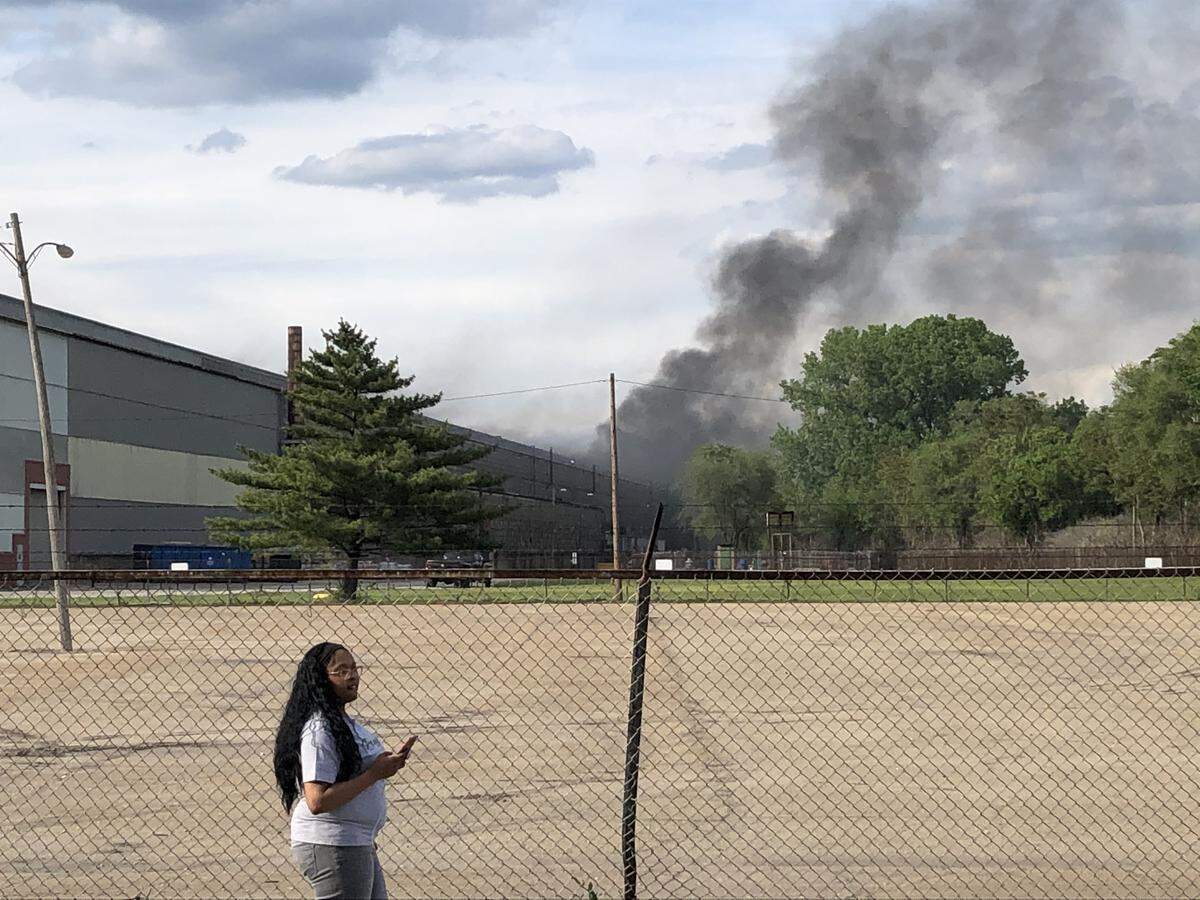
More than 30 fire departments responded to the Magnesium Elektron plant on May 7, 2020, when a fire broke out and spewed thick, black smoke that could be seen from St. Louis.
Firefighters were leery of spraying water, not knowing at first what started the fire and trying to avoid another explosion, according to media reports. No injuries were reported.
The fire wasn’t related to the coil-heating furnace, according to IEPA spokeswoman Kim Biggs.
“It wasn’t an explosion,” she said Monday. “It was material in a drum that was on site for disposal (that caught fire). It had a reaction, and that spread to oil that was also stored nearby.”
The IEPA issued a violation notice for several issues related to the fire and for improper handling of hazardous waste, Biggs said.
The enforcement process is still ongoing because IEPA officials rejected Magnesium Elektron’s proposed terms for a “compliance commitment agreement” in October.
The plant consists of about 10 interconnected buildings that cover 1.4 million square feet. Local residents have argued for decades that its chemical releases are harmful to human health.
The property was formerly owned by Dow Chemical Co. and later Spectrulite Consortium Inc., which sold it to Magnesium Elektron. Dow used some buildings for nuclear weapons and fuel testing in the 1950s and early ‘60s, according to the U.S. Department of Energy.
The U.S. Army Corps of Engineers spent 12 days cleaning in 2000 to eliminate “low-level” uranium contamination.
“Remediation included vacuuming, scraping, and sweeping approximately 60,000 pounds of dust and debris from overhead surfaces, including window ledges, utility conduits, trusses, and cross-member beams,” a USDOE fact sheet states.
“The debris was then shipped to a licensed facility for permanent disposal. In addition, a few pieces of asbestos-containing material were found on some surfaces and were removed along with the dust for proper disposal.”
This story was originally published April 27, 2021 at 12:08 PM.