Local police officers welcome body cams, but only if Illinois rules are fair and funded
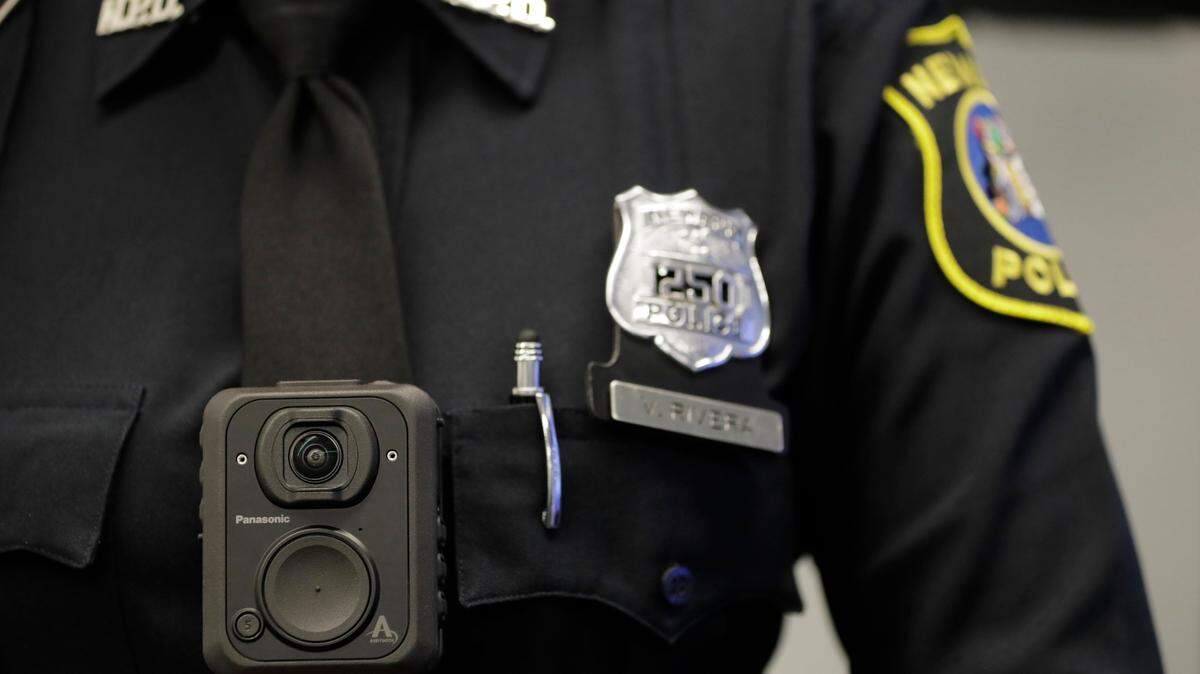
Americans have gotten used to watching body-cam video of traffic stops and other police activity in recent years, especially in high-profile cases such as George Floyd’s death.
But many small police departments don’t have the cameras or the capability for data storage and video management, which can cost tens of thousands of dollars and require additional manpower.
O’Fallon, Swansea and Washington Park are the only cities in St. Clair County where all police officers wear body cams. Cahokia Heights, which was formed recently by the merger of Cahokia, Alorton and Centreville, has started purchasing the equipment.
“We try to keep up to date on the technology,” said Lt. Craig Koch in O’Fallon, which installed its system last fall. “We knew that it was eventually going to be mandatory for us to have (the cameras), and officers actually seem to like them quite a bit.”
O’Fallon, Swansea and Washington Park won’t be alone for long.
Earlier this year, Illinois enacted legislation that will overhaul the state’s criminal-justice system, including provisions that require all uniformed police officers to begin wearing body cams between now and Jan. 1, 2025, depending on local populations.
That makes Illinois one of seven states with such mandates.
The Illinois Legislative Black Caucus, which initiated House Bill 3653, sees cameras as a way to ensure that citizens, particularly minorities, are treated properly by police. Supporters say they also protect officers from false claims of misconduct and possibly help with investigations and prosecutions.
The latter reasoning helped persuade Police Chief Allen Bonds to make Washington Park the first municipality in St. Clair County to get body cams more than a year ago.
“I just felt like we needed them, basically for our protection,” he said, speaking of his 15 part-time officers.
“We deal with these clubs, and you have a lot of issues with intoxicated people. They don’t remember anything until the next day or a week later. They feel like they’ve been violated or something’s wrong, and they want to come at us. This way we have the video as a back-up.”
Less than 10% use cameras
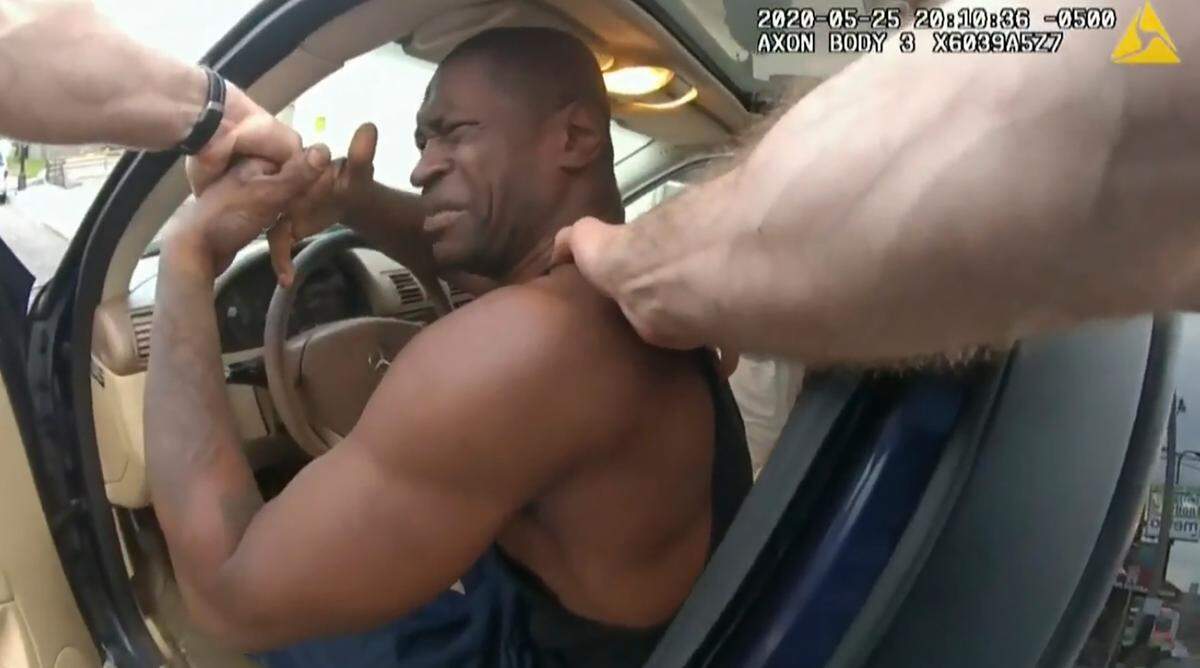
It’s widely believed that video from a bystander’s cellphone and police body cameras led to the recent murder conviction of Derek Chauvin, a white Minneapolis police officer who pressed his knee on the neck of Floyd, a Black man, for more than nine minutes in May 2020 before Floyd died.
Similar footage has been used in other cases involving claims of police misconduct.
The issue of cameras came up locally last month, when a white Red Bud officer shot and killed a white Missouri man after the man, a felon driving a stolen motorcycle and carrying a backpack full of meth, shot another officer in the leg during a struggle.
Randolph County State’s Attorney Jeremy Walker called the shooting “justified” based on preliminary reports.
The man’s family asked to see video, but Walker told them and reporters at a news conference that Red Bud Police Department doesn’t have body or dashboard cameras.
“(That is) not uncommon in a small jurisdiction like this,” he said. “We just don’t have a whole lot of that technology available to us.”
St. Clair County Sheriff’s Department deputies don’t have body cams, nor do police officers in nearly 20 other municipalities in the county, including Belleville, its largest city.
Most, but not all, police departments have dash cams in patrol cars.
Some 75 law-enforcement agencies in Illinois were using body cams in 2019, according to the most recent Body Worn Camera Report of the Illinois Law Enforcement Training and Standards Board.
“That’s less than 10 percent, and that’s what you have (in St. Clair County),” said Ed Wojcicki, executive director of the Illinois Association of Chiefs of Police, noting there are 877 agencies in the state.
Police generally supportive
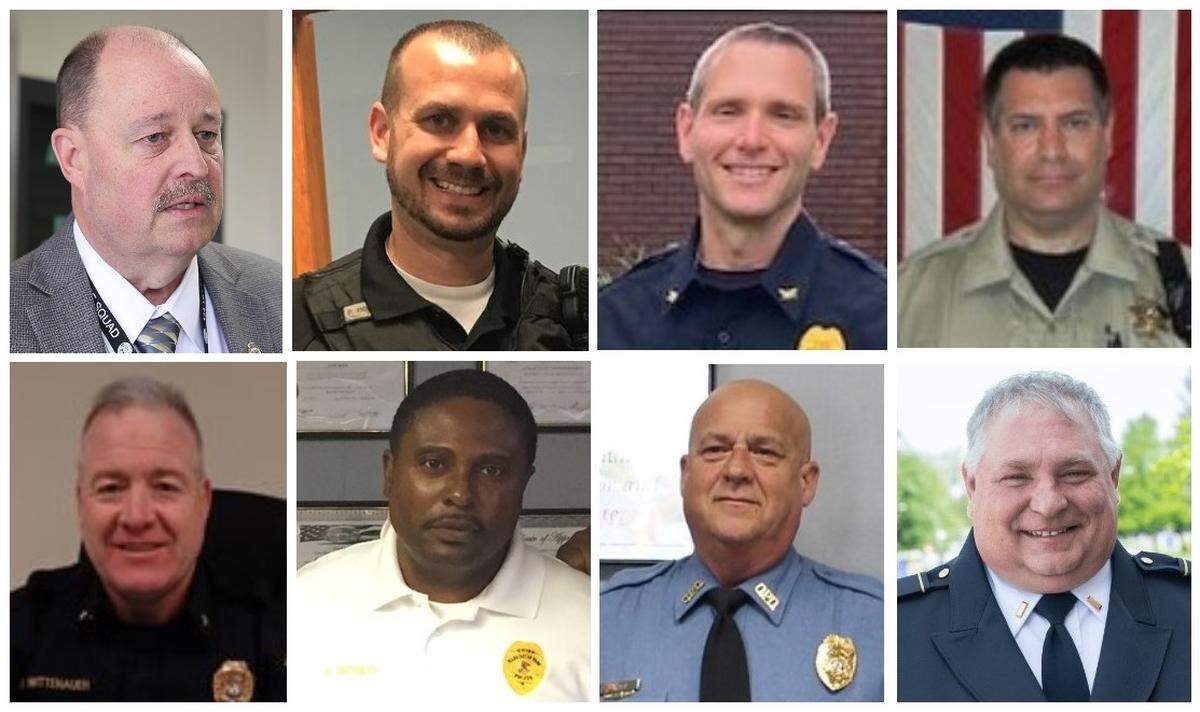
The Illinois Association of Chiefs of Police has supported the use of body cameras as a tool for transparency that can benefit both the public and law enforcement, but it has argued for operational rules that it deems fair and practical.
Springfield, Elgin and other cities with body-cam systems already in place reportedly get fewer complaints from citizens. Some people decide not to file grievances after being invited to sit down and watch video of their interactions with police, Wojcicki said.
Many experts believe that the mere presence of cameras changes behavior.
“There is anecdotal evidence that some encounters and interactions between police and civilians have more civility to them on both sides, not just by the police,” Wojcicki said.
Washington Park’s Bonds said citizen demeanor often changes the second people realize they’re being videotaped by cameras attached to officer’s shirts.
Brooklyn Police Chief Tom Jeffery is generally supportive of body cams, but he says footage can sometimes make police look bad, even when they’re doing their jobs to protect the public.
He gives the example of an officer politely and lawfully asking someone to step outside a vehicle and, after multiple requests, raising his voice or using aggressive language to show authority and gain compliance from a suspect who may be drunk or dangerous.
“When you arrest someone, it’s never pretty,” said New Athens Police Chief Leo Simburger. “It’s always ugly, and people see that and react to it. There’s no nice way to do it.”
Law-enforcement officials also point to the technical limitations of body cams, particularly if only one officer is involved in an incident. Footage won’t show activity behind his back or off to the side.
The more officers with cameras capturing different angles of a scene, the more complete the picture, O’Fallon’s Koch said.
Video can answer many questions, but it can’t settle all arguments over a traffic stop, arrest, search or shooting, said Millstadt Police Chief Alan Hucke. He likens it to NFL instant replays, which still result in “inconclusive” calls by officials on occasion.
Hucke and Simburger think body cameras will be good for police departments if the state of Illinois figures out a way to pay for them because videos can provide evidence that officers acted appropriately (or not) and help with investigations and prosecutions.
Smithton Police Chief Jason Neff expects body cams to improve PR.
“It will show the good job we’re doing and stop the negativity with the general public,” he said.
Law is ‘unfunded mandate’
The Democratic-led Illinois General Assembly passed House Bill 3653 in January, and Gov. J.B. Pritzker signed it into law Feb. 22. It calls for major criminal-justice reforms, including the elimination of cash bail and stricter rules on police conduct and use of force.
The bill also is known as the SAFE-T Act, with the acronym standing for Safety, Accountability, Fairness and Equity — Today.
One of law enforcement’s biggest concerns related to the law’s body-cam requirement is cost.
Camera purchase prices can be as low as $120 each, but that doesn’t include data storage, software, training or video distribution, which may involve the redaction of faces or conversations from some footage before it’s released to the public to protect privacy.
Those expenses can run thousands of dollars a year for small police departments, tens of thousands for larger ones and hundreds of thousands for big cities and state police agencies.
“There’s a whole lot more to this than just buying the equipment,” said Fairview Heights Deputy Police Chief C.J. Beyersdorfer.
O’Fallon initially spent $46,845 on hardware and cameras for its 46 officers, with expected licensing and storage fees of $14,500 per year, according to a city news release. Officials said the cost would be covered by seized funds and government grants.
Swansea’s Board of Trustees voted in December to spend $43,000 over five years to equip its 21 officers with cameras and pay for charging stations and cloud-based data storage. The village installed its system in January.
“Quite frankly, officers have been clamoring for (body cams) for quite some time,” said Deputy Chief Matt Blomberg.
But other communities in St. Clair County, particularly those with low tax bases and tiny police departments, may face bigger challenges meeting the new requirements.
Sgt. Brian Sheridan of Marissa Police Department noted that the village’s three full-time officers don’t have much time for video editing between calls and other business. But he likes the idea of people seeing the situations they deal with on a daily basis.
Brooklyn’s Jeffery worries that some small towns might lose their police departments due to body-cam requirements and other SAFE-T Act regulations, placing more burden on St. Clair County.
The Illinois Law Enforcement Training and Standards Board offers grants to help with the cost of camera purchases, but there’s not nearly enough money to go around, Wojcicki said.
Capt. Bruce Fleshren, spokesman for St. Clair County Sheriff’s Department, which has 55 uniformed deputies, called the new law an “unfunded mandate.”
“Until there’s some funding or other way to implement it, it’s going to be difficult to do,” he said. “It’s going to be a very expensive proposition, and no one’s giving us the money to do it.”
.jpg "IMG_8122 (1).jpg")
Chiefs opposed original bill
The Illinois Association of Chiefs of Police opposed House Bill 3653 due to what law enforcement viewed as serious problems, including some that would have made it difficult to implement body-cam requirements and caused police officers to quit.
One provision allowed officers to be charged with a felony for failing to turn on cameras before all public interactions. That would have criminalized forgetfulness, said Shiloh Police Chief Rich Wittenauer.
Another provision prohibited officers from consulting video while writing incident reports.
“That’s setting someone up for failure,” said Brooklyn’s Jeffery, noting that an officer could be unsure how many times he yelled “throw down your gun” to a suspect under chaotic circumstances, then be accused of lying if his report didn’t match the video.
On Monday, the Illinois General Assembly passed House Bill 3443, a “trailer bill” that changed these body-cam provisions and other controversial parts of the SAFE-T Act enough to get the association’s support.
Pritzker is expected to sign the bill into law.
“We did not budget for (body cameras) this fiscal year, but depending on the way the trailer bill comes out, I wouldn’t be surprised if we budgeted for them next year,” Wittenauer said before learning of House Bill 3443’s passage.
As of 2016, about 47% of the more than 15,000 general-purpose law-enforcement agencies in the United States had purchased body cams, according to a 2018 report by the Bureau of Justice Statistics, the most recent study measuring nationwide usage.
However, supplies, daily usage and procedures vary widely.
In Illinois, officers required to start wearing cameras under the SAFE-T Act include Illinois State Police troopers. The agency estimates it will spend nearly $4.4 million to purchase the equipment and another $1 million a year to maintain the program, the Chicago Tribune reported.
Wittenauer thinks technology has an overall positive effect on policing, if funding is available and rules are fair and practical.
“When car cameras first came on, obviously they benefited us a lot more than they ever hurt us,” he said. “And videotaping interviews ... That’s been a big benefit. I think body cameras will just add to that.”
The table below shows which police departments in St. Clair County have body cams and dash cams:
| City | Police officers (approximate in some cases) | Body cams | Police vehicles (approximate in some cases) | Dash cams |
| Belleville | 40 (uniformed) | No | Not provided | Yes |
| Brooklyn | 5 | No | 5 | No |
| Cahokia Heights | 27 | Some | Unavailable due to recent merger | Some |
| Caseyville | 23 | No | 10 | Most |
| Dupo | 10 | No | 9 | Most |
| East St. Louis | 34 | No | 34 | No |
| Fairview Heights | 45 | No | 17 | Yes |
| Fayetteville | 2 | No | 3 | Yes |
| Freeburg | 9 | No | 8 | Yes |
| Lebanon | 11 | No | 6 | Some |
| Lenzburg | 2 | No | 2 | No |
| Marissa | 3 | No | 5 | Yes |
| Mascoutah | 15 | No | 8 | Yes |
| Millstadt | 9 | No | 8 | Yes |
| New Athens | 4 | No | 5 | Yes |
| O’Fallon | 46 | Yes | 17 (marked) | Yes |
| Sauget | Not provided | No | Not provided | Not provided |
| Shiloh | 20 | No | 12 (marked) | Yes |
| Smithton | 7 | No | 7 | No |
| Summerfield | No response | Unknown | Unknown | Unknown |
| Swansea | 21 | Yes | 11 | Yes |
| Washington Park | 15 (part-time) | Yes | 14 | No |
| St. Clair County | 55 (uniformed) | No | 20 (marked) | Yes |