
Southern Illinois University researchers are looking for the original town of Kaskaskia
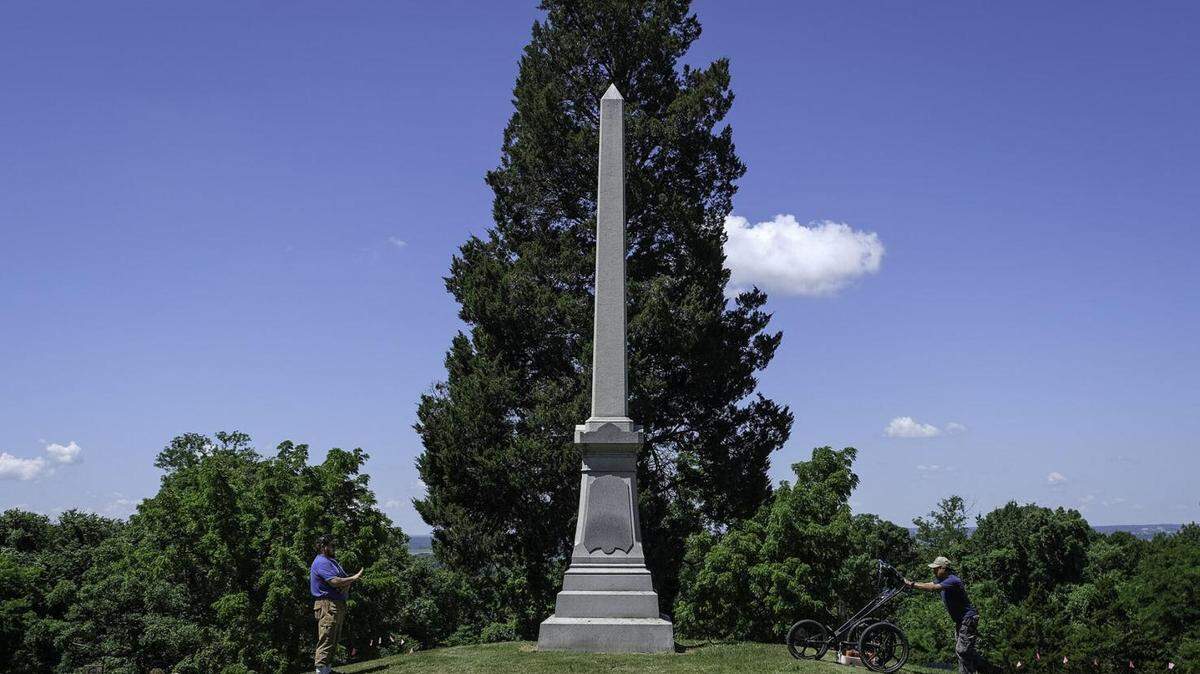
Researchers from Southern Illinois University are working on a project that is a spin-off of work the Center for Archaeological Investigations Summer Field School has done at the Fort Kaskaskia State Historic Site. They are looking for the original town of Kaskaskia.
The town was home to Native American tribes, French explorers, traders and early American settlers. It was mostly destroyed by flooding 150 years ago, but SIU researchers believe much of the lost community of Kaskaskia can still be found. Locating the town could teach important lessons about the history of the region.
Mark Wagner, professor in the School of Anthropology, Political Science and Sociology and director of SIU’s Center for Archaeological Investigations, is leading an investigation of Kaskaskia’s original site in hopes of finding how much of the historic town still survives. Evidence points to the possibility that more than half of the town is beneath the ground on what is now the west side, the Missouri side, of the Mississippi River.
A major aspect of the research project involves training tomorrow’s scientists, an important focus at SIU. Wagner and Ryan Campbell, assistant scientist and associate director of the CAI, are training Rebecca Ramey, a senior in anthropology, to use technology and good old-fashioned map work to unlock Kaskaskia’s mysteries.
“Just because something is gone on the surface doesn’t mean it is gone in the archaeological context,” Ramey said in a press release. “It’s important to remember our state’s history and preserve what we can. It could also potentially help the current residents in Kaskaskia by increasing tourism and boosting their local economy as they have been hit hard by floods.”
Wagner said the research began with investigations at Fort Kaskaskia State Historic Site. The park has portrayed the site of a French fort as the site of two forts. The one built by the French and a second fort built by the Americans.
Through research of the Summer Field School, students have located a second fort, the American fort, up the hill near a cemetery at the park.
Wagner said Kaskaskia Islands visible from the park.
“One of the things I did was look for old maps of the town of Kaskaskia,” Wagner said.
The search for maps of the town of Kaskaskia led Wagner to the Abraham Lincoln Presidential Museum and Library, where he found a very detailed map created in the 1830s.
“People don’t use that map. It is so detailed it has the houses in the town,” Wagner said, adding that the names of the occupants are also on the map.
They also have older maps that have been used in books about the town and its history, but the map from the 1830s has not been used.
He said Ramey is an undergraduate. They applied for a grant from SIU Foundation to do more investigation.
After completing the map research, they would like to possibly do some GIS work on the island.
“This is kind of a long term project,” Wagner said.
Ramey is planning to go to graduate school at SIU and wants this to be her thesis.
Wagner said the Illinois State Archaeological Survey decided Friday morning to have its 2023 conference in Carbondale.
He hopes to present preliminary results of the project at that conference and a state historical conference.
Distributed by Tribune Content Agency, LLC.