28-year-old with schizophrenia to get treatment, not prison time, for Belleville murder
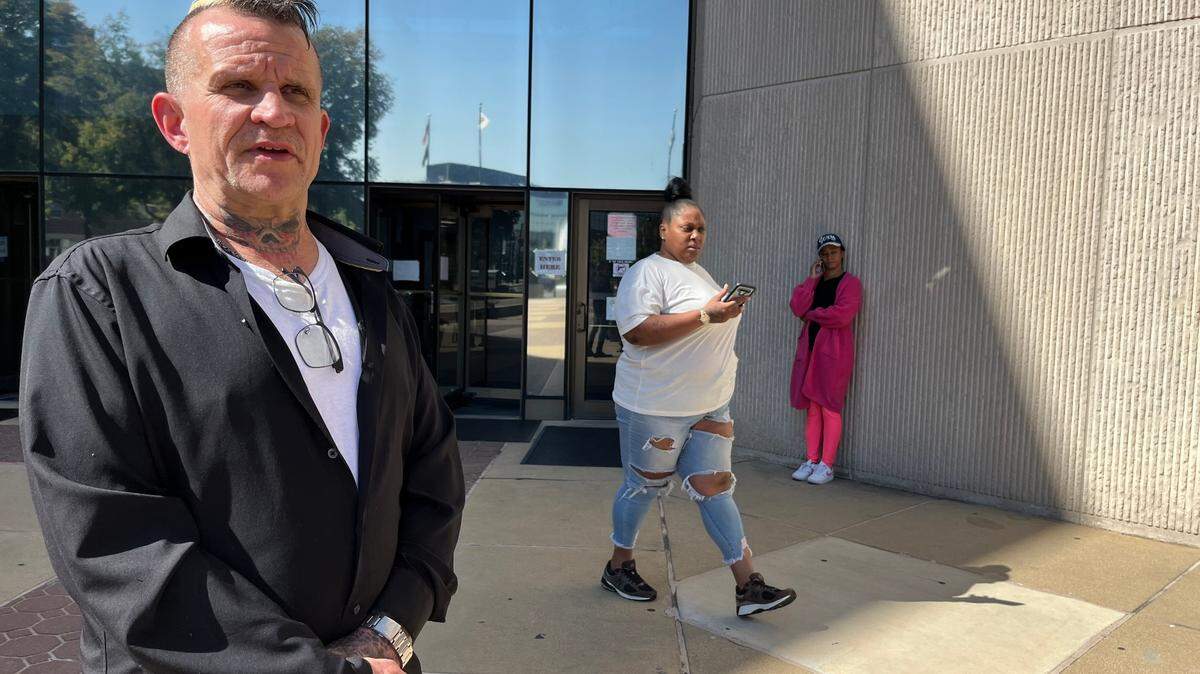
A St. Clair County Circuit Court judge has found a 28-year-old man not guilty by reason of insanity for killing his mother’s friend at her home in unincorporated Belleville two years ago.
Instead of going to prison, Bailey Hamor, formerly of Belleville and East Alton, will likely be hospitalized and treated for mental illness under a plea agreement negotiated by his attorney, Chief Public Defender Cathy MacElroy, and Assistant State’s Attorney Erica Mazzotti.
“I feel like justice has been done,” said Robert Hamor, of East Alton, Bailey Hamor’s father. “They did the right thing. Bailey don’t need to be in prison. He needs help. Save prison for the bad people. He’s not a bad person.”
Bailey Hamor had been diagnosed with paranoid schizophrenia and spent time in psychiatric wards of area hospitals and drug-treatment centers before he was arrested, charged with murder and jailed in 2022.
Circuit Judge Zina Cruse accepted Hamor’s plea on Thursday. She remanded him to the custody of the Illinois Department of Human Services, which will conduct its own evaluation to determine whether he’s subject to involuntary admission or in need of mental-health services.
Doctors could prescribe outpatient or inpatient treatment. But due to Hamor’s history and the seriousness of a murder charge, MacElroy said he’s sure to be sent to one of several state-operated hospitals that treat mentally ill people who have committed crimes.
“He’s going to go to a hospital, and he’s going to go to a hospital for a substantial period of time,” she said.
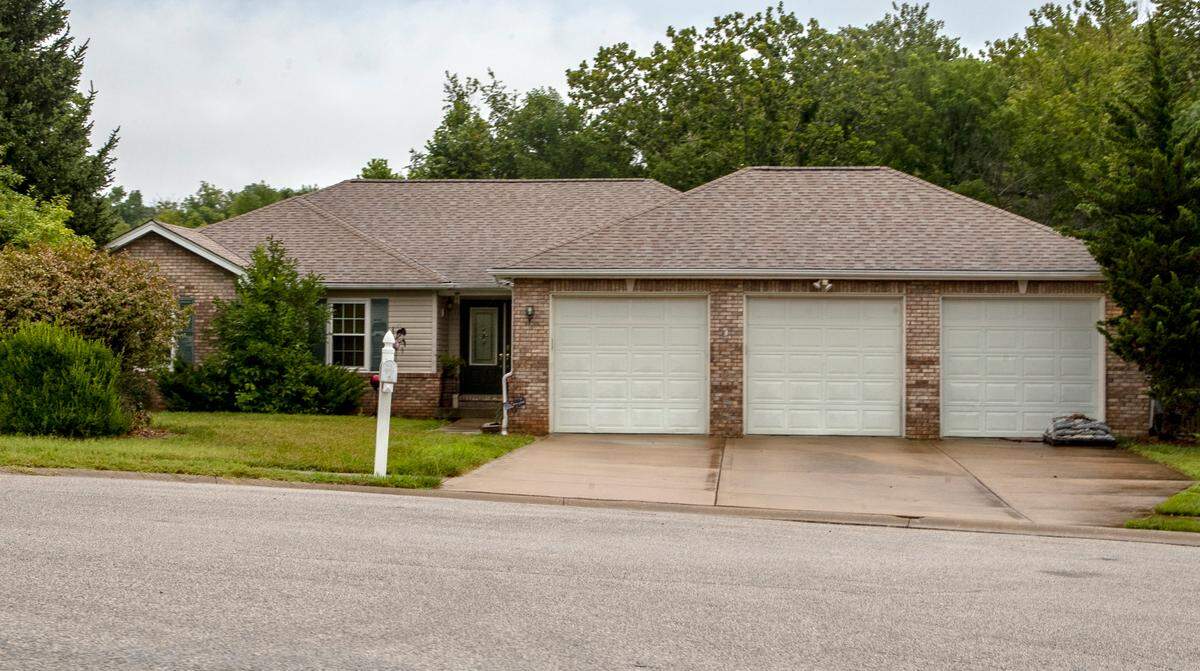
James Goodwin, 33, of Belleville, was stabbed to death in the early morning of July 20, 2022, at the home of Cheri and Loek Koene, Hamor’s mother and former step-father, at 1034 Golfview Court in an unincorporated Belleville subdivision, near Elmwood Golf Course.
Cruse’s order contains a stipulation agreement of undisputed facts, including what investigators would testify about the crime scene and Hamor’s capture in nearby woods if the case went to trial.
The agreement also references a report submitted earlier this month by Dr. Daniel Cuneo, a court-appointed forensic psychologist who examined Hamor and his medical records.
“Cuneo would testify (at trial) that Bailey Hamor was delusional when he stabbed James Goodwin,” the agreement states. “Further, he was actively psychotic when he was arrested. His insight and judgment were grossly impaired the time of the offense due to his mental illness.”
Victim’s family ‘understands’ plea
Goodwin’s family hasn’t spoken publicly about the murder and couldn’t be reached for comment on Hamor’s plea. Goodwin was survived by two brothers, identified as Joe and Ian Bohannon in his obituary.
One brother filed a civil lawsuit for wrongful death in December 2022 against Hamor and Loek Koene, who is now divorced from Cheri Koene. (The brother is identified as Joseph Goodwin in those court records.) His attorney, Thomas Maag, of Wood River, didn’t return calls for comment.
The lawsuit alleges that Loek Koene was partly responsible for James Goodwin’s death because he allowed Hamor to stay at the home, where knives were accessible in the kitchen.
First Assistant State’s Attorney Dan Lewis on Wednesday said the state’s attorney’s office has been in contact with a representative of Goodwin’s family about the murder case.
“The information I have from the attorney involved is that (the family representative) understands why a plea of not guilty by reason of insanity was under consideration,” Lewis said.
“And that’s very different from an outright acquittal. It’s not like Bailey Hamor is going to be out on the streets.”
Hamor underwent treatment for paranoid schizophrenia off and on for years, suffered hallucinations, told doctors and others that he was going to kill someone and at times begged for help with his mental illness, according to family members and police reports.
Hamor also spoke to friends and family of being pursued by Russian and German soldiers he believed were trying to “assassinate” him and a “demon” that was ordering him to kill.
In a phone interview from jail in April, Hamor told the BND that his mental health had improved since he was put on ziprasidone (brand name Geodon), a drug used to treat conditions such as schizophrenia and bipolar disorder.
“I hope that I get my freedom again someday and continue on this medication,” Hamor said. “I understand that they’re not just going to let me go because I’m mentally ill, but I hope I get a merciful, favorable sentence to a hospital.”
Laughing causes disturbance
On Thursday, a bearded Bailey Hamor was led into the courtroom wearing an orange jumpsuit and Crocs, handcuffs and leg irons. He smiled and waved at his father, the only outside person who attended the hearing.
While standing in front of Judge Cruse, Bailey Hamor began laughing for no apparent reason, prompting her to instruct the bailiff to remove him before discussing it with his attorney and allowing him to re-enter.
“(Cruse) was concerned that he wasn’t fit to enter the plea, but I have no doubt about his fitness,” MacElroy said after the hearing. “Do I think he’s having some break-through symptoms? Yes. But the best place for him is a hospital where he can get treatment.”
Robert Hamor attributed his son’s laughing to anxiety, happiness over seeing a family member for the first time in months and relief that he’s going to be getting help with his mental illness.
After the hearing, Bailey Hamor started walking toward his father in the spectator section, but the bailiff stopped him. He then yelled, “I love you, Dad,” before turning and exiting through a back door.
Under Illinois law, not guilty by reason of insanity is a plea in which a defendant admits committing a criminal act but maintains he was mentally disturbed at the time and lacked the mental capacity to have intended to commit it.
That’s different than fitness to stand trial, which refers to a defendant’s ability to understand the nature and purpose of court proceedings and assist in his or her defense.
Judge Cruse found Hamor fit to stand trial last year. He has been held in St. Clair County Jail in Belleville on a $2 million bond since his arrest. He’s now isolated due to problems getting along with other inmates, particularly child abusers, according to his father.
“He’ll be a different person if he gets some fresh air and sun on him,” Robert Hamor said. “That means everything. Could you imagine being in a room, having no sun on your skin, the lack of vitamins, for two years? He hasn’t been outside since he got locked up.”
Robert Hamor said he hopes his son will be sent to Alton Mental Health Center, which is near his home.
Long waiting list for beds
MacElroy’s office began representing Bailey Hamor last fall, when Joseph Reames, a private Wood River attorney retained by his family, withdrew from the case and became a Madison County assistant state’s attorney.
Under an insanity plea, an Illinois defendant’s period of treatment by the Illinois Department of Human Services can’t exceed the maximum prison sentence for someone found guilty. In the Hamor case, that’s 60 years. It’s unknown when he will leave jail.
“The wait list for (beds in mental hospitals) right now is 200 people deep statewide,” MacElroy said. “It’s a four- to six-month wait. DHS would tell you it’s 60 days, but it’s not.”
Patients in such hospitals start with no privileges, MacElroy said. As they become more stable, they can get supervised grounds passes, unsupervised grounds passes, supervised off-grounds passes and unsupervised off-grounds passes.
If and when patients are considered ready to re-enter society, they often go from the hospital to a group home.
“They base it on risk to the public, and DHS is going to take the most conservative approach possible,” MacElroy said. “The more serious the felony, they tend to recommend inpatient treatment for longer periods of time.”
Bailey Hamor lived with his mother and stepfather in Belleville and his father in East Alton. He worked for his father’s landscaping business, studied welding at Southwestern Illinois College for a time and played guitar in a rock band.
St. Clair County sheriff’s deputies responded to a 911 call from the home of Cheri and Loek Koene about 10 p.m. on July 19, 2022.
The Koenes expressed concern about Hamor’s behavior, but Millstadt EMS personnel determined that he wasn’t a danger to himself or others, and authorities left the scene.
The Koenes made a second call to 911 about three hours later to report that Goodwin had been killed. Police found him lying on his stomach in a pool of blood in front of the three-car garage.
“Officers received information that the homeowner’s adult son (Bailey Hamor) grabbed James Goodwin by his neck, stabbed him and ran,” according to the stipulation agreement filed Thursday.
Hamor captured ‘without incident’
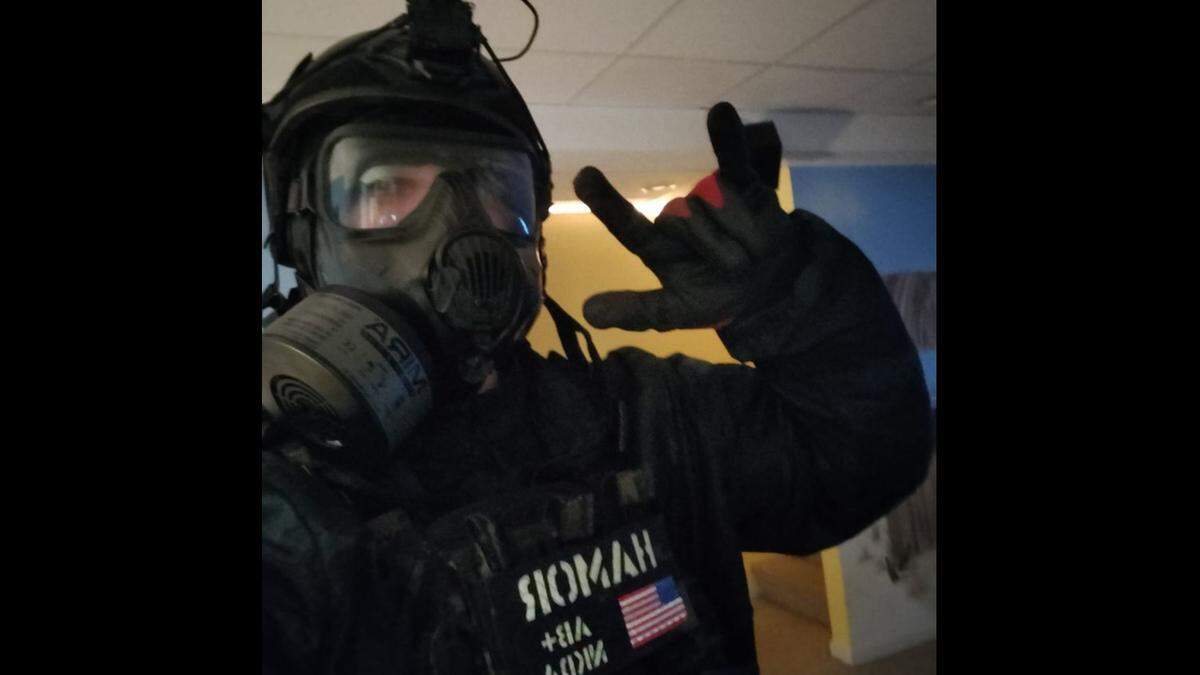
Several law-enforcement agencies helped with the search for Hamor. Officers found him in a thicket of woods near the Koene home, wearing fatigue camouflage clothing, body armor and a ballistic helmet with light.
Hamor complied with commands to surrender “without incident,” according to the stipulation agreement. Searchers found a butterfly knife in the vicinity and a “multi-tool” in his pocket.
Investigator Christopher Hoernis conducted an interview with Hamor and asked him about Goodwin’s death.
“The defendant explained that he comes from a military lineage, that it was his coming of age and right of passage, that it was his civic duty, and that he was fulfilling his obligation to society,” the stipulation agreement states.
A grand jury later indicted Hamor on one count of first-degree murder. He pleaded not guilty.
Judge Cruse issued an order in January 2023 finding that Hamor was fit to stand trial. She referenced her own observations of him, as well as an October 2022 report from Cuneo, who recommended that he be found fit.
“(The psychologist) opines that Defendant understands the nature and purpose of the proceedings against him and has the ability to assist in his own defense,” Cruse stated in that order.
In the April phone interview, with Hamor, he told the BND that he remembered some, but not all, of what happened on July 20, 2022. He declined to speak further about the murder.
Robert Hamor said his son often mentions being “responsible” for a man’s death but gives no details.
“Bailey was interviewed three times by detectives that night and into the next day, and he was all over the place,” his father said. “We may never know the whole story. I’m not sure if he’ll want to talk about it. I’m not going to ask. But I’ve got so many questions.”