EPA dismisses resident concerns over Cahokia Heights sewer repair timeline
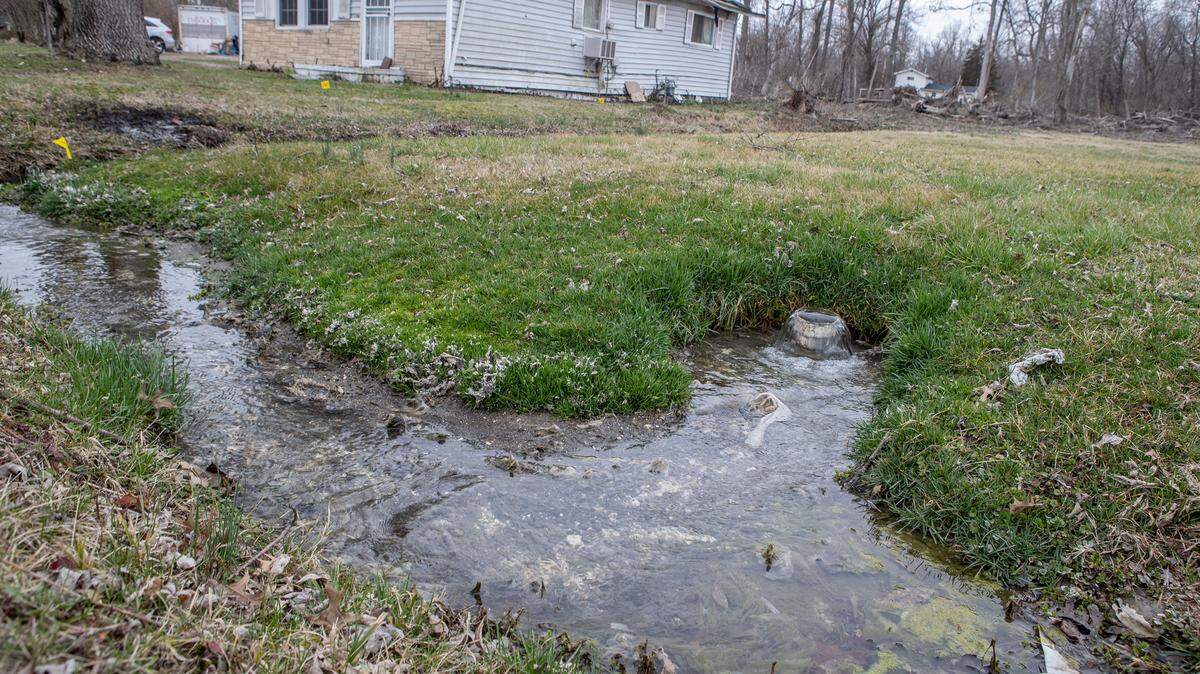
Residents who have advocated for years for solutions to broken city infrastructure that causes sewage to spill from pipes and flood homes and yards say they now worry they will not live to see the work completed.
The city and environmental protection agencies have officially agreed on a plan to service the aging sewer system, despite pushback from the community. Residents have called the repair timeline “unreasonably long.” They say it fails to fully address the problems by excluding projects related to flooding, which causes sewers to fill with rainwater and overflow, among other criticisms.
U.S. District Judge David W. Dugan of the Southern District of Illinois recently approved a settlement agreement the agencies negotiated with Cahokia Heights as part of federal litigation over illegal sewage discharges. The approval comes about a year after the plan was announced and the community was given a chance to comment.
Residents voiced concerns that it could take the city more than two decades to complete the repairs under the agreement, based on estimates they obtained from an environmental engineering firm.
The agreement, known as a consent decree, includes some firm deadlines over the next decade. But the end date for other work is undefined, pending further investigation, planning and government approval.
Meanwhile, sewage spills will continue while repairs are underway, which the city has acknowledged repeatedly in court filings.
“I feel like the city is waiting for us to die before they do anything,” resident Michael Hayes, 80, wrote in his comments on the plan before court approval Jan. 20. “I have had to seriously consider moving out of this area, and I should not have to.”
Cahokia Heights Mayor Curtis McCall Sr. and the city’s attorneys did not respond to requests for comment. The U.S. Environmental Protection Agency also did not respond to multiple requests since Jan. 23. In court filings, the agency largely dismissed residents’ concerns and suggested changes to the plan.
It argued the timeline is “as expeditious as possible.”
Funding for projects remains uncertain
The EPA said it agreed to a flexible schedule — which also allows Cahokia Heights to request delays of up to five years — because the city’s ability to complete projects depends on whether it receives state and federal funding to help cover costs.
“When evaluating the appropriateness of a revised schedule, EPA will consider the public health and environmental impacts of any delay,” the agency stated in its reply to resident comments.
Residents expressed worry about the uncertainty of future funding, as well as money that has been promised, amid cuts to federal spending during President Donald Trump’s administration.
During a visit to the metro-east on Friday, U.S. Sen. Tammy Duckworth vowed to keep pushing for funding to reach the community.
“What happens with the Trump administration is that they try to turn off the funding stream, and then when you pressure them on it, they actually release the funds after all, so that’s what we’re going to have to do,” Duckworth said.
Duckworth and U.S. Sen. Dick Durbin have been advocating for federal funding for Cahokia Heights to address its infrastructure problems since legal action by residents and media coverage beginning in 2020 drew attention to the issue. U.S. Rep. Nikki Budzinski joined their efforts after being elected in 2023.
“They should know that I’m going to fight for them every chance I get,” Duckworth said.
Contaminated water, mold create health concerns
The EPA said consent decree timelines are also affected by the need for more investigation to understand the full scope of work required.
One resident, William McNeal, challenged that explanation, writing in a 2025 court declaration that he believes the city should have already been investigating the problems “for years at this point.”
Residents like McNeal and Hayes formed the group Centreville Citizens for Change to advocate for solutions. Most members are 60 or older.
At least 14 longtime residents have died since the group’s public advocacy began six years ago, according to a court motion Centreville Citizens for Change filed to try to expedite repairs.
Walter Byrd, 68, a past president of the group, said breathing issues are common among them after years of floods bred mold in their homes. He said some now need oxygen machines and attend group meetings virtually by phone or online.
“It seems like it’s taking us out one by one,” Byrd said in a recent interview.
Untreated sewage also carries health risks from bacteria, viruses and other harmful organisms. An independent health study is currently investigating bacterial infections among residents and the possible connection to the chronic flooding from contaminated water.
Federal lawmakers requested a public health assessment from the Centers for Disease Control and Prevention in 2023 following BND reporting on the study’s findings and the lack of a public health response in the community. The CDC hasn’t committed to a review.
Residents want to take city back to court
Some Centreville Citizens for Change members filed lawsuits in 2020 and 2021 seeking to force local officials to fix the decades-long infrastructure issues and pay for property damage.
Dugan was also assigned to those cases. He temporarily halted litigation in 2024 during the consent decree settlement negotiations. On Feb. 2, residents filed a motion asking Dugan to reopen their cases and schedule them for trial, arguing the consent decree does not address their requests for flood mitigation or claims for damages. The judge had not ruled on their filing as of Friday.
Kalila Jackson, one of the residents’ attorneys, called the consent decree a mixed bag.
“On one hand, we are proud of the work that the community did to get to this point, but it’s tragic that for many of the people, the fixes that are contemplated by this consent decree most likely will not take place even within their lifetime.
“We are eager to get back into the courtroom to address the flooding for this community that the consent decree could not, did not and would not,” she added.
Flooding was outside the EPA’s enforcement jurisdiction in this case, the agency stated in court documents. Cahokia Heights has told the court that, although not required under the consent decree, some projects have been planned or recently completed in an effort to reduce flooding.
HeartLands Conservancy completed $400,000 in grant-funded repairs to stormwater infrastructure in Ping Pong, one of the neighborhoods most affected by flooding, according to court records.
The city also plans a project in the Piat Place neighborhood, scheduled for completion in April 2027. Cahokia Heights received a $10 million Community Development Block Grant from St. Clair County to fund the project.
What sewer system repairs are required?
The EPA previously provided this overview of the work the city will be required to do under the consent decree:
Phase 1:
- Begin systematic cleaning of the entire sewer system.
- Develop and implement a plan for a portion of the sanitary sewer system to determine the sources and causes of the city’s ongoing sanitary sewer overflows during wet weather.
- Prepare a report describing in detail the deficiencies discovered during a sewer condition assessment.
- Repair or replace sewer lines and defective manholes
After completing Phase 1, the city will have to determine whether it continues to experience sanitary sewer overflows from capacity issues. If so, the city is required to prepare further plans.
Phase 2:
- Investigate areas of the sanitary sewer system not evaluated in Phase 1 to determine the condition for the remainder of the sewer system.
- Prepare another report and plan describing the corrective measures to repair the additional sewer system defects.
This story was originally published February 9, 2026 at 5:00 AM.