Troy residents grill city, developer about data centers. What did they learn?
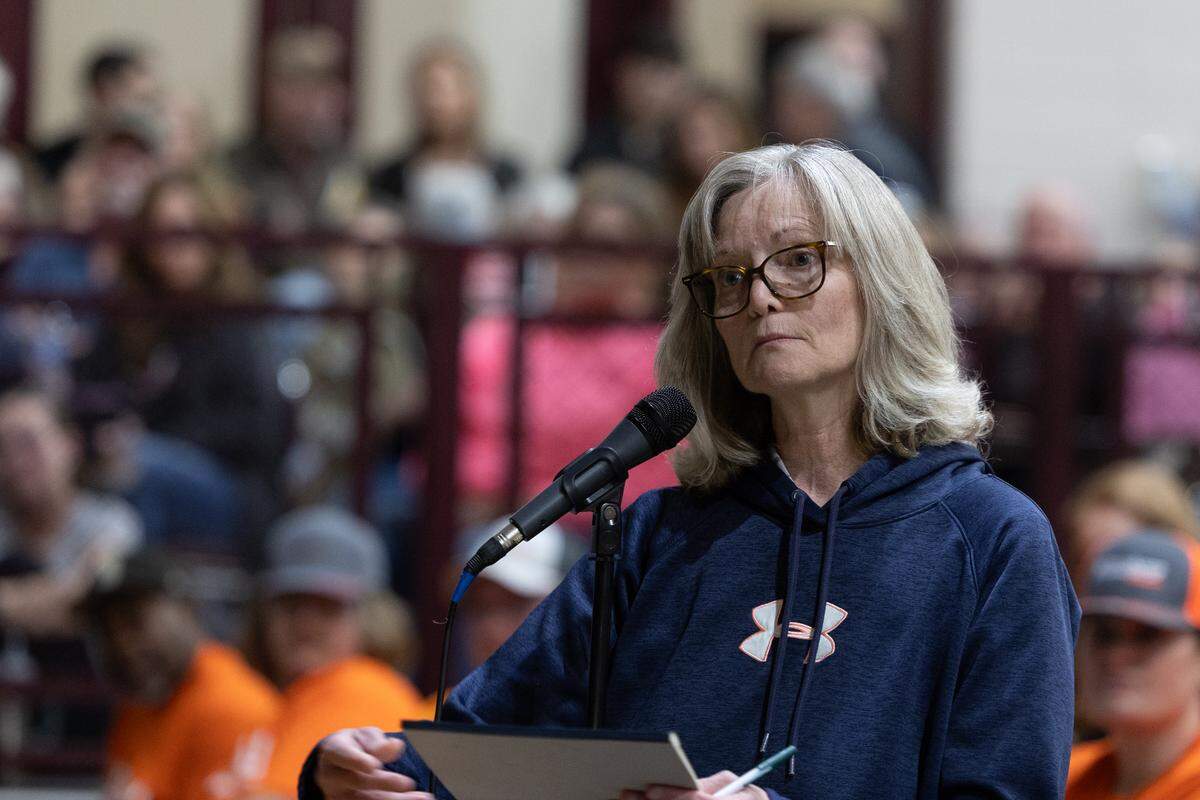
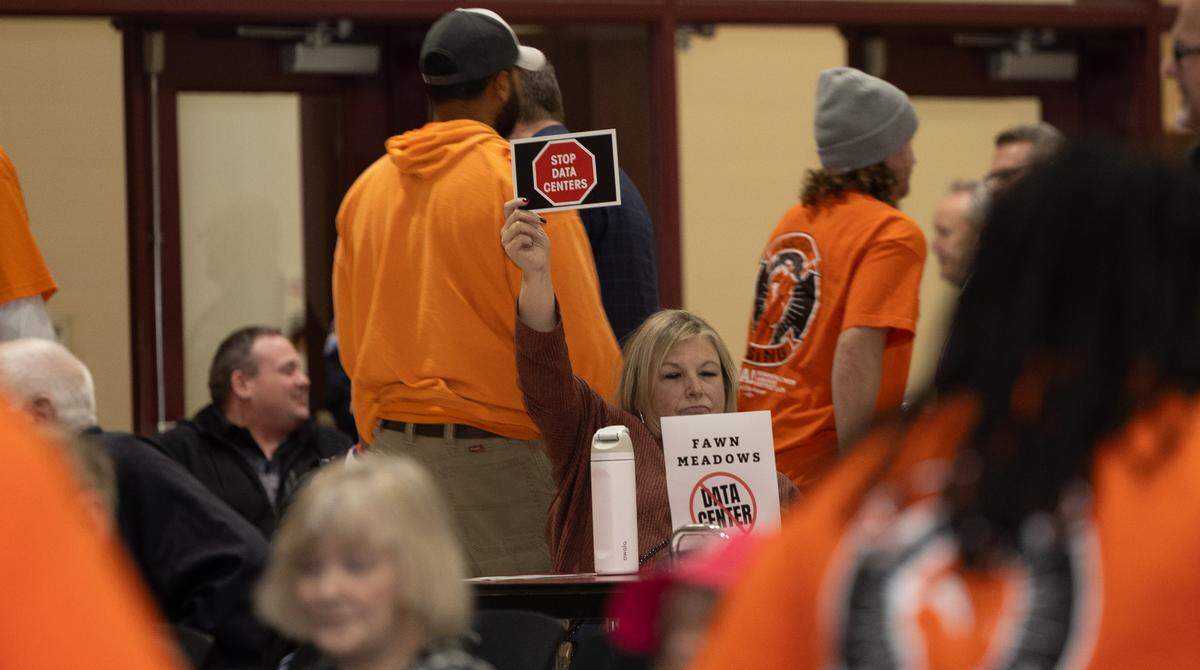
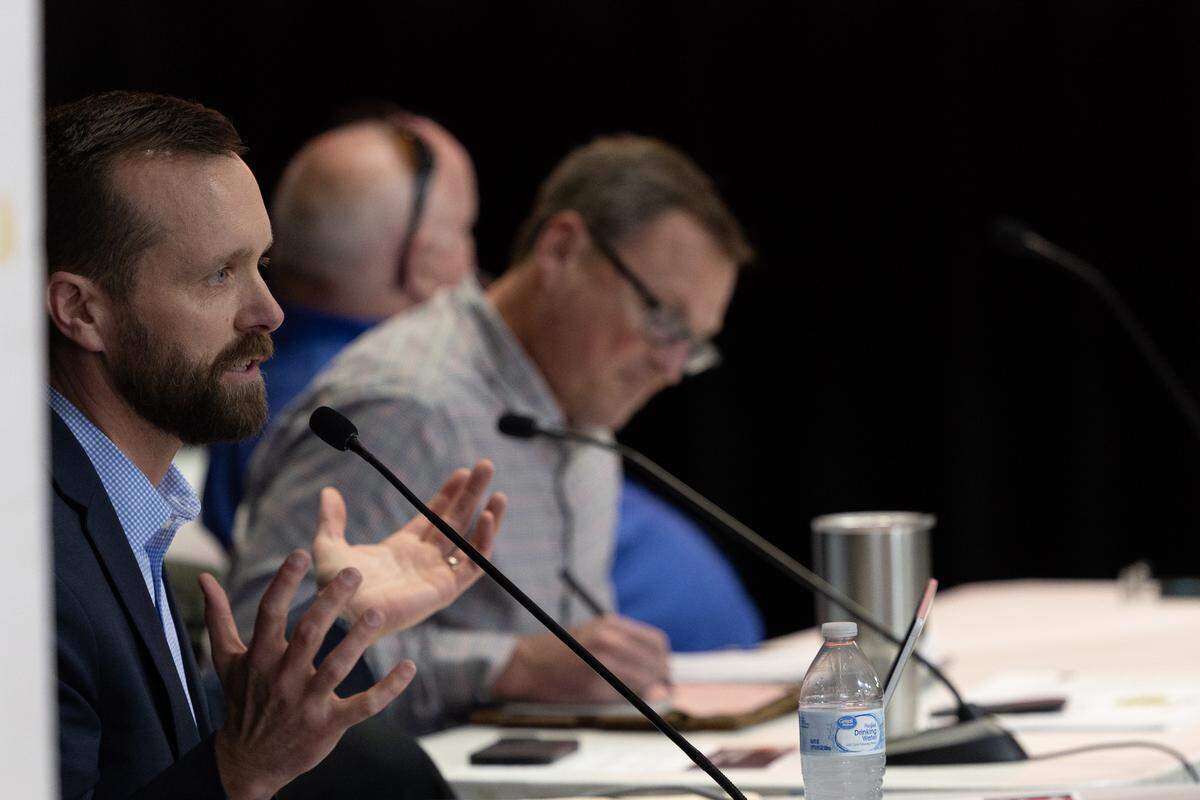
A crowd of about 400 people packed Triad High School on Tuesday night to question officials from Troy, Madison County and Houston-based development company Cloverleaf Infrastructure about a potential project to build a data center in Troy.
Data center construction has become a booming industry as demand surges for artificial intelligence. Servers and storage systems inside data centers are also used for other kinds of computing.
These centers face criticism for their large energy and water consumption needed to power the technology and keep the hardware from overheating.
Tuesday’s forum lasted four and a half hours as citizens pressed for answers about possible utility bill increases, noise controls, how far along the development is in the planning and approval process, and other concerns.
Here’s what they learned:

How far along is the development plan?
Cloverleaf’s role in projects is to prepare a site for a technology company to build a data center by handling land, electricity, and local zoning agreements ahead of time, said company executive Jeff Lake, Cloverleaf’s development principal.
Lake and Cloverleaf energy project manager Louis Linden emphasized that the possible Troy development is in the early stages. They said the company has requested 500 megawatts of power from Ameren, and the utility is currently studying whether the grid could support that demand.
As of Tuesday, Cloverleaf had not yet presented a request for a special-use permit for any potential data center site to the city’s planning committee. But Lake provided an estimate for when that could happen.
"If there’s positive outcomes from conversations, we would be looking somewhere in the next 30 to 60 days for an application," he said.
Lake said the company went “back to the drawing board” on possible site plans recently in response to community feedback.
Cloverleaf is looking at farmland off Formosa Road because of a nearby power substation.
It first considered a plan to build on farmland north of U.S. Route 40 but received pushback from residents and the City Council about its proximity to Bethel Church, which operates a Christian school.
The church’s pastor also did not support the plan, Lake said.
The company plans to have another meeting with residents of the Fawn Meadows subdivision, which borders other farmland Cloverleaf is considering south of Route 40.
Lake said the future data center operator would be identified either just before or just after Cloverleaf’s completion of the zoning process, if the proposal receives public support.
According to Lake, the tech companies Cloverleaf works with are household names such as Amazon, Meta, Microsoft, Google, and OpenAI.
Why is Cloverleaf interested in Troy?
Cloverleaf is working on at least two Madison County sites for data centers, in Troy and Granite City.
Lake told residents Tuesday that the company approached Troy because of power availability in the community and the fact that no data centers have been built in the metro-east yet.
It considered Missouri at one time but decided against submitting a proposal due to what Lake described as a “very crowded queue” of applications from other developers.
How would utility bill hikes and noise be avoided?
Lake said 500 megawatts of electricity for a data center is equivalent to powering 300,000 to 350,000 homes.
Cloverleaf is working with the Southwestern Electric Cooperative to create a special rate structure. Linden said the goal is for the future technology company operator to pay for any infrastructure upgrades needed to power the data center, rather than passing costs on to residents.
He said he does not believe the data center would cause electric rates to increase.
“We’re doing everything we can to ensure there’s no unintended rate consequences from the data center,” Linden said.
Regarding water usage, a new Troy zoning ordinance would require a data center to cool its servers by recycling the same water through a “closed-loop” system.
Lake said closed-loop cooling would require a “one-time fill-up” of around 1 million gallons of water and would only require “topping off” occasionally over the years.

Troy Public Works Director Rob Hancock said city officials were told the data center’s daily water usage would be 32,000 gallons. Cloverleaf compared it to the amount a small office building would use in a document distributed to residents at Tuesday’s meeting.
Troy can produce a total of 4.3 million gallons of water per day, and its average daily usage is about 1.5 million gallons, according to Hancock.
“It should not impact residents’ rates based on an additional 32,000 gallons per day,” Hancock said.
The new city ordinance also sets noise limits of 50 to 55 decibels, which City Engineer Tom Cissell compared to a “quiet office atmosphere.”
Lake said that if a site is selected, additional sound buffers, such as tree plantings, could be considered. Some residents asked about financial penalties for data center owners who violate city rules, arguing that a wealthy company would need larger fines as a deterrent.
If the city receives a proposal for a data center, City Administrator Jay Keeven said Troy will hire an expert to advise officials on additional guardrails it could establish.
Lake said Cloverleaf has covered the cost of a consultant for another community and would be willing to consider it for Troy, too.
How long has Cloverleaf been in business?
Lake said Cloverleaf Infrastructure is a new company, formed in July 2024, with executives who have prior experience at Microsoft and Meta.
It has completed a total of three land sales to tech companies planning to build data centers in communities, according to Lake.
He told Troy residents Tuesday that no community has rejected one of the company’s proposals so far.
But Cloverleaf recently abandoned plans for a possible data center in Wisconsin that had faced community opposition, Wisconsin Public Radio reported last month.
Would union labor be used to build the data center?
Cloverleaf estimates that the possible Troy data center would create about 1,000 construction jobs.
Cissell said the city could require a project labor agreement as part of the development.

How would a data center benefit the community?
Madison County Board Chairman Chris Slusser argued that a data center could result in property tax relief for homeowners.
He shared calculations showing a savings of 30% to 39% — between about $2,000 and $2,500 — for the owner of a $300,000 home. The amount, he said, would depend on whether schools, governments, libraries, and other taxing bodies raise levies to “capture the growth” from an estimated $37.7 million property tax bill the data center would pay.
Several residents questioned whether property values would decrease for homes near a data center.
Slusser said the county assessor is analyzing whether homes in neighborhoods closest to a data center development in a DeKalb, Illinois, industrial district lost value in recent sales.
“So far, she found 10 sales in 2025, and they were all still at market rate,” Slusser said. “We’re going to have a complete list where everybody can examine that. It’s not just me saying it.
“I promise you I will never support anything that’s going to negatively affect property values,” he added.
Keeven said Troy would also collect utility taxes from a data center — an estimated $4 million a year for 500 megawatts of electricity.
He said the city could use that money to lower water and sewer rates or make needed sewer plant upgrades without raising taxes.
Lake said Cloverleaf estimates the data center would create 100 to 200 new jobs.
“In our experience those are accurate numbers,” Lake said. “... If you happen to drive by one and look at the number of cars, it’s not 10 cars, it’s 100.”
He said the company is preparing a report with further information about jobs that it will share with the community.
How can residents voice their opinions?
Planning commission and City Council meetings on any data center proposal Troy might receive will be open to the public, city officials noted Tuesday night.
Meeting agendas are posted on the city’s website. If residents are not able to attend, officials said they can call or email their aldermen with questions and comments. Cloverleaf also created a Facebook page for the development — named “Project Beacon” — which includes Lake’s contact information.
“We want your opinions,” Mayor Dave Nonn said. “You help us make these decisions.”
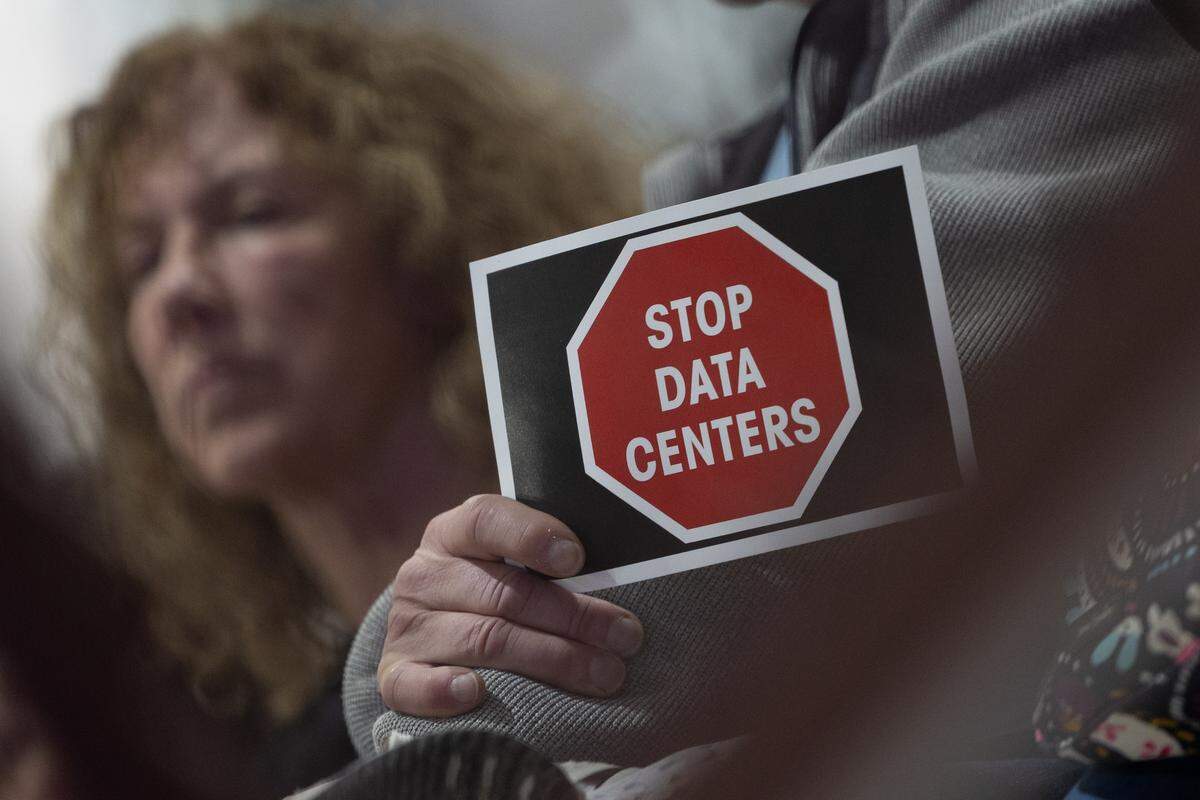
Several residents questioned why the city is still entertaining a possible proposal from Cloverleaf when hundreds of people have spoken out against it at recent community meetings like the question-and-answer forum. The city’s population is about 12,000.
Meeting attendees on Tuesday suggested putting an advisory referendum about data centers on the ballot in the next election. Nonn told them they could bring that request to the City Council to consider.

Nonn said Tuesday that he is still learning about data centers.
Keeven acknowledged that he has not decided if the city should move forward with a development. He noted that Tuesday was the first time he saw property tax estimates and that the city plans to seek expert guidance if it receives a proposal.
“I’ve read articles that have said there are health impacts. I’ve read articles that said that electric rates will go up. I’ve read articles that say water consumption is terrible, and they’re putting pollutants in your sewer system. But I don’t know that everything that I’m reading is accurate,” Keeven said.
This story was originally published February 12, 2026 at 5:00 AM.