Lawmakers call for expanded testing after E. coli found in Cahokia Heights water
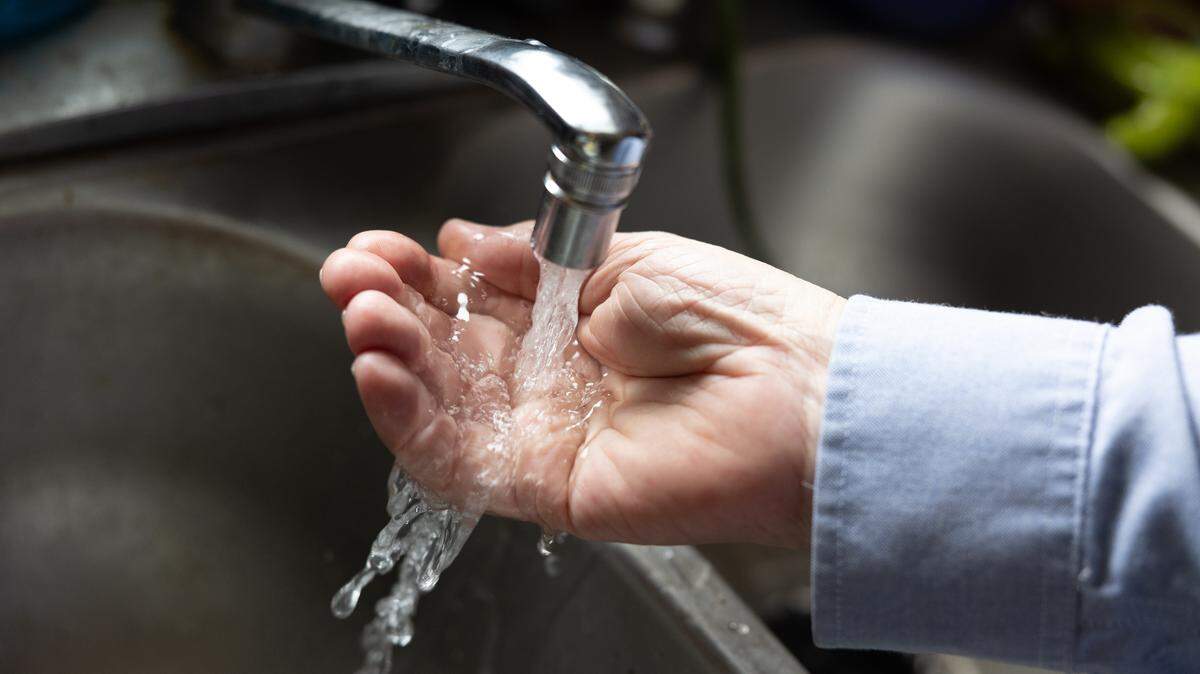
Illinois’ two U.S. senators and a metro-east congresswoman are calling on water providers in Cahokia Heights to increase drinking water monitoring through additional testing after residents found E. coli in samples they collected from their kitchen taps.
The calls for action from U.S. Sens. Tammy Duckworth and Dick Durbin and U.S. Rep. Nikki Budzinski are in response to recent community-organized testing results first reported by the Belleville News-Democrat and its partners, St. Louis Public Radio and the Illinois Answers Project.
The community testing detected E. coli in eight of the 118 samples collected from 23 homes over seven months, from June to December. Six of the community’s eight E. coli-positive samples came from the same home in the former city of Centreville.
Their findings contradict test results from the city’s two water providers — private company Illinois American Water and the city of Cahokia Heights. Public records show the water providers’ sampling outside homes has not detected E. coli in treated drinking water in the past 15 years.
The utilities said in response to the community findings that their water meets regulatory standards.
Lawyers Nicole Nelson, Kalila Jackson and Kennedy Moehrs Gardner and community organizer Maliaka Hill from the nonprofit Equity Legal Services led the water testing program with resident participants and volunteers.
They said Equity Legal Services plans to share the data with the Illinois Environmental Protection Agency and seek regulatory action in response to the findings.
The community testing also found total coliforms, a group of bacteria common in the environment, in 26 of the water samples. Regulators say they are generally not harmful, but their presence signals a potential problem with equipment or treatment systems.
Some kitchen tap water also did not meet the minimum state standards for its disinfectant, chlorine, to effectively kill germs as the water travels through pipes to homes, according to the results.
Residents have been raising concerns about their drinking water for years because of longstanding infrastructure problems in the community. Heavy rain forces sewers to overflow onto streets and flood into residents’ yards and homes.
“The only way they can correct this is by doing right by our community and giving us safe water that not only is safe in their plant, but making sure it’s safe as it’s going from their plants to reach residents’ homes,” longtime resident Yvette Lyles said.
The U.S. Environmental Protection Agency previously required increased water monitoring in both water systems over concerns about possible contamination until three years ago. The EPA released Illinois American Water from the mandate in 2023 after determining it met the terms of the order.
Illinois American provides water to residents in the former city of Centreville, where residents say sewage backups have been happening for decades before Centreville, Alorton and Cahokia merged in 2021 to become Cahokia Heights.
The city of Cahokia Heights remains under the EPA order for water monitoring while work on its drinking water infrastructure is ongoing.
Federal lawmakers react to water quality concerns
Duckworth and Durbin have advocated for federal funding for Cahokia Heights to address its infrastructure problems since resident legal action and media coverage beginning in 2020 drew more attention to the issue.
Budzinski joined them in seeking funding and resources when she was elected in 2023. Her congressional district includes Cahokia Heights.
Together, Duckworth, Durbin and Budzinski in 2023 asked the Centers for Disease Control and Prevention to investigate how decades of flooding and exposure to sewage have affected Cahokia Heights residents’ health.
Their request followed a BND investigation that found residents were being exposed to bacteria and parasites, according to a Washington University health study, while public health agencies failed to act. The CDC has not committed to a review.
In a recent statement, Duckworth said finding E. coli in drinking water is “unacceptable” and that further monitoring must be done.
“For years I’ve been working to bring awareness to the water infrastructure problems that plague the Metro East and bring in more funding and oversight. I’ve been on the ground and seen firsthand the devastation,” Duckworth said. “It’s absolutely unacceptable residents in Cahokia Heights are finding dangerous E. coli in their drinking water, just as it’s been unacceptable for residents to have sewage backing up in their homes.
“It’s clear that we need a whole of government approach, bringing together federal, state and local agencies to support a full, comprehensive overhaul of the region’s water infrastructure. ... In the meantime, further monitoring must be done to understand the severity of this problem, and I will continue pushing at all levels of government to ensure we get the answers residents deserve.”
Durbin also called for more testing from water providers, saying in a statement that the community’s results “raise serious alarms.”
“No one should fear that their drinking water may contain harmful bacteria when they turn on the tap,” Durbin said. “Community reports of contaminated water raise serious alarms, and Cahokia Heights’ water providers should immediately expand water testing to ensure that residents can access safe water in their homes. I standby to provide assistance to state and local partners in any way possible.”
Budzinski described the community’s findings as “incredibly concerning.” She said in a statement that she would contact the state and water providers to ensure additional testing can happen.
“The results of these tests are incredibly concerning. Everyone deserves access to clean, safe drinking water, and the people of Cahokia Heights have suffered these challenges for far too long,” Budzinski said. “This situation further underscores the urgency of our ongoing effort to push the CDC to conduct a public health assessment of the region. In the short term, I will be reaching out immediately to the state and utility to ensure additional, thorough testing can be conducted.
“The work continues to secure the federal resources needed to address the water infrastructure crisis in the community as a whole.”
In a statement responding to the lawmakers’ calls for action, Equity Legal Services praised Duckworth but offered some criticism of Durbin and Budzinski.
“Equity Legal Services appreciates the attention that federal leaders are now bringing to the recently released community water testing results,” the community nonprofit stated. “We especially want to acknowledge the engagement of U.S. Senator Tammy Duckworth’s office, her dedication to community-centered leadership, and her office’s work to ensure that residents’ concerns are taken seriously and addressed with urgency.
“We stand ready to work with any elected official who is willing to engage directly with residents and prioritize the outcomes the community itself is calling for. At the same time, it is important to recognize that the offices of U.S. Senator Dick Durbin and U.S. Representative Nikki Budzinski have attended community meetings for years where residents raised these same concerns about water quality and repeatedly shared their experiences, fears, and requests for action. Yet, until very recently those concerns were not reflected in public calls for stronger oversight or intervention.”
The organization added that calls for increased water testing are helpful, but it believes the community needs “an immediate public health response,” including a public health emergency declaration and bottled water distributions.
“Families should not have to wait for additional rounds of testing to be provided with access to clean, safe drinking water,” Equity Legal Services stated.
Lyles, a resident of more than 30 years, agreed.
“We’ve already proven it over and over,” Lyles said of the Washington University health study and community water testing. “How many more tests do we have to take? Why can’t you take the scientific, proven facts?
“We need more than bottled water,” she added. “We need to have what we deserve: clean, uncontaminated water.”