Raw sewage floods the homes of Centreville residents. Why hasn’t it been fixed?
READ MORE
More coverage on flooding in Cahokia Heights
Expand All
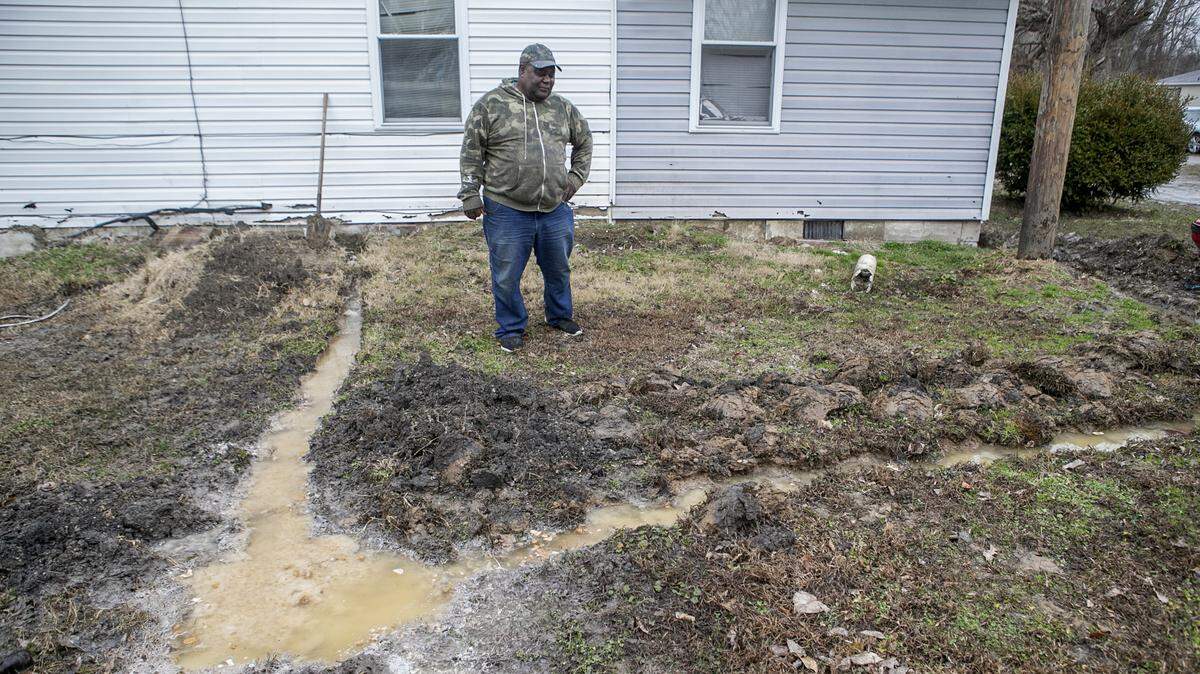
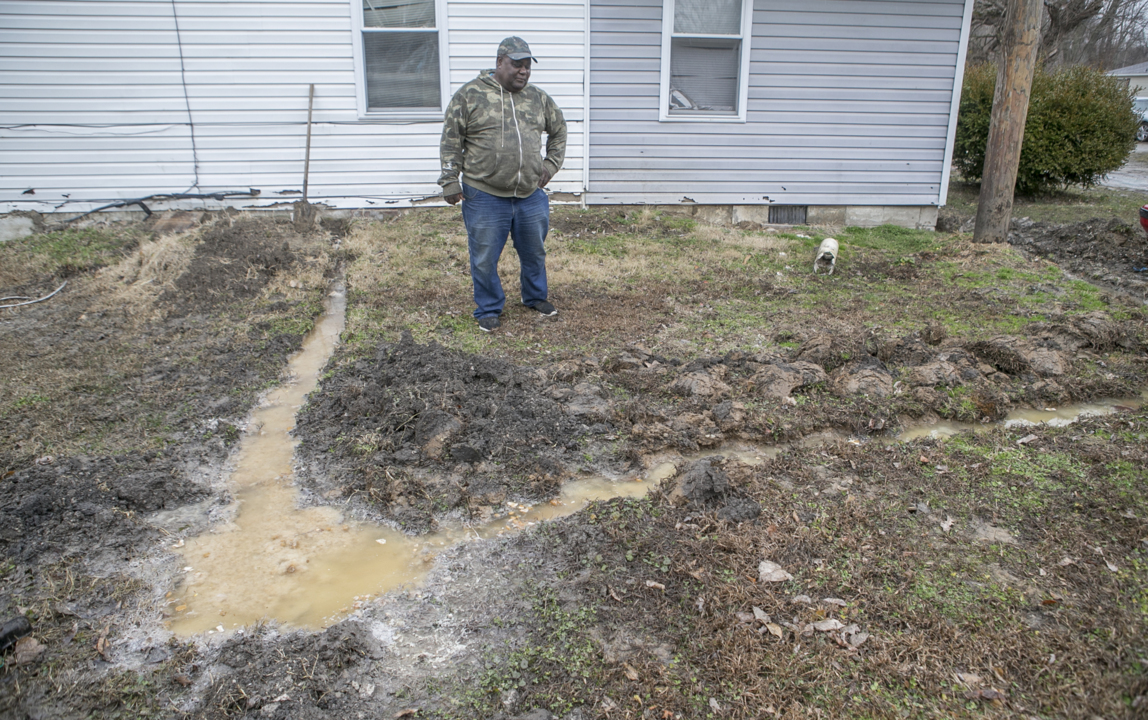
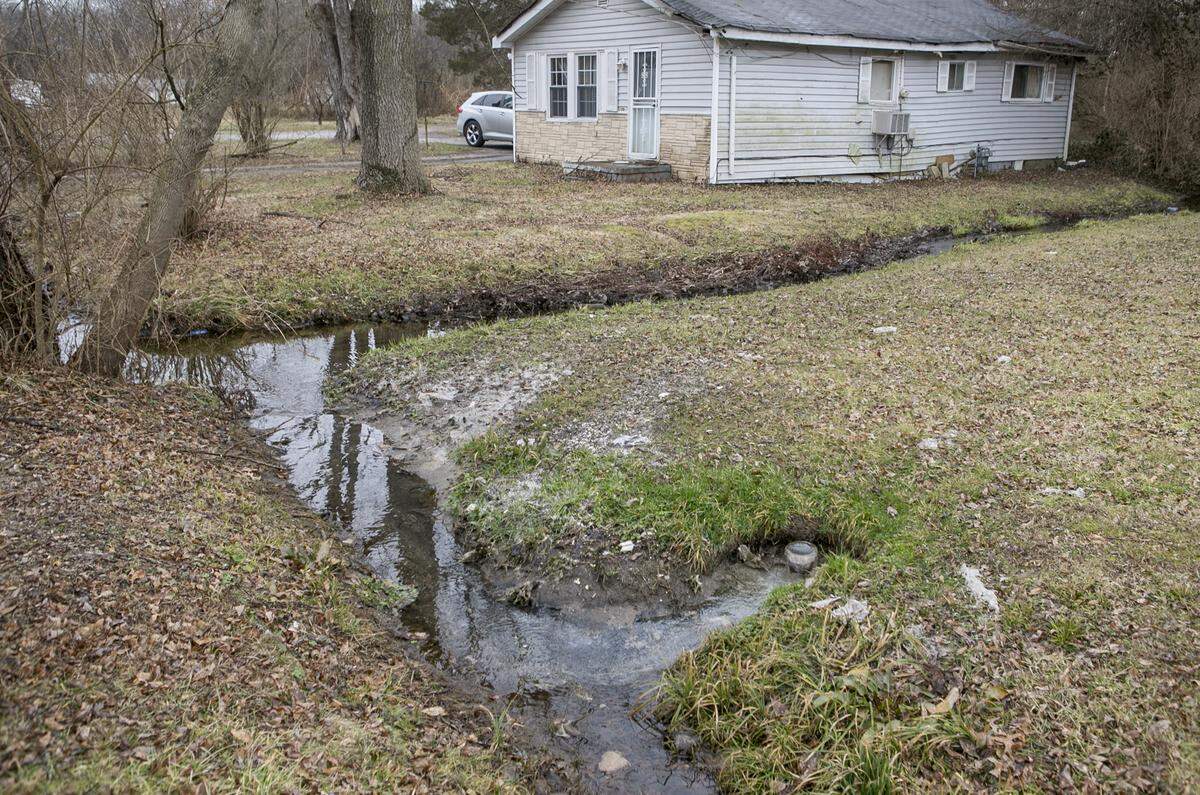
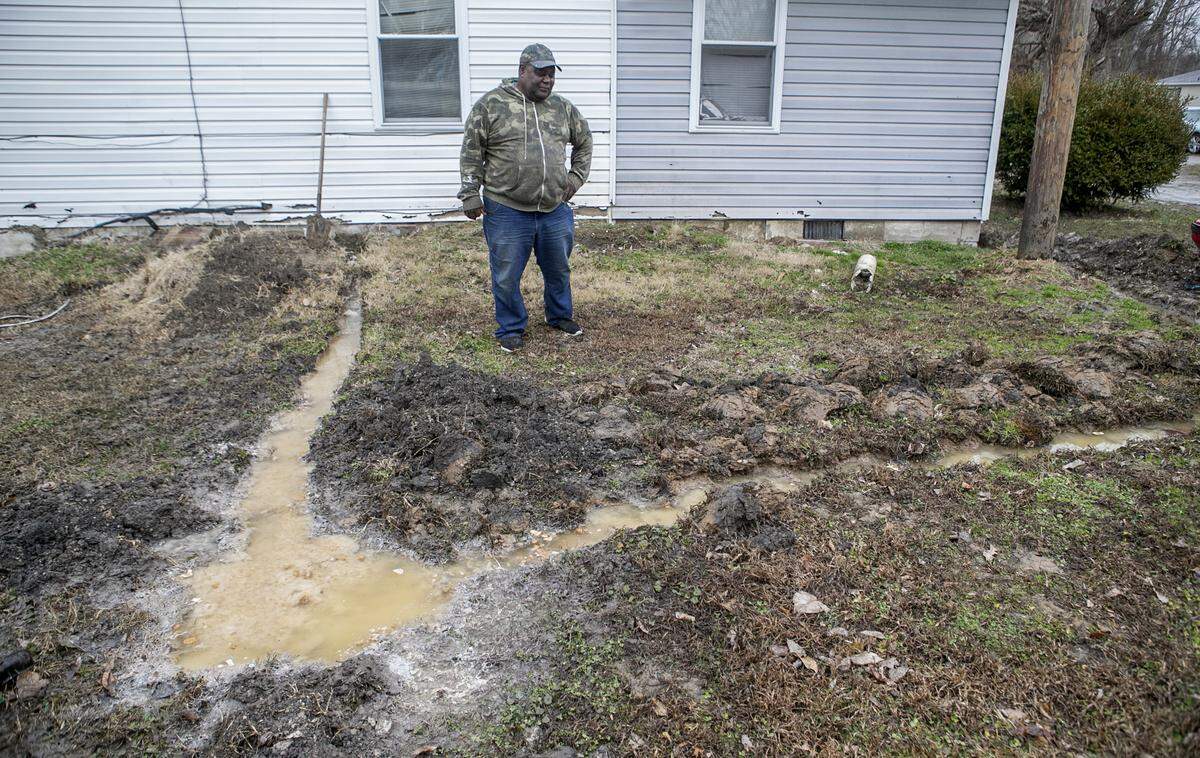
Two makeshift dirt drains filled with human feces and toilet paper lead away from Walter Byrd’s two-story home on 85th Street in Centreville.
The drains are part of Byrd’s last-ditch effort to keep sewage from overflowing onto his property and into his home, which has happened repeatedly during the past six years.
“It’s hard,” Byrd says as he looks over his sewage-covered lawn. “Sometimes you just want to sit there and cry or grab a bottle.”
Stories like Byrd’s are common in northern Centreville, a St. Clair County community of mostly low-income and African-American residents.
People who live in at least 54 homes in the 4.29 square mile area struggle with flash flooding, raw sewage in yards and homes that does not drain away and drinking water they don’t trust, according to residents and two lawyers who have taken up their cause.
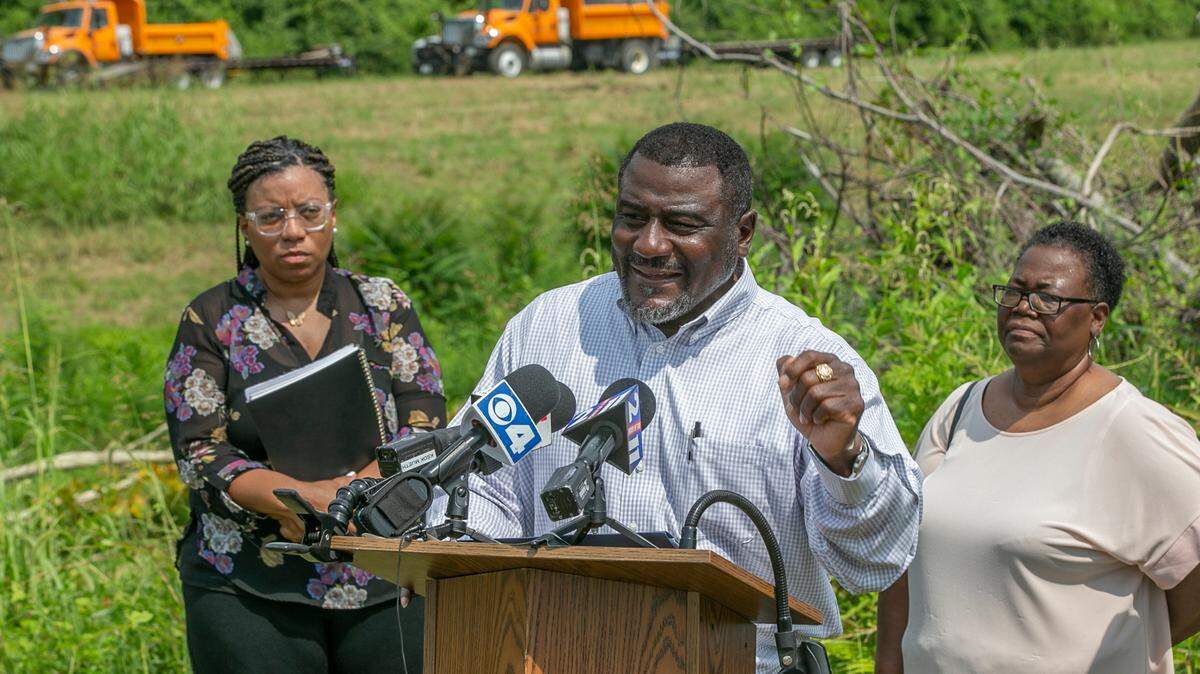
“We have residents who have raw sewage coming up into their lawn, into their ditches and their homes,” said Nicole Nelson, one of the lawyers. “They are fed up, they’re tired of feeling like they’re not being heard, not feeling like there is a solution and being told it’s OK for them to continue to have to live like this.”
Residents say failed infrastructure and decades of neglect by public agencies have destroyed the community and made living there nearly impossible.
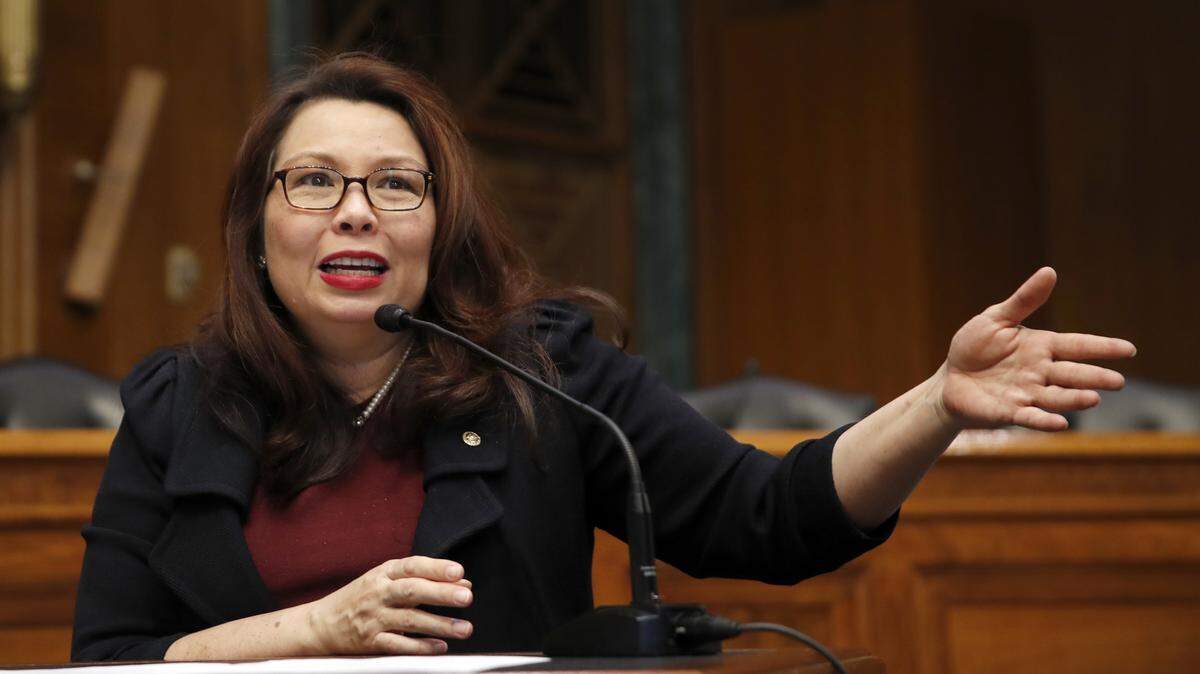
Centreville’s flooding problems are bad enough that U.S. Sen. Tammy Duckworth and the Illinois Environmental Protection Agency said they have started investigating.
Nelson and another lawyer, Kalila Jackson, say they have been trying to get help for Centreville residents for nearly two years. Nelson is the founder and executive director of Equity Legal Services, a nonprofit that provides free legal services for low income people. Jackson works for the Metropolitan St. Louis Equal Housing and Opportunity Council, a not-for-profit agency that fights against housing discrimination.
Nelson and Jackson have enlisted scientists, environmentalists and, more recently, politicians in hopes of finding a solution to the constant flooding issues the lawyers and residents say have come from faulty infrastructure.
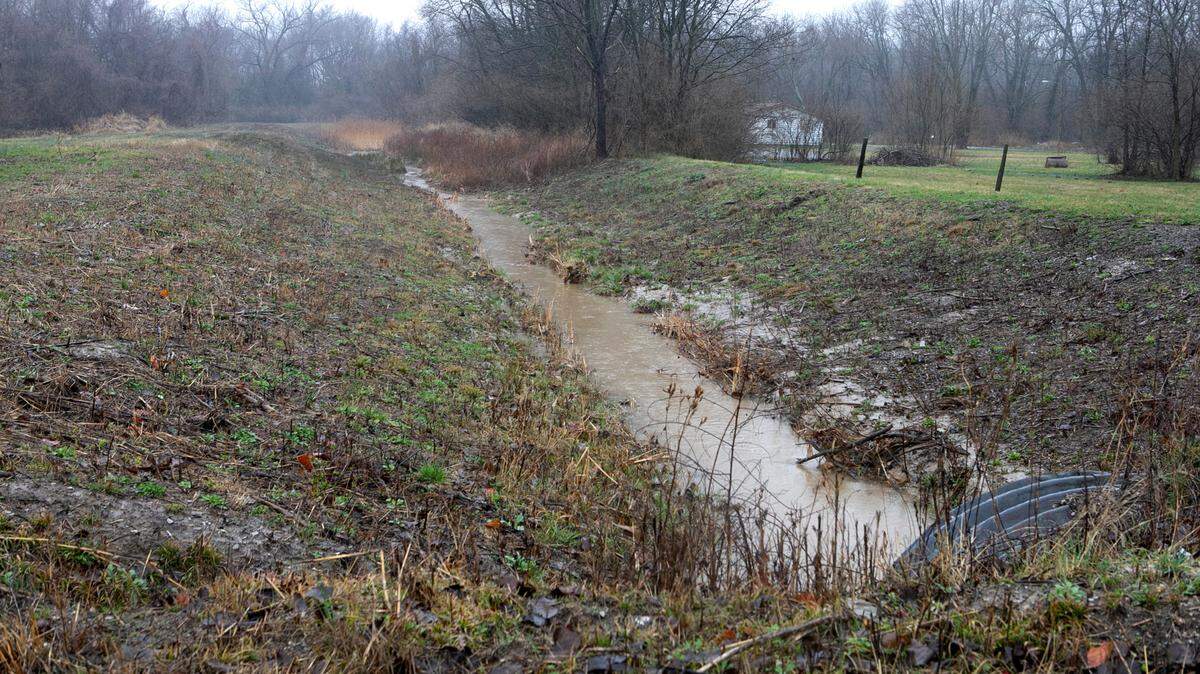
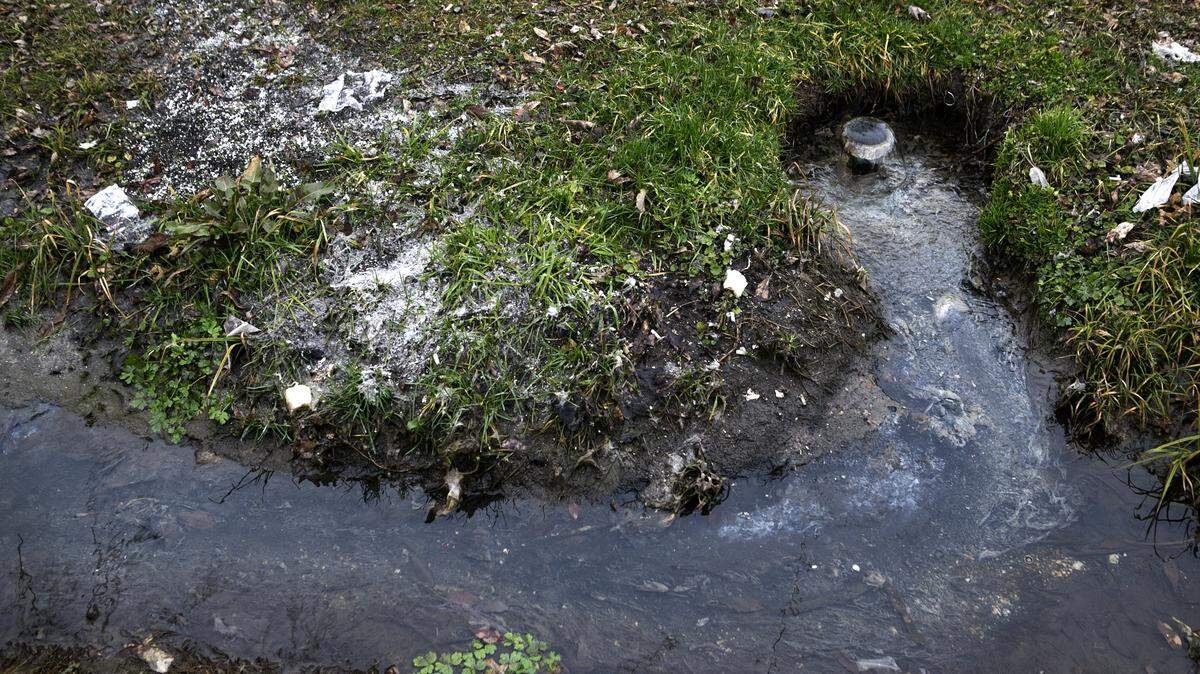
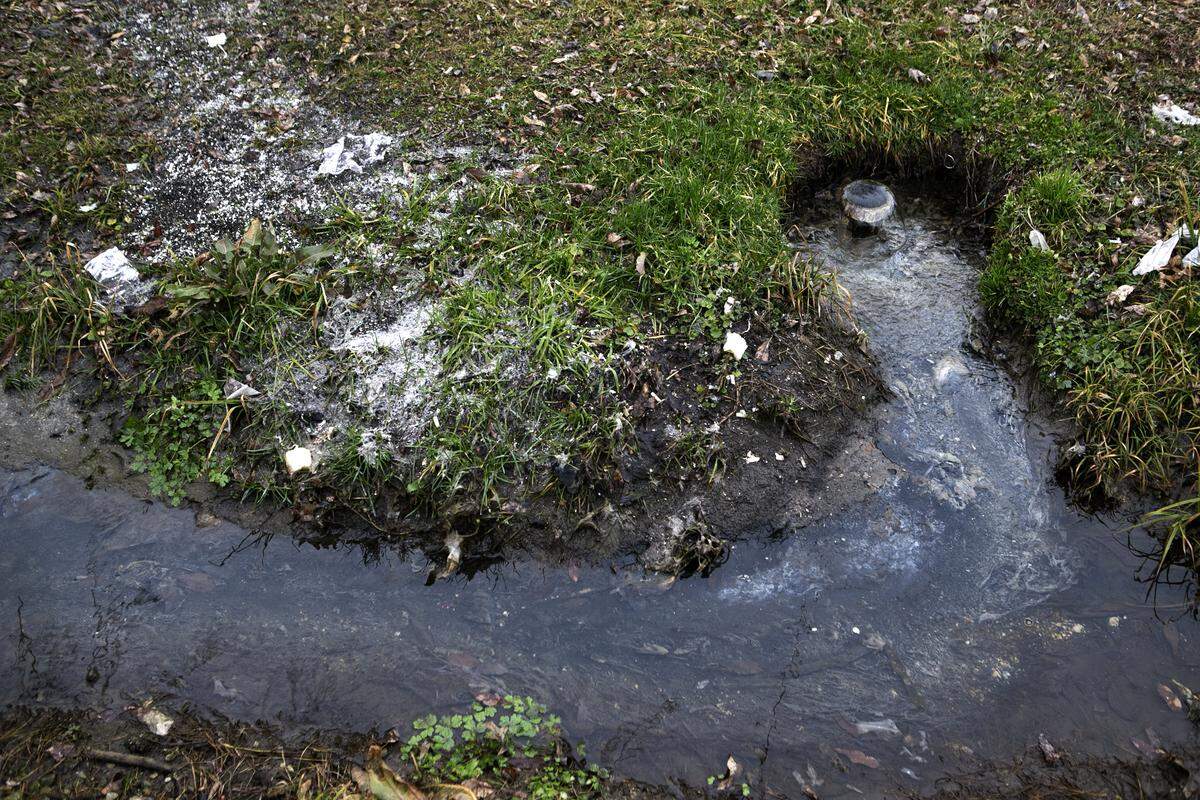
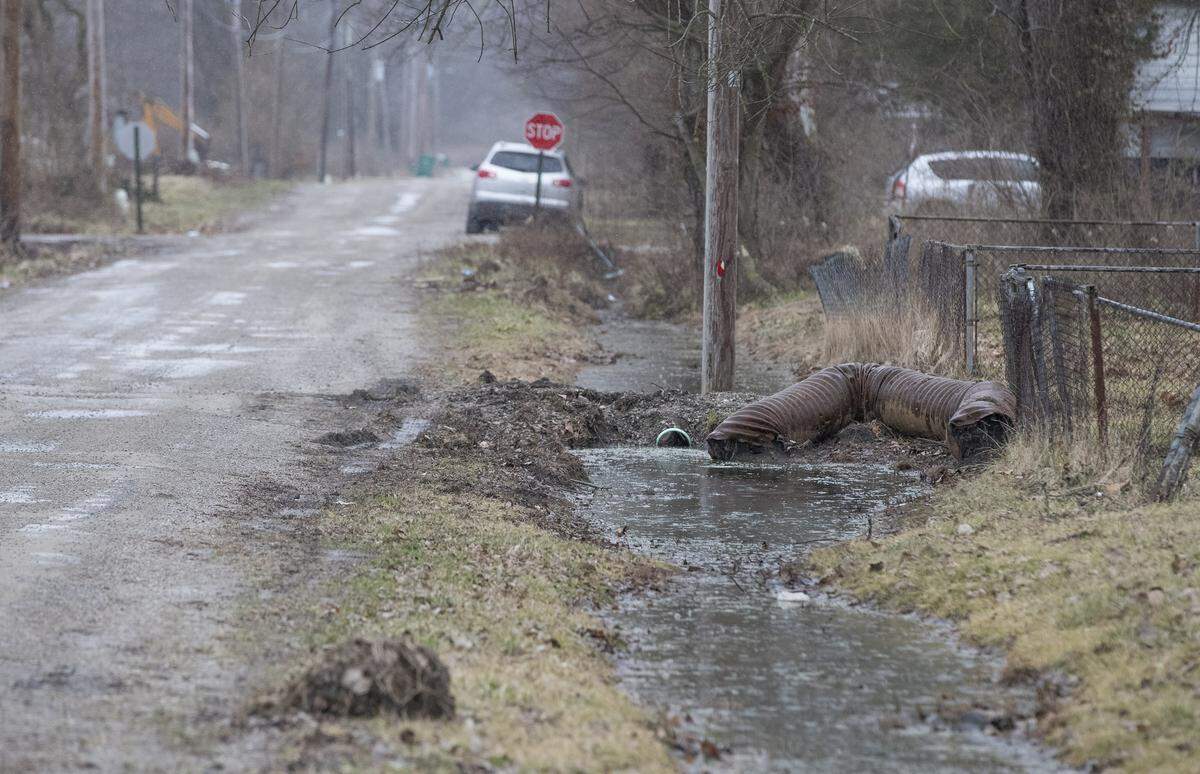
On 82nd Street, a few streets away from Byrd’s home, brownish water pours from an open pipe residents say runs year-round into a man-made trench. The pipe feeds into a trench littered with toilet paper and tampons.
A Google Maps photo from 2013 shows that dirty water was running as far back as seven years ago.
Nelson and Jackson believe it’s raw sewage.
The lawyers say pump stations designed to pull sewage away from the area are barely functional, non-functional or aren’t turned on during heavy rain, leaving raw sewage and stormwater in the Centreville streets, on residents’ lawns and inside their homes.
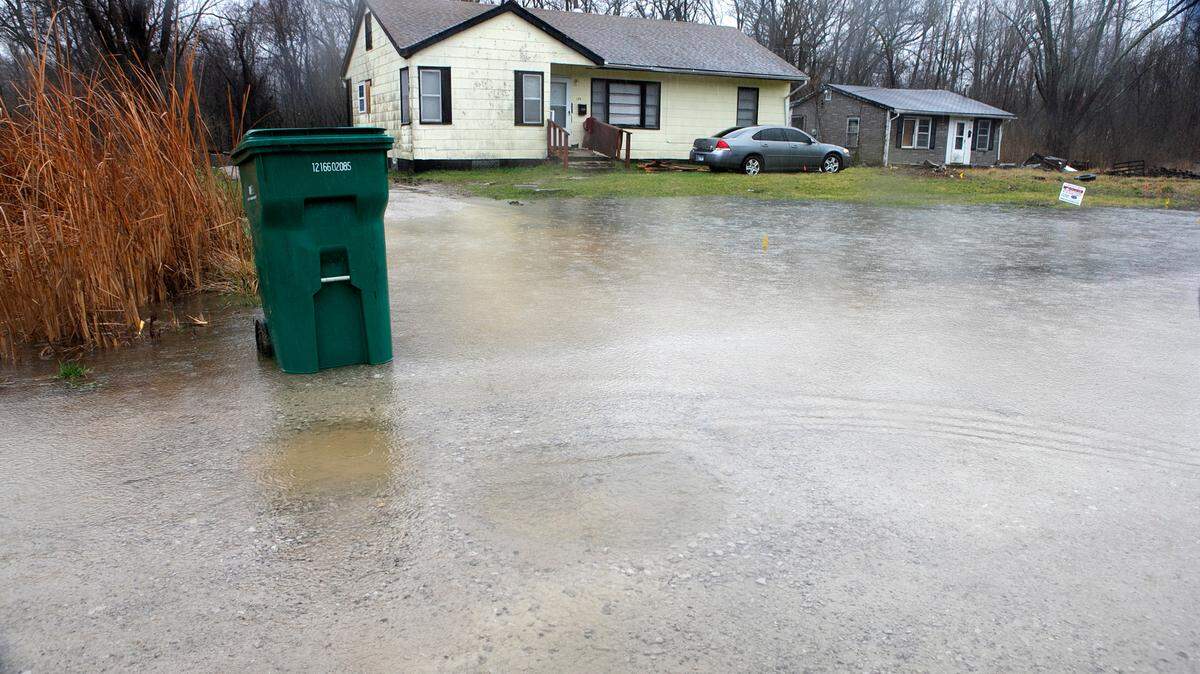
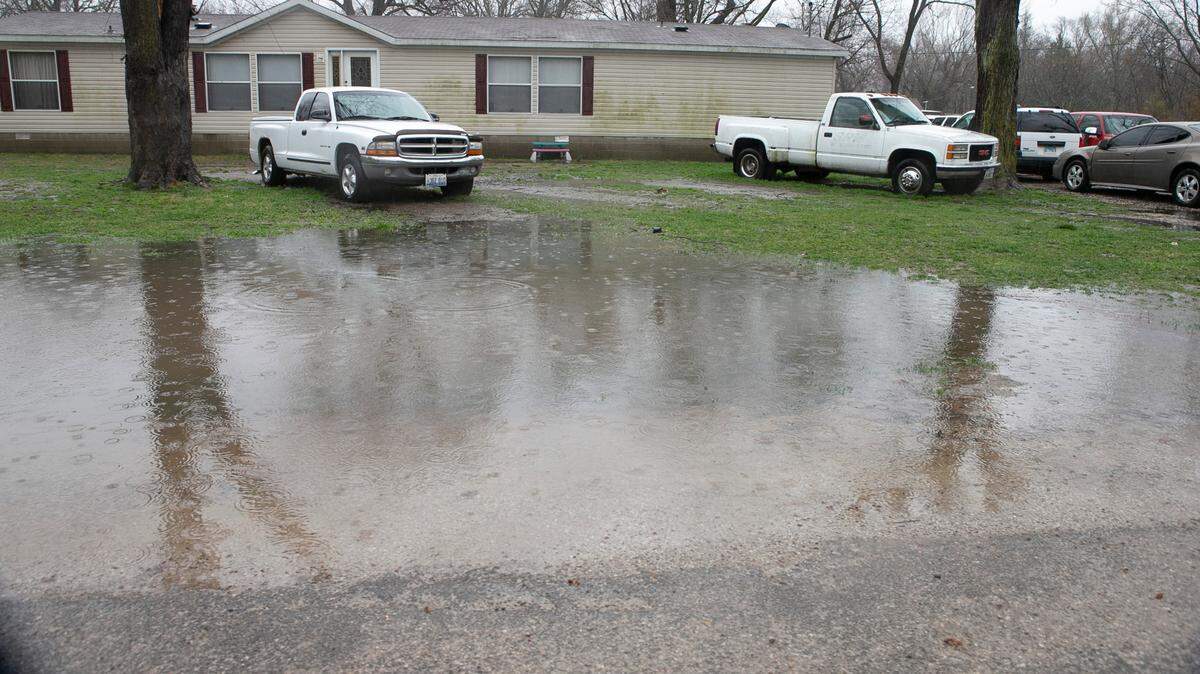
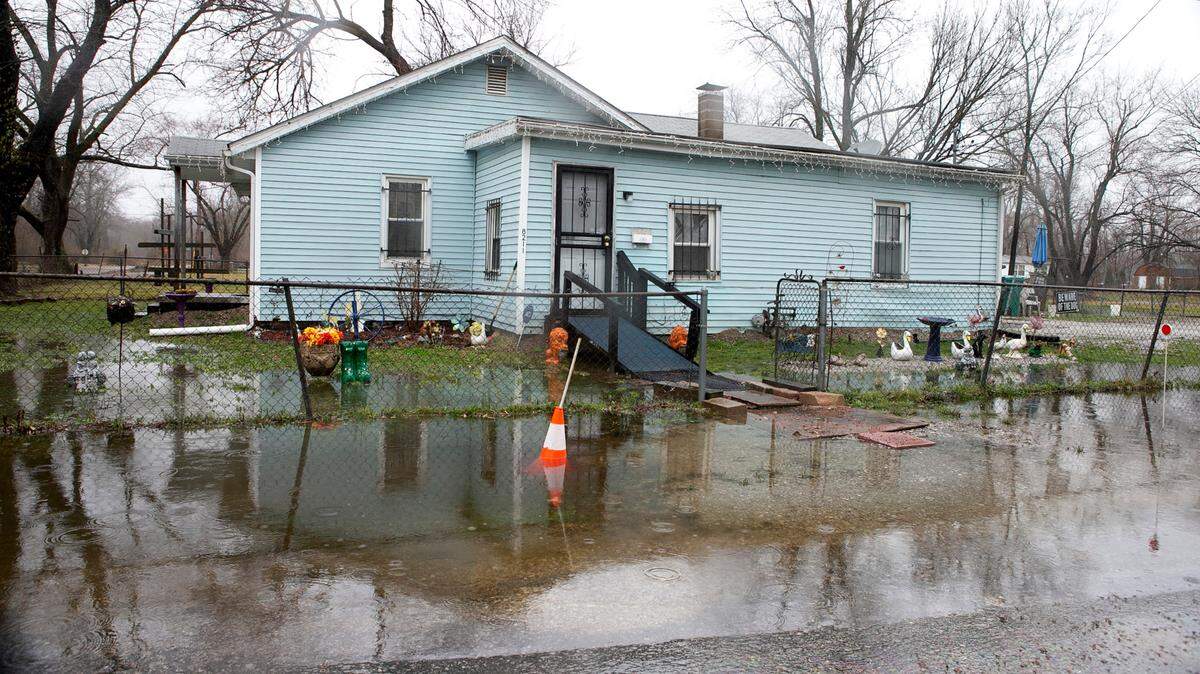
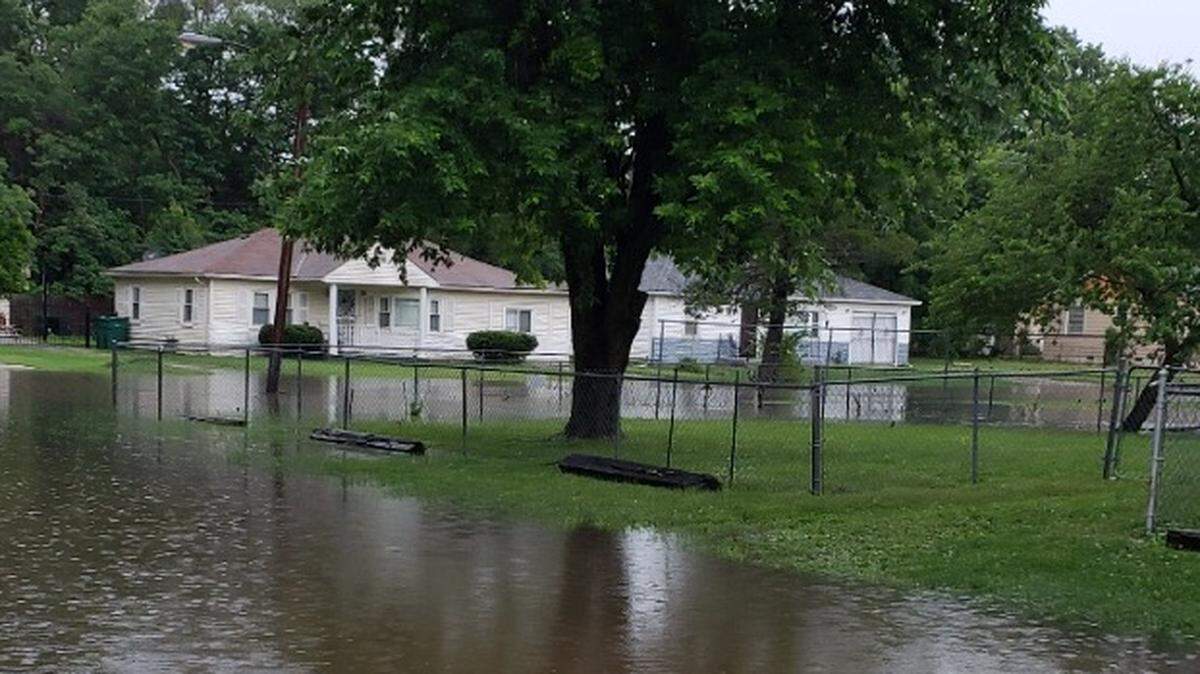
Even a small amount of rain can cause flash flooding, Nelson said, sometimes reaching up to 2 feet high and taking weeks to recede. She said the soil is almost constantly saturated because of the drainage issues.
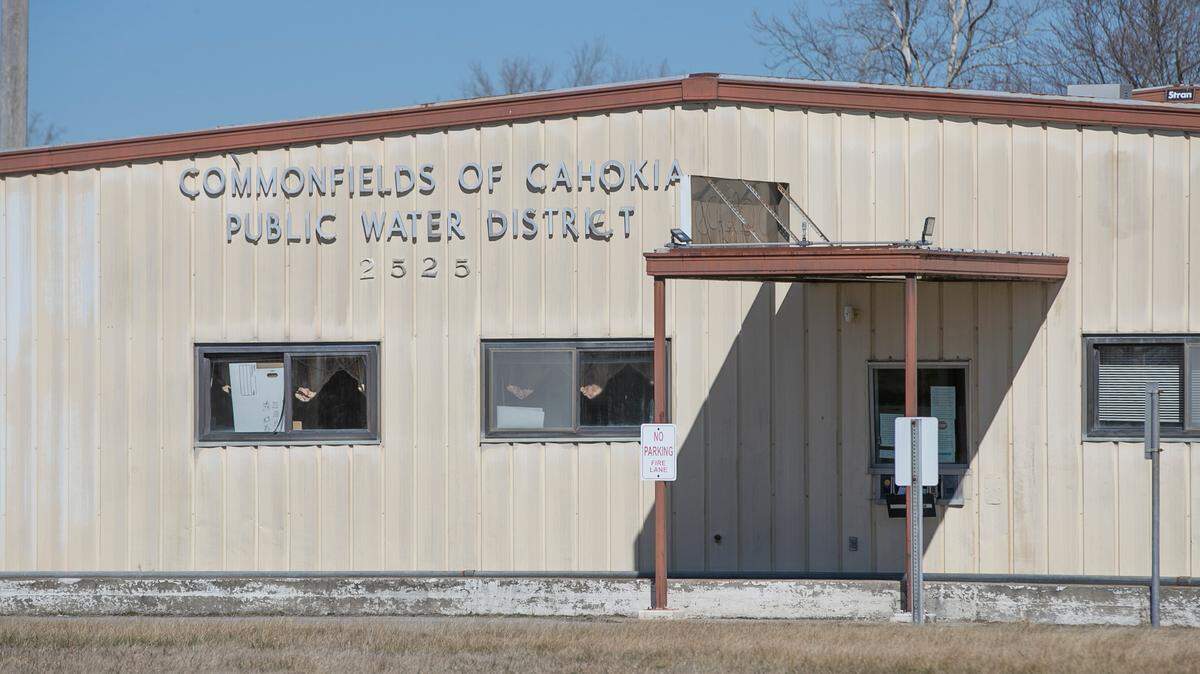
In 2003, Commonfields of Cahokia Water and Sewage District took over Centreville’s and Alorton’s sewer district. The agency did not respond to a BND request for comment on the issues in Centreville and phone calls to the office yielded no answers.
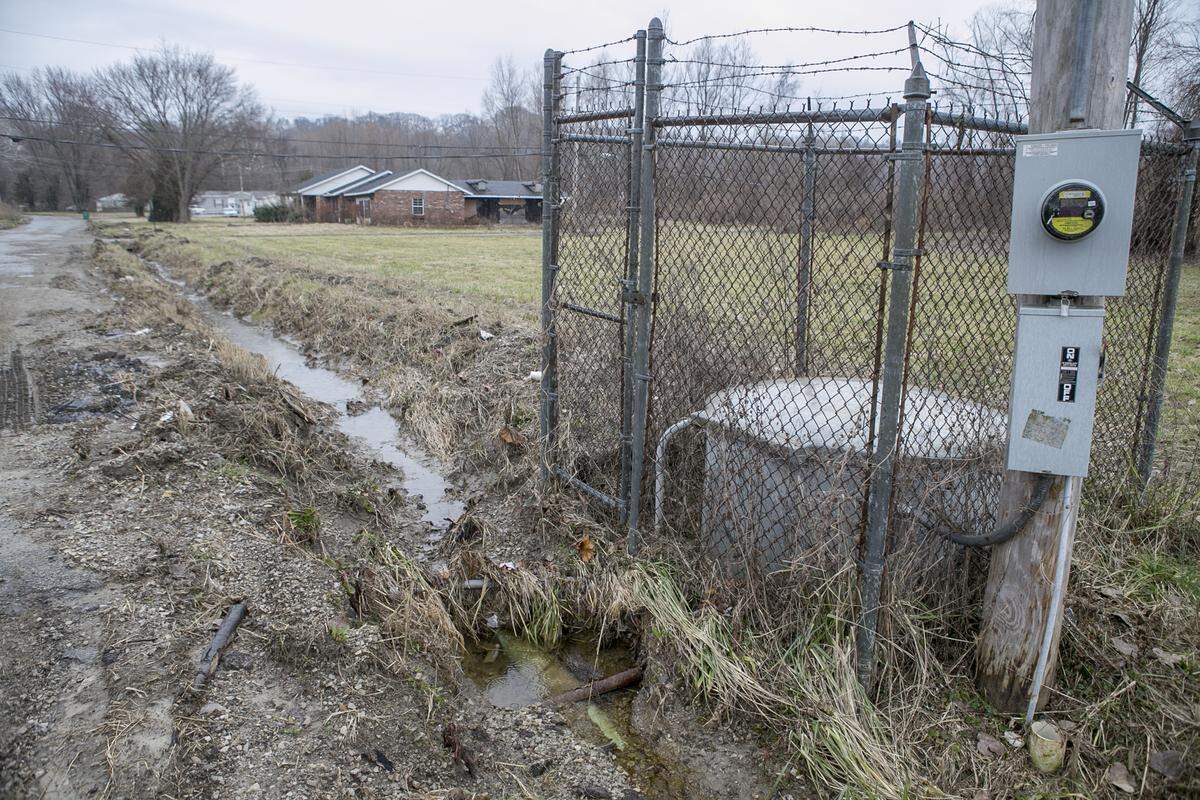
A steady and sometimes heavy stream of stormwater flowing from the bluffs above Illinois 157 into Centreville’s clogged culverts makes matters worse, Nelson and Jackson say. From there, they say, the water spreads and inundates the area.
Centreville Mayor Marius “Mark” Jackson did not return the BND’s repeated requests for an interview in person, over the phone and through email on the sewage or drainage issues. Curtis McCall Sr., Centreville Township supervisor and Commonfields of Cahokia trustee, had no comment.
Decades of frustration in Centreville
Byrd, one of Nelson’s and Jackson’s clients, is hoping for a remedy through legal means or from financial aid that citizens and advocacy groups are seeking from government.
Byrd estimates he’s spent almost $15,000 trying to keep sewage and flooding out of his home of 20 years. He’s tried to look for another home, but like many others from the area, moving is easier said than done. He said debt he’s accrued from fixing his home repeatedly and living on a fixed retiree’s income has kept him from moving away.
Centreville is a town of about 5,000 people, with a median income of roughly $17,440, according to the U.S. Census Bureau. Ninety-five percent of the residents are black. Centreville is the poorest city in Illinois, according to the bureau.
The town sits in a low-lying area with a high water table.
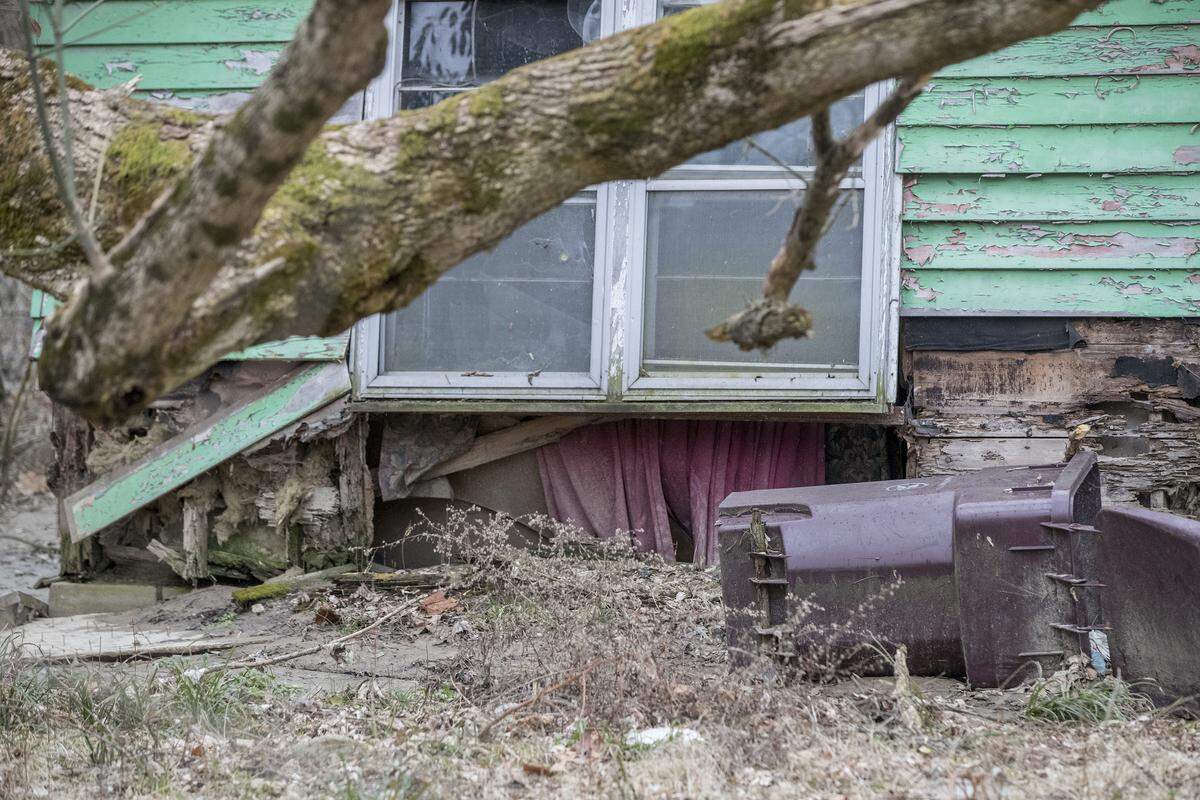
Byrd’s neighborhood in north Centreville is littered with abandoned and burned down homes, which residents say once belonged to families who moved away. Now, those who remain say they are struggling to survive.
Byrd said the area was a nice place to live when he built his home in 1996. But every year since then, the sewage problems have gotten worse.
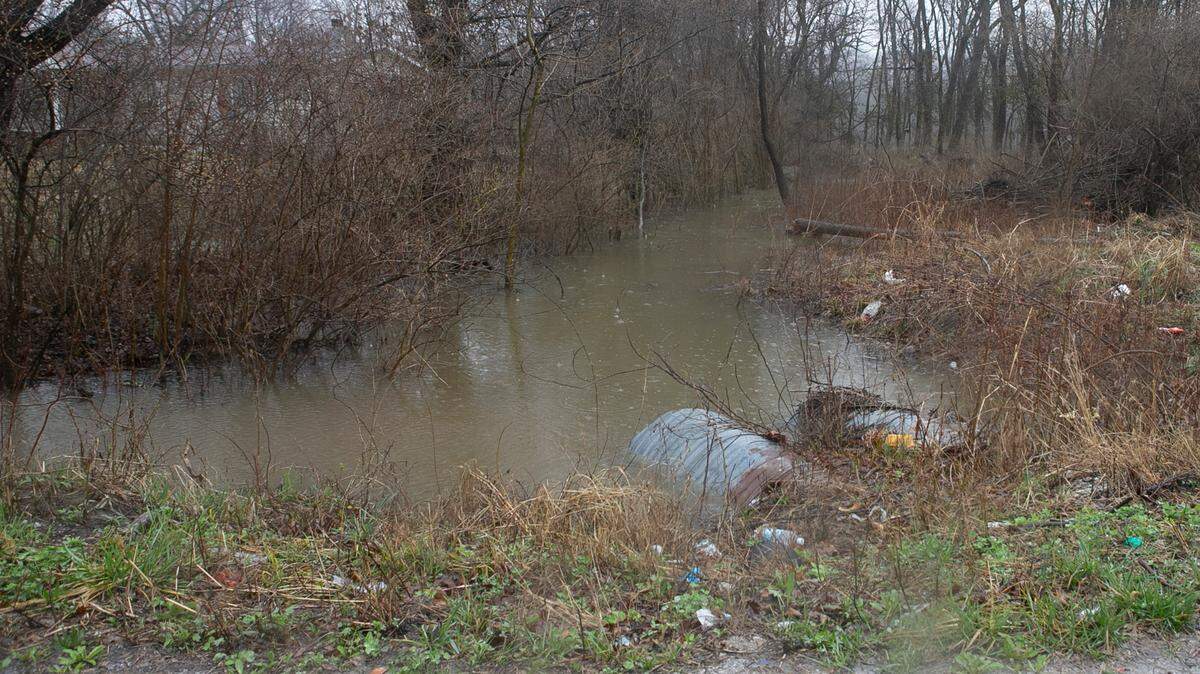
A large pool of water stretches back into the woods and out of sight on the far side of his lawn. When the rain is heavy, the pool spreads and reaches his home about 40 feet away. The pool separates his home from the neighboring property, which was owned by a man Byrd said had to move because of deteriorating health issues that many in the area believe are caused by the standing sewage.
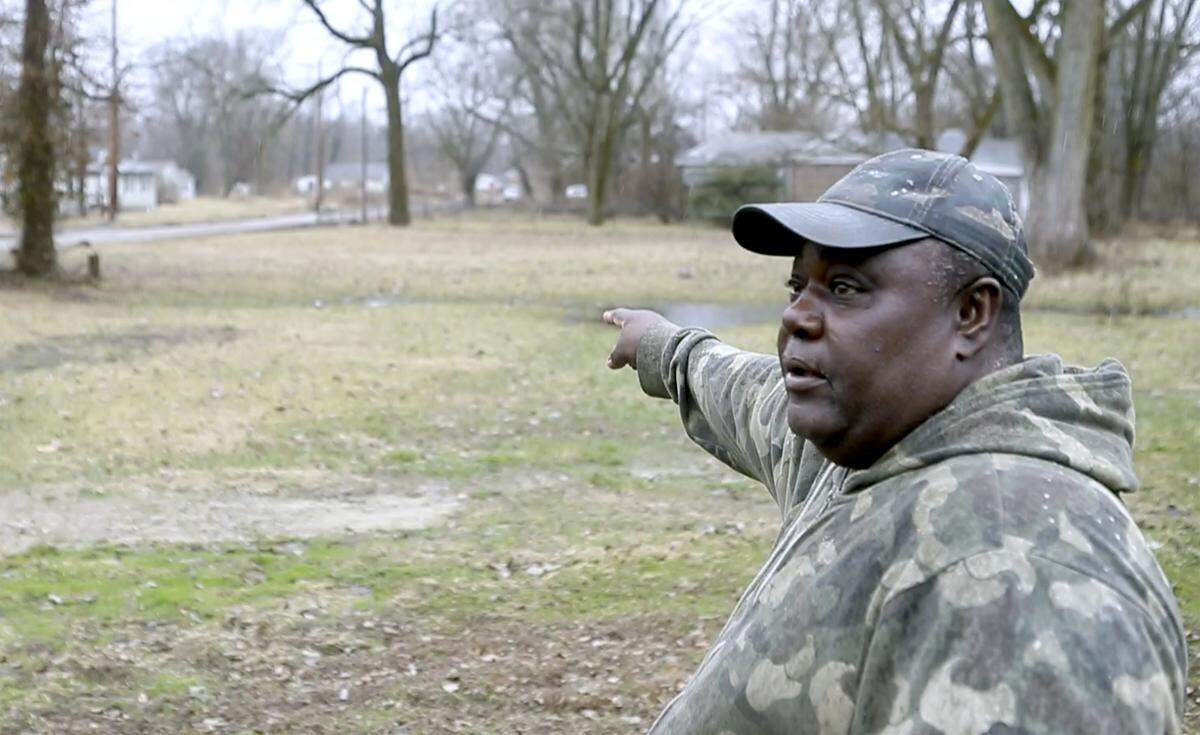
Next to the pond is a boat Byrd often uses to help residents get out of their homes or to make repairs to their heating and cooling equipment during floods.
Many of the roads are impassable when the rain is especially heavy, Byrd said. For some, even a moderate amount of rain can trap them in their homes for extended periods.
Kalila Jackson said while the community is prone to flooding because it is in a low-lying area, it’s no excuse for the conditions there.
“We can track this back 40 to 50 years, so we know that, yes, some areas have been prone to flooding, that’s true,” Jackson said. “But even in the areas where there had always been some flooding, it’s worse than it’s ever been, and the water is coming more often, higher, deeper and faster.”
In the past, Jackson said, similar flooding problems in Cahokia and Belleville were remedied through grants or loans from state agencies. In Centreville’s case, the attorneys say, no help has come until only recently from the state. Remedies from Centreville’s local government haven’t worked.
“We’ve been working on this for a year and a half, almost two years,” she said. “Nothing has improved and nobody has intervened with any sort of substantive fix. Nobody has done anything that has improved anyone’s lives thus far.”
Illinois senator gets involved
Sen. Duckworth’s office took notice and recently became involved.
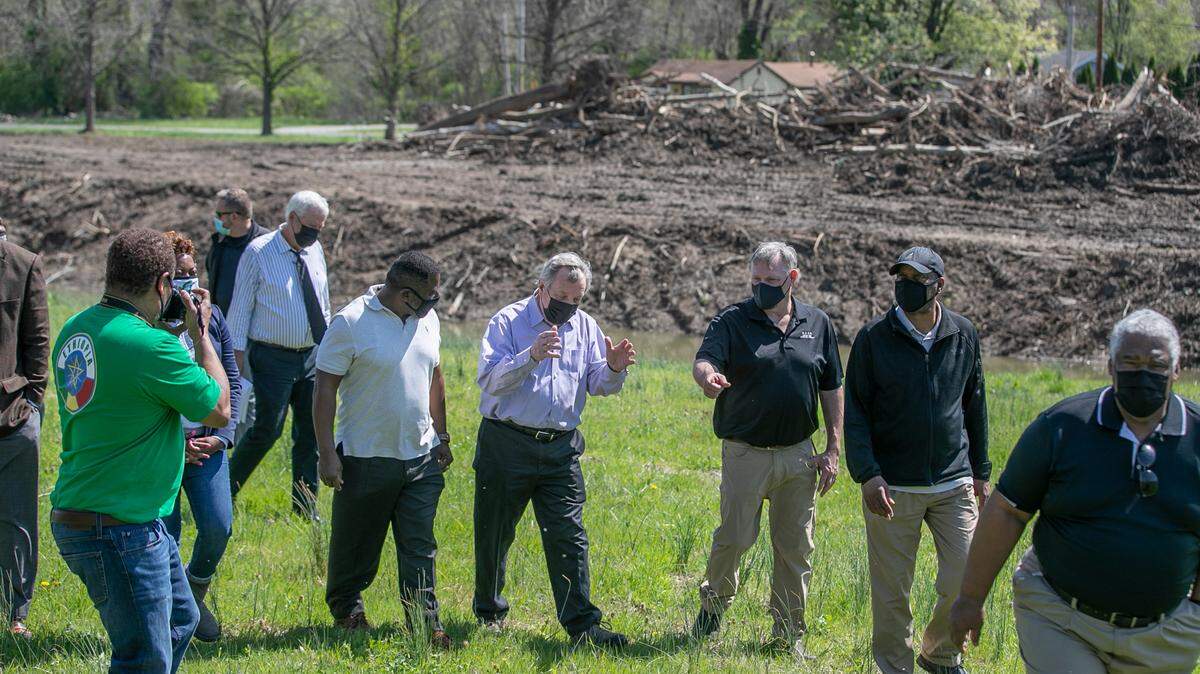
Chad Phillips, Duckworth’s metro-east community outreach coordinator, and several staff members who focus on environmental issues, are leading a “fact-finding” mission in search of solutions.
At a recent meeting of a citizen’s group dealing with sewage and flooding issues in Centreville, Philips said Duckworth’s office is seeking federal money to help improve infrastructure and is putting pressure on local, state and federal agencies to help.
Duckworth has called the condition of the community unacceptable.
To date, Philips said, Duckworth’s office has sought information or action from the City of Centreville, Environmental Protection Agency Region 5, Commonfields, the Metro East Sanitary District, American Bottoms Regional Wastewater Treatment Company and the U.S. Army Corps of Engineers.
Philips said many of those conversations are ongoing and some action is being taken.
For instance, he said, the Metro East Sanitary District is inspecting Harding Ditch, where stormwater from Centreville is supposed to filter to. Philips said issues in East St. Louis may be making the situation in Centreville worse, as the systems may be connected.
Illinois EPA is investigates flood issues
The Illinois Environmental Protection Agency is investigating the issues in Centreville, agency spokeswoman Kim Biggs said. She said agency staff members are meeting with local groups and officials to help determine what steps can be taken to alleviate the environmental problems.
Through meetings with the city of Centreville and Commonfields, Biggs said the agency discovered that many residents were sending complaints to Commonfields instead of directly to the Illinois EPA. She said Commonfields had not been forwarding those reports from residents to the Illinois EPA.
Since 2003, Illinois EPA has received 25 complaints from citizens, with only one in 2019 and four in 2018, Biggs said. The response to those complaints varied depending on the amount of reports, she said.
“Generally, if there is an active incident, we would send an inspector out,” Biggs said in an email. “However, if the complaint is general and we aren’t receiving multiple complaints or after the fact, we contact the local provider for necessary follow-up.”
At a recent public meeting, Centreville Mayor Jackson said that if voters approve the proposed merger of Centreville and nearby Alorton, more federal money would be available to fix the sewage issues, based on the population of the larger town. Jackson and other local leaders are supporting the proposed merger, creating a town called Alcentra. A referendum asking for voter approval is on the March 17 primary ballot. (UPDATE: Alorton and Centreville voted to join with Cahokia during the November election to form Cahokia Heights.)
Centreville residents say nothing works
For many, government help is coming too late, Jackson and Nelson said. Many people abandoned their homes long ago, unable to deal with the mounting issues, Nelson said.
Residents say past government actions to fix the problems have been mostly ineffective.
One such fix was to replace the dilapidated corrugated pipe installed to drain water away in ditches that flank the sides of almost every road in the area. That hasn’t worked, lawyers and residents said.
More recently, the city has been “trenching” to expand existing ditches and, in some cases, replace corrugated pipes with PVC, which typically runs underneath driveways. The old corrugated pipes, many of them dented and flattened, were discarded to the side of the roads where many remain.
Jackson and Nelson say residents welcome these attempts to fix the problems but they want more substantive system-wide solutions.
“Our concern is that they’re doing more of the usual, which is ad-hoc, patchwork fixes instead of system-wide fixes,” Nelson said.
Nelson said ditches still quickly fill up and take weeks to drain.
This is evident in Vittorio Blaylock’s front yard on 82nd Street, where his chickens and horse roam. Ditches that are supposed to drain stormwater away from his yard are blocked with leaves and mud.
Blaylock bought his house more than 15 years ago to live closer to his father, who died several years ago. When he moved into the neighborhood, he said, his block was filled with homes. Now, only three remain.
Blaylock said people abandoned the homes as problems worsened. Those houses were eventually burned or torn down. Other residents share similar stories.
On almost every block there are homes that have completely crumbled or partially fallen in on themselves.
“People have given up,” Blaylock said.
BEHIND THE STORY
MOREHow we did this story
The Belleville News-Democrat interviewed half dozen residents and attended meetings with 30- plus residents who want government agencies to do something about the flooding and sewage issues. We also toured northern Centreville before and after a minor rain event, and interviewed lawyers who are taking up the cause of the residents there.
We reached out for comment from officials from the city of Centreville and Commonfields of Cahokia Water and Sewage District repeatedly in person, via email and over the phone with no response. We hoped to ask both public entities questions about what’s been done about the flooding, how they plan to tackle the issues going forward and other issues.
We also spoke with officials from U.S. Sen. Tammy Duckworth’s office, local health agencies, St. Clair County, Illinois Environmental Protection Agency and others
Requests for comment from State Senator Chris Belt and State Representative LaToya Greenwood, who represent the area were not returned.
We are continuing our reporting on this issue. What do you want to know about this topic? Do you have any questions or suggestions? Please send your feedback to Kavahn Mansouri at kmansouri@bnd.com or call him at 239-2507.
We can’t do this kind of in-depth reporting without the support of our subscribers. If you already subscribe, thank you for your support. If you aren’t a subscriber, you can sign up for a subscription at https://account.bnd.com/subscribe.
‘Like living in a Third-World country’
Blaylock said people leave due to financial or health problems that they attribute to living in the community. Most of the health problems are related to breathing issues, he said.
“It’s like living in a Third-World country,” Blaylock said.
Just one of the 54 families with which the attorney’s are working drink their tap water. The others fear it is hazardous to their health. The attorneys say most residents rely on bottled water, which residents of Centreville collect twice a month from the Urban League of Metropolitan St. Louis.
Illinois American Water provides water to a major portion of the metro-east, including parts of Centreville. Spokeswoman Karen Cotton said Illinois American water mains are treated and tested regularly and that residents shouldn’t worry about drinking the water.
“Illinois American Water provides high-quality water service to all of our metro-east customers, including Centreville. Water quality tests are conducted daily to protect our customers,” Cotton said in a statement. “Our certified water operators and scientists continuously monitor water quality to safeguard all of our customers.”
Nelson said some areas of Centreville receive water from Commonfields as well. No matter the supplier, she said, residents haven’t been willing to drink the water for decades due to what Nelson called a “lack of transparency” about the conditions of mains in the area.
Like Byrd, Blaylock has spent thousands of dollars repairing and improving his home. In 2015, he had to replace his entire plumbing system and, in the past two decades, has gone through three HVAC systems. His neighbor relies solely on space heaters during the winter, he said.
Flooding affects health of Centreville residents
Nearby, on Bluff Street, resident Valerie Marion says she also believes that the living conditions are affecting people’s health.
Marion said she’s had to repair parts of her home over and over again through the years. She has exhausted every avenue for borrowing money to fix the problems.
Now, if things break she said she typically leaves them broken. Her breathing has worsened over time, she says, because of the raw sewage in the neighborhood.
During the summer, Blaylock, Byrd and Marion say the entire area reeks of sewage. No matter where you go, Byrd says, the area smells like “a hog’s pen.”
Myla Blandford, assistant administrator and director of environmental health for East Side Health District, said the agency gets calls from people in the Centreville community “consistently” concerning the smell of sewage and the illnesses they relate to it.
The East Side Health District provides preventative health care services to Canteen Township, Centreville Township, East St. Louis Township and Stites Township.
Blandford said East Side hasn’t received any “concrete” diagnoses that can be directly linked to flooding or sewage. Typically, the agency responds to the area when there is raw sewage on lawns or for standing water that needs larvacide to prevent mosquito growth.
‘It’s really cruel to think that we’re living this way’
Like other residents, Marion said she’s tired of struggling through the issues in her community. She said she doesn’t understand how things have changed so little after decades of neglect.
“It’s hard, it’s unhealthy, it’s hurtful, and it’s very heartbreaking,” she said. “And it’s cruel. It’s really cruel to think that we’re living this way, and we just don’t know where we can get help from.”
Marion, Jackson and Nelson say the community’s demographics are at the heart of all the problems.
Nelson said the northern part of Centreville is roughly 95% black and mostly populated by retirees.
She said if a situation like this were to arise in cities that are predominantly white, it would be fixed. County and state government aren’t helping solve the problems because of race, she said.
“If you took these issues over to O’Fallon or Shiloh or Belleville, these issues wouldn’t go on for even a week without the mayor or St. Clair County intervening saying ‘This isn’t tolerable,’ ” she said. “But somehow with an all-black community, it is tolerable.”
St. Clair County Board Chairman Mark Kern disagrees.
He said grant funding in the county is highest in its most diverse cities. Over the past 27 years, St. Clair County has provided just short of $1.6 million in grants to 10 Centreville city and township projects. That’s the second largest sum granted a St. Clair County city over that period. Alorton, Centreville’s partner on the March 17 merger referendum, received the most.
Any community can apply for block grants but only certain areas meet the qualifications to receive them. Those qualifications are partially based on income levels.
“This money is dedicated to low or moderate-income areas,” Kern said. “It is designed for areas with economic difficulties.”
Centreville fixed sewers but not flooding
According to figures provided by the county, roughly $380,000 in block grant money to Centreville was used on sewer-related projects. None of it went to the parts of the city currently affected by the flooding problems. The remaining $451,000 was used for street improvements, also in the southern part of the city.
Kern said the county can only contribute grant money when the municipalities request it. How it’s spent is up to them.
“The cities have to be the lead; they have to tell us where the issues are. All of these projects are looked at based upon the number of people they help,” Kern said. “Centreville is trying to help the most people they can. They’re applying for the grants they think will help the most people. It’s just a big issue and solving these issues is very expensive.”
Rick Stubblefield, executive director of St. Clair County’s Intergovernmental Grants and Economic Development departments, said also Centreville gets large amounts of grant money for other programs, such as housing rehabilitation and weatherization.
Nelson, one of the residents’ lawyers, said in a statement that St. Clair County has a legal obligation to ensure that Community Development Block Grant money in Centreville and elsewhere is used “in a way that does not exacerbate inequalities or erect barriers to housing for vulnerable populations like people with disabilities and communities of color.
“Similarly, the City of Centreville’s decision(s) to distribute funding in certain areas (many times commercial) when Mayor Marius Jackson was aware of significant issues during this same time period in other areas does not absolve him or the City of Centreville of their obligations, one of which is to provide a functioning sewer system to the residents of Centreville.”
This story was originally published February 20, 2020 at 12:17 PM.