
East St. Louis’ Reginald Petty reflects on life’s work after top Illinois honor
.JPG "Reginald Petty receives the Order of Lincoln over the weekend at Southern Illinois University Edwardsville, as Illinois Gov. JB Pritzker watches.")
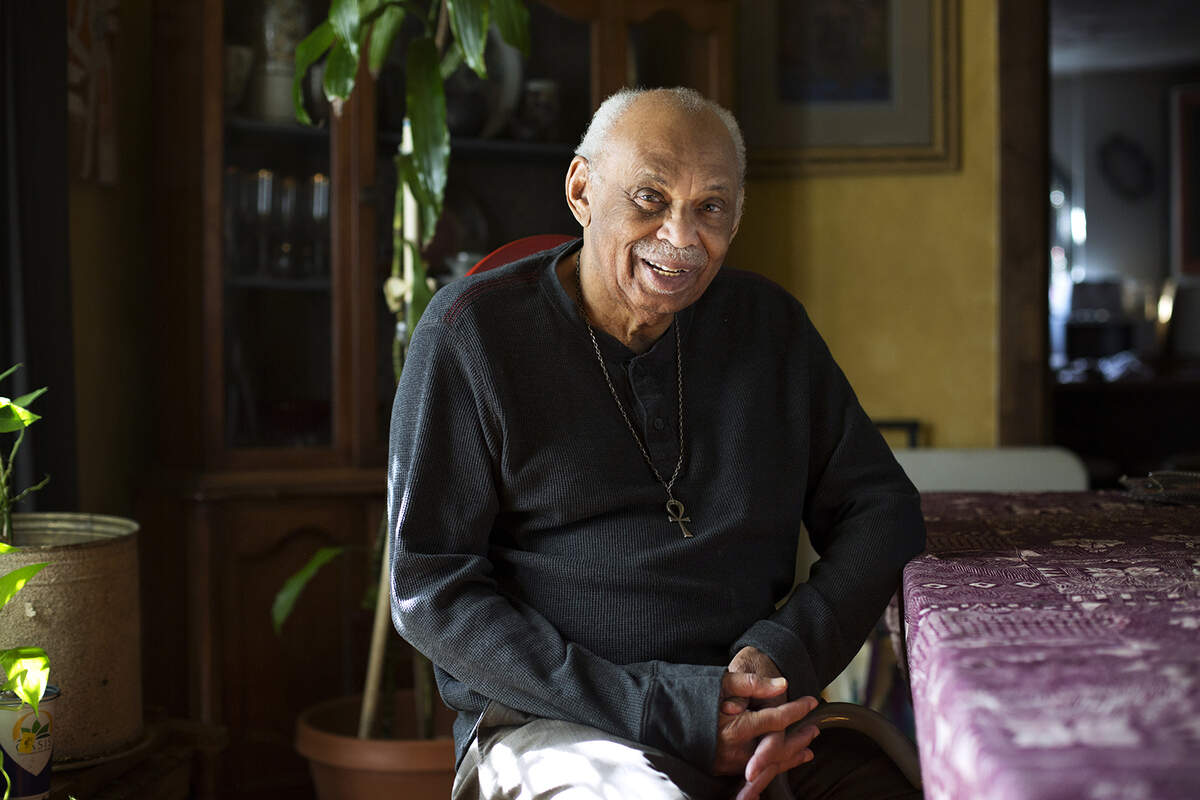
Reginald Petty, a civil rights activist and East St. Louis historian, was one of five Illinoisans awarded with the state’s top honor for professional achievement and public service.
The Order of Lincoln, whose recipients are picked by the governor, “recognizes individuals who have made remarkable contributions to the betterment of humanity in or on behalf of the State of Illinois.”
Petty received the award along with the other honorees at a ceremony Saturday at Southern Illinois University Edwardsville. Just before getting the award, he talked with St. Louis Public Radio about his storied path.
Petty, 90, first became involved in the Civil Rights Movement working to register voters in the 1950s and ‘60s in the South, alongside the Rev. Martin Luther King Jr., John Lewis and Jesse Jackson. He later pivoted to job training at home and abroad before returning to East St. Louis.
“I don’t think much of what I’ve done over the years. I’ve just done these things because they were right to do,” he said.
That also included being a Peace Corps director in Africa. Petty said it all comes back to the central theme of making the world a better place.
“Money won’t make you happy,” he said. “But yet doing things that make life better for others is what life is really about. If you can just do that, you’d be surprised how that makes you feel.”
As a student at the University of Chicago, Petty became active with the African American Heritage Association alongside St. Louis native Dick Gregory, a fellow activist and a comedian, in the early ‘60s.
After graduate school at Southern Illinois University Carbondale, Petty turned to the South, where he met Lewis, who would go on to represent an Atlanta-based congressional district for 17 terms until his death in 2020.
At the time, Petty said he couldn’t comprehend that many of his peers would become icons. “We hadn’t really focused much on what would happen politically later on,” he said. “I mean, we were too busy trying to stay out of jail and trying to change things locally.”
Through his work with the Student Nonviolent Coordinating Committee, Petty and others focused on getting Black voters registered throughout the South. Meanwhile, King had focused more on organizing the political class and churches. The difference in philosophy was a matter of organizing bottom up vs. top down, Petty said.
“We still worked together on different issues,” Petty said. “If there was a march, we came together around that.”
Some of that progress that was made in the ‘60s and after has been walked back by the Trump administration, Petty said. Cuts to the Department of Education and proposed changes to voting rights serve as good examples, he said.
“We’re now having to redo — refight, I guess — some battles that we thought were over with,” he said.
After his work in civil rights, Petty went on to establish one of the first Job Corps in the U.S., which provides free vocational training. While in the Peace Corps, he developed education and training programs in South Africa, Kenya, Botswana, Ghana and the Seychelles.
When he was Peace Corps director in what’s now Eswatini, the country landlocked by South Africa, Petty met Nelson Mandela.
“When I met him, it surprised me that we believed in nonviolence and his wife didn’t,” Petty said of Mandela. “That was something that kind of shocked me, given all that he had gone through.”
After a medical emergency left him in a coma for a couple of months, Petty retired from the Peace Corps and returned to his native East St. Louis.
He quickly observed how different his hometown had become, mainly the population lost. He felt it imperative to understand the history that had shaped and created the town, like the 1917 East St. Louis Massacre.
He also wanted to highlight the less known historical figures with East St. Louis roots, including:
- Donald McHenry, a U.S. ambassador to the United Nations under President Jimmy Carter.
- Harry Edwards, a sociologist and civil rights activist who organized the Black Power salute in the 1968 Mexico City Olympics by two American track athletes.
- Abraham Bolden, the first Black Secret Service agent.
East St. Louis history is now taught in 8th grade in the city’s public schools, which Petty credits to Jaye Willis, executive director of the East St. Louis Historical Society.
He hopes those historical lessons can inform those working to build up East St. Louis.
“Just because you or your community is poor, starts off a certain way, doesn’t mean that change can’t take place, and that change takes place through organizing,” Petty said.