Port district land emerges as new flashpoint in Granite City data center fight
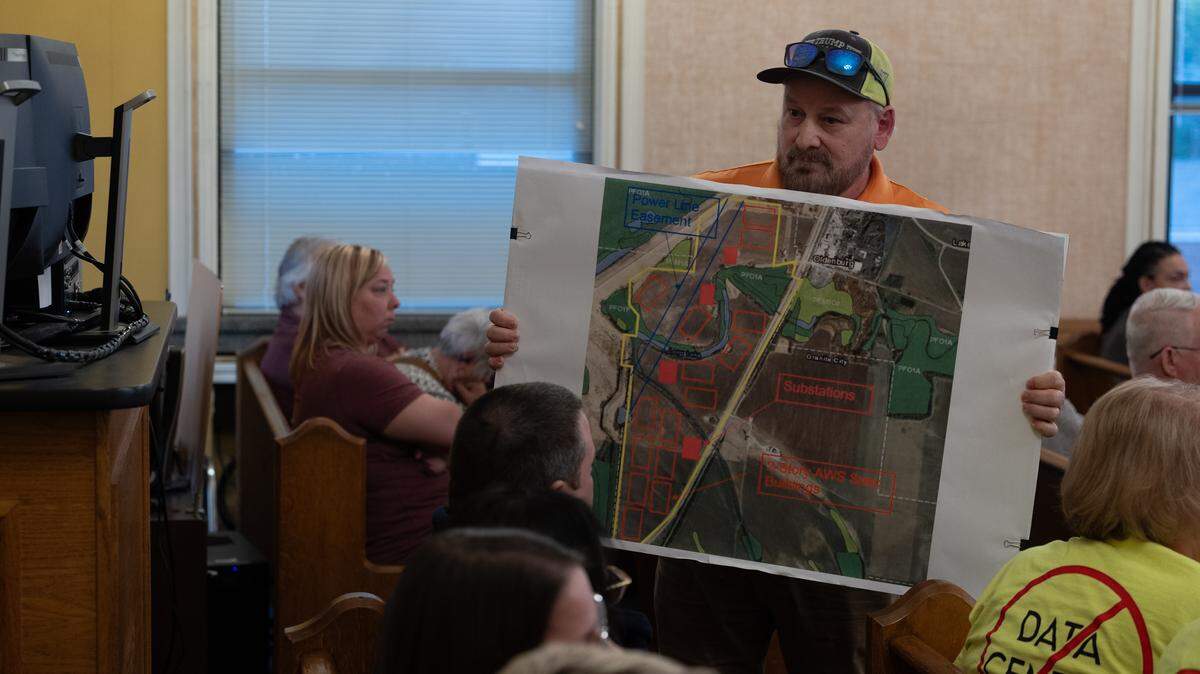
A regional port district and its relationship with the mayor have become a new focus in the battle over whether Granite City should allow a data center to be built in the community.
Opponents recently discovered that some property being eyed by land scouts for data centers is owned by America’s Central Port District, a special governmental unit in the metro-east; that the district has negotiated with them on possible land sales; and that city officials were briefed on development plans well before the public knew.
This information came from emails and other documents that Charles McCoy and his wife, Mary, obtained through public records requests and that were reviewed by the BND.
The McCoys live in an unincorporated subdivision near Illinois 3 and New Poag Road, an area that’s being considered for a data center. They confronted officials at a City Council meeting on Tuesday night.
“The contrast between what was presented publicly and what had already occurred behind the scenes suggest a lack of transparency,” said Charles McCoy, 56. “At a minimum, it indicates that key information was not shared with the City Council, the Planning Commission or the residents of Granite City.”
The McCoys question why a transportation-oriented port district would be selling property for data centers, and why its role has never been mentioned in public meetings.
Dennis Wilmsmeyer, executive director of the port district, said economic development is one of its state-designated functions, and it’s common for public bodies to keep discussions or negotiations with developers about possible land purchases private.
The McCoys also are accusing Granite City Mayor Mike Parkinson, who serves on the port district board, and other city officials of misleading the public when they told residents earlier this year that they were just beginning to educate themselves on data centers and implied that they weren’t privy to information on development plans.
“The whole time, (Parkinson has) been crafting a deal,” said Mary McCoy, 58, who operates a small business with her husband.
Parkinson strongly denies that accusation. He said he has operated with full transparency, and residents wouldn’t even know about the possibility of a data center being built in Granite City if he hadn’t invited a land scout to make a presentation at a committee meeting in November.
The McCoys said emails between company representatives, city officials and port district staff show that substantive planning and discussions had taken place well before that meeting.
Data centers house and manage servers, storage systems, networking equipment and hardware for data processing and distribution. With advances in artificial intelligence, the need for them is growing. Complexes often cover 100,000 to 200,000 square feet.
Data center proposals have caused controversy all over the country, including the metro-east communities of Granite City, Troy and Edwardsville. Opponents often point to environmental impacts, including the need for extremely large amounts of power and water.
The McCoys are opposed to a data center near their subdivision because they fear potential negative effects, such as lower property values and higher water and electricity bills. They also dislike the idea that they could someday look out their window and see a giant industrial complex.
“I don’t want it here, and I’m trying to speak for my neighbors because some of them are older, and they don’t know what to do,” Mary McCoy said. “... All of the people who live out here are very concerned.”
Most of the port district’s undeveloped property consists of more than 1,000 acres of land that it purchased two years ago from Ameren Development Corp., mostly in northern Granite City.

Mayor pushes back on claims
Parkinson is pushing back on the McCoys’ claims. He said they’re posting documents on Facebook out of context, including some that relate to a data center project that fell through before he joined the port district board in May 2025. Prior to that, Granite City’s representative on the board was former Mayor Ed Hagnauer.
Parkinson confirmed that a different land scout, Houston-based Cloverleaf Infrastructure, now is looking at property in northern Granite City, but he said no sale has occurred and no formal proposal has been submitted, so officials can’t take action or formulate a position.
“There was never a collaboration between my administration and the port to go out and find data centers to bring here,” Parkinson said, noting that land scouts are the ones reaching out, not only to the port district, but also to other owners of farmland.
One of the emails obtained by the McCoys was between Wilmsmeyer, the executive director, and a port district staff member on Nov. 19, the day after Cloverleaf made its presentation to the City Council committee. Wilmsmeyer summarized a conversation with Parkinson, writing that the city was “fully supportive” of one or possibly two data centers.
The McCoys said they were particularly disturbed by that email because it sounded like Parkinson had already made up his mind, before City Council members or the public had weighed in.
Parkinson said the email should have read that he was definitely interested in hearing what the land scouts had to say so he could determine whether such a project would benefit Granite City.
“You’re talking about a lot of money,” Parkinson said, noting data centers can bring millions of dollars in property taxes to a community. “I wouldn’t be doing my job if I didn’t entertain it.”
Parkinson said he knew virtually nothing about data centers until Cloverleaf approached the city last year about buying land for one, but at that time, the company was considering a site along Illinois 3 near Aldi. City officials began gathering information and working to establish rules for such projects in case a formal proposal was submitted.
The first Cloverleaf plan was abandoned because it was going to cost too much to bring power down from the north, according to Parkinson, so the company began looking at land owned by the port district and others near the intersection of Illinois 3 and New Poag Road.
Parkinson said he would never agree to annex land or issue permits for a data center unless the project provided significant property tax relief and other financial benefits for local residents, and that’s the only factor guiding his decision-making.
“(The issue is) very complicated,” he said. “People don’t understand it, and I think that’s why they think something nefarious is going on, and that’s just not the case.”
Most of the Granite City land being considered by land scouts for data centers already is zoned industrial so no special-use permits would be required, Parkinson said. The real work of city officials will begin when they get a formal proposal, he said, because they can make sure the community is protected and compensated before approving plans or issuing permits.
Port prefers manufacturing
The Illinois General Assembly created the port district in 1959 to promote economic growth in southwestern Illinois. It operates a transportation hub along the Mississippi River with barge, rail and truck access.
The port district owns 114 parcels of land in Madison County, mostly in the Granite City area, according to county records. Its 1,200-acre main campus includes the former Melvin M. Price Support Center, a U.S. Army base that closed gradually in the 1990s.
Wilmsmeyer, the executive director, confirmed that port district staff has communicated in recent years with land scouts for data centers who might be interested in buying property that it owns, but he declined to say whether negotiations are ongoing.
“(There is a) code of ethics if you will, in the economic development field, that you typically never talk about projects publicly until something is done,” he said. “... It’s the kiss of death sometimes if you go out and publicly talk about something that you believe is going to happen or ‘this sounds great,’ that sort of thing, and then it doesn’t come to fruition.”
One of the port district’s goals is to buy smaller tracts of vacant land and consolidate them into larger development-ready sites for industry, particularly manufacturing plants that could create high-paying jobs for area residents, Wilmsmeyer has said.
This also is a goal for other economic development organizations in the St. Louis region. A list of 26 available “development-ready rail land sites” can be found on the website of the St. Louis Regional Freightway, which is part of Bi-State Development.
“I would say from an economic development standpoint ... people maybe don’t realize the number of acres that some of these developments take,” Wilmsmeyer said. “And I’m not just talking about data centers here. I’m talking about any development, especially on the rail-served side.”
Wilmsmeyer said the port district would prefer selling or leasing land to companies that need rail service to transport goods or commodities. He noted that state grants it has received to buy land for rail-served development must be either used for that purpose or returned.
The port district board, chaired by Madison Mayor John Hamm, voted in January to form a committee to negotiate a land sale for a data center, according to officials and meeting minutes. The district might lose grant money, but it could use proceeds from a sale to pay off debt.
Documents obtained by the McCoys included a sales contract for 1,097 acres of land that the port district bought from Ameren Development Corp. in 2024 for nearly $10 million; emails between district staff, land scouts for data centers and city officials; and references to a power study conducted in May 2025 to determine one project’s feasibility.
City and port district officials said such studies are a standard part of the process when companies are considering land purchases, and the companies pay for them.
“It’s a big deal,” said Charles McCoy, arguing that companies wouldn’t pay for such studies if they weren’t serious about projects.
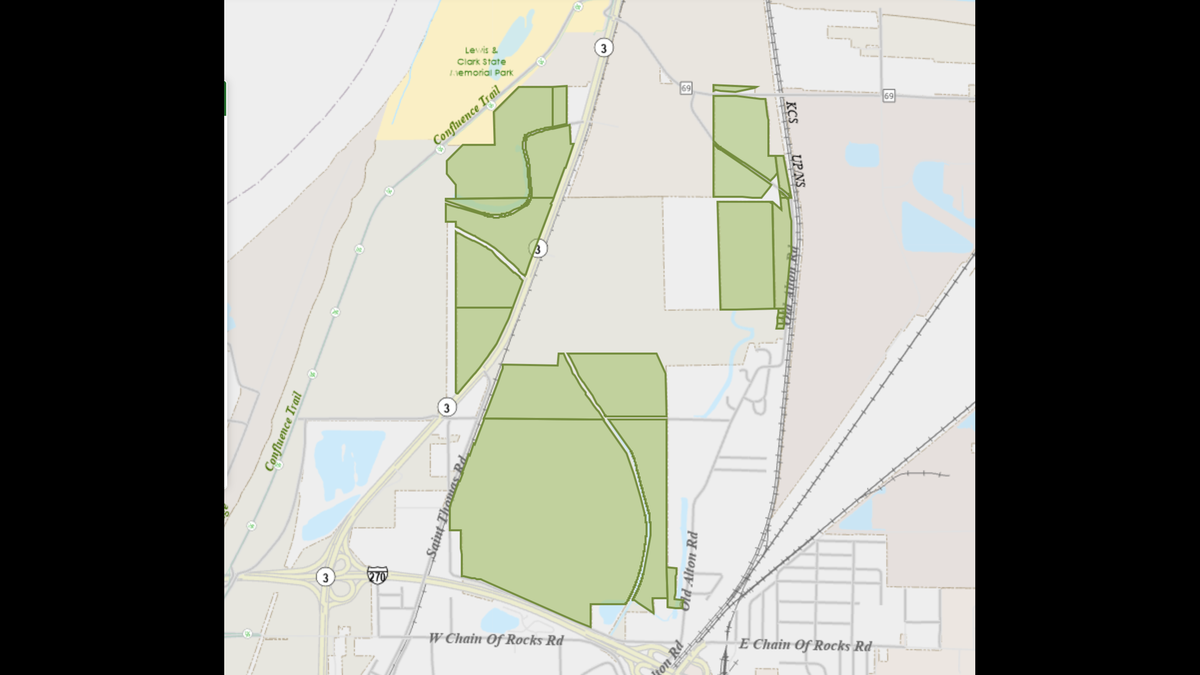
The McCoys said the former Ameren land was leased to farmers for decades, so they saw its sale as a red flag, suspecting it could lead to data center development. The land is divided into three major areas, mostly within Granite City limits but some slightly to the north. Their subdivision is surrounded by those areas.
The Ameren land purchase was funded in part by a $5 million state grant for the purchase of property for rail-served development, according to Illinois Department of Commerce and Economic Opportunity records.
The McCoys understand that they would be more directly affected by a data center in northern Granite City than others, but they encourage all residents to do research on how such projects have affected people in other communities and how city officials, port district staff and land scouts have been working behind the scenes.
“It may not be against the law, but it’s unethical,” Charles McCoy said.

This story was originally published May 7, 2026 at 5:00 AM with the headline "Port district land emerges as new flashpoint in Granite City data center fight."