Pioneer sisters to sell convent in Ruma after 150 years of ownership
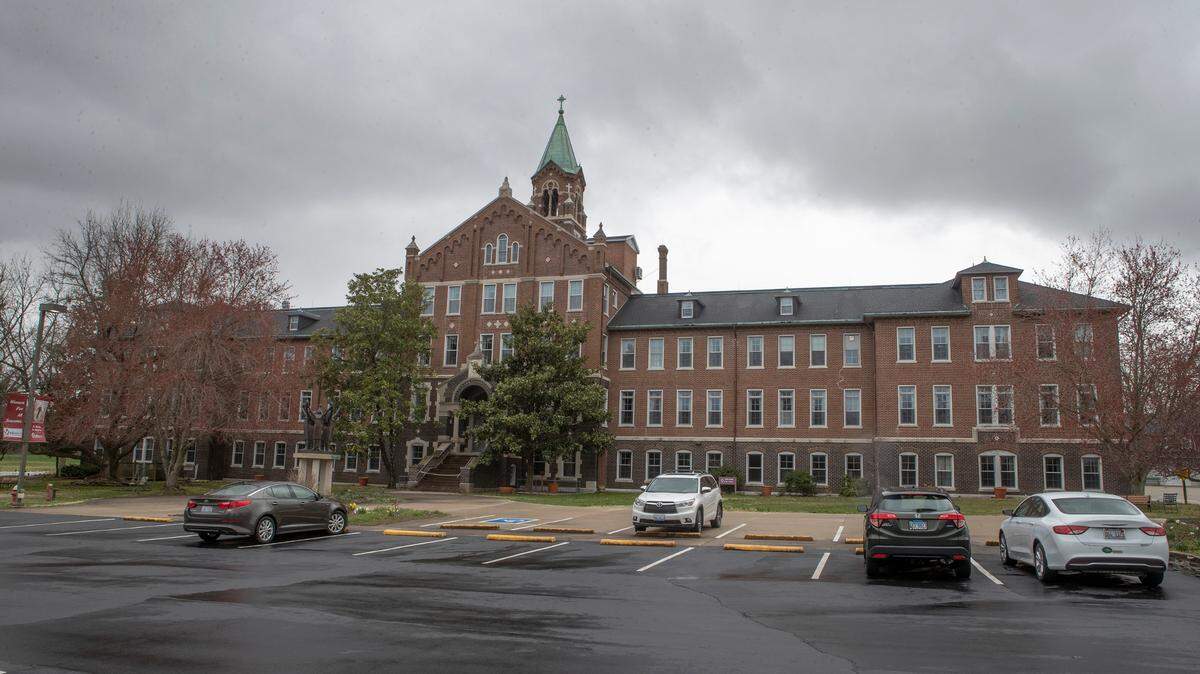
It was four years ago that nuns with the Adorers of the Blood of Christ made the heart-wrenching decision to leave their convent in Ruma after 146 years due to high maintenance costs and advancing ages of the 37 sisters who lived on the property.
The nuns had no idea what would happen to the 112,000-square-foot brick complex, 400 acres of farmland and woods or Catholic cemetery with more than 500 graves.
This week, the St. Louis-based order is providing some answers. Leaders announced that they’re selling the convent, outbuildings and 33 acres to a nonprofit organization called Books for All that will convert it into a library and conference center.
“(The Adorers) will retain ownership of the surrounding farmland, as well as the cemetery, where sisters will continue to be buried,” stated a press release from the order.
Sister Barbara Hudock, regional leader of the order’s U.S. Region, couldn’t be reached for comment.
The sale closed Friday, according to communications associate Ellie Marsh. As of Tuesday, it hadn’t yet been recorded at the Randolph County Courthouse. The two parties declined to reveal the sale price.
The village of Ruma annexed the convent property, on Pioneer Lane next to St. Patrick’s Catholic Church, in late March.
“Otherwise, we would be landlocked on that end of town,” said Village Clerk GayLynn Kruse. “You’re opening that land up for growth. And the property owners wanted utilities out there.”
‘God has guided the sale’
The Adorers, ranging in age from 75 to 97, moved from Ruma in 2022 to the Benedictine Living Center at the Shrine at the National Shrine of Our Lady of the Snows in Belleville.
Leaders knew that a deteriorating convent in the middle of farm fields might be hard to sell, but they put their trust in God.
“The sisters patiently and prayerfully sought a buyer committed to the continuation of the (Adorers’) legacy of community and mission, as well as responsible stewardship of the buildings and land,” the order’s press release stated.
“The sisters rely on the Providence of God and believe that God has guided the sale of the property to Books for All.”
The nonprofit organization was formed in 2024 to accept a donation of about 35,000 books from an anonymous collector who wanted them to be used to educate and promote literacy, according to Claire Cook, 37, a New York City resident who’s moving to Illinois to manage what will be known as The Ruma Center.
The collection includes history, philosophy, economics and other humanities books, as well as biographies and memoirs.
“By ensuring that everyone, regardless of background or circumstance, has the opportunity to explore, learn, and grow through reading and access to knowledge, Books for All will work to create a more informed, equitable, and connected world,” its website states.
Books for All also plans to operate a retreat and conference center for nonprofit and civic organizations, local governments and other groups that want to collaborate and bond in a peaceful setting.
The organization consists of a three-member board, as well as librarians and archivists who have volunteered to catalog the collection of books, which will be lent out at no charge.
“While we are not a religious organization, we carry forward the spirit of what (the sisters) built: a place dedicated to community, care for the people who pass through it, and respect for the earth it sits on,” Cook stated in the Adorers press release.
Convent founded in 1876
Maria De Mattias, now a saint, founded the Congregation of the Sisters Adorers of the Blood of Christ in Italy in 1834 with a focus on education and helping women, children and the poor.
German members of the order began immigrating to the United States in 1870. About a dozen nuns and novices led by Sister Clementine Zerr planned to settle in Edwardsville but followed the wishes of Bishop of Alton Joseph Baltes and went to Ruma instead.
Zerr paid the diocese $12,000 for 26 acres, two horses, an unspecified number of cattle and an 1867 brick structure built to house a Catholic school and seminary that had failed. Over the years, the “pioneer sisters” expanded with land purchases and building additions.
The Adorers also fanned out across southern Illinois, working in Catholic parishes, schools and hospitals. Some served as missionaries around the world, but they considered Ruma home.
By the end of 2021, only 37 sisters were actually living on site. That was down from about 200 nuns and women in formation in the late 1950s and early ’60s, when the Ruma province also operated Precious Blood Institute, a Catholic girls high school.
Another problem was rising utility, maintenance and repair costs for the 112,000-square-foot brick complex, which includes the original 1867 structure and two additions, one built in 1890 and one in 1926.
“We became more and more aware that we didn’t have the resources or the people to keep everything going,” leadership team member Sister Mary Catherine Clark said just before nuns vacated the property.
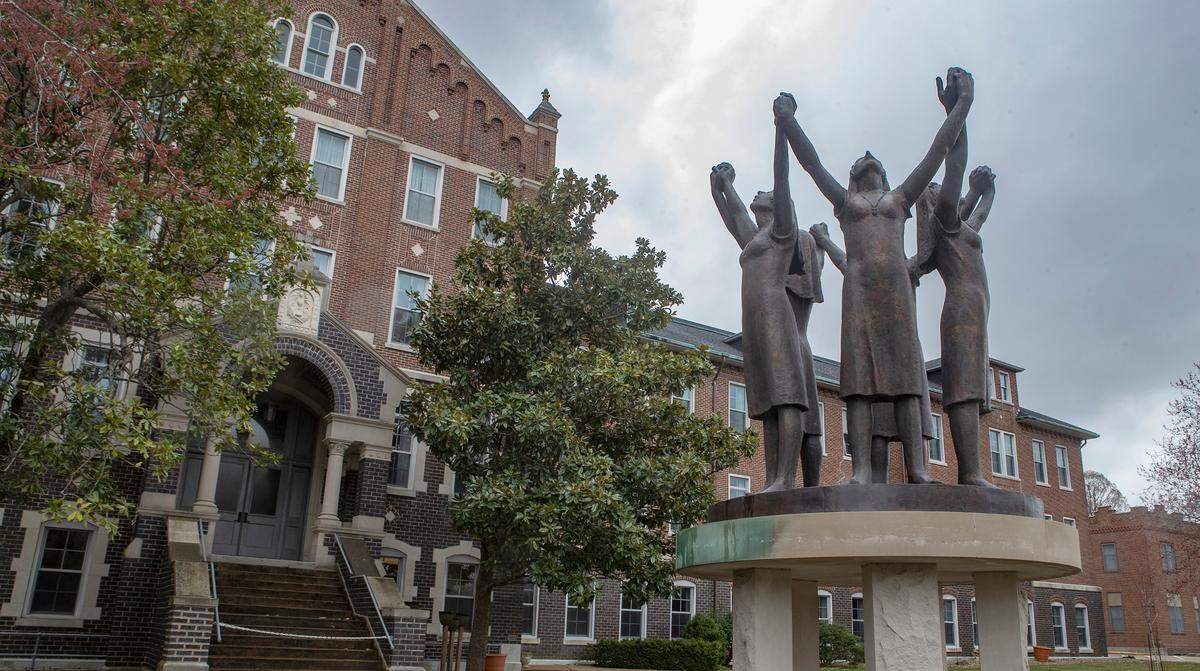
The Adorers moved a large statue from the convent to cemetery grounds, according to Marsh. Five women in a circle with arms stretched toward heaven represent nuns killed in 1992 while working as missionaries during a civil war in Liberia.
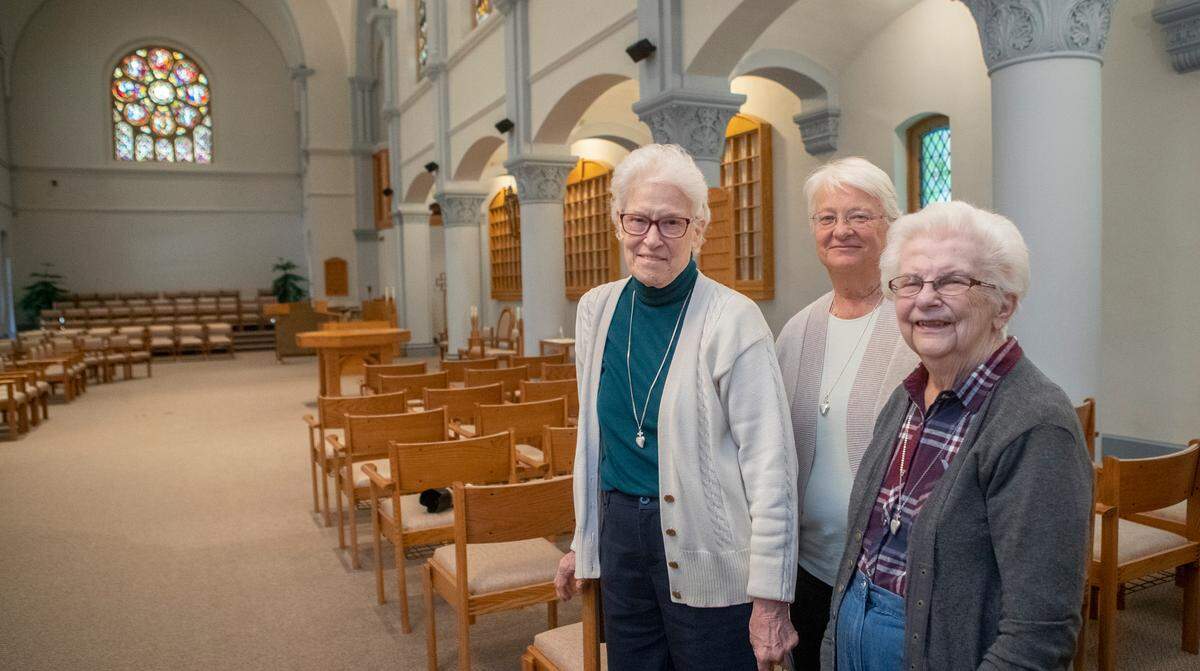
Cook said Books for All plans to utilize the convent’s stunning chapel, where area residents attended Mass and generations of young women took vows under a 37-foot-high arched ceiling, surrounded by massive columns and stained-glass windows.
“We’ll make modifications to help with acoustics, so we can hold meetings in there, and we may store some books in that space,” she said. “But we’ll be preserving all that we can.”

This story was originally published May 13, 2026 at 5:45 AM.