
Opponents, supporters of solar farm at Belleville cemetery face off at meeting
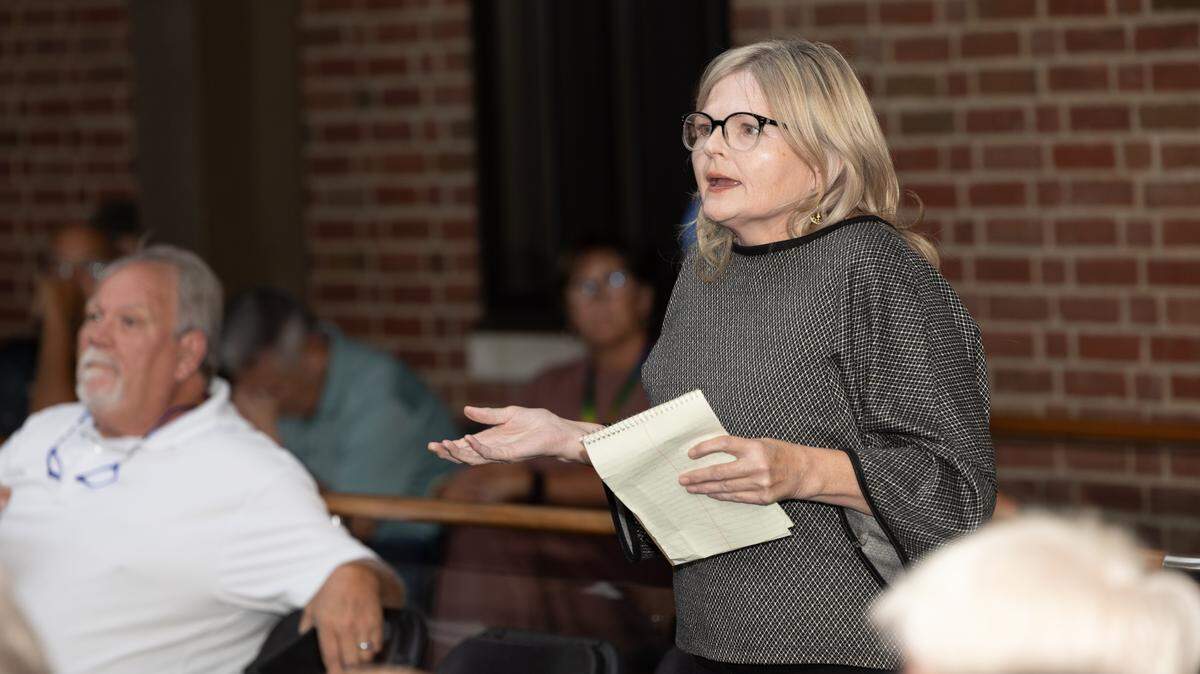
A public meeting on a solar farm planned at Mount Hope Cemetery in Belleville gave opponents and supporters a chance to reiterate their positions and take some pointed swipes at each other.
But the meeting seemed to change few, if any, minds.
“It looks like it’s going to court,” said opponent Jesse Berger, who had warned earlier that the city was opening itself up to legal challenges if it proceeded with the controversial project.
“It may be the only way to get it stopped. (Officials) aren’t backing down,” he said.
About 60 people gathered on Thursday evening at the Southwestern Illinois Justice and Workplace Development Campus. The city had been required to hold the meeting under guidelines of a state program that’s providing financial incentives for the project.
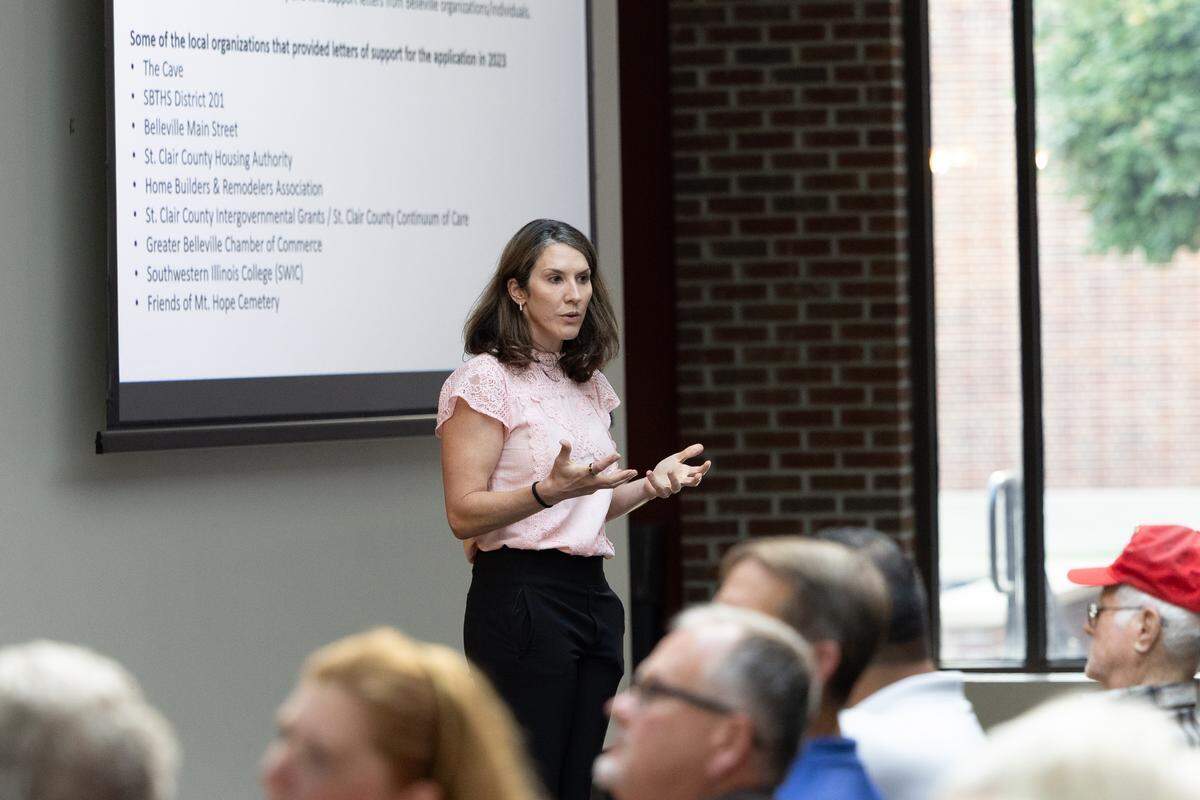
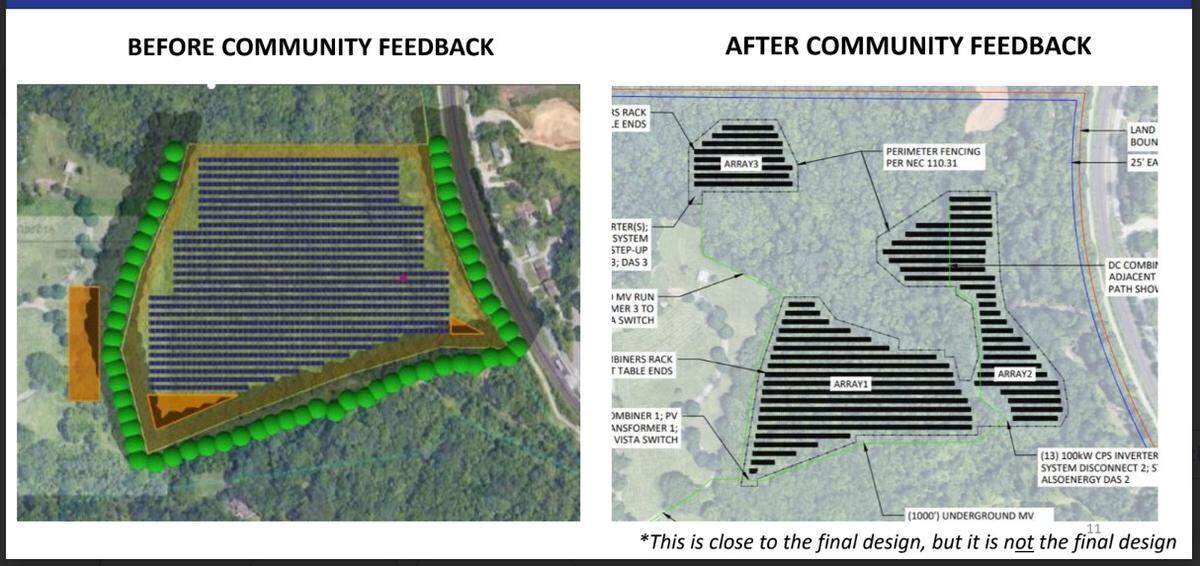
Representatives of Texas-based developer Shine Development Partners and local installer StraightUp Solar went over their plan to lease 19 acres of cemetery land from the city, clear-cut woods and build a 5-megawatt “community-driven” solar farm. The original plan was for a 25-acre site.
Rachael Cornick, Shine’s director of operations, and Dan Hancock, StraightUp’s senior commercial project developer, addressed concerns that the solar farm would harm the sanctity and character of Mount Hope, which dates back to the late 1800s, and destroy a natural area full of wildlife.
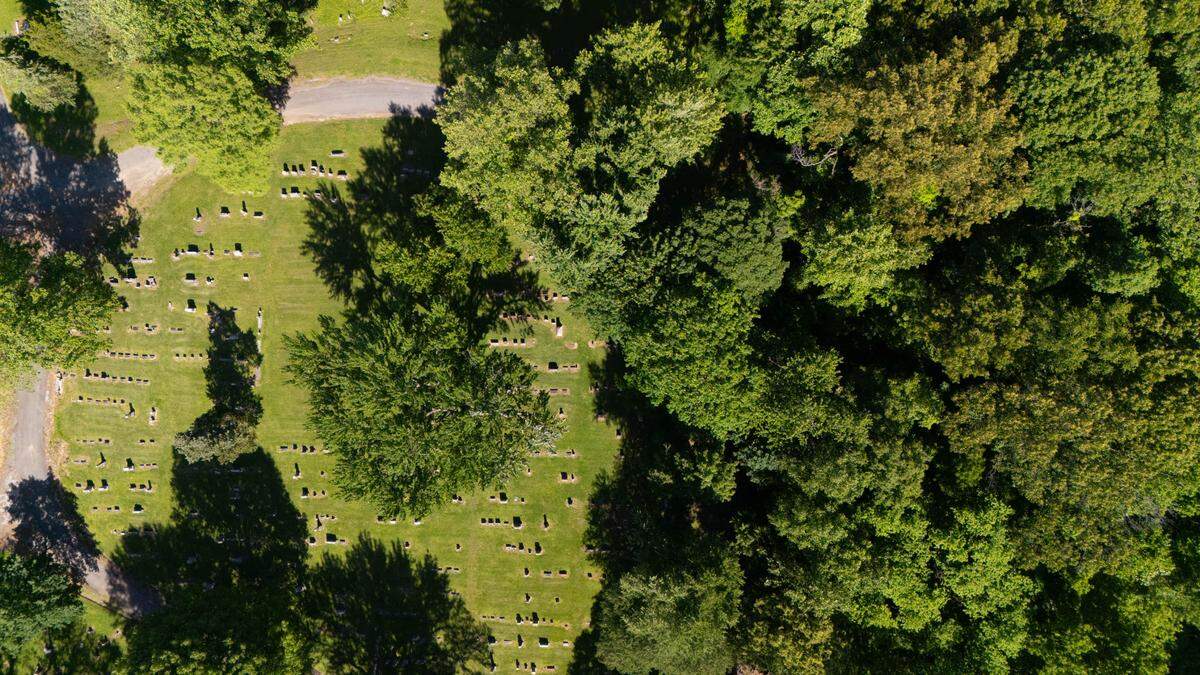
“People will never even know it’s there,” Hancock said, maintaining that a buffer zone of trees will hide solar arrays from public view on the slope that leads down to Schoenberger Creek and that designated corridors will allow animals to pass through.
That prompted opponents in the audience to shake their heads “no” in disagreement. Edward Ulkus, 66, a Belleville resident who often walks in the cemetery with his wife, Lisa Griffith, noted that visibility increases in winter, when leaves fall off trees.
Cornick showed a video of the sloping woods that she had shot at Mount Hope this week after flying from New York to St. Louis to attend the meeting. Belleville resident Amy Clark reacted with sarcasm.
“I’m so glad that you walked around our cemetery for an hour today, so you can really understand how much we love the sacred ground of Mount Hope,” said Clark, 48, who is co-administrator of a Facebook page for a group called Friends of Mount Hope Cemetery.
“I’m glad you experienced that for an hour, and you’ll get on your plane, and you’ll go back and hopefully never try another cemetery coup.”
Clark called it a “crime” to lease Mount Hope land to a for-profit company. Other opponents have argued that state law prohibits using cemetery roads for commercial purposes.
E. Gayle Schneider, who formed the Friends group from her home in North Carolina 11 years ago, also traveled a long distance for the meeting. She plans to be buried at Mount Hope next to her mother.
Opponents have criticized Schneider for not consulting other families with loved ones buried at the cemetery while working with the city and solar companies on the solar-farm plan for two years. She supports it as a way to fund maintenance, repairs and improvements.
At the meeting, Schneider, 78, spoke directly to opponents who have accused officials of withholding information from the public until the project was a “done deal.”
“I think (the solar companies) been acting in good faith,” she said. “But, believe me, if they mess up, I will be the first to hold their feet to the fire. But for God’s sake, don’t burn them at the stake before they even start the project.”
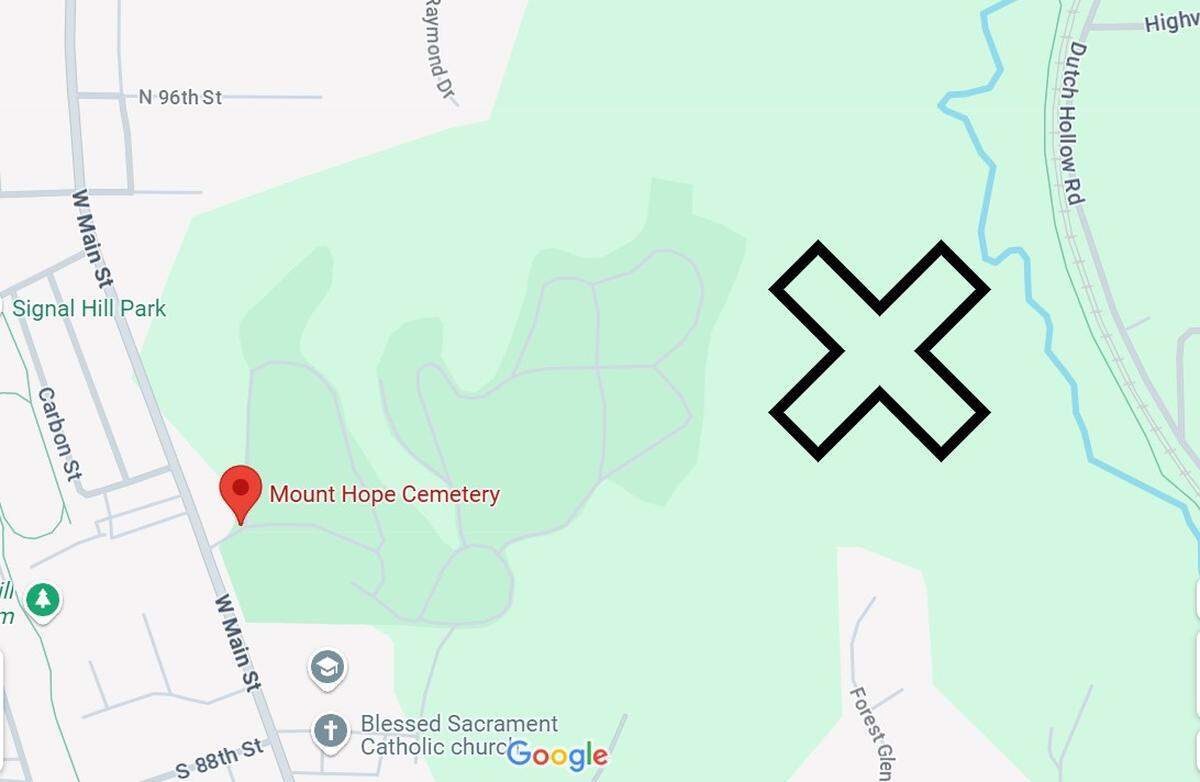
StraightUp Solar presented a third design for the solar farm, which is slightly different than the second one presented in December 2024. Solar arrays would be divided into three sections on the east side of the Mount Hope property, behind the burial grounds.
“This isn’t the final design, but we expect it to be close,” Cornick said after the meeting.
Construction is expected to begin before the end of the year, according to Cornick. Hancock said it would take about 18 months. Cliff Cross, the city’s former director of economic development, planning and zoning, formerly estimated three to four months.
All parties agree that the narrow, winding Mount Hope roads will be damaged by heavy construction vehicles. The solar companies have promised to repair them afterward.
Opponents have accused officials of rushing through decisions without adequate transparency. At the meeting, Cornick went through their timeline from July 2023, when solar-farm discussions began, to July 2024, when a lease agreement was signed.
“It took a team of people to put that together,” Cornick said, noting that they reached out to civic leaders and partner organizations in the community. “It took a lot of work.”
Berger and his wife, architect Amy Rangel, said they support renewable energy, but not cutting down trees to build a solar farm.
“I urge city officials to think long-term,” Rangel said. “What kind of city does Belleville want to be in 10, 25 years? How about several generations from now? Preserving our green spaces makes our city more desirable, and that brings people and tax revenue to support places like Mount Hope.”
The cemetery’s former owner abandoned it decades ago, leading to receivership and neglect. The city began maintaining the property in 2010 and bought it for $1 last year in a foreclosure auction. The solar farm would be operated by Belleville Solar LLC, owned by Shine.
Berger, 38, characterized the project as “Hofbrauhaus 2,” referring to the failed development of a giant brewery and restaurant off Illinois 15 that involved city investment.
Berger noted that the amount of money Belleville would receive from the solar farm has changed at least three times. Officials originally estimated annual lease payments of $75,000 to $80,000. That went down to $69,000. Now it’s $50,000 to $55,000.
“This project is a quagmire with a capital Q,” Berger said. “These solar people couldn’t accurately estimate the cost of hooking up to the grid, and we know why, because this site is unsuitable, and they sold the city on a deal that was too good to be true.”
Dale Kurrus, who operates Kurrus Funeral Home in Belleville, spoke in favor of the solar farm. He said Mount Hope had been in receivership three times and, before the city took over, it was in terrible shape.
Kurrus asked where opponents were years ago, when he and others were fighting for Mount Hope’s survival and working to keep its historical records from disappearing.
Another solar-farm supporter, Karlyn Clarida, said she admired officials for coming up with a creative way to fund the cemetery, listening to residents at public meetings last fall and adjusting their design to address concerns about wildlife and roads.
“We’ve got to think about this long-term, and I think this is a good compromise,” said Clarida, 70, who has an estimated 50 family members buried at Mount Hope.
Karen Welling, 69, read a statement at the meeting from her husband, Gene Canavan, who has hiked in the cemetery woods and used to go ice-skating on a pond on the property as a boy.
Canavan stated that the city should be “saluted” for buying Mount Hope and trying to come up with a way to fund it, but he called the site selection “rushed” and “ill-conceived” and accused the solar companies of falsely characterizing a healthy forest as “scrubland.”
Once the natural corridor is destroyed, he stated, wildlife won’t travel down a “dark, alley-like” path between solar arrays.
“Please plan for the long-term health and benefit of the cemetery, the city and city leaders’ reputations by saving every bit of greenspace existing in the city and plan to preserve new green spaces,” Canavan stated. “By all means, build a solar farm, but not in the cemetery.”
The Mount Hope solar farm got Part 1 approval in December 2023 from the Illinois Power Agency to participate in the lllinois Shines program, which provides incentives in the form of renewable-energy credits that can be sold to Ameren Illinois.
Mount Hope’s credits are valued at up to $7.2 million. Under the lease agreement, the city will receive a lump-sum payment of $250,000 and annual rent payments of $50,252 for the first 25 years and $55,311 for the last 10, totaling about $2 million.
At Thursday night’s meeting, Cornick told the crowd that the state receiver could’ve sold Mount Hope to a private company instead of the city. She showed a photo of how a dirt-hauling business had scarred the landscape at nearby Mount Carmel Cemetery.
“This was what was done next door,” Cornick said, pointing to a large brown hole in the middle of woods. “They used it to excavate soil.”
Opponents have argued that a decision by Mount Carmel’s private owners to lease land for a dirt-hauling business doesn’t mean the city should compound the problem by allowing commercial activity.
This story was originally published August 8, 2025 at 12:06 PM.