Belleville alderman wants to bring back vacant property program that city ended
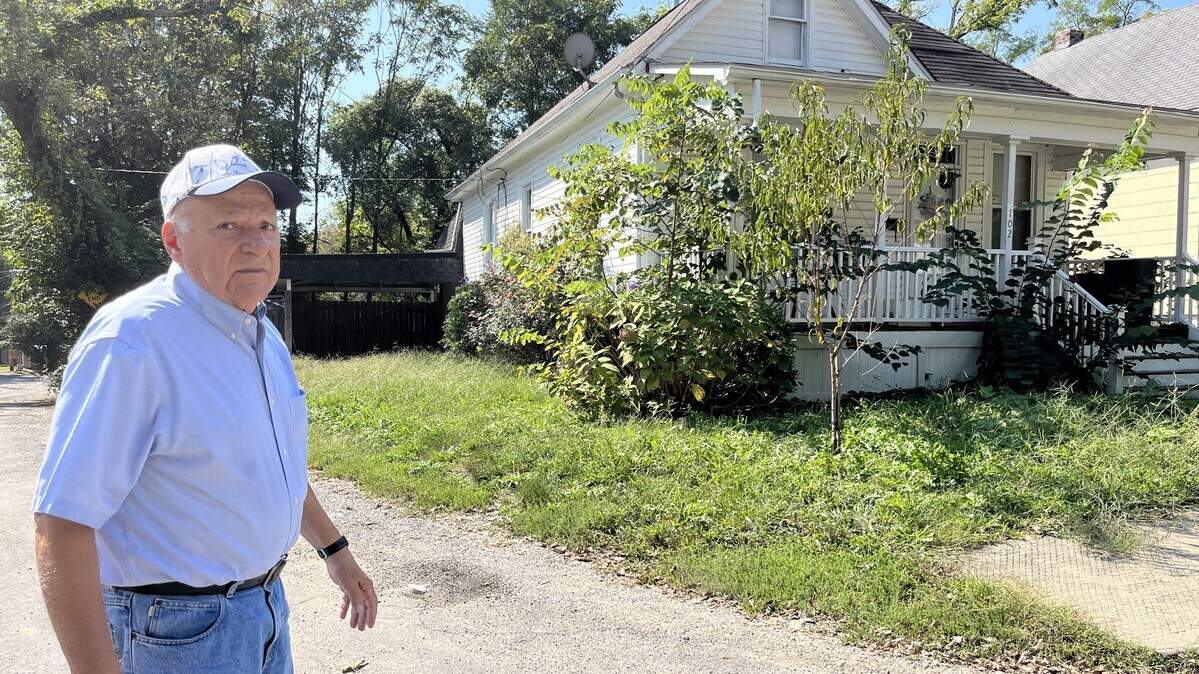
It’s been more than two years since Belleville City Council voted to repeal an ordinance that created a vacant property program, and Raffi Ovian believes it was a mistake.
The Ward 4 alderman had initiated the pilot program in 2018. His goal was to reduce the number of vacant homes and other buildings by establishing a timeline for owners to register them, get them inspected and renovate or demolish them to avoid fines.
Ovian argued that greater control over vacant buildings would also help alleviate problems with rental housing that was deteriorating under the ownership of what he called “slum landlords.”
“That’s what is destroying Belleville,” he said last week. “People are buying these derelict homes for little or nothing, and they slap on a coat of paint or do what they have to do to meet code, and then they don’t monitor the people who rent from them.”
Ovian was the only one of 16 aldermen who voted to keep the vacant property program in June 2023.
Director of Health, Housing and Building Scott Tyler had told the City Council that his department didn’t have the money or manpower to enforce the ordinance’s extensive list of requirements.
“The way it was written, it was impossible to enforce,” he said last week. “Belleville would’ve needed a whole new department just for that, and a budget of a half-million dollars or more.”
Mayor Jenny Gain Meyer, who served as city clerk when the ordinance was approved and repealed, said Ovian hasn’t talked to her about it since she was elected mayor in April.
Meyer said she wouldn’t support the same vacant property program, based on the city’s experience.
“It was cost-prohibitive and labor-prohibitive,” she said.
Addressing the derelict-housing crisis in Belleville was one of Meyer’s key promises during her mayoral campaign.
Last week, Meyer said her department heads are meeting once a month to brainstorm ideas and coordinate action. That includes a more aggressive legal approach to dealing with buildings that have city liens due to unpaid bills for services.
Officials also are exploring how the city could work with nonprofit organizations to get control of problem properties through the Illinois Abandoned Housing Rehabilitation Act, according to Meyer.
“We’re trying some new things in court,” she said.
Some metro-east communities, such as Edwardsville, Swansea and East St. Louis, have vacant property programs that require owners to register and submit plans for maintenance, rehabilitation or occupancy.
Other communities, like Belleville, rely on the occupancy-permit process and maintenance codes to regulate vacant buildings.
Ovian has been a vocal critic of people who don’t take care of their properties. He frequently patrols his ward, looking for tall grass and other ordinance violations that he reports for enforcement.
“I just want (the neighborhoods) to stay nice, and people appreciate it,” he said. “That’s why they don’t move. They know that their property values are going up.”
Ovian thought the city should do more to address derelict-housing problems in 2018, when he helped write the ordinance that created the vacant property program. The pilot began with two buildings in each of eight wards. Aldermen approved it 16-0.
The 16-page ordinance required:
- City officials to determine which buildings met the definition of being “vacant.”
- The city to send notices to owners with a list of obligations and notice of right to appeal.
- Owners to register their vacant buildings within 30 days and pay a $50 registration fee.
- Vacant buildings to be inspected inside and out, at the owners’ expense, to determine if they met city codes.
- Owners to submit plans, which could be approved, rejected or modified, to bring buildings into compliance.
- Windows and doors to be boarded up a maximum of three months, except when extensions were granted.
The ordinance stated that officials could require building owners to provide cash bonds of up to $25,000 to secure continued maintenance and reimburse the city for fees and expenses.
“A vacant building which is otherwise code compliant and secure, as determined by the Building Official on the basis of police reports, citizen complaints, and other information considered reliable by reasonable persons, may not remain vacant for more than two years,” the ordinance stated.
“(The building) must have an approved plan for occupancy, sale, demolition, or other disposition of the building in place within the timeframes established in this subchapter.”
The ordinance provided that building owners could be fined $250 to $1,000 for violations and squatters could be fined $100 to $1,000.
Tyler is a former alderman who voted for the ordinance in 2018. But, he said last week, it became clear that it was too labor-intensive, and it wasn’t enforced by the two housing directors before him.
Ovian argues that Belleville City Council shouldn’t have eliminated the vacant property program without trying to improve on it or replacing it with another plan.
“They all bought a pig in a poke,” he said.
This story was originally published October 21, 2025 at 5:45 AM.