What was it like in the Edwardsville courtroom for Alton mom’s sentencing hearing?
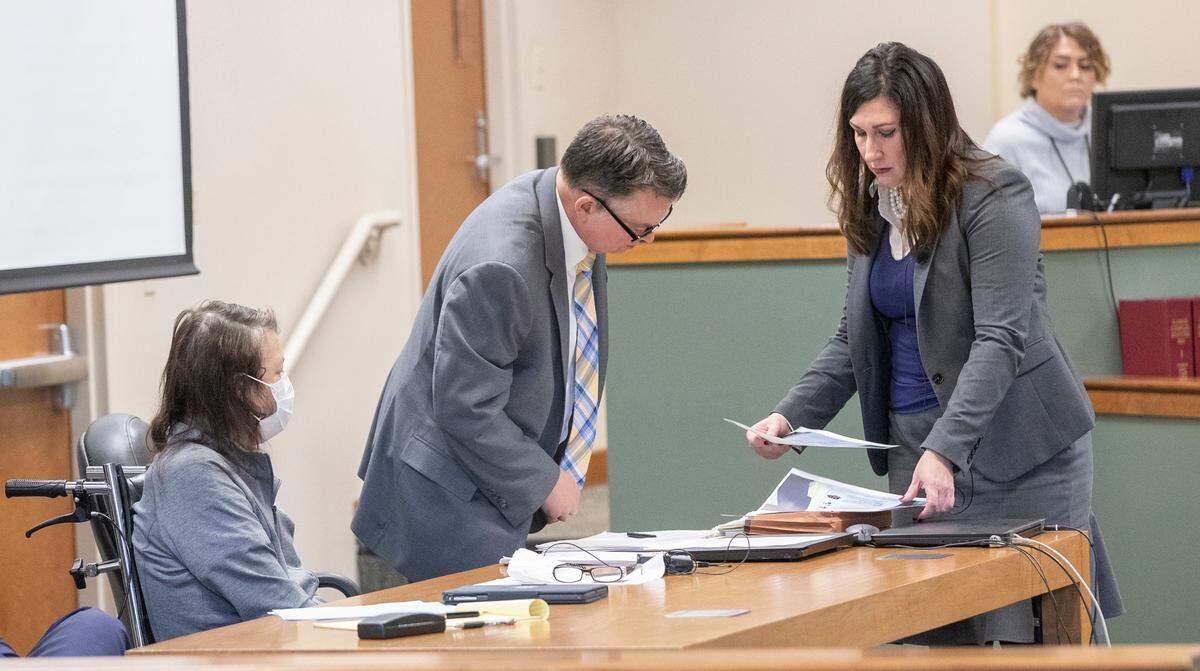
Amber Hampshire’s body shook as she tearfully read a statement in Madison County Circuit Court on Tuesday, begging the judge not to send her to prison.
Sitting in a wheelchair, the Alton woman expressed remorse for contributing to the 2018 death of her 14-year-old daughter, Emily, by failing to provide proper medical treatment for her diabetes.
Hampshire, 41, argued that her son still needed a mother, and her husband couldn’t care for him while working his job as a railroad engineer on call 24 hours a day.
“There’s not a day that goes by that I don’t relive every day of (Emily’s) life and think of all the choices I made and what I should have done,” Hampshire said. “It is a reoccurring nightmare that will not go away. We are a close family and losing Emily has profoundly affected each of us.”
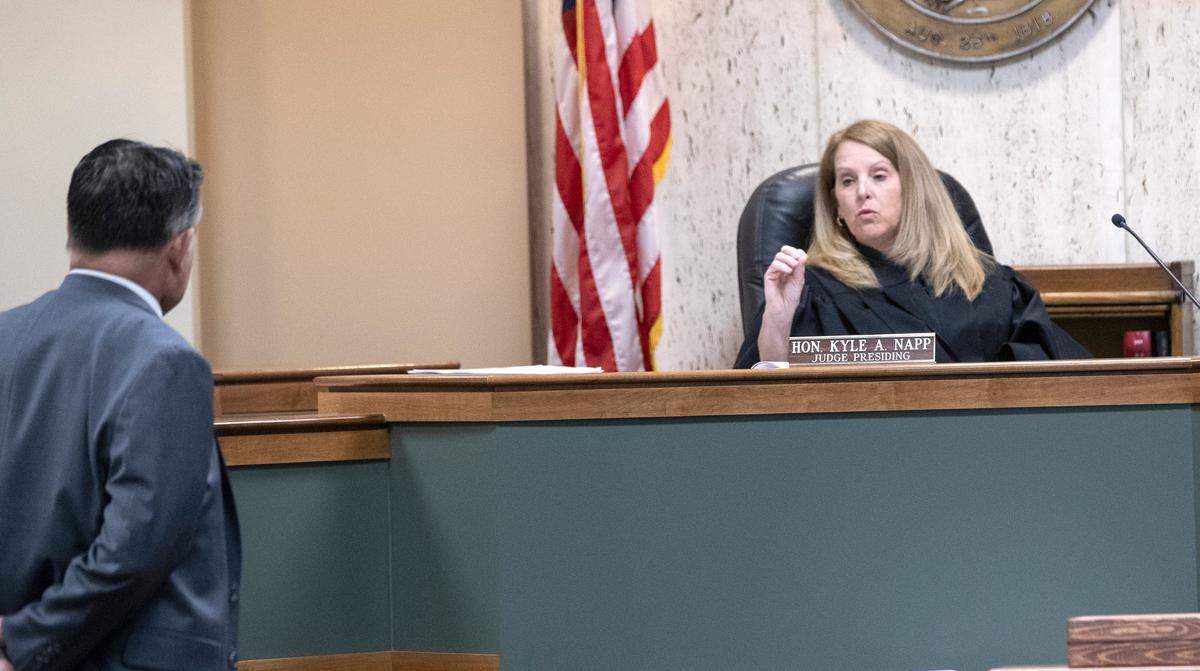
Judge Kyle Napp listened intently to the statement but ultimately rejected the defense’s request for probation. She sentenced Hampshire to seven years in prison for involuntary manslaughter.
That came at the end of a sentencing hearing that lasted nearly five hours and seemed more like a trial at times, with expert witnesses and cross-examination, in addition to emotional words from friends and family.
Napp pointed to a particular piece of evidence that the prosecution had introduced at the hearing, a text message that Emily had sent to a friend, telling him that she had diabetes but begging him to keep it a secret, as her mother had done for five years.
“(Emily) was alone in her fight,” Napp said somberly.
After the hearing, Hampshire was sent back to a rehab center, where she’s been recovering from a hospital stay. She recently had three toes amputated due to her own Type 2 diabetes, a fact that was revealed publicly for the first time in court Tuesday.
Napp ordered another hearing to be held in 30 days to assess if Hampshire is medically able to report to prison.
“I have no idea what Emily Hampshire would want,” Napp said. “I never had the pleasure of meeting her. ... I do believe she would try to protect her mom as much as she could, as much as a 14-year-old could.”
Diagnosis hidden from husband
Emily died on Nov. 3, 2018, of diabetic ketoacidosis, a problem of not being able to produce enough insulin.
She had been diagnosed with Type 1 diabetes in 2013, but her mother reportedly never filled her insulin prescriptions or otherwise followed a treatment plan developed by doctors.
Amber and Zachary Hampshire told Alton police that Emily had been sick for a couple of days before they found her unresponsive in their living room on Nov. 1, 2018, and called 911, according to Detective Sgt. Michael O’Neill, who testified on Tuesday.
When questioned by Assistant State’s Attorney Kathleen Nolan, O’Neill expressed his belief that Amber Hampshire had kept Emily’s diagnosis from her husband.
“He was very emotional (in a police interview after her death),” O’Neill said. “He seemed generally shocked about that information, given his knowledge about her condition, or lack thereof.”
Former State’s Attorney Tom Gibbons charged Amber Hampshire on Dec. 27, 2018, with one count of involuntary manslaughter involving a family member and one count of endangering the life or health of a child.
Hampshire pleaded guilty in October 2020 to the first charge, a Class 2 felony. The second was dismissed as part of her plea agreement.
Nolan and Assistant State’s Attorney Alison Foley are prosecuting the case. On Tuesday, they asked Napp to give Hampshire the maximum penalty of 14 years in prison to reflect the seriousness of her crime.
“The first responsibility of a parent is to ensure that their children are safe and cared for, and in this case, a mother’s negligence led to the tragic and completely avoidable death of her daughter,” current State’s Attorney Tom Haine said after the hearing.
“No sentence can undo the result of this fatal negligence, but justice was served with today’s sentencing.”
Involuntary manslaughter involving a family member is a Class 2 felony in Illinois, punishable by three to 14 years in prison.
Hampshire pleaded not guilty at her Jan. 10, 2020, arraignment. She backed out of a negotiated plea agreement in August before pleading guilty in October with an unspecified penalty.
Teachers didn’t know, either
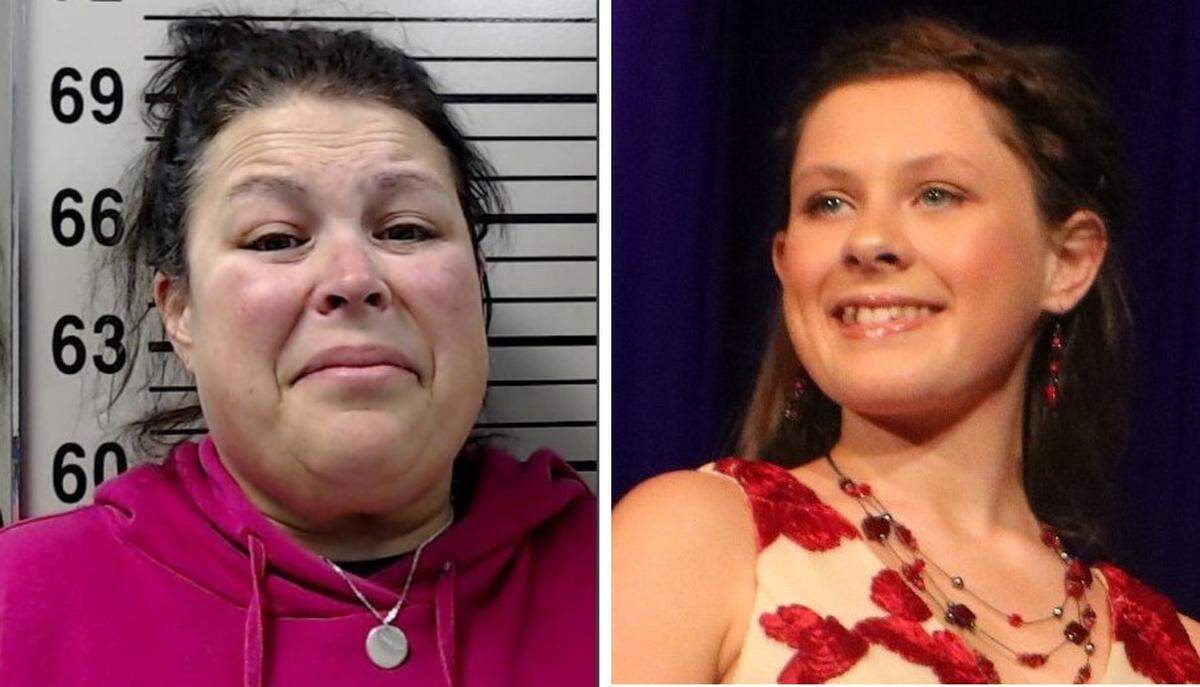
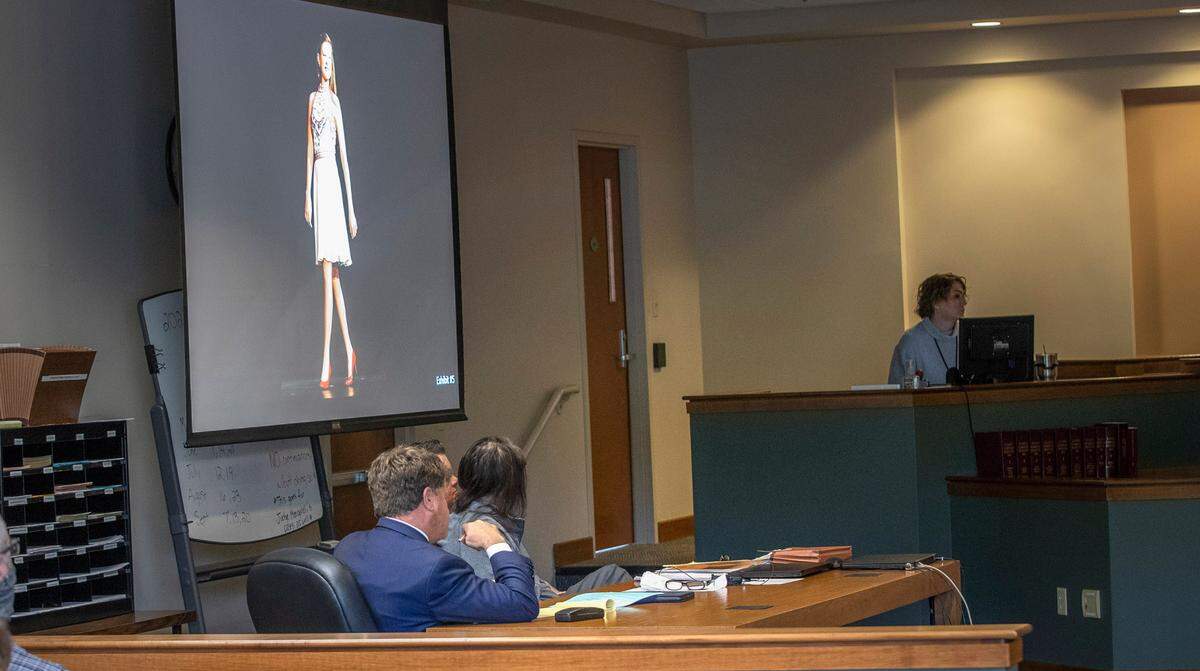
Emily was a student at Evangelical United Church of Christ School in Godfrey, a cheerleader, volleyball player and dancer who competed in Junior Miss Madison County Fair pageants.
At Tuesday’s hearing, a friend recalled the fun they had performing in school musicals and told of their plans to become college roommates.
Michelle Decker, Emily’s fifth-grade teacher and Student Council adviser, fought back tears while explaining that no one had warned her about Emily’s diabetes, even when the class went on a field trip.
“She was a brilliant, beautiful, talented and amazing young lady, whose life was taken out of this world way too soon,” Decker said.
The prosecution called two other witnesses, including Lindsey Reichert, an investigator with the Illinois Department of Children and Family Services, and Dr. Andrea Granados, a pediatric endocrinologist at St. Louis Children’s Hospital.
O’Neill and Reichert outlined their investigations, prompted by a call to the Southern Illinois Child Death Investigative Task Force hotline from Cardinal Glennon Children’s Hospital, where Emily died on Nov. 3, 2018.
After Amber and Zachary Hampshire called 911, Emily was taken by ambulance to St. Anthony’s Health Center in Alton then airlifted to Cardinal Glennon.
The staff suspected medical neglect after Amber Hampshire reportedly refused to sign a release so they could access medical records from St. Louis Children’s Hospital, where Emily had been diagnosed with diabetes in 2013 and was hospitalized in early 2018 for ketoacidosis.
“Typically, a 14-year-old just doesn’t die unless there’s some other major circumstances involved,” O’Neill said.
O’Neill and Reichert also testified that:
- Hampshire denied in a police interview that Emily had diabetes until confronted with medical records proving she had received information about the diagnosis and instructions for testing and treatment by multiple providers over the years.
- Police searched the Hampshire home and found brochures and other materials on diabetes in a drawer in Emily’s bedroom.
- Police found no evidence that Hampshire had ever filled prescriptions for Emily’s insulin or that she was following a recommended diet.
- St. Louis Children’s Hospital sent a health-care plan to Emily’s school, where Hampshire was working as a preschool teacher, and she told office personnel it was a mistake.
- Hampshire filled out a school physical form for Emily and checked “no” when answering questions about whether she had any health problems or special dietary needs.
- Friends didn’t know about Emily’s diabetes, but they were aware of her bed-wetting and heavy liquid intake, which can be symptoms.
Brother thought it was his fault
Investigators interviewed Emily’s younger brother, Ethan, to make sure he wasn’t being abused and to get a sense of how the household was handling Emily’s health problems, according to Reichert.
“He did not know what had happened to his sister,” she said.
“Ethan had reported that he had flu-like symptoms a few days prior to Emily dying, and he believed that whatever he had he gave to her, and it was his fault that she died.”
Hampshire was represented at the hearing by Alton attorneys Steve Williams and John Stobbs. They called one witness, Dr. C. Robert Cloninger, a psychiatrist and professor emeritus at Washington University in St. Louis.
Cloninger testified that he had spent 10 hours interviewing Hampshire and trying to determine why she would withhold medical treatment from her child.
He concluded that Hampshire suffered from “avoidant personality disorder” characterized by anxiety, hyper-sensitivity, shyness, low self-esteem, trust issues and lack of confidence.
Cloninger said Hampshire also had a “blind spot” when it came to Emily’s diagnosis because of the traumatic death of her grandmother, who had diabetes and died suddenly of a heart attack around the same time that Hampshire was diagnosed with diabetes at age 18.
Cloninger said Hampshire’s experience with the disease was that she only tested high on blood sugar intermittently, so she was largely in denial that it was a real danger.
“Her doctor explained to her that people can be vulnerable to elevated sugar levels (when) under stress and infection and ... pregnancy,” Cloninger said. “So she had grown up in her family believing that you’re not sick, you don’t have the disease, if you’re not symptomatic, and she was asymptomatic.”
Cloninger said this way of thinking carried over into Hampshire’s approach with Emily, who was happy and active most of the time.
Cloninger also argued that a “fragmented and dysfunctional” health-care system played a role in Emily’s case. He described Hampshire as a devoted and supportive mother who loved both her children dearly and returned to college so she could work at their school.
Williams read aloud letters of support from Hampshire’s brother and mother-in-law, asking that she be spared jail time.
In Judge Napp’s remarks at the end of the hearing, she took issue with Cloninger’s theories, saying Hampshire’s grandmother’s death was “just part of life,” not a sign of a traumatic childhood.
As for his take on the health-care system, “I call that ‘hogwash,’” Napp said. “The health-care system was the only thing that kept Emily alive for a few more years.”
This story was originally published May 12, 2021 at 7:00 AM.