Alton woman who killed infant daughters granted parole by Illinois Prisoner Review Board
READ MORE
Paula Sims coverage
Here’s the BND’s coverage leading up to the parole hearing for Paula Sims:
Expand All
After 30 years, Alton mother who killed her babies deserves mercy, attorney says
Alton woman who killed infant daughters granted parole by Illinois Prisoner Review Board
A timeline of events leading to the conviction of an Alton mother who killed her babies

Parole hearing today for Alton mom who killed babies. Here’s a look back at her trial
Madison County state’s attorney opposes Paula Sims’ parole. Here’s his letter to the board
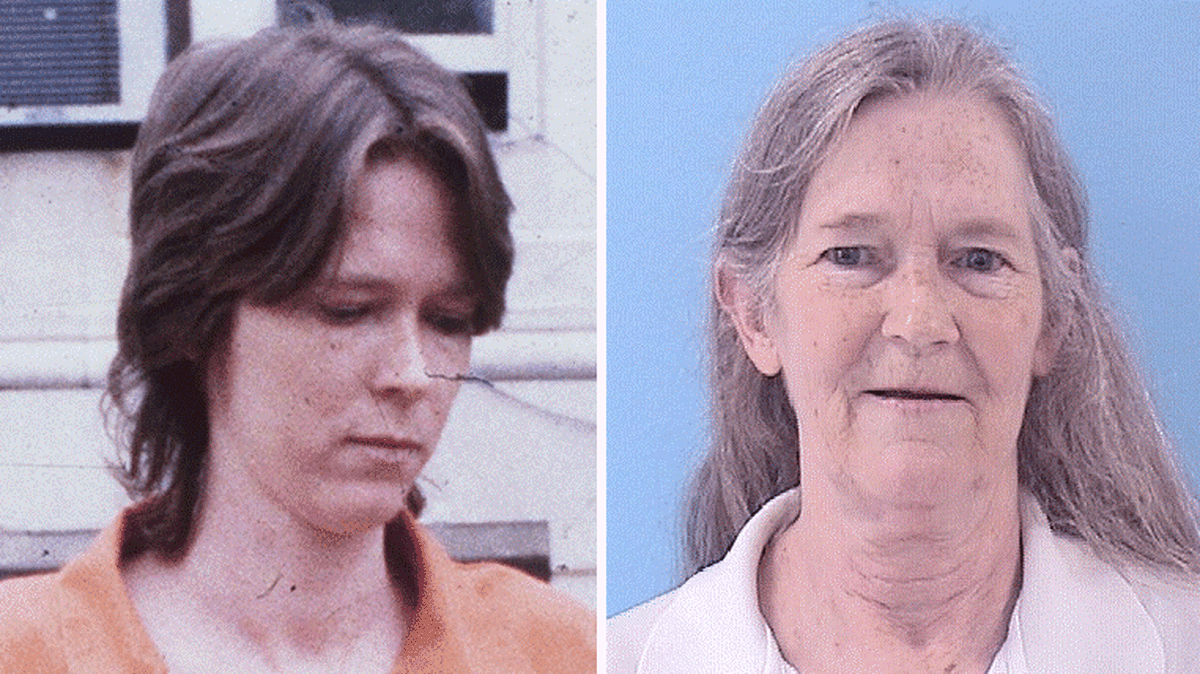
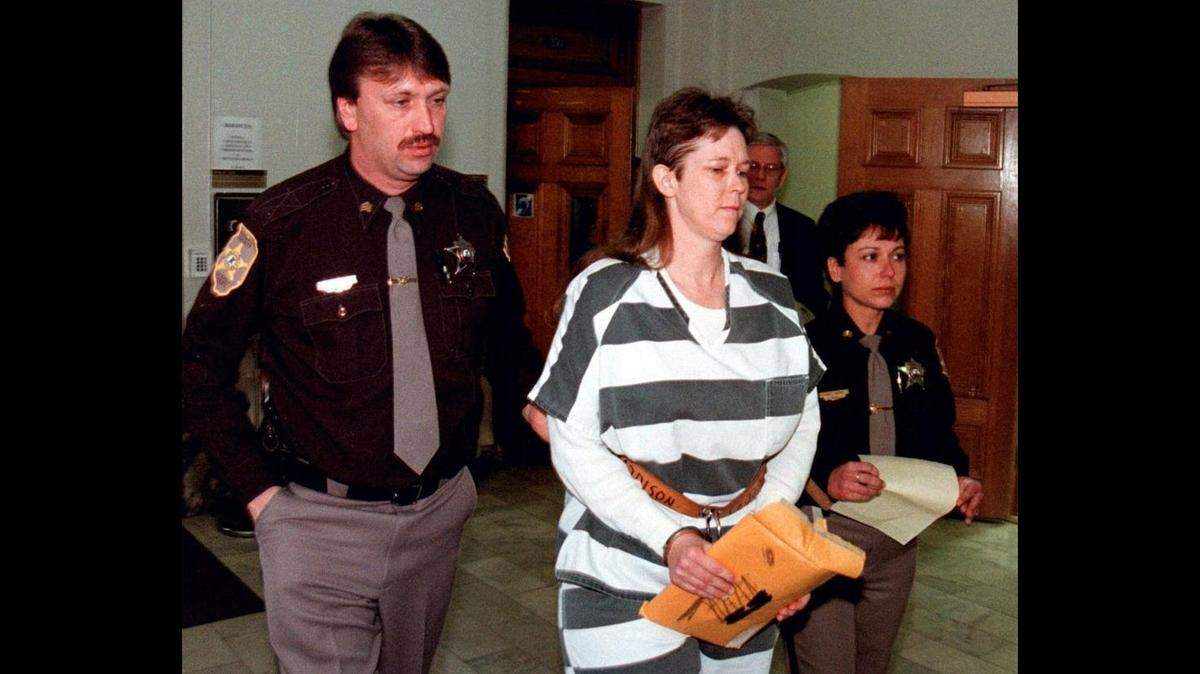
The Illinois Prisoner Review Board on Thursday granted parole to Paula Sims, a former Alton woman who killed her two baby daughters in the 1980s.
The board voted 12-1 after more than an hour of testimony and discussion.
“This was a great victory for women, a great relief for me and a great gift to Paula,” said Sims’ attorney, Jed Stone, who defended her at a Springfield hearing along with two psychologists who have worked with her.
“It is a recognition that postpartum psychosis is real and the women who suffer from that mental illness need to be treated and understood and not brushed aside for having the ‘baby blues.’”
It’s unknown exactly when Sims, 62, will be released from Logan Correctional Center, northeast of Springfield. She has been incarcerated for more than 30 years.
“It’s not uncommon for someone to be released the same day,” said Jason Sweat, chief legal counsel for the Illinois Prisoner Review Board. “It’s also not uncommon for it to take a couple of days, up to a couple of weeks.”
One factor is how much time is required for the Illinois Department of Corrections to verify that an inmate has an acceptable parole plan.
According to Stone, Sims will move to Decatur and live with the owner of a publishing company — for which she has worked as a book reviewer for years — and eventually become a dog groomer in Alabama.
The hearing at Crowne Plaza Hotel in Springfield began with a presentation by the Illinois Prisoner Review Board member assigned to Sims’ case. Donald Shelton said he interviewed her last month, read testimony from her trial, talked to psychologists and consulted books about postpartum psychosis.
Shelton recommended that the board vote to release Sims from prison, expressing his belief that she wasn’t an “evil” person.
“I trust in the judgment of the psychologists,” Shelton said.
Sims’ trial in 1990 was one of the most sensational and widely covered cases in Illinois history. It was moved from Edwardsville to Peoria because of intense publicity in the St. Louis region.
The jury convicted Sims of first-degree murder, concealing a homicide and obstructing justice in the suffocation death of her 6-week-old daughter, Heather Sims.
Paula Sims later admitted to the 1989 killing of Heather and 1986 killing of her other daughter, 13-day-old Loralei Sims.
Stone has argued that Paula Sims committed the crimes while suffering from postpartum psychosis, a rare mental illness that causes some new mothers to experience delusions, hallucinations and paranoia.
Stone said knowledge and understanding of postpartum depression and psychosis have evolved over the past three decades, and recent changes in Illinois law allow them to be considered as mitigation factors in sentencing.
Researchers have found that postpartum psychosis occurs in one to two mothers per 1,000 who give birth, and it can cause them to hurt themselves or their children.
Speaking on behalf of Sims at Thursday’s hearing were psychologists Susan Feingold, of Chicago, and Diane Sanford, of St. Louis, who have treated, studied and written about postpartum depression and psychosis.
About 25 people attended the hearing in support of Sims’ parole. After the Illinois Prisoner Review Board voted, the audience clapped, hugged and sighed with joy.
No one attended the hearing in opposition to Sims’ parole. Ex-husband Robert Sims, 63, and son Randall, 27, died in a Mississippi car crash six years ago. Paula Sims has no other close family, Stone said.
Madison County State’s Attorney Tom Haine sent a five-page letter to the Illinois Prisoner Review Board on Aug. 30, “strenuously” opposing Sims’ release.
Haine argued that Sims lied about her crimes for years to avoid punishment and confessed only after she was found guilty of murder and wanted to avoid the death penalty.
Haine characterized Sims’ request for clemency as a “shifting and far-fetched psychological story” that shouldn’t change the conclusions of jurors at her trial or the decisions of judges who handled appeals, petitions and other court reviews over the years.
“Post-partum depression is a difficult mental illness and complicated issue,” Haine wrote. “But in this case, Defendant’s claims about her psychological state from decades ago have been fully litigated and her life sentence maintained.”
Illinois Gov. J.B. Pritzker commuted Sims’ sentence in March from life without parole to life with the possibility of parole.
This story was originally published October 28, 2021 at 1:22 PM.