What impact do exemptions for disabled vets have on your property taxes? Are they fair?
Editor’s note: This story was updated 9:09 a.m. Monday to correct the number of losses due to the exemption for O’Fallon Township High School.
A property tax exemption for disabled veterans means lost revenue for school districts and higher tax rates for noneligible homeowners.
In 2020, the exemption cost O’Fallon Township High School $1.4 million, according to Superintendent Darcy Benway. That’s a 248% increase in losses from 2015. Since 2018, Belleville Public School District 118 has missed out on $1.6 million in revenue, and O’Fallon School District 90 has lost a total of $8.8 million since 2015.
Charlotte Vielweber, 73, is a lifelong resident of Freeburg and says she feels the exemption is “an insult to homeowners who pay property tax.”
The retired school nurse is frustrated that many of her neighbors pay zero property taxes when she and her husband, a retired AT&T technician, have paid all their lives — and are paying more now as the disabled veteran population in St. Clair County grows.
Vielweber’s father served in the South Pacific in WWII, and she says she deeply respects veterans.
“But this law diminishes the integrity of the property tax system,” said Vielweber, who would like to see stricter requirements for the exemption.
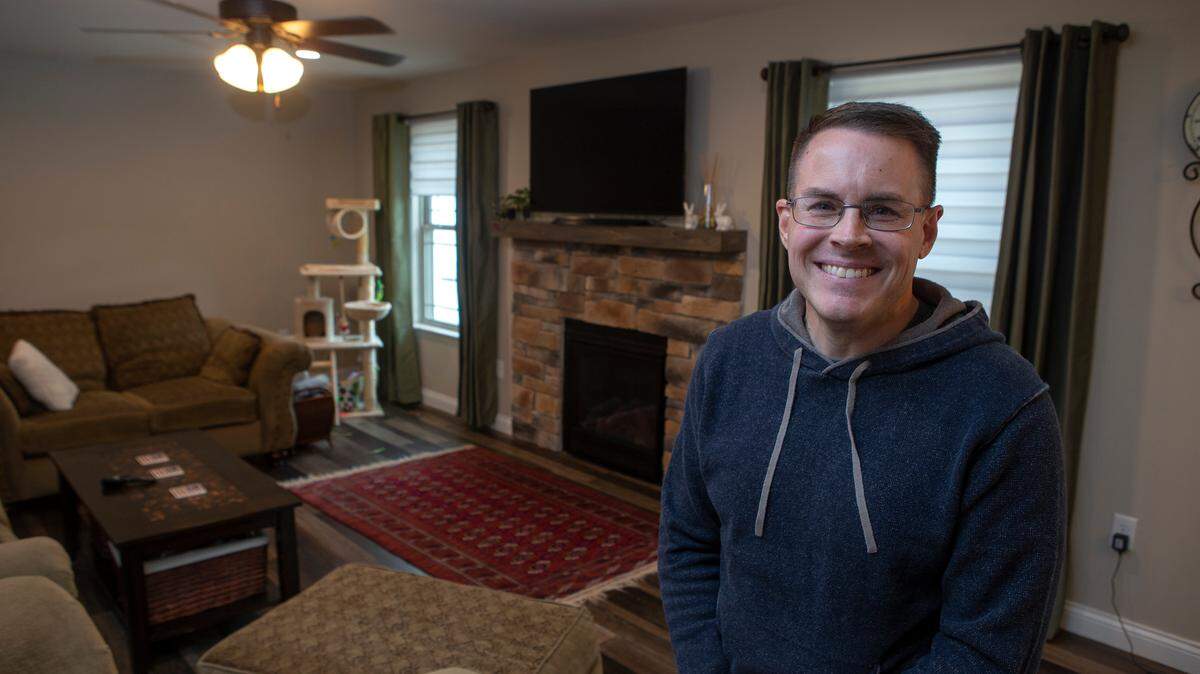
Col. Jeremiah “Scot” Heathman said veteran disabilities are often misunderstood. He’s vice commander of the 18th Air Force at Scott Air Force Base, but spoke to the BND as a recent Shiloh homeowner.
“There’s a deeper understanding that needs to happen here about what a disabled veteran looks like,” Heathman said. “It looks different for almost all of us. It’s not Lieutenant Dan from Forrest Gump.”
Heathman, 47, is near retirement after 25 years in the military, and he and his family chose to stay in the metro-east.
They’ve lived on base for three years, marking the first time their 17-year-old son has been able to stay in a school district for more than two years. Heathman and his wife want him to graduate from Mascoutah High School, and then they want to stay because they love their community, he said.
“We are so appreciative that there are states out there like Illinois that are willing to do so much for its veterans. I hope it’s reciprocal when you find a lot of us wanting to stay in your communities. We want to grow our roots here because you care,” said Heathman, who could qualify for exemptions after he retires.
While the exemptions do have an impact on schools, districts also receive reimbursement from the federal government for the number of servicemember’s children they teach. Heathman said residents should also consider the value Scott Air Force Base and veterans bring to the community, though they might not pay property taxes.
“We want to stay in this community. I want to start a business in this community,” Heathman said. “I’m doing everything a local citizen can do to bring to the community.”
Here are answers to some questions readers asked after the BND’s report on the veteran property tax exemption was published online last week:
My neighbor seems fine. Why are they eligible?
What if your neighbor isn’t paying any property taxes because they are eligible for the exemption, and you see them out mowing the lawn and leaving for a full-time job every day?
They could still have disabilities from service.
There’s no way to judge someone on a disability just by looking at them, said Karen Tamley, president and CEO of Access Living, a Chicago-based disability advocacy organization.
“Disability is diverse,” Tamley said. “It’s impossible to make a judgment based on what you see on the surface.”
It doesn’t mean there isn’t fraud in the system, Tamley said, but it’s important to consider what might be happening in a person’s life. A disability could be a mental disorder, limited mobility or chronic illness.
Joel Funk, a 38-year-old veteran from Mascoutah, is fully disabled as rated by the VA. In additional to operating his family farm, he’s a member of the school board, has run for Congress and is running for St. Clair County Board District 21.
At face value, no one would assume Funk will qualify for 100% property tax forgiveness once he takes over ownership of his farmstead home. They don’t see the pain caused by his double reconstructive knee surgeries or the limited mobility in his neck caused by a thousand flight hours wearing a heavy helmet.
“It’s easy to say, ‘I support the troops,’ but then (harder) on the back side to try to understand and accept what that means,” Funk said.
Even if a veteran did their job mainly behind a computer, they likely had to go through the same training as peers who faced combat, Funk said. A friend of Funk’s who served alongside him took a bad jump out of a helicopter during training and landed in a tree, severely injuring his leg.
Funk feels as if veterans can’t win either way when they talk about their disability. If they talk about it, they’re seen as “crying out for attention or not being strong enough.” If they stay silent, they risk worsening mental health problems and missing out on benefits, or they face accusations of faking disabilities.
He believes this stops veterans from seeking help.
“You don’t want people’s sympathy, so you compensate, whether it’s mentally or physically,” Funk said.
How do veterans qualify for the exemption?
The U.S. Veterans Administration assesses disability in veterans by percentage. To qualify for full property tax forgiveness, a veteran in Illinois must be at least 70-100% disabled from a service-related injury or illness.
That could be a visible disability such as one that puts a veteran in a wheelchair. Or it could be an invisible disability such as hearing loss or post-traumatic stress disorder, which is sometimes linked to disorders like sleep apnea.
The VA recommends servicemembers begin the disability assessment process six months before leaving the military, Heathman said. Depending on how long they were in service, it can take that long to collect all their medical records.
“This is a very rigorous system and it takes a lot of time,” Heathman said.
Usually a nonprofit organization such as the Disabled American Veterans assists a veteran with applying for the assessment and putting in a claim, Funk said. The VA will later contact the veteran to schedule an appointment with a third party doctor for a medical evaluation. The doctor assesses current medical issues, as well as those that could develop in the future, Heathman said.
Using results from that evaluation, the VA will make a determination on percentage disability.
What’s the median assessed value of exemptions?
In St. Clair County, roughly 4,000 parcels were eligible for 100% property tax exemption, according to assessor records.
The county uses a property’s “assessed value” to calculate property taxes. The median assessed value of fully exempt properties was $73,446 in 2021.
The assessed value is different from the market value, or a property’s selling price. The selling price can be affected by a number of factors such as curb appeal, square footage or location.
The median selling price of a home in St. Clair County from 2016 to 2020 was $134,800, according to the U.S. Census Bureau.
Here are some other exemption statistics from assessor’s office data.
- One of the median homes with $73,446 in exempt assessed value was in Belleville and sold for just over $223,000 in 2013. The home’s owners in that tax year paid $6,450 in property taxes prior to the exempt owner buying the property. Another in Belleville with the same assessed value sold for $196,000 in 2013.
- Nearly 24% of the fully exempt homes had an assessed value of less than $50,000. One Belleville home worth roughly that sold for $127,000 in 2013. Taxes on that home were roughly $3,680 in that tax year.
- About 21% of fully exempt homes had an assessed value of more than $100,000. One O’Fallon house with roughly that assessed value sold for $225,025 in 2008. Property taxes totaled $6,831 in 2018, the year before the exemption went into effect on that home.
- The home with the highest assessed value was in Swansea and valued at $254,736 in 2021. It sold for $741,394 in 2016 and the homeowners paid $19,470 in property taxes in 2019 before the exemption went into effect.
- The home with the lowest assessed value was in Cahokia and valued at $2,653. It hadn’t been sold in recent years.
Vielweber isn’t concerned with the exemption for lower-value homes. She takes issue with the exemption for veterans “who never served in combat and whose household income may be in six-figures survive in a home appraised at $750,000.”
Funk says it’s a stereotype that veterans depend on benefits and can’t contribute to society. The wealthy, successful disabled veteran defies that stereotype.
“There is a stigma that we go off to war, we get screwed up and, when we come home, we’re not able to integrate — or that we’re basically freeloaders or drinkers, not able to hold a job.”
What is the exemption like in other states?
All 50 states have some form of property tax exemption for disabled veterans, but Illinois’ is one of the most generous.
It’s partly many veterans choose to call St. Clair County home, Heathman said. Disabled veterans contribute billions in economic value back to their communities, he added.
Laws differ in other states.
In Texas, fully disabled veterans are exempt from all property tax, but a veteran with a 70-100% disability rating may only receive $12,000 of the assessed value in exemptions. Veterans from 50-69% receive $10,000.
In Arizona, a disabled veteran may receive a property tax exemption of $3,000 on a primary residence if the assessed value doesn’t exceed $10,000, according to mortgage lender Veterans United.
California offers an exemption as long as the home’s assessed value doesn’t exceed $100,000, which the state adjusts for inflation. The state also provides an exemption to low-income veterans whose homes are assessed at less than $150,000.
In Arkansas, disabled veterans full exemption on a primary residence if they are fully disabled because of their service, are blind in one or both eyes or have lost of the use of one or more limbs.
What can be done to change the exemption?
Either the VA would have to change the disability assessment or Illinois lawmakers would have to adjust the law.
That’s what Vielweber would like to see happen.
“The issue is not with veterans. The issue is with the law,” Vielweber said. “No one would suggest, myself included, eliminating property tax relief for disabled veterans.”
She worries noneligible residents will leave Illinois because they have to pay higher taxes, though veterans might stay.
“Can the non-veteran, blue-collar worker afford the continued shift in property taxes resulting from this law?” Vielweber asked.
One way to reduce the exemption’s impact on local taxing bodies would be to cap the assessed value or tie it to income, as California does. If someone lived in an extravagant house with a high assessed value, they might not be eligible.
Another idea would be to have the state reimburse local government for revenue losses or for avoid rate increases, an idea mentioned by state Rep. Jay Hoffman, D-Swansea, in a March hearing in Springfield.
Vielweber said she would like the exemption only be available to combat veterans.
Heathman said he loves his community, and hopes government, education and military leaders can work closer on the issue in the future.
“A community comes together to solve problems,” Heathman said.
This story was originally published April 11, 2022 at 7:00 AM.