
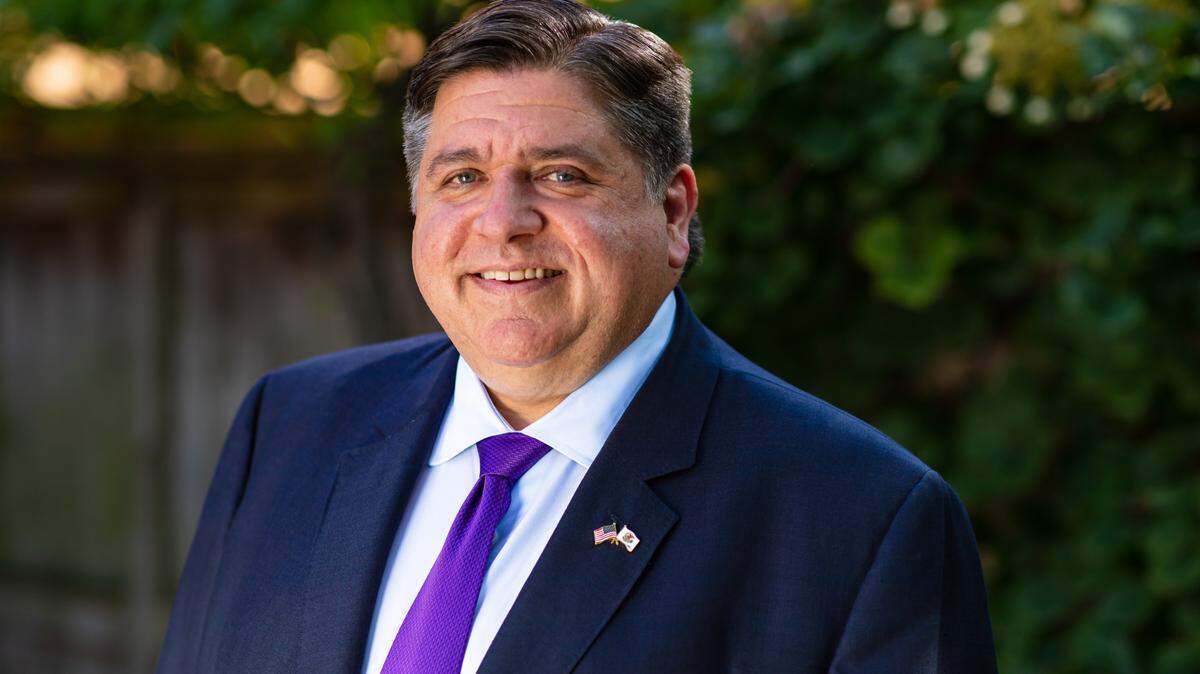
J.B. Pritzker, Democratic candidate for governor of Illinois
READ MORE
More on the Democratic candidates running for Illinois governor
Illinois governor. Candidates are listed alphabetically.
Expand All
Name: J.B. Pritzker
Political party (if applicable): Democrat
Age as of June 28, 2022: 57
Campaign website or social media page: JBPritzkercampaign.com
Office seeking: Governor
Are you an incumbent?: Yes
Have you run for elected office before? (Please list previous offices sought): Candidate for U.S. House, 1998
Occupation: Governor of Illinois
Education: Duke University (BA), Northwestern University (JD)
Please list highlights of your civic involvement
Governor, Hillary Clinton for President, National Co-Chair, Candidate for U.S. House, Founder, Democratic Leadership for the 21st Century, Senator Alan Dixon, U.S. Senate Legislative Assistant, Congressman Tom Lantos, U.S. House Staff Assistant
Who are your top three campaign contributors?
N/A
Why are you running?
I am running for reelection alongside Lt. Governor Juliana Stratton to safeguard and build upon the meaningful progress we’ve made putting state government back on the side of working families.
Previous administrations left Illinois’ finances in dire straits, but from day one I have focused on putting Illinois on firmer fiscal footing — proposing, passing and signing four balanced budgets, eliminating the bill backlog, restoring the Budget Stabilization (“Rainy Day”) Fund to its highest level ever, and paying down the state’s short- and long-term debt.
Illinois state government is now a fiscally responsible one, allowing us to save taxpayers money, put dollars back in taxpayers’ pockets, and lower our state’s interest payments with the first credit upgrades in over two decades. We’ve also made historic investments to rebuild our roads, bridges, parks and schools — improving the lives and livelihoods of Illinoisans.
Even when there are disagreements, it’s up to the Governor to work with the General Assembly to ensure residents have access to good-paying jobs, a quality education, and affordable health care, and that’s what I’ve fought for since day one. There is so much at stake in this election, and Juliana and I will continue to fight for even greater access to livable wages, good-paying jobs, affordable health care, and quality educational opportunities for all Illinoisans from Carbondale to Metro East to Champaign to Chicago.
What is the top issue in your race, and how would you address it?
There is so much at stake in this election: the right to choose, living wages, good-paying jobs, balanced budgets, access to affordable health care, and the safety of our communities.
Together, we’ve raised the minimum wage and lowered taxes for more than 90% of Illinoisans; launched the largest program to build roads, bridges, schools, and broadband in Illinois history; expanded health care, child care, and early childhood education; and put Illinois back on the path to fiscal stability.
We’ve also reversed the damage Republicans did when they defunded public safety programs during the budget impasse of the Rauner years. We’ve grown the number of state police troopers and provided an unprecedented amount of funding towards youth employment and violence interruption programs. We’ve invested in new state-of-the-art crime labs and enhanced witness protection programs to help law enforcement solve crimes faster and keep communities safe. We will continue to support public safety measures, invest in the tools law enforcement needs to prevent and solve crimes, and support violence prevention programs that keep communities safe.
In a world that feels increasingly more like us vs. them, my administration remains committed to working together with Democrats, Republicans, Independents, and everyone in between to get big things done and deliver real results for people in every corner of the state.
Why should people vote for you?
My values have led me to fight for and deliver bold victories that are making measurable improvements to people’s lives. I’ve gotten big things done and put Springfield on the side of working families.
Through some of our state’s darkest hours, I have led with conviction and compassion––providing strong leadership through tough times. In my first term as Governor, I’ve brought Republicans and Democrats together to achieve the largest infrastructure program in state history, a bold plan to expand clean energy production, tax cuts for 90% of Illinoisans, and pension reform that will alleviate the upward pressure on property taxes.
I’ve supported working families in every corner of the state by ensuring equal pay for equal work, codifying a woman’s right to choose, and implementing the nation’s largest small business grant program.
I’m delighted at how much we’ve been able to accomplish together in just three and a half years and remain committed to putting Illinois back on the right track. The results are plain to see, including achieving a population increase that moved Illinois from the 6th most populous state to the 5th most populous state.
Throughout my life I’ve taken on big challenges and delivered even bigger results, and if reelected, I’m determined to deliver even more historic progress for families across Illinois.
If you’re an incumbent, describe your most significant achievement in office and a single policy you would like to work on in your next term, if you were reelected. If you’re not an incumbent, describe your greatest professional or civic achievement and a single policy you’d work on if you’re elected.
I’ve stabilized and improved our budget and restored fiscal responsibility to state government. When I entered office, the challenges facing this state were significant: two years without a budget. Not paying bills on time and wasting billions of dollars in interest payments. Credit ratings that had dropped for 10 years in a row. But each day since my inauguration, I’ve awakened with the question of what more we can do to lift up working families, and to make this state stronger. I’m proud to have signed four balanced budgets, eliminated the state’s massive bill backlog, and achieved six credit rating upgrades to Illinois for the first time in decades. By doing so, we’ve saved taxpayers hundreds of millions of dollars in the process, making sure the government does its job so that Illinoisans can focus on theirs. And we’re addressing the issues that matter most to families by expanding access to affordable healthcare, raising the minimum wage, and making childcare more affordable. We’re creating jobs, providing tax relief to more than 90% of Illinoisans, and protecting a woman’s right to choose. I realize there’s more work to be done, especially to lift up those who have too often been left out and left behind. Perhaps the most important thing we can achieve over the next four years is to put a focus on our young people by attaining greater college affordability and expanded early childhood education and childcare. Illinois ought to be the best place in the nation to raise young children and provide them with an outstanding education. Although we’ve achieved more than $2 billion of additional funding for all levels of education, raised the minimum wage for teachers, and implemented scholarships to attract more teachers into the profession, there’s still more to do.
What policies would you pursue to help Illinoisans recover economically from the impacts of the COVID-19 pandemic and deal with inflation?
There’s no corner of earth that hasn’t been touched by the deadly COVID-19 pandemic. Saving lives and livelihoods has been my primary focus for more than two years.
With no help from Republicans, I’m proud that Democrats voted to implement one of the largest and fastest programs to provide rental and mortgage assistance to support people’s ability to retain their homes and keep landlords afloat during the toughest moments of the pandemic. Democrats also crafted an equity-focused business relief program — the largest state program of its kind — supporting small businesses during the peak of the pandemic. We provided assistance to over 12,000 businesses to keep their doors open and keep people employed. But the pandemic is not over, and Illinoisans are now experiencing the impacts of inflation.
My administration continues to leverage federal funding and offer support to working families and small businesses. The budget I recently signed into law contains $1.8 billion in family tax relief, bringing real improvements to the lives of working families and setting us up for a stronger fiscal future. We’re suspending the grocery tax, freezing the gas tax, permanently expanding the earned income tax credit, and providing property tax rebates and direct payments to families. Through measures like these, the State is supporting our state’s residents during this difficult time.
How would you deal with a resurgence of COVID-19? What policies would you put in place to keep people safe while also supporting business and the economy?
Throughout the pandemic, I’ve had one mission: keep as many people alive and safe as possible. You can’t have a thriving economy when workers and their families are getting sick. Illinois was one of the first states in the nation to slow the spread of COVID-19 through free testing and we later became the vaccination leader of the Midwest. Therapeutics are now widely available across the state and are helping to save the lives of the unvaccinated and the elderly. We also implemented an equitable response that ensured all residents, including communities of color and those hit the hardest, had access to vaccines and testing.
I am committed to continuing to follow the science while building up our healthcare system and mitigating as many economic impacts as possible. The budget I recently signed into law reflects the State’s commitment to supporting vital healthcare providers through the pandemic. We’re providing hundreds of millions of dollars in hospital tax relief and grant funding for safety net hospitals, improving nursing home staffing, waiving licensing fees for nearly 470,000 frontline healthcare workers, and creating a new Pipeline for the Advancement of the Healthcare (PATH) Workforce grant program to train and provide support to students entering high demand healthcare professions. The State is also continuing to support businesses and the economy through critical funding for workforce development initiatives, waiving retail liquor license fees, expanding minority entrepreneurship programs, and continuing to make improvements to our roads and bridges statewide.
Because of its large veteran population, St. Clair County is disproportionately affected by a disabled veterans property tax exemption that shifts the burden onto other taxpayers. What solution would you propose to alleviate the burden while also maintaining support for veterans?
I have taken action to address the property tax burden statewide for veterans and working families. For decades, police and fire pension systems have become increasingly underfunded, placing significant pressure on local governments to raise property taxes. In 2019, I proposed and signed the new law consolidating nearly 650 downstate and suburban first responders pension systems to lower costs and raise returns, and these consolidated funds are projected to save taxpayers billions of dollars over the coming 20 years and reduce the burden of property taxes. Already the consolidation has yielded savings.
Additionally, Illinois state government has historically provided nearly the lowest percentage of school funding in the nation, leaving local school districts to carry an inordinate burden of paying for their schools. During my term in office, the General Assembly and I have increased state funding for schools, allowing school districts to alleviate the burden on property taxpayers.
Finally, I proposed and signed into law a doubling of the property tax rebate for homeowners, now up to $600 per household, helping veterans and working families deal with the current effects of inflation.
How would you address crime in the metro-east while ensuring your policies don’t unfairly impact people who have disproportionately targeted by the criminal justice system?
Every neighborhood and every home in Illinois deserves to be free from violence, and I am committed to public safety for everyone. Hiring police who are highly trained and who target perpetrators based upon evidence of crimes committed and not on the color of their skin is essential for our communities, and that is precisely what I’ve invested in.
I’ve hired more state police than at any time in the last decade, including authorizing the largest state police cadet classes in history. And we’ve invested in more training for those cadets. With the strong partnership between the Illinois State Police (ISP) and local law enforcement throughout Metro East, these additional troopers are essential for crime fighting in the region.
To reduce crime, law enforcement must solve crimes. That’s why I’ve worked with the General Assembly to provide law enforcement with the tools they need catch criminals based on evidence. We’ve provided new security for witnesses with the Gang Crime Witness Protection Program, invested in new state-of-the-art crime labs, doubled patrols to address expressway shootings, and hired forensic scientists, DNA program specialists, and evidence technicians.
On my third day in office, I signed legislation creating the Firearm Dealer License Certification Act, requiring any gun dealer in the State of Illinois to be certified by the Illinois State Police and creating the Gun Trafficking Information Act, requiring ISP to publish key information related to crime-related firearms. We’ve modernized the Firearm Owners Identification (FOID) card system, required universal background checks on all gun sales in Illinois, cracked down on organized retail theft and ghost guns, and bolstered state and local coordinated task forces to catch and prosecute carjackers. ISP has also significantly reduced the backlog of DNA and rape kit evidence, allowing local law enforcement to solve crimes even faster.
Since taking office in 2019, I have more than doubled violence prevention, diversion, and youth employment funding. And we’ve invested more to support local police and invest in the tools law enforcement has asked for.
Safe neighborhoods and a fair criminal justice system are a right every Illinoisan deserves, and Metro East will benefit greatly from the investments we’ve made.
This story was originally published May 31, 2022 at 9:17 AM.