Masks can limit spread of coronavirus as IL reopens from shutdown. Will you wear one?
Three months ago, it would have been unthinkable for most Americans to go out in public wearing surgical masks, homemade face coverings or bank-robber-style bandannas.
Who could have imagined that some states, including Illinois, would actually require people to wear masks in stores and offices? That the decision of when, where or whether to cover your face might be viewed as controversial? That fights would break out over it?
The COVID-19 pandemic has led us to this point.
A security guard at a Target store in Van Nuys, California, suffered a broken arm during a confrontation with two men who refused to wear masks earlier this month. Another security guard was shot and killed at a Family Dollar store in Flint, Michigan.
“When I see those stories, it makes me sad,” said Dr. Jason Newland, a Washington University infectious disease specialist at St. Louis Children’s Hospital. “And the reason it makes me sad is that the way we’re going to get through this pandemic and the way we’re going to get through it most successfully is by working together and having a unified approach.”
Protesters have taken to the streets without masks in several states, arguing that coronavirus-related restrictions violate their rights as U.S. citizens. They’ve received support from President Donald Trump, who has declined to cover his face in public.
There also have been altercations related to people confronting those they consider irresponsible for refusing to follow mask rules to help with prevention.
On Friday, North Dakota Gov. Doug Burgum fought back tears while condemning “mask-shaming” by residents who assume that people covering their faces are making political statements. He noted that some may be at risk due to cancer treatments or other health conditions.
“We’re all in this together, and there’s only one battle we’re fighting, and that’s the battle of the virus,” said Burgum, who isn’t requiring masks in his state.


What is the law in Illinois?
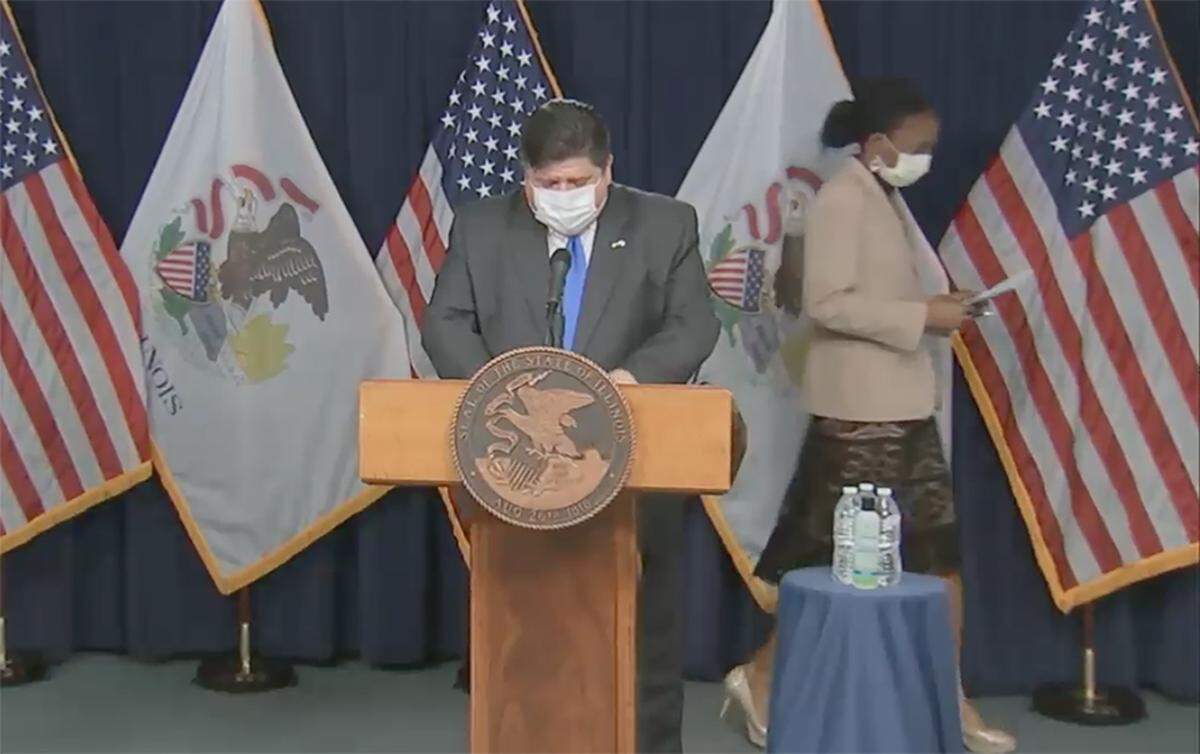
On April 30, Illinois Gov. J.B. Pritzker issued an extended stay-at-home order that required people ages 2 and older to wear masks or face coverings in public places where they were unable to social distance by staying 6 feet away from others.
On May 5, the governor unveiled a regional, five-phase Restore Illinois plan to reopen businesses and other parts of the economy. It states that face coverings will “continue to be required” during Phase 3, which begins Friday barring a sudden, unforeseen spike in COVID-19 cases.
“If you are (in public), and you cannot maintain 6 feet distance between you and another person, you need to be wearing a face covering,” said Melaney Arnold, spokeswoman for the Illinois Department of Public Health, whose guidelines dovetail with Pritzker’s plan.
“When you’re outdoors, obviously it’s easier to be further than 6 feet apart. So if you are, for example, walking in a park and you are able to stay 6 feet apart, then wearing a mask isn’t necessary.”
But neither the Restore Illinois plan nor IDPH guidelines list enforcement actions to be taken against people who violate the requirement on face coverings.
The Illinois State Police and other law enforcement aren’t going to arrest people or write tickets for violations, according to Christoper Watson, south deputy chief of ISP’s Public Information Office. Police will only work to educate the public.
The main “enforcement tool” is the ability of business owners to ask people not to enter their supermarkets or department stores without face coverings, Arnold said.
“This all basically boils down to personal responsibility,” she said. “We know what the science says, and it is going to be human behavior that dictates what happens going forward. It really is incumbent on each person to take personal responsibility and wear a mask when they’re in public.”
.jpeg "JasonNewland_fitted (1).jpeg")
What do scientists say?
The U.S. Centers for Disease Control and Prevention recommends face coverings in public settings where social-distancing measures are difficult to maintain, especially in areas of significant community-based transmission.
“We now know from recent studies that a significant portion of individuals with coronavirus lack symptoms (‘asymptomatic’) and that even those who eventually develop symptoms (‘pre-symptomatic’) can transmit the virus to others before showing symptoms,” the CDC website states.
“This means that the virus can spread between people interacting in close proximity — for example, speaking, coughing, or sneezing — even if those people are not exhibiting symptoms.”
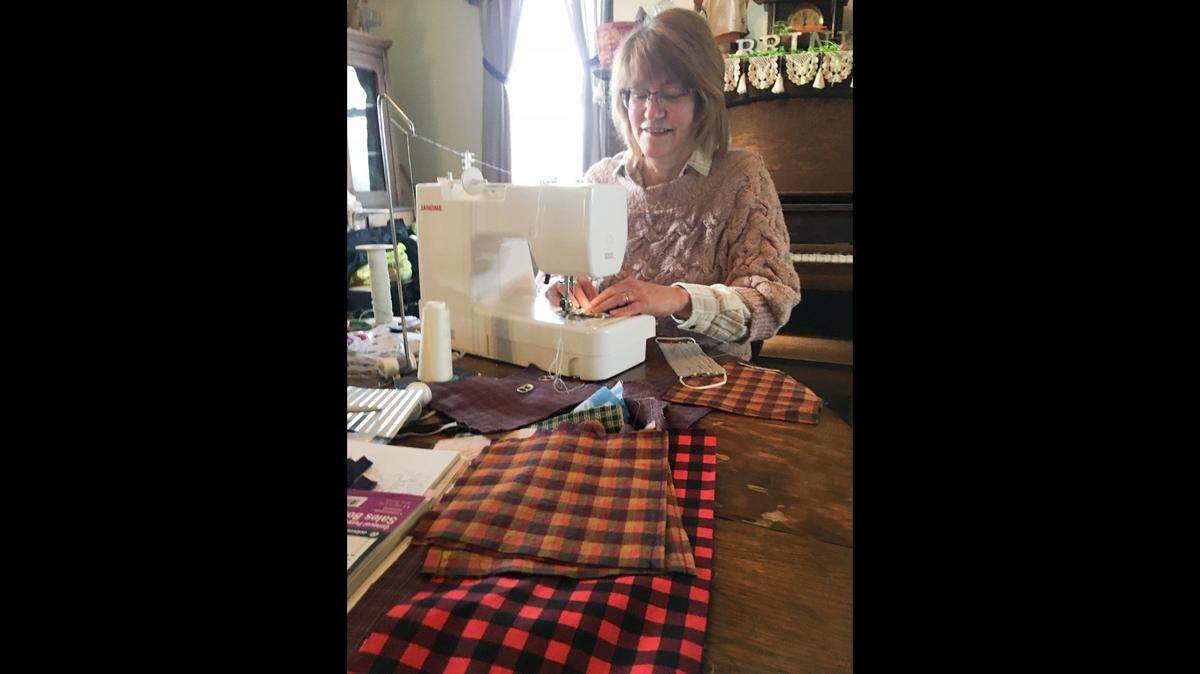
Cloth face coverings that can be purchased or made at home with cotton fabric mainly keep people from spreading the coronavirus, while surgical masks provide more protection for both wearers and those around them, according to Newland.
But he agrees with the CDC that cloth face coverings are preferred for the average person so surgical masks and N-95 respirators can be reserved for health-care workers and first responders.
“You can do your best to social distance, but sometimes it’s harder than others,” Newland said. “The cloth-based mask is going to keep you from giving the virus to others, so if we’re all wearing one, we’re really decreasing the chance of transmission.”
Face coverings must be worn over both the mouth and nose to work properly, he added. They also should be comfortable and fit well because if a person is constantly touching his face to make adjustments, it defeats the purpose.
The CDC, like the Illinois Department of Public Health, recommends face coverings for ages 2 and older.
“With a baby, you can do something like put a blanket over them,” Newland said. “Of course you have to be careful. You also don’t want to use a mask with someone who has trouble breathing, like someone with asthma, or someone who can’t remove a mask.”

This story was originally published May 27, 2020 at 12:49 PM.