Here’s what to know about masks as IL prepares to move to next phase of reopening plan
Coronavirus restrictions will continue to loosen on Friday, when the state enters Phase 4 of its Restore Illinois plan, but attitudes and policies on the wearing of masks have changed very little among state officials, businesses, scientists and doctors.
Here are some frequently asked questions:
What is the state’s policy on masks?
The Illinois Department of Public Health and Gov. J.B. Pritzker’s office continue to ask residents to wear face coverings in public buildings, with a few exceptions, and outside if they’re unable to practice social distancing by staying 6 feet away from others.
It’s believed that masks can keep people from contracting the coronavirus but also protect others, particularly senior citizens and those with underlying health problems.
“Face coverings are kind of the norm now,” Public Health spokeswoman Melaney Arnold said Thursday. “There’s not a vaccine for the virus, and there is not a highly effective treatment that’s widely available, so those two things have not changed.
“One thing we do know is that face coverings can reduce the transmission of the virus.”
Are masks required in restaurants?
One big change with Phase 4 is that Illinois restaurants can start offering indoor seating on Friday, as long as tables are spaced 6 feet apart, parties are limited to 10 people or less and standing areas, such as bars, reach no more than 25% of normal capacity.
The state will require employees to wear masks and encourage customers to do so.
“Patrons should wear face coverings over their nose and mouth while on premises, except while eating and drinking at tables (exceptions can be made for people with medical conditions or disabilities that prevent them from safely wearing a face covering),” according to state rules and regulations released Monday for restaurants and bars.
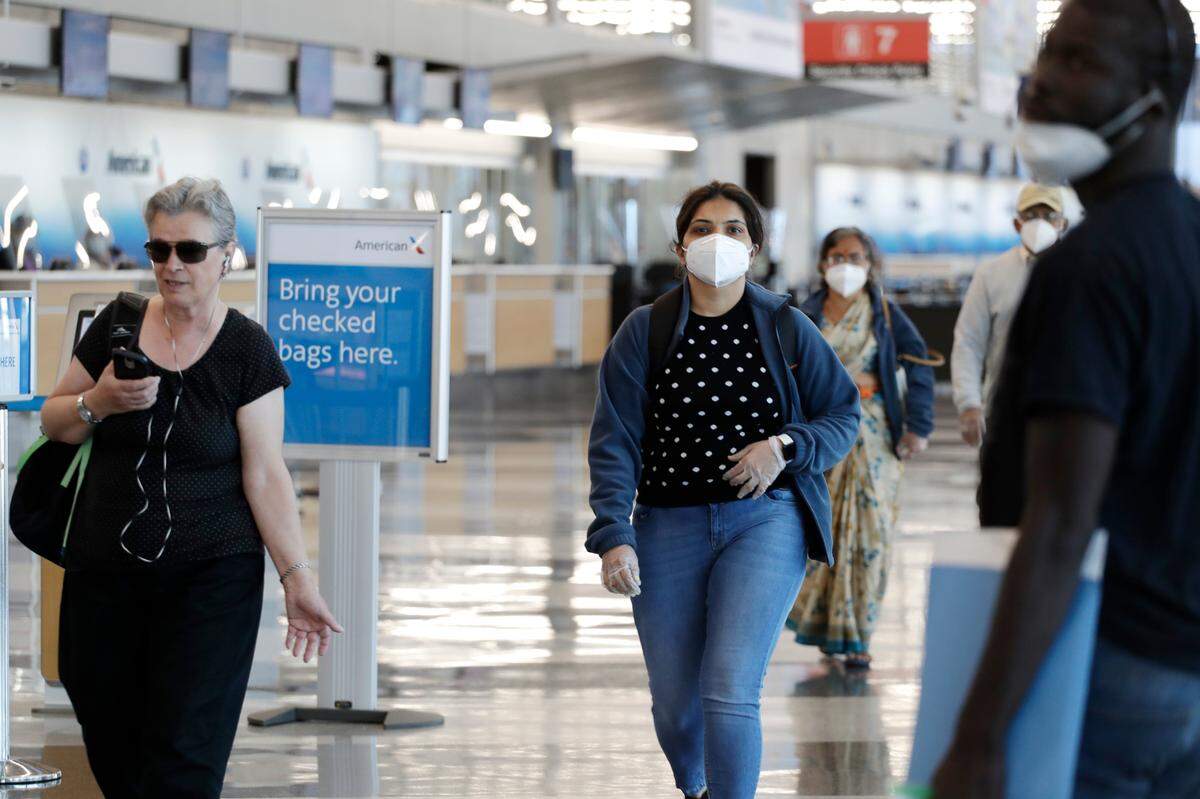
How are retail stores handling it?
State officials continue to ask retail stores and other businesses to help ensure that most people wear masks in public buildings, but individual policies vary.
Goodwill stores in the St. Louis region are requiring employees and customers to wear face coverings, according to the MERS Missouri Goodwill website. The Home Depot stores are not, but its website mentions that face coverings and gloves are being provided to employees.
Schnucks supermarkets are somewhere in the middle.
The company is requiring employees to wear face coverings and “strongly encouraging” customers to wear them for the safety of all, said spokesman Paul Simon. But he noted that employees aren’t trained in “deescalation” or “policing.”
“We’re trained at stocking shelves,” Simon said. “We’re trained at checking out customers. We’re not looking to start fights at the entrances of our stores.”
Do masks work?
The U.S. Centers for Disease Control and Prevention continues to recommend that people wear face coverings in public when social distancing is difficult to maintain to protect themselves and others from spreading the coronavirus, which causes the respiratory disease COVID-19. Exceptions include children under 2 years old and people with breathing problems.
“Cloth face coverings provide an extra layer to help prevent the respiratory droplets from traveling in the air and onto other people,” the CDC website states.
Health organizations often express their preference for the general public to wear face coverings made of cloth instead of surgical or N-95 masks to ensure availability of needed personal-protective equipment for first responders and medical professionals.
The important thing is to wear something over your nose and mouth, said Dr. Jason Newland, a Washington University infectious-disease specialist at St. Louis Children’s Hospital.
“We know masks can help protect us,” he said.
Will police enforce mask guidelines?
Throughout the COVID-19 pandemic, Illinois law-enforcement agencies have consistently declined to arrest people or write tickets for violations of health and safety guidelines.
The Illinois State Police sees itself as a “community caretaker” that educates the public with the goal of “voluntary compliance,” according to a statement released in May by Christoper Watson, south deputy chief of ISP’s Public Information Office.
Again, the Illinois Department of Public Health is hoping to see individuals and businesses take “personal responsibility,” Arnold said.
“We ask that people practice social distancing and wear face coverings. If you are at a store and you are not seeing this, then you might think twice about going there again. If the owner of a business sees somebody coming in and not wearing a face covering or not practicing some physical distance, they may choose not to have that customer in their business.”
Why have masks become so political?
A political divide seems to have developed between people who insist on wearing face coverings and those who don’t think it’s necessary.
“The disdain runs between the consciously unmasked president of the United States and his deliberately mask-donning Democratic rival, all the way on down to those crossing paths — and often crossing each other — in the cereal aisle of the grocery store,” according to a story by National Public Radio last month.
The story referenced a Quinnipiac University poll that showed overwhelming support among Democrats for mask wearing. Little more than a third of Republicans felt the same way.
Experts offer several explanations for the politicization, including President Donald Trump’s decision not to wear a face covering. Some people believe mask requirements are heavy-handed mandates that infringe on their personal freedom while others feel those who don’t follow the advice of scientists are being selfish and risking the health of others.