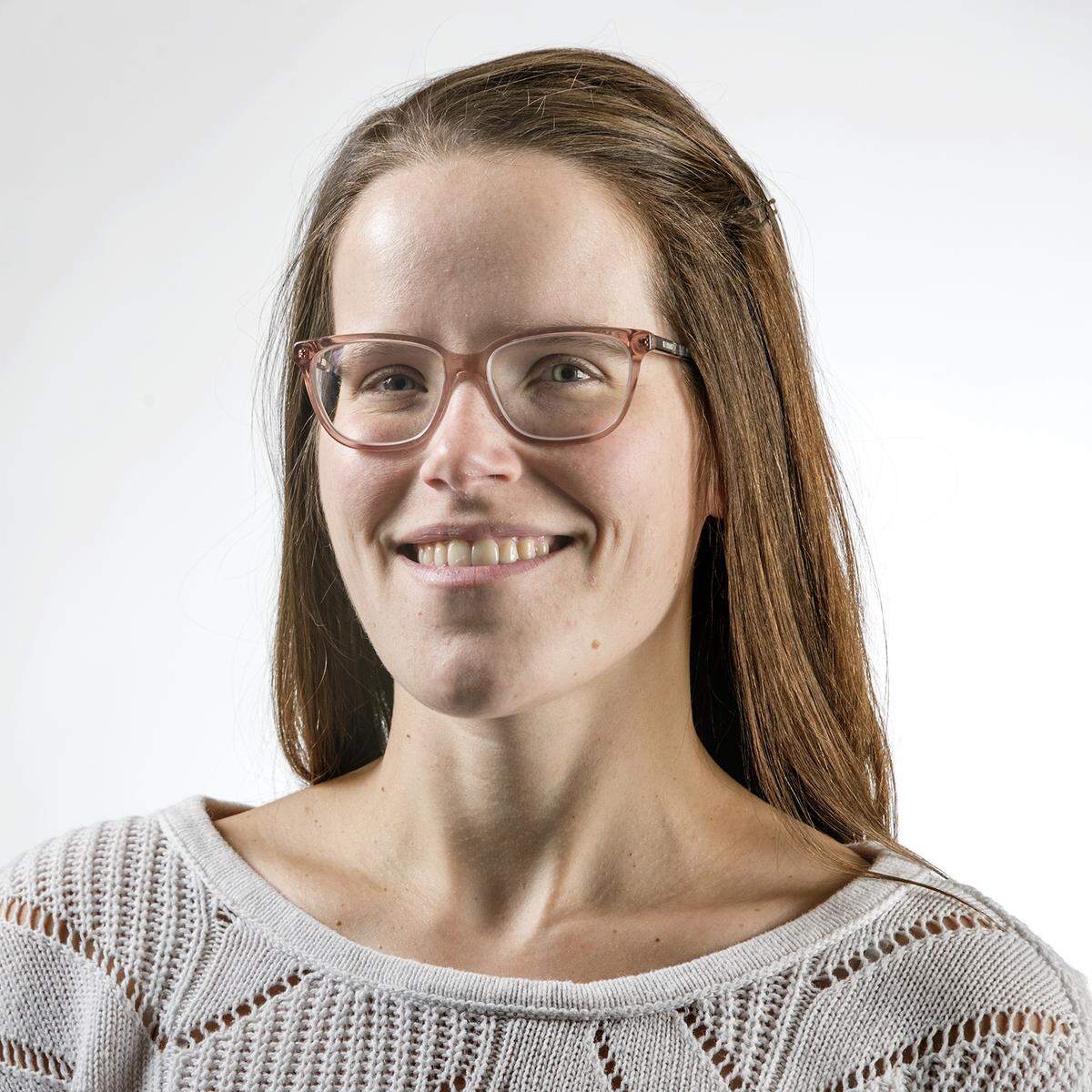
This Latino cop made it his mission to help when COVID hit his southwest IL community
Noe Marquez, second in command at the Fairmont City Police Department, knows the people of his hometown try to lay low these days.
In a village where more than 80% of the population identifies as Hispanic and 27% are not U.S. citizens, there are plenty of reasons.
Between the Trump administration targeting immigrants, this year’s Census count and elected officials urging them to get tested for COVID-19, it has been harder than usual for undocumented residents and their families to avoid contact with the government.
“It brought a lot of fear,” said Marquez, who has lived in southwestern Illinois village since he was 2 years old.
Just 10 minutes east of St. Louis across the Mississippi River, the town is a destination popular for its Central American cuisine. Competition in the food truck business is cut-throat. Small, tidy houses line the streets, though many side roads don’t have sidewalks and taper off into well-tended lawns. A buffer of swampy woodland protects against the sounds of nearby Interstate 55, lending a hush reminiscent of rural living.
Marquez, a lieutenant, detective and first generation Mexican-American, is the link to an English-speaking world that can be unfamiliar and even menacing to Latino Fairmont City residents. His white colleagues see him as their connection to the Spanish-speaking community, too, as the only full-time Latino officer in the 21-member department, says his friend and former coworker Scott Penny Jr.
Since the pandemic began, Marquez has adopted another unofficial title: go-to guy for public health information.
Coronavirus has a disproportionate impact on Latino communities, and Fairmont City is no exception. While Gov. J.B. Pritzker’s office and local county leaders translate news conferences and information into Spanish, gaps in language, technology and culture complicate matters.
Marquez, 42, has witnessed the problem first-hand. Two residents he knew have died of coronavirus, and hundreds more have fallen ill. As of Wednesday, the zip code that includes the village counted 227 known cases since March, 63% of them Hispanic, according to Illinois Department of Public Health data. The zip code also includes parts of East St. Louis area, and 27% of the cases were in Black residents.
Marquez realized how bad things were getting after the death of a woman in her 50s who frequently baked bread for officers. Though she rarely left the house because of health concerns, the virus found her through visitors.
“You had the thing where you thought COVID would never come to Fairmont. We’re a small community,” Marquez said, “and it did.”
A dangerous COVID-19 spike
Given the distrust of government and the lack of resources available to the majority Spanish-speaking population, it was almost inevitable the village would see a coronavirus outbreak.
In early July as testing began increasing, village leaders discovered the virus was more a problem that they thought. Testing revealed new infections every day after factories reopened in late June to non-essential workers. Blue-collar laborers from Fairmont City went back to work in close quarters in steel, heavy metal and transportation equipment production, among other manufacturing industries in the metro-east.
“It was a dangerous spike given that this town is so small,” Marquez said.
Marquez’ father, now retired, used to be one of those workers. While his mom stayed home to care for Marquez and his two siblings, his father worked at a steel production plant, sometimes seven days a week.
“They put us through private schools on one income,” said Marquez, who graduated from Althoff Catholic High School in Belleville in 1997.
People like Marquez’ father know that if they don’t show up to work, it could easily mean losing their job to the next person in line. And there are lots of people in line, Marquez said.
So immigrant workers tend to go to work even if they’re feeling sick.
“A lot of Hispanic men look at it as you’re weak if you have a cold and you call off work,” Marquez said. “You just muscle through it or you get picked on at work.”
This custom may have contributed to increased coronavirus transmission, and a suspicion of testing may have contributed as well.
“A lot of undocumented immigrants are fearful if they test positive for COVID, (the government) might know where they live,” Marquez said. “So there was a lot of reluctance for people to get tested.”
Lack of information-sharing could also be to blame. While wealthier communities in the metro-east enjoy easy access to smart phones and reliable internet, residents of Fairmont City may be lucky to have a cell phone, let alone an iPhone. Median household income is just above $35,000, compared to roughly $52,000 in nearby Collinsville where most Fairmont City children attend public school.
“What are the symptoms? Who should get tested? Is it painful? Who gets the information?” Marquez said. “All these things that a lot of English-speaking people getting bombarded with over the news and social media, it wasn’t there for the Spanish-speaking community.”
Helping the Latino community
As the de facto go-between for the English- and Spanish-speaking communities, Marquez knew he had a responsibility to help translate information, both culturally and linguistically.
He chose to become a cop not for the “stereotypical protect and serve” calling, he said, but because he wanted to provide the information and assistance that southern Illinois government hadn’t extended to Latinos.
“For me it had a lot to do with growing up and not having a lot of resources provided for the Hispanic community,” Marquez said.
One of the biggest challenges was helping people understand they couldn’t continue with their regular customs of holding frequent and large parties.
“Latinos love parties. A 5-year-old’s birthday party turns into 50 people,” Marquez said. “COVID really put a big stop to all of that and aside from wearing masks and safe distancing, it also meant keeping away from family as much as possible.”
Marquez enlisted the help of a few well-known figures in the Latino community to help spread the public health message that had already seeped well into English-speaking communities by the summer.
At Marquez’ request, former St. Louis Cardinals outfielder and first baseman José Martínez recorded a video in Spanish specifically for the people of Fairmont City urging them to follow health guidelines. Polo Ascencio, the Spanish broadcaster for the Cardinals, also appealed to residents to stay at home when possible, wear masks, wash their hands and maintain social distance.
The police department shared the videos on their Facebook page, which has nearly 2,500 followers.
The celebrity appeal helped spread the word, but Marquez and his fellow officers also did the work on the ground to reach families without reliable internet access. One path to reaching people was the meal delivery routes for school children.
The governor shut down in-person schooling in April, but kids still needed the meals. The Collinsville School District prepared bagged lunches, which Fairmont City police picked up and distributed, sharing information with residents in the process as much as possible while wearing a mask and social distancing.
By late-August, the number of cases in Fairmont City began evening out despite increased testing, but transmission hasn’t stopped and continues to inch upward in the zip code every day. With rates of diabetes and other complicating health issues higher than in white communities, the virus poses a greater threat.
Every loss is a blow to the small village, Marquez said, even if it’s just one or two deaths. They look to Marquez for help, but police there still have “walls to break down,” he said, especially in the Latino community where residents might not trust law enforcement in the country where they came from.
“It’s not a secret that a lot of governments, not just in Mexico but in other other countries, are involved in crime and corruption. They come here just assuming that’s natural,” Marquez said. “So that’s why doing community policing is number one here.”
This story was originally published September 19, 2020 at 6:00 AM.