How long can Illinois trains block traffic at a railroad crossing? Here’s the law
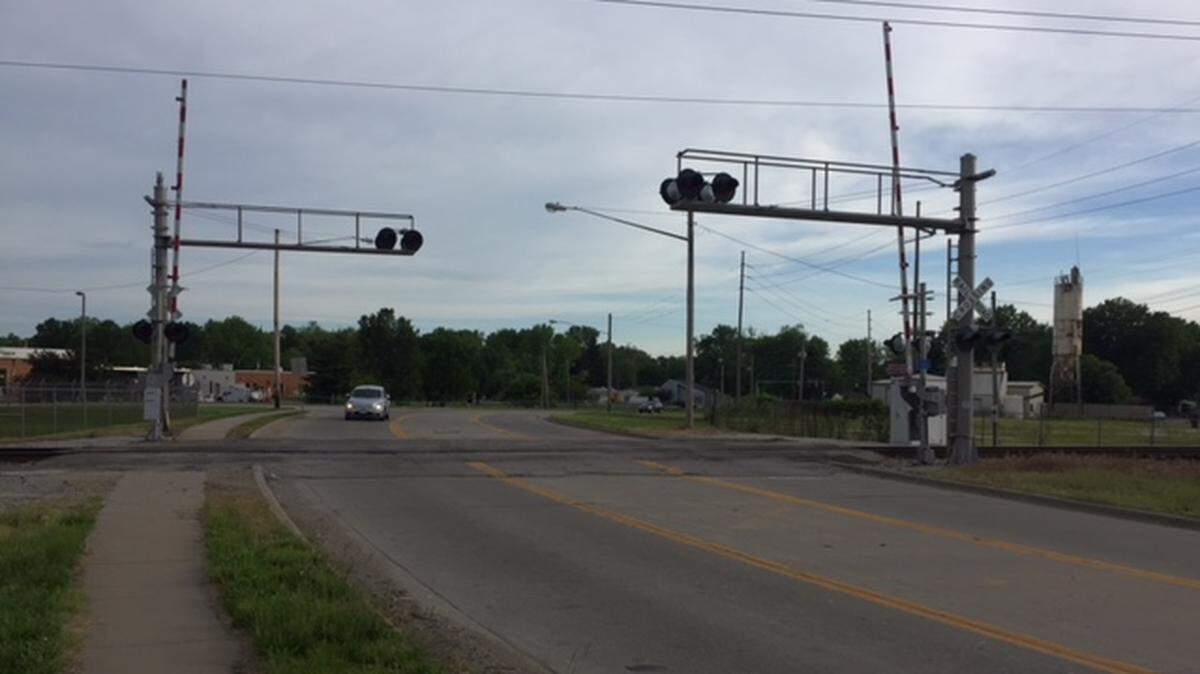
Passing through a railroad crossing on your metro-east commute? You might want to allow extra time, as Illinois restrictions on how long trains can block crossings have exceptions and also may be limited in enforceability.
The Illinois Vehicle Code has a provision limiting trains from blocking a crossing for more than 10 minutes, with certain exceptions, but a 2008 Illinois Supreme Court ruling found a Mundelein local ordinance similar to the state law was preempted by the Federal Railroad Safety Act.
“What the Illinois Supreme Court said was that regulating how long trains can occupy a crossing affects train movements, scheduling, switching operations, rail traffic management, on a big scale, and interstate commerce,” Teri Ross, executive director of Illinois Legal Aid Online, told the News-Democrat in a recent interview.
Similar cases involving federal preemption have also taken place in Ohio, Indiana, Kansas, Pennsylvania and Oklahoma.
“The statute, interestingly enough, is still in the Illinois compiled statutes,” Ross said. “It’s just its enforceability is strongly limited, because of this court case.”
What are the exemptions to the 10-minute rule?
The Illinois state law that institutes the 10-minute time limit for trains blocking traffic at crossings exempts continuously moving trains as well as trains that can’t be moved, such as in the case of a breakdown or downed trees.
“In practice, if a railroad gets ticketed or sued, they often argue, and usually successfully, that enforcement actions are barred by federal law,” Ross said.
The argument for limiting how long a train can block traffic at a crossing typically stems from concerns about emergency access and affected response times for an ambulance, firetruck or police officer, Ross said.
“It is unlawful for a rail carrier to permit any train, railroad car or engine to obstruct public travel at a railroad-highway grade crossing for a period in excess of 10 minutes, except where such train or railroad car is continuously moving or cannot be moved by reason of circumstances over which the rail carrier has no reasonable control,” the relevant portion of the Illinois Vehicle Code reads.
What other railroad crossing laws are on the Illinois books?
- Illinois state law requires motorists to stop at railroad crossings if there is a posted stop sign, the electric signal is flashing or when the gates are lowered or in the process of lowering.
“So technically, if you’re trying to speed through it once they’ve started to go down, you’ve broken the law,” Ross said.
- When stopping at railroad crossings, Illinois drivers are required to stop at least 15 feet from the nearest rail, but not more than 50 feet away. Some vehicles, such as school buses, those carrying passengers for hire and certain others are always required to stop at railroad crossings.
“If a railroad grade crossing has no warning devices or only a sign, you should slow down and look in both directions of the track and listen for a train before proceeding. You must yield the right of way to any approaching train or railroad equipment,” the Illinois Secretary of State’s office reports.
If your vehicle breaks down or stalls on railroad tracks, state officials say you should get out immediately, call 911 and move away from the tracks at a 45-degree angle in the direction of the train.
Do you have a question about Illinois state law for the News-Democrat? We’d like to hear from you. Fill out our Metro-east Matters form below.