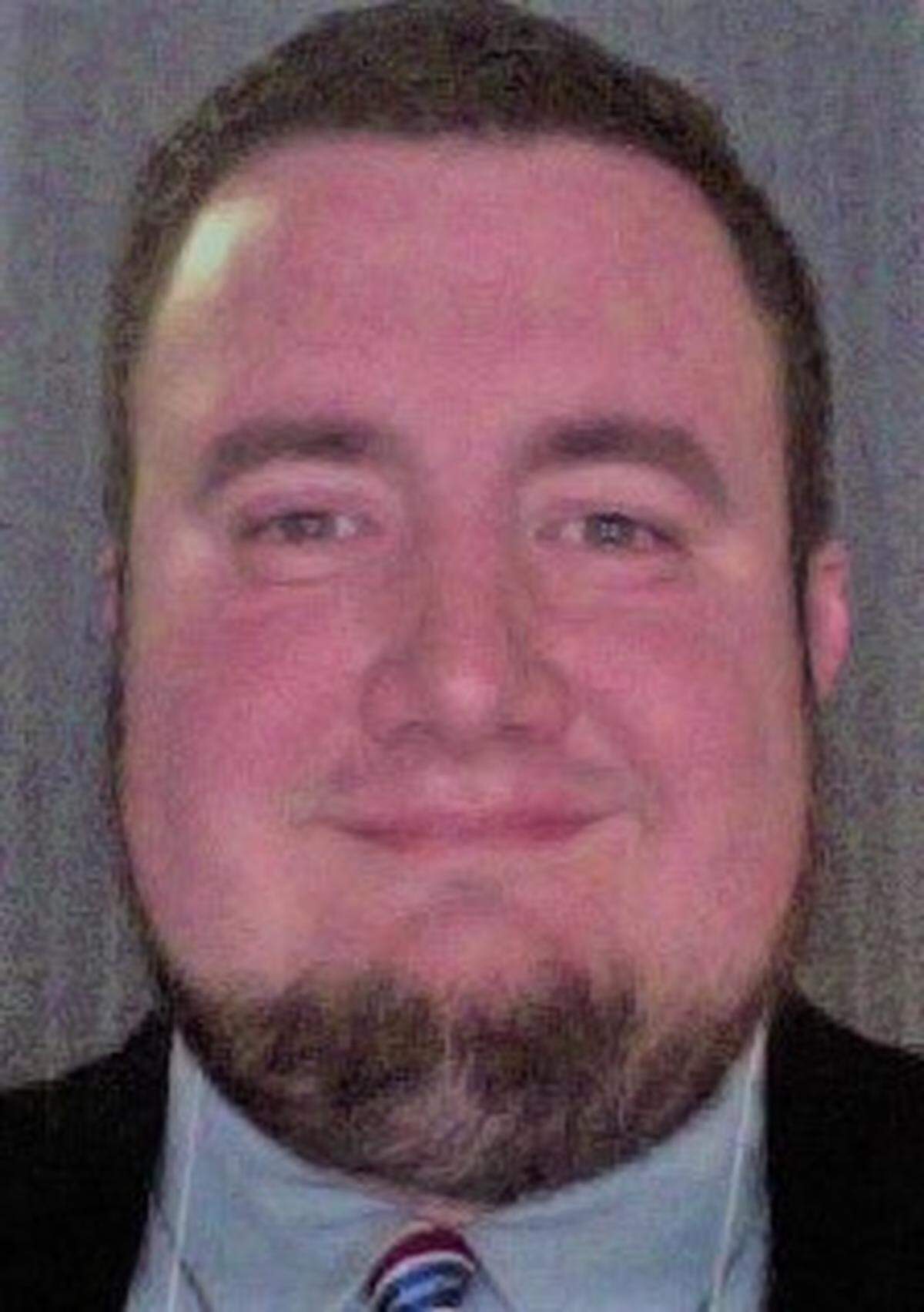
Columnist: Umpire’s firing for gambling must be a hard line for MLB
Major League Baseball announced Monday that it fired umpire Pat Hoberg on May 31 and that a review of his termination was recently upheld through the league’s appeal process, shining the most damaging spotlight yet on the ongoing dalliance between professional baseball and the sports gambling industry.
A review of Hoberg’s gambling activity found no indication that he bet on baseball, no indication that he shared inside information with the professional gambler with whom he shared an account, and no indication that that gambler’s baseball betting activity was influenced by patterns of teams, players or umpires in any way.
Still, the facts of the case are both chilling and undisputed – a Major League umpire shared an account which placed 141 individual bets on baseball in a two-year span between 2021 and 2023. Nineteen of those bets were placed from electronic devices not belonging to Hoberg from inside of Hoberg’s home.
When, in a horror movie, a character says the call is coming from inside the house, this is roughly what they mean.
There is simply no way to avoid sticky gambling situations among a group of adults as sizable, affluent, and overwhelmingly male as those who comprise the MLB ecosystem. In a rapidly changing environment in which sports betting is widely legal and easily accessible – mobile betting is allowed in Illinois and was approved as a constitutional amendment in Missouri in November – the warnings against betting on baseball have never changed, never wavered, never loosened a bit.
Posters hang in every clubhouse in every major league park and spring training facility across the country, displayed in English, Spanish, Korean and Japanese, explicitly outlining the prohibition. There is no gray area, and there cannot be if the game is going to survive this thundering wave of cash which crashed down upon a desperate industry’s shores at roughly the same time the game was fighting to rebound from a pandemic which froze business in its tracks.
It’s not hard to understand how it all happened, but it also should not be difficult to understand and agree upon what has to happen next.
That the umpire involved in this case has been nicknamed “Perfect Pat” is not without its share of sad irony. Hoberg has consistently ranked among the best MLB umpires in ball/strike accuracy since being hired on a full-time basis in 2017. He accurately called all 129 taken pitches in game two of the 2022 World Series, highlighting on the game’s biggest stage both his skills and the broader goals for younger, dynamic umpires.
By that point, Perfect Pat had been logging into a shared sports betting account from his home for nearly two years, dumping a not-insignificant portion of his salary into losing sports bets even as his own career advanced. MLB umpires of Hoberg’s experience generally earn in the range of $250,000 annually. MLB’s investigation showed that between Dec. 30, 2020, and Jan. 15, 2024, Hoberg’s devices made a total of $709,605.83 in bets, losing an aggregate total of $74,876.61.
Over a three-year span, then, Hoberg lost shockingly close to 10% of his gross salary, every year, to legal sports books. Whether that’s an amount of money which has a material effect on his life is likely known only to Hoberg. Michael Jordan once memorably claimed that his gambling wasn’t a problem because he could afford it. That is certainly one rationalization that is both common among gamblers and perhaps may be true, but is largely irrelevant to the overall picture.
When fringe Pittsburgh infielder Tucupita Marcano was placed on the permanently ineligible list last summer – 10 days before Hoberg’s “discipline” was first made public – it was the result of betting on games involving the Pirates while he was on the injured list. It was a hard line, black and white, and Marcano was miles across it. The four other minor leaguers suspended at the same time, for just a year, were involved in much more nebulous activity, generally including baseball legs in parlays for organizations with which they weren’t involved.
Nor was there any evidence produced that Ippei Mizuhara bet on baseball while stealing from Shohei Ohtani to bet on everything else which was available to him. That Mizuhara could commit one of the most stunning betrayals in the history of baseball and yet still follow the sport’s most sacred prohibition says a lot on its own, and in a twisted way is demonstrative of just how far beyond the pale Hoberg’s conduct became.
Investigation into betting
When MLB investigators reached out to the person with whom Hoberg shared accounts, he deleted two messaging threads with Hoberg (one containing bets, one containing accounting) from a secure messaging app, and then had a phone conversation with Hoberg in which he instructed the umpire to delete the app from his phone. This had the result of destroying the conversations between the two end-to-end, and MLB was unable to recover those messages. There’s no proof Hoberg bet on baseball, but ultimately, the league has to take his word for it.
Both Hoberg and the MLB Umpires Association released statements on Monday in which they accepted the results of the investigation. Hoberg apologized “to Major League Baseball and the entire baseball community for (his) mistakes.” There is no wiggle room for alternate understandings, save for one chilling silver lining.
MLB’s statement says that its processes will allow Hoberg to apply for reinstatement at the start of spring training in 2026. That is perhaps statutory, and there’s no indication at the moment that they would indeed reinstate Hoberg at that time. That should never change. It can’t. The integrity of the game – the entire reason to play the game – is dependent on avoiding precisely the appearances that Hoberg flagrantly flaunted with his conduct and throughout the body of MLB’s report.
There will be more of these cases. This will not be the worst one to come. But they must all, without exception, have the same result. MLB’s relationships with the sports betting industry have permitted this, and now the time comes to reap what they’ve sown. Rob Manfred’s legacy may well be the largest rash of gambling suspensions throughout the industry in a century. He’s earned that as much as Hoberg has, and no faux-reconciliation should be allowed to blur that photo.