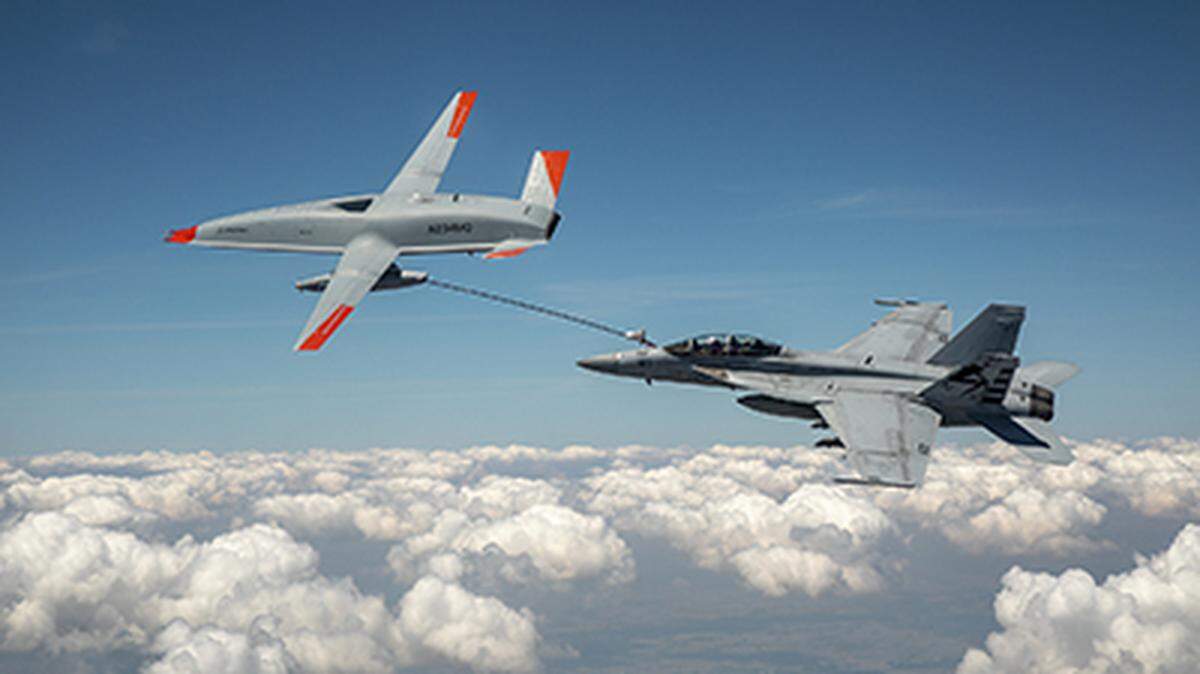
What is the MQ-25 Stingray drone and how has MidAmerica Airport helped its development?
READ MORE
Background articles on Boeing drone project
Here’s past coverage of Boeing’s drone facility project at MidAmerica
Expand All
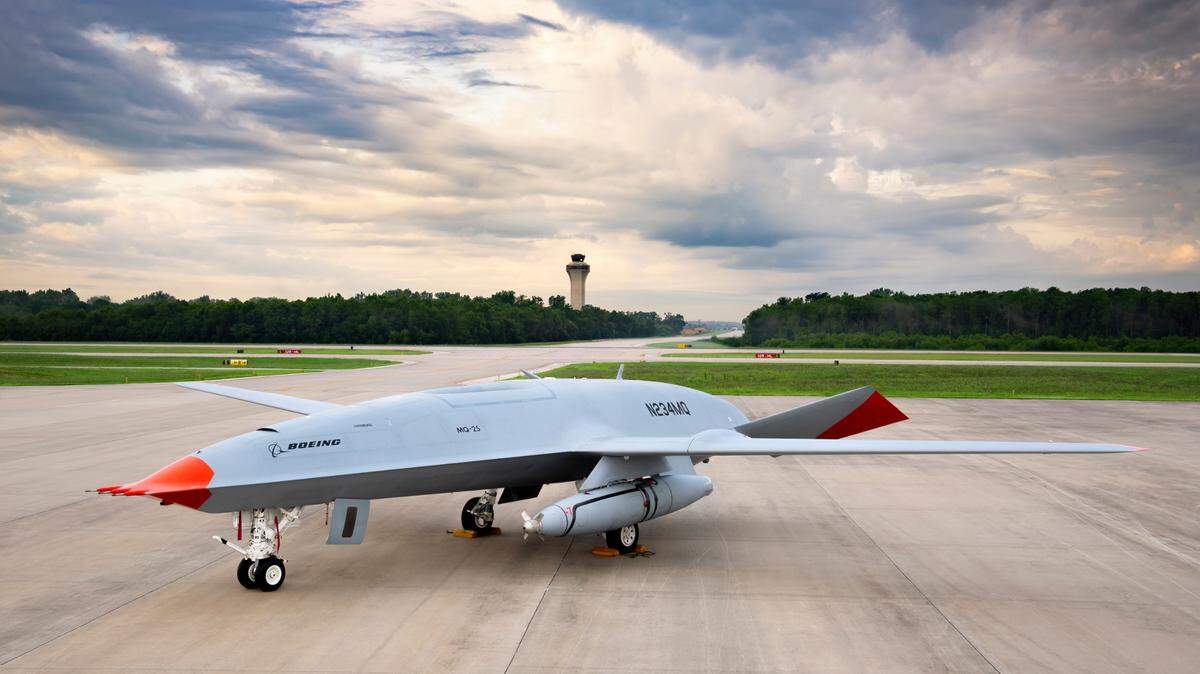
The MQ-25 Stingray is an unmanned plane, or drone, that can be used in airborne refueling operations. The MQ-25 Stingray is loaded with jet fuel, which is then offloaded into a manned aircraft flying alongside the unmanned aircraft.
Chicago-based Boeing Co. has tested its version of the MQ-25 called the T1 at MidAmerica St. Louis Airport in Mascoutah, which will be the site of a new production facility that will bring some 300 jobs to the metro-east.
The T1 drone first took off for a two-hour test flight and landed at MidAmerica on Sept. 19, 2019, according to Boeing.
Although the MQ-25 has been tested at an airport in the middle of the country, the drone is designed to take off from an aircraft carrier at sea.
The goal is to extend the flying range of carrier-based planes by allowing pilots to get more fuel in the air from an unmanned aircraft and eliminate the need of having manned aircraft refuel planes.
When did the MQ-25 airborne refueling tests occur?
Boeing has said it successfully tested the airborne refueling capabilities of the MQ-25 with three different manned airplanes since June, with the most recent test occurring this week at MidAmerica:
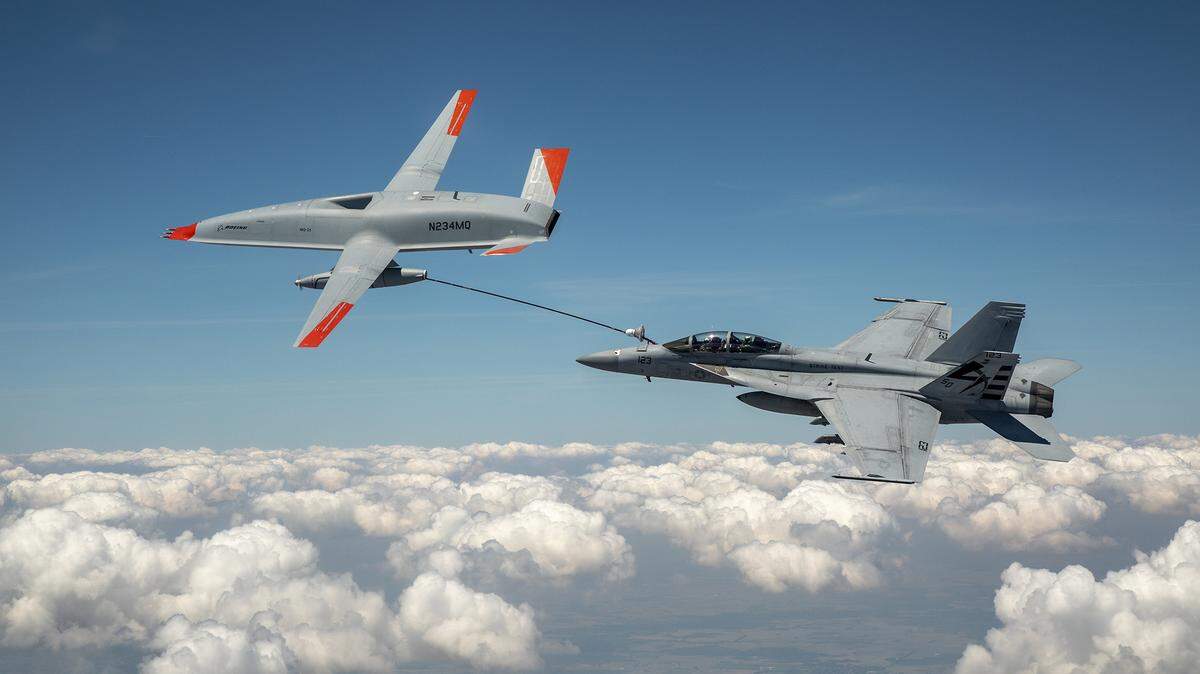
On Monday, the Stingray refueled a U.S. Navy F-35C Lightning II fighter jet; on Aug. 18, it was a U.S. Navy E-2D Hawkeye command-and-control aircraft; and on June 4, it provided mid-air fuel to a U.S. Navy F/A-18 Super Hornet.
Boeing said that the company and the Navy made “aviation history” on June 4 when the MQ-25 became the first unmanned aircraft to refuel another plane.
What’s the next test step?
The MQ-25 drone known as T1 is expected to be shipped to Norfolk, Virginia, to be tested on a Navy aircraft carrier in “the coming months,” Boeing has said.
How much does all this cost so far?
Boeing, which bills itself as the world’s largest aerospace company with over 140,000 employees in 65 countries, said it has received two contracts worth about $890 million from the U.S. Navy to develop the MQ-25.
The first contract was awarded in 2018 for $805 million while the second one was issued in 2020 for $84.7 million.
The initial contract called for Boeing to engineer and produce four test MQ-25 Stingrays while the second contract called for Boeing to produce three more MQ-25s for a total of seven.
The Aviationist reports the Navy wants to buy more than 70 of the drones, which will free up the F/A-18E Super Hornets now used for aerial refueling.
What are features of the MQ-25?
Zenger News reports the test drone has the following features:
▪ Range of 580 miles when carrying 15,000 pounds of fuel.
▪ 75-foot wingspan and is 51 feet long.
▪ The top speed “has not been confirmed,” Zenger reported.
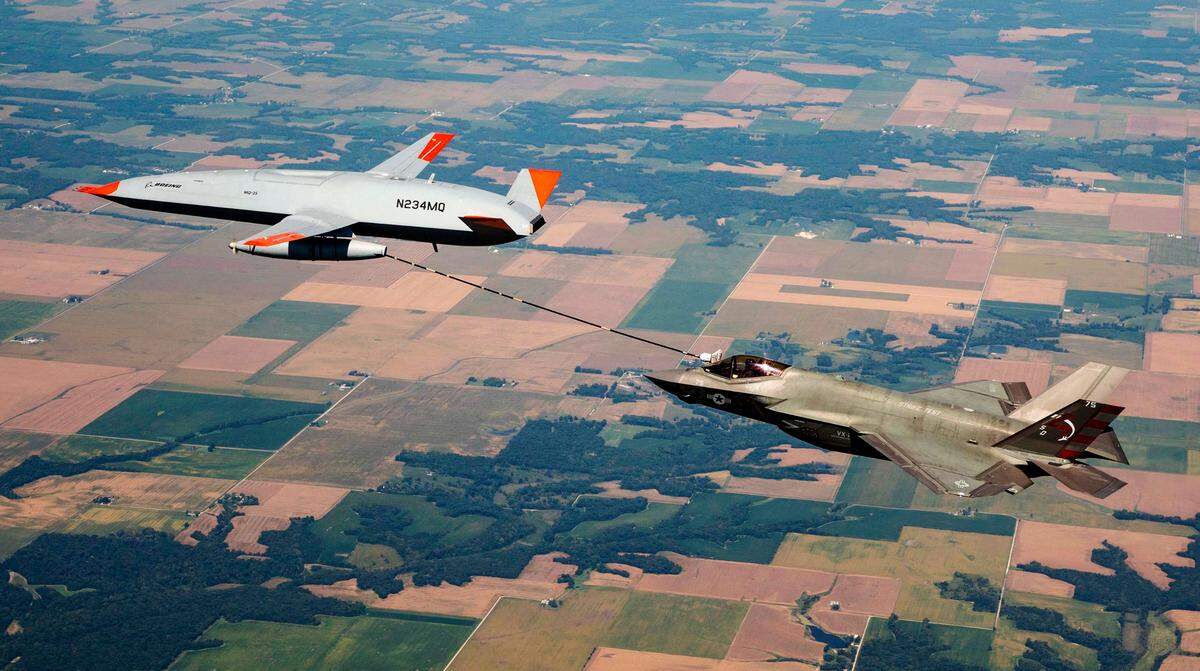
Boeing videos show the MQ-25 and a plane flying next to each other. A hose extends from the drone and then “plugs” into the fuel line of the nearby plane. After the jet fuel is offloaded, the drone retracts the fuel hose.
Boeing said the maneuver on June 4 required as little as 20 feet of separation between the drone and the F/A-18 refueling probe.
What are military leaders saying?
After the August test flight, one Navy leader praised the connection the MQ-25 made with the E-2D Hawkeye, which Boeing said is known as the “digital quarterback” for its role in “joint battle management and command and control.”
“Once operational the MQ-25 will refuel every receiver-capable platform, including E-2,” said Capt. Chad Reed, the Navy’s Unmanned Carrier Aviation program manager, in a Boeing news release. “This flight keeps us on a fast track to getting the Stingray out to the fleet where its refueling capability will greatly increase the range and operational flexibility of the carrier air wing and strike group.”
This story was originally published September 17, 2021 at 6:00 AM.

.jpg)