Cahokia Heights mayor shares theory about E. coli found in city’s tap water

Cahokia Heights Mayor Curtis McCall Sr. on Friday morning shared a theory about recent community-organized testing that found E. coli in residents’ kitchen tap water.
During a City Hall news conference about the community’s drinking water concerns, McCall suggested residents with troubling results could have a problem with the water lines on their properties because of the age of their homes. He said he planned to reach out to county, state and federal officials about possibly gathering funding to help residents with the cost of replacing their pipes.
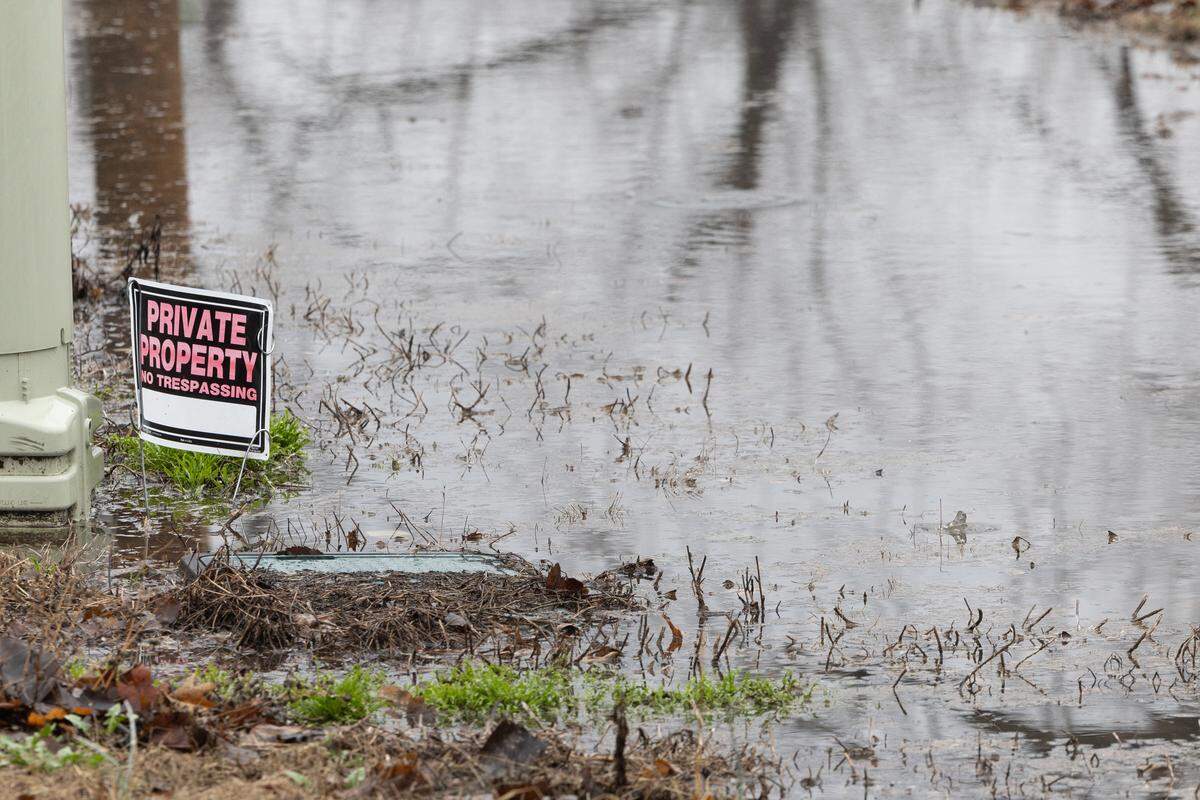
Residents have been raising concerns about their drinking water for years because of longstanding infrastructure problems in the community. Heavy rain forces sewers to overflow onto streets and flood into residents’ yards and homes.
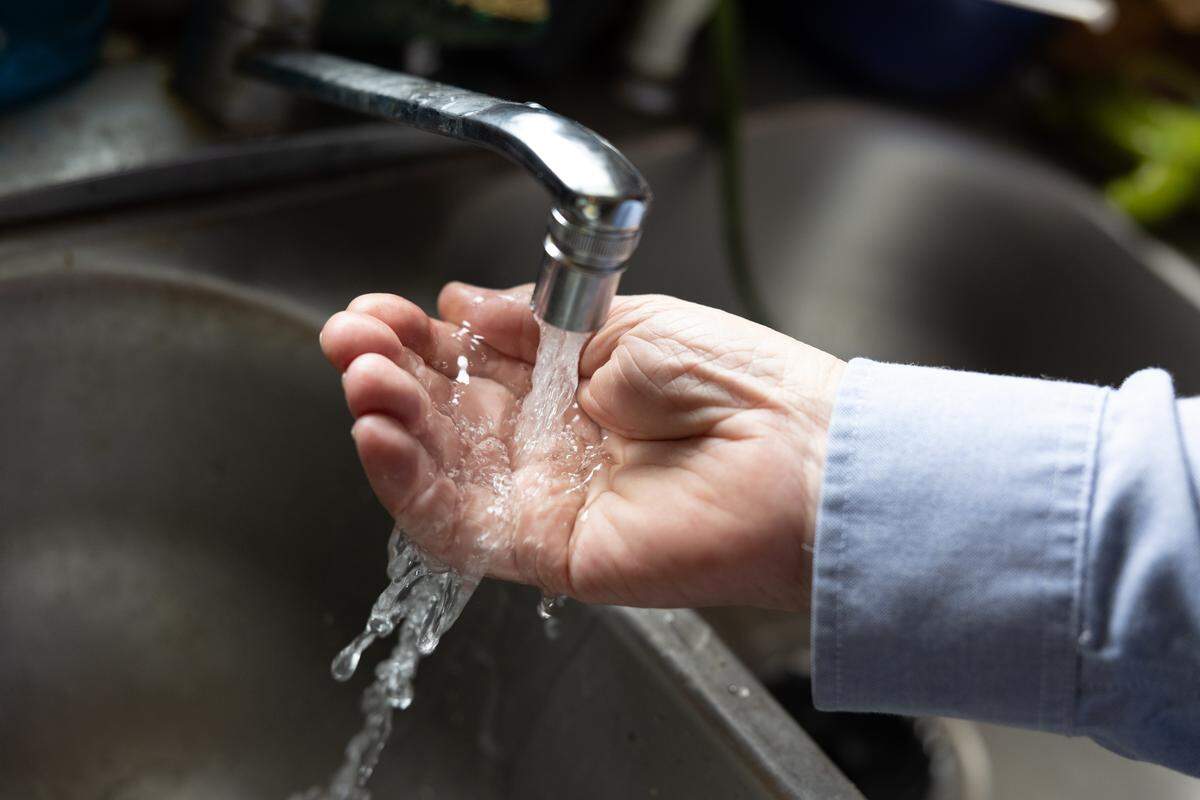
The community water testing detected E. coli in eight of the 118 samples collected from 23 homes over seven months, from June to December.
Six of the community’s eight E. coli-positive samples came from the same home in the former city of Centreville, where residents say sewage backups have been happening for decades.
McCall noted he has not reached a conclusion about the cause of the community’s findings but raised their homes’ aging pipes as a possibility because of the difference between what residents and the utilities are finding in their tests.
Cahokia Heights’ two water providers — the city and private company Illinois American Water — have not detected E. coli in treated drinking water samples collected outside of homes in the past 15 years, public records show.
“I’m saying that they could have problems, but it’s at their homes, not in our water supply that’s going to their home, and that’s what we want to help them with,” McCall said.
“They may have a problem, I don’t know,” he added. “… I do know that some of these homes are probably 60 or 70 years old, so there’s the potential of problems with their personal lines going into the home. … And also I know that all our sample testing on our water supply is clear.”
In addition to E. coli, the community testing found total coliforms, a group of bacteria common in the environment, in 26 of the water samples. Regulators say they are generally not harmful, but their presence signals a potential problem with equipment or treatment systems.
Some kitchen tap water also did not meet the minimum state standards for its disinfectant, chlorine, to effectively kill germs as the water travels through pipes to homes, according to the community’s results.
Lawyers Nicole Nelson, Kalila Jackson and Kennedy Moehrs Gardner and community organizer Maliaka Hill from the nonprofit Equity Legal Services led the community water testing program with resident participants and volunteers. Elin Warn Betanzo, an engineer who formerly worked at the U.S. Environmental Protection Agency, provided technical support.
In a statement Friday, Equity Legal Services pushed back on the mayor’s theory about problems with water lines on residents’ properties. The organization said positive E. coli and total coliforms samples from multiple homes, as well as the amount of bacterial infections from Helicobacter pylori in the city, is “no coincidence.”
An ongoing health study, separate from the community water testing, is tracking H. pylori infections and intestinal inflammation among Cahokia Heights residents. The research is led by Washington University in St. Louis and the University of Colorado Colorado Springs.
Researchers want to understand how flooding with sewage-contaminated water might be affecting the residents’ health.
H. pylori is thought to spread through contact with feces or contaminated food or water. It infects the stomach after it is ingested. In severe infections, it can cause ulcers. Some research has also linked long-term H. pylori infection to a higher risk of developing gastrointestinal cancer.
The health study has found about 30 active H. pylori infections in 2022 and 2023 with sample sizes between 42 and 52 adults and some overlap in participants each year.
“This isn’t about the age of homes or any other red herring the city uses to deflect from its responsibilities,” Equity Legal Services stated. “Drinking water, stormwater flooding, and sewage overflows have been issues for decades with City leaders at the helm.
“The City has a fundamental obligation to deliver services that are safe, operational, and reliable — services residents fund through their taxes. Its track record in meeting that obligation has been, at best, abysmal. Accordingly, we suggest the City direct its attention toward delivering the services residents depend on and addressing the public health risks that have emerged in connection with its poorly managed systems.”
Lawyers from Equity Legal Services represent Cahokia Heights residents in federal litigation against city officials seeking infrastructure fixes and compensation for their property damage.
They also noted that the U.S. EPA previously required increased water monitoring in both of Cahokia Heights’ water systems over concerns about possible contamination until three years ago. The EPA released Illinois American Water from the mandate in 2023 after determining it met the terms of the order. Illinois American provides water to residents in the former city of Centreville.
The city of Cahokia Heights remains under the EPA order for water monitoring while work on its drinking water infrastructure is ongoing.
Regulator responds to E. coli findings
The Belleville News-Democrat and its partners, St. Louis Public Radio and the Illinois Answers Project, first reported the community testing results on March 9.
Kim Biggs, spokeswoman for the Illinois Environmental Protection Agency, said in a statement Friday that the agency tested 24 samples from both the city’s and Illinois American Water’s systems as recently as March 18 in response to the community results.
It detected chlorine within the required limits and no total coliform or E. coli-positive results, according to Biggs.
Dennis Traiteur, director of Cahokia Heights’ water and sewer department, said during the news conference that 20 of those samples came from the city’s system.
Biggs added the Illinois EPA is working with the community water testing team to obtain homeowners’ consent for the agency to collect additional samples inside the residences that had positive results in the future.
“Results from those tests will inform the Agency’s next steps,” she stated. “... Illinois EPA shares the sense of urgency and is committed to taking decisive, science-based action to support the residents of Cahokia Heights.”
How the community tested its water
During the news conference, McCall noted the additional information the city would like to have about the community testing.
“As of this date, we the city of Cahokia Heights haven’t a single document of any locations with bacteria in the water,” he said. “As of this date, we don’t have any information on who did the testing, whether they were certified, whether they had a license to test water, whether they even prepared to make sure they didn’t cross-contaminate the system while testing, or even if they did a retest if they had a positive testing.”
The community water testing team said in past interviews that they followed the same protocols that water providers follow.
Residents disinfected their sinks and faucets and applied hand sanitizer and gloves before collection. Volunteers filled out a chain-of-custody form documenting the sample from collection to laboratory delivery.
They visited 10 homes at around the same time of day for regular sampling. And they followed up within 24 hours of a positive total coliform result with additional testing at that home, plus two neighbors within five service connections of the original home, one upstream and one downstream. (Those neighbors brought the total number of households participating in testing to 23.)
Gardner, from Equity Legal Services, said previously that most of the homes that were involved in the community testing get their water from Illinois American Water. She confirmed that their testing detected E. coli in the water of both Illinois American’s and the city’s water customers.
They collected two sets of samples for total coliform and E. coli testing at each home. One went to an Illinois EPA-certified laboratory for testing. The other was tested in-house at Equity Legal Service’s office so that residents could be involved in the process of investigating their water quality.
They counted a sample as positive if one or both of the labs detected total coliforms or E. coli.
Betanzo, the community’s consultant on the testing, urged water providers in Cahokia Heights to investigate their systems based on the community’s findings.
“I think we need to believe the E. coli results,” Betanzo said in a past interview. “We found it more than once. It was not a fluke. There was repeat samples in multiple locations, and that is a problem.”
U.S. Sens. Tammy Duckworth and Dick Durbin and U.S. Rep. Nikki Budzinski have also called on water providers in Cahokia Heights to increase drinking water monitoring through additional testing in response to the community testing results.