Port district buying up metro-east land for future development. What will it be?
Nearly 1,500 acres of undeveloped land bordering neighborhoods and a state historic site has drawn scrutiny from metro-east residents who fear any part of it could become a sprawling data center complex.
America’s Central Port District, a special governmental unit based in Granite City, is using grant money to acquire land in the hopes of attracting developers looking for hundreds of acres of space for manufacturing plants or other industrial growth.
Data center developers have taken notice.
Residents only recently learned that the transportation-oriented port district has entertained the idea of selling land for a data center. The information was in emails and other documents they obtained through public records requests.
A group of about two dozen people protested outside the port district’s office on Monday morning before sharing their complaints about a possible data center with the board at a public meeting.
Some said they called off work to be there. A total of 35 people attended the 11:45 a.m. meeting.


Data centers house servers and technology that supports artificial intelligence and other kinds of computing. The developments are controversial because of concerns about their massive energy and water needs, noise, pollution and questions about long-term job creation and viability.
Protesters’ signs called on officials to protect the community’s air, water, wildlife and residents.
“What legacy will you leave behind: what you did for the people of Granite City or what you did to the people of Granite City?” Chouteau Township resident Rebecca Wells said to the board.
Dennis Wilmsmeyer, executive director of the port district, confirmed in an interview last week that staff have communicated with data center developers about the port’s available property in recent years. He declined to say whether those talks are ongoing.
However, the port district board made up of local mayors and political appointees voted in January to form a committee to negotiate a land sale for a data center, according to officials and meeting minutes.
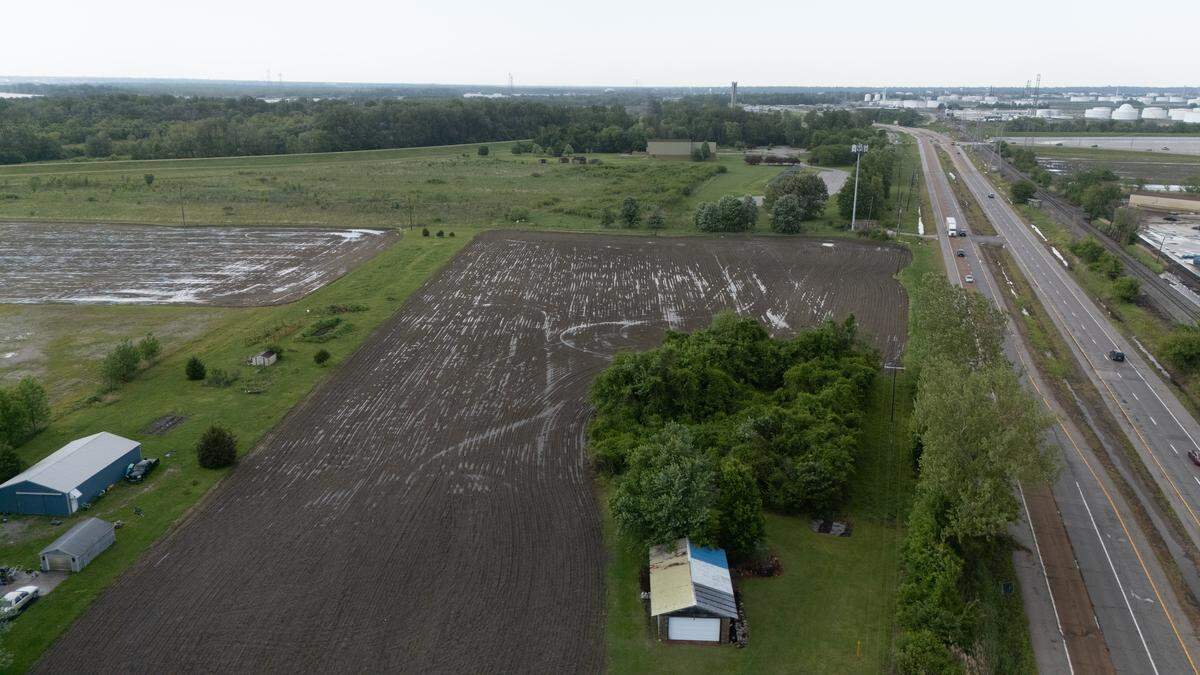
Ameren sold more than 1,000 acres
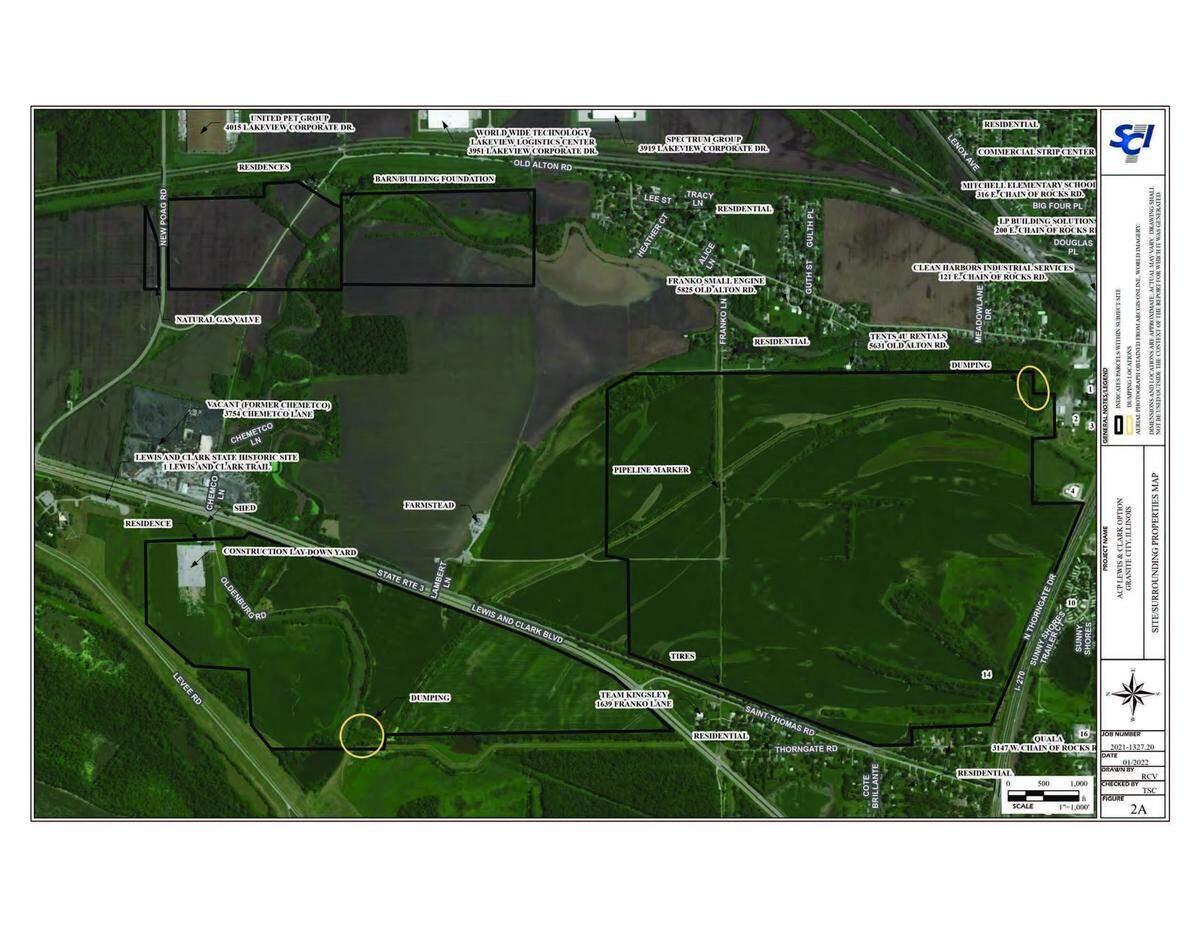
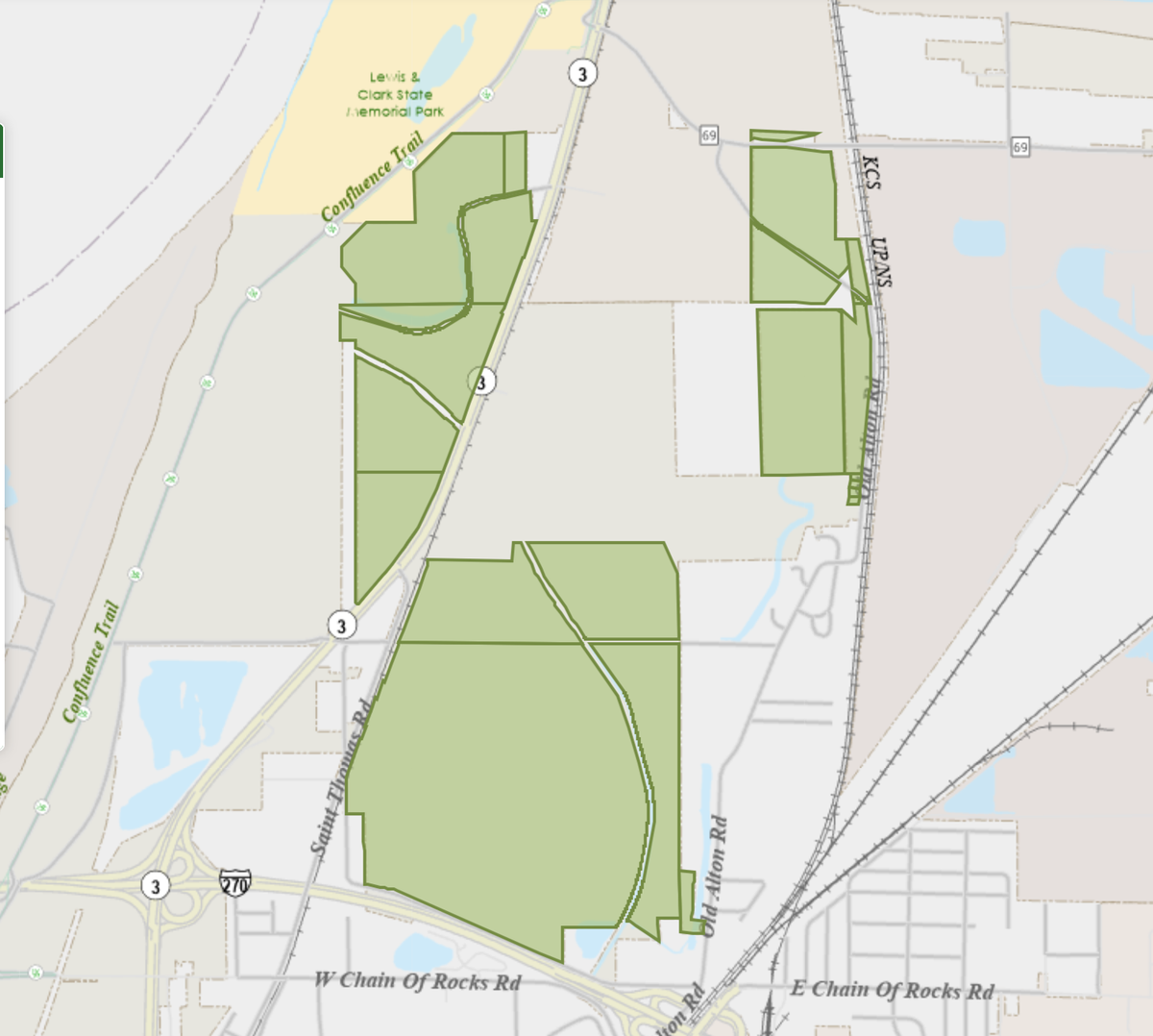
Two years ago, the port district bought 1,097 acres of farmland, largely in Granite City near the intersection of Illinois 3 and New Poag Road. It was previously owned by Ameren. The utility company did not immediately respond to BND questions about why it sold the land at that time after leasing it to farmers for decades.
The land borders some neighborhoods off of Old Alton Road and the Lewis and Clark State Historic Site, which commemorates the explorers’ winter quarters two centuries ago. A $5 million grant from the state of Illinois covered about half of the cost of the nearly $10 million purchase.
This year, the district received another $5 million state grant to purchase an additional 350 acres of farmland. District officials have not released the exact location due to ongoing negotiations.
Wilmsmeyer has said the port district would prefer selling or leasing the land to companies that need rail service to transport goods or commodities. He noted that the grants it has received to buy land must be either used for rail-served development or returned.
The district might lose grant money if it sells the land to a data center developer, but it could use proceeds from a sale to pay off debt.
Granite City-area resident Charles McCoy told board members on Monday he finds the prospect of selling land for a data center after receiving a grant for rail-specific development “disturbing.” He accused the port district of misleading the state to get the money.
“That’s almost fraud,” he said. “… You’re being deceitful to gain grant funds.”
Neither the board nor any port staff members responded to accusations or complaints during the meeting.
In an interview last week, Wilmsmeyer said the port district spent time and resources studying how the property could be developed for rail purposes, but staff also has heard from developers interested in building data centers and solar farms.
“We’ve had a lot of different people that have expressed interest in properties over the last several years,” he said.
‘How would you like it?’
Charles McCoy and his wife Mary live in a subdivision just north of Granite City that is surrounded by the former Ameren property. They have been requesting public records to learn more about behind-the-scenes discussions related to data centers and sharing the documents on social media.
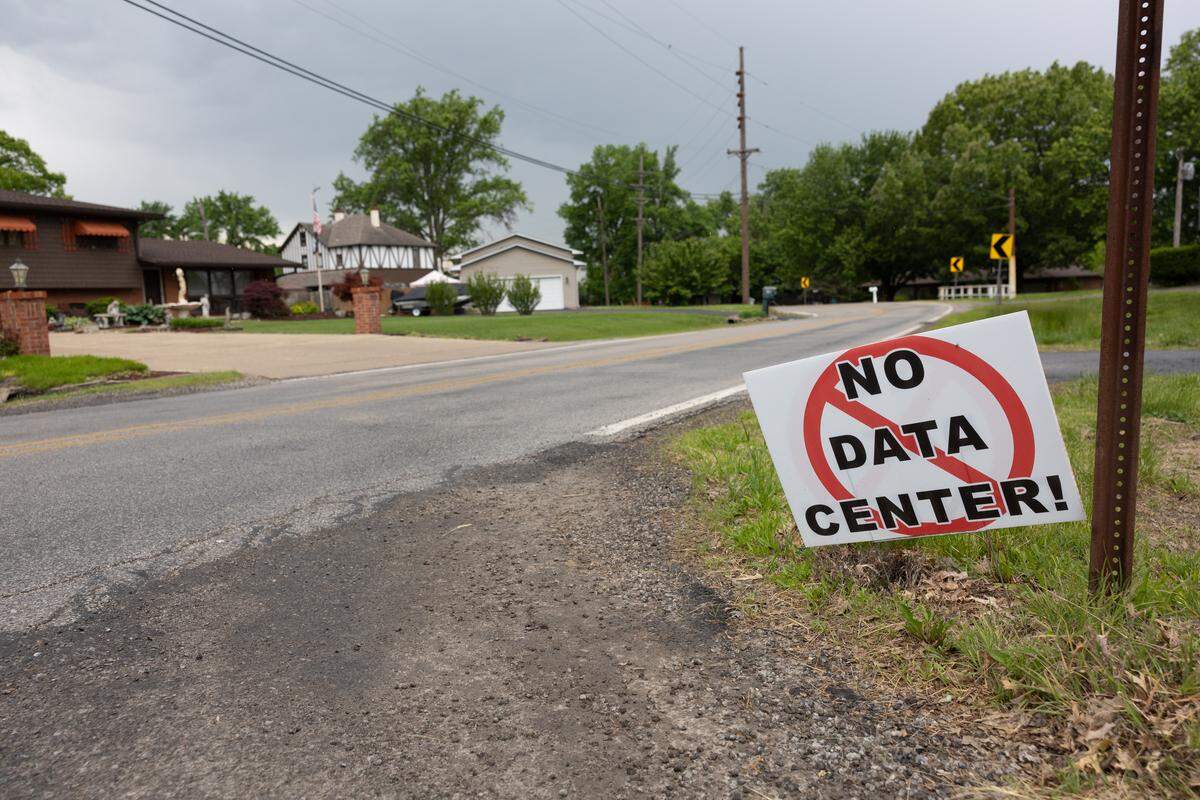
The McCoys told port board members on Monday they are opposed to a data center near their home. They do not want to see a giant industrial complex outside their windows. They worry it will lower property values and lead to higher water and electricity bills.
“I want this board to slow down,” Charles McCoy said, suggesting the board wait until the federal government has implemented regulations. The state legislature is also in the process of writing rules designed to protect residents from shouldering the costs of data center infrastructure.
Other port board meeting attendees said they oppose a data center development near residential areas. Several people told the board they fear negative health effects.
“I’m not going to sit up here and argue; I just wanted to say to everyone: how would you like it in your backyard?” said Sue Rogers, who also lives north of Granite City.
Carolyn Farrell, who lives in Madison near its border with Granite City, said she was thinking of buying a home where Rogers and the McCoys live, but news that data center developers are eyeing property there has made her reconsider.
On Monday, Farrell asked board members, “Is this a done deal?”
John Hamm III, the port board chairman and mayor of the city of Madison, said the board had nothing more about data centers on that meeting agenda.
Who runs the regional port district?
The Illinois General Assembly created the port district in 1959 to promote economic growth in southwestern Illinois. It operates a transportation hub along the Mississippi River with barge, rail and truck access.
The port district owns 114 parcels of land in Madison County, mostly in the Granite City area, according to county property records. Its 1,200-acre main campus includes the former Melvin M. Price Support Center, a closed U.S. Army base.
Wilmsmeyer has worked for the port district for the past 27 years, including 16 years as director, according to a biography from the state grant application. The port district’s board appoints the director.
The board has six members who are appointed by the governor, plus three seats representing the communities of Granite City, Madison and Venice, which are filled by the mayors or their appointees.
The current board members are:
- Granite City Mayor Mike Parkinson
- Madison Mayor John Hamm III
- Venice Mayor Philip White Jr.
- Former Madison County clerk Debbie Ming-Mendoza, appointed in 2025
- Tisha Glasper, member of the Venice school, library and zoning boards, appointed in 2025
- Metro East Sanitary District Director Mike Nordstrom, appointed in 2023
- Alton Mayor David Goins, appointed in 2021
- Alton Housing Authority housing manager Lisa Brown, appointed in 2021
- Former Granite City mayor Ed Hagnauer, appointed in 2005
Parkinson and Hagnauer were absent from Monday’s meeting. They were traveling for a funeral, according to Hamm.