They don’t have TV sets or internet, but nuns at a Belleville monastery are going solar
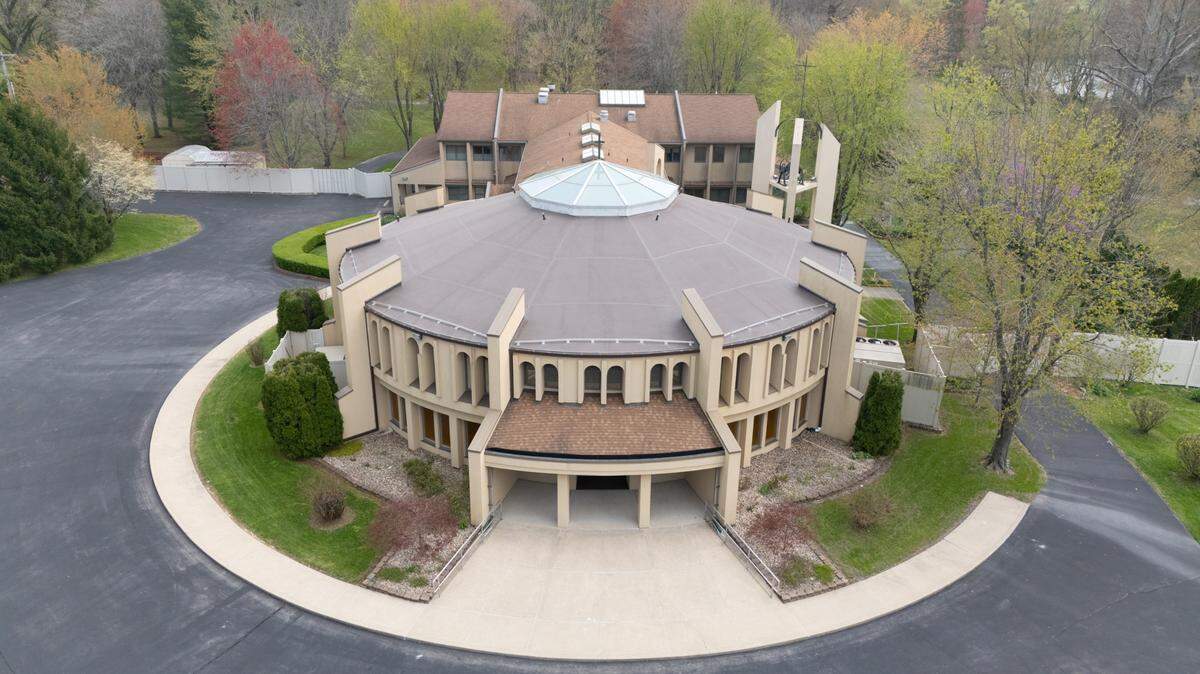
Nuns in the Franciscan Order of St. Clare live in isolation at a Belleville monastery, spending most of their time in prayer, never leaving to visit family, go shopping or even walk in the neighborhood.
Known as the Poor Clares, they don’t have TV sets, radios or internet. Private telephone use is prohibited, except in emergencies.
But the monastery has electricity, and rising power bills have led the 11 cloistered sisters to make a decidedly modern move: They’ve hired a company to install a solar system on their 8.2-acre property near Frank Scott Parkway West and West Main Street.
“We only needed to cut down two trees,” said Sister Regina Buchanan, the monastery’s “portress” (person designated to interact with the public). “All the other trees are remaining. They’re far enough from the system that they won’t shade it.”
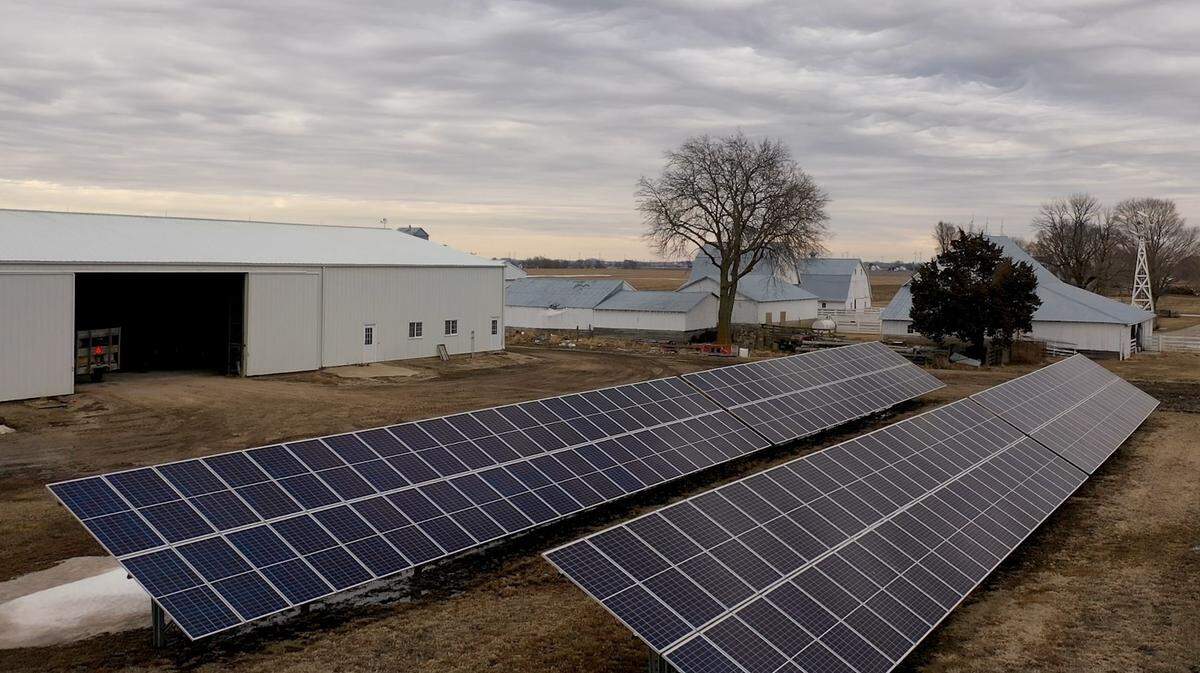
Specifically, two ground-mounted solar arrays with nearly 150 photovoltaic modules will be lined up in a grassy area that once served as baseball fields for the former St. Henry’s Preparatory Seminary.
Belleville City Council voted 14-0 to approve a special-use permit for the project at its Monday night meeting. Alderwoman Jamie Eros and Ward 8 Alderwoman Kara Osthoff were absent.
For city purposes, the project is classified as a “solar farm.” But Cliff Cross, director of economic development, planning and zoning, told alderman that it will provide electricity only for the monastery.
“It’s not a farm,” said Rae Liening, project manager with StraightUp Solar, the company hired by the sisters. “It’s a commercial-size solar system. (That’s needed) because the monastery is larger than a home.”
The system was designed to meet the sisters’ goal of providing 100% of their electricity. It will cover 3,600 square feet of land, well below the maximum allowable under city zoning codes for that size property, Liening said.
The nuns rejected the idea of putting solar panels on the monastery’s roof, according to Buchanan. The cross-shaped stucco building at 300 N. 60th St. was built in 1989, four years after St. Henry’s closed.
“We were concerned about the aesthetics, the look of the building, with that many solar panels up there,” Buchanan said.
Environmental questions
The special-use permit for the solar system at Poor Clare Monastery of Our Lady of Mercy, as it’s officially known, was first considered at a March 27 meeting of the city’s Zoning Board of Appeals. Members voted 4-0 to recommend that it be approved by the City Council.
The board’s advisory report stated that members had considered public health, safety and welfare, the environment, neighboring property values, the local tax base, utilities, traffic, the project’s effect, if any, on schools or hospitals and whether it aligned with the city’s comprehensive plan.
On Monday night, several aldermen inquired about the system’s environmental impact, including what would happen to the solar arrays at the end of their lifespan in 20 or 25 years.
“It will be decommissioned in accordance with a decommission plan so you don’t get a graveyard of solar panels,” Cross said, noting it also will be based on environmental regulations at that future time.
Ward 3 Alderman Kent Randle asked about the possibility of chemicals leaking into the soil and affecting a nearby pond.
Liening, the project manager, addressed that issue on Tuesday.
“There’s no hydraulics (in the system),” he said. “There’s no batteries. There’s literally not a single element that we’re proposing that contains any kind of liquid that would be of concern.”
The City Council approved the special-use permit after voting to require that it be amended to include safety measures discussed at the meeting, as requested by Randle.

Order founded in 1212
The Order of St. Clare was founded in 1212 in Assisi, Italy, by St. Clare of Assisi, a young woman who had heard St. Francis preach faith and “evangelistic poverty.” Today, the order includes about 20,000 sisters worldwide and 39 monasteries in the United States, according to its website.
The nuns stay separated from the rest of the world to focus their energy on prayer, penance, contemplation and manual work.
“Each Poor Clare community is autonomous,” the order’s website states. “Not all Poor Clares dress alike, work alike or keep the same daily schedule. If you go from monastery to monastery you will feel the spirit of Joy and Communal gifting of each other.”
The Poor Clares have been part of the Catholic Diocese of Belleville since 1986, when they branched out from a monastery in Roswell, New Mexico.
The nuns wear brown Franciscan habits with cord belts and black veils, even when they sleep, and go barefoot most of the time. They have few possessions. Each of their 6-by-10-foot bedrooms, called “cells,” contains a wooden table, stool, cupboard and twin bed with a thin mattress.
The sisters don’t take vows of silence, but they avoid idle conversation, except during a one-hour recreation period each night, when they gather in a community room and converse while doing handiwork.
“We keep a perpetual fast, so we have only one full meal per day, and that’s at noon,” Buchanan said in 1999. “We’re abstinent. We don’t eat meat.”
That year, the Poor Clares allowed a BND reporter the rare opportunity to enter their private quarters in the monastery to further public understanding of their community. This week, Buchanan verified that the operation remains largely the same as it did 26 years ago.
Except now solar energy is a growing part of American life, and the nuns have embraced it as a cost-saving measure that will help them continue their mission for many more years.
The monastery is supported by donations and the sale of handcrafted items in its gift shop. The solar-system investment was made possible by a bequest from someone who recently died, Buchanan said.
“We could have never afforded something like this without the legacy and the solar company helping us apply for grants and incentives that would make it more affordable,” she said.
This story was originally published April 10, 2025 at 5:30 AM.