Investors say rezoning creates lending roadblocks on Belleville duplexes
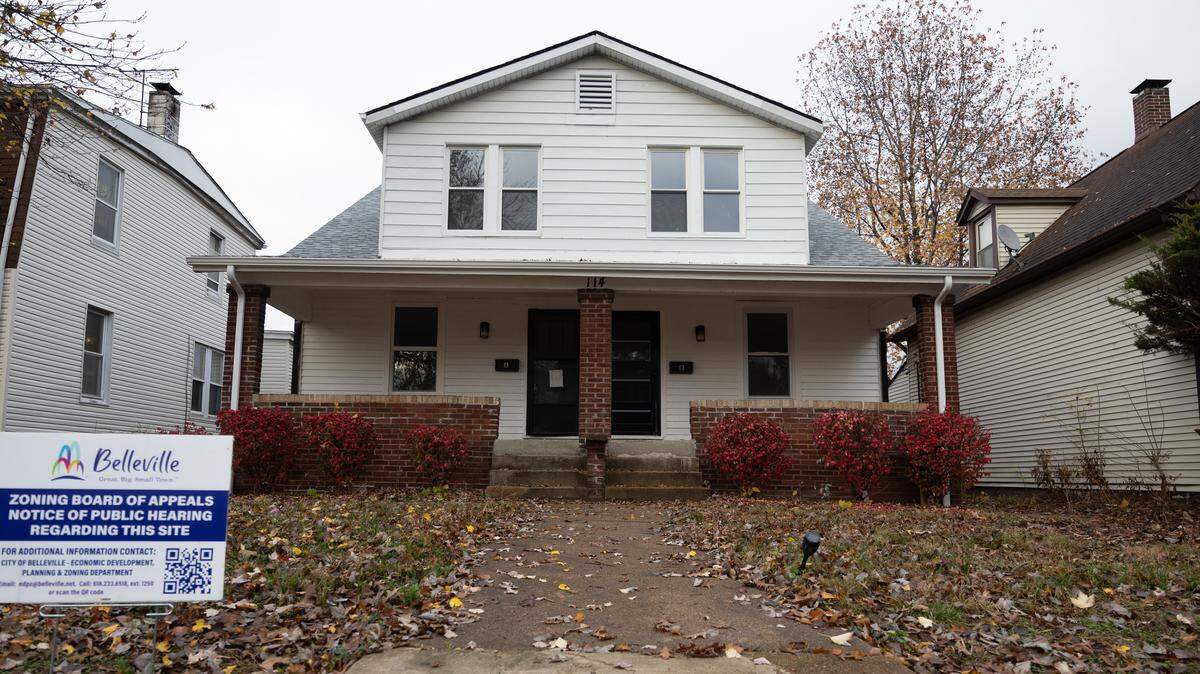
12/1/25 UPDATE: The vote total by the Belleville Zoning Board of Appeals regarding a variance request at 114 N. Missouri Ave. has been corrected.
One consequence of Belleville’s widespread rezonings in the 1990s and 2000s is that many banks won’t loan money for purchase or renovation of duplexes in the city.
That’s according to local investor Ryan Goldman and his real estate agent, Craig Wilson, who appeared before the city’s Zoning Board of Appeals on Tuesday night.
Goldman requested a variance that would allow him to rent his duplex on Missouri Avenue to two tenants, even though the property is in a neighborhood that was rezoned as single-family residence in 2001 after more than 50 residents signed a petition.
After the meeting, Goldman and Wilson said such rezonings prevent people from buying, selling or renovating duplexes.
“Even if (a duplex) has legal non-conforming status, a lender will not lend on it,” Wilson said.
In the 1990s and 2000s, the Belleville City Council rezoned thousands of parcels from two-family or multifamily to single-family residence in more than a dozen neighborhoods. The move was billed as a way to stabilize the city’s aging housing stock.
Officials “grandfathered in” duplexes, apartment buildings and businesses, allowing them to remain as “non-conforming structures” as long as they stayed occupied. But if those buildings sit vacant for more than a year, their non-conforming use can’t be resumed under city code.
Even if the buildings aren’t vacant, many banks will not provide loans for them, citing the risk that their zoning status could someday change, according to Wilson. He gave the example of an older couple with a Mascoutah Avenue duplex they cannot sell.
“They’re stuck with that place,” Wilson said. “Nobody will buy it because it’s a non-conforming structure.”
During the rezoning movement, Belleville officials particularly sought to reverse the trend of subdividing large single-family homes into low-quality apartment units.
In recent years, several families have converted such multifamily dwellings back to their original use.
But Goldman’s duplex at 114 N. Missouri Ave. and the Mascoutah Avenue duplex described by Wilson, along with many other duplexes in neighborhoods zoned single-family residence, were originally built for two tenants and have always been rented as such.
The Missouri Avenue duplex was built in 1907, according to St. Clair County parcel records. Goldman bought it in September.
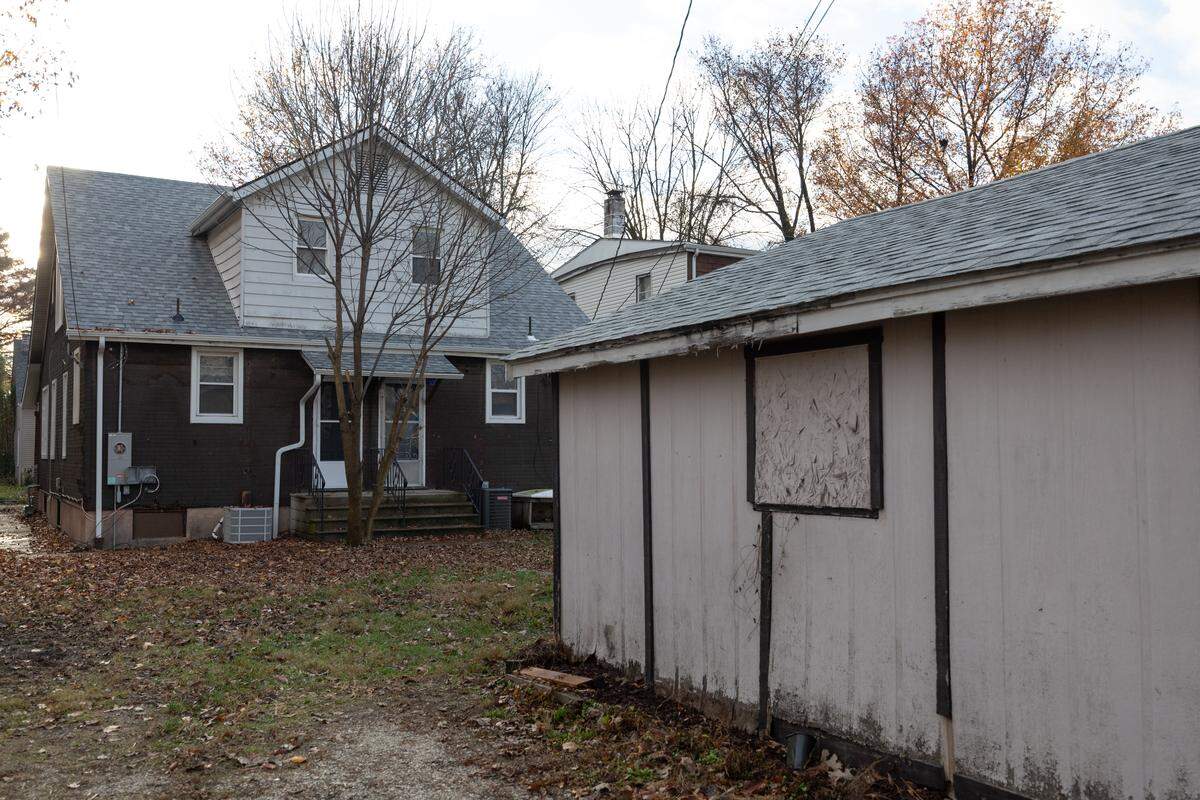
The duplex has been vacant for several years due to a fire. Goldman said it was not easy to come up with the $53,000 purchase price and another $80,000 for renovations because most banks are unwilling to loan money for non-conforming structures.
Goldman said converting the duplex into a single-family home wouldn’t make sense. It has two living rooms, two dining rooms and two kitchens on the lower level, two sets of bedrooms upstairs and two garages.
“This variance is not going to create any negative impact related to traffic, parking, noise or density,” Goldman told Zoning Board members.
The board voted 5-0 to recommend that the City Council approve the variance. Aldermen are expected to decide at their next meeting on Monday.
Three people spoke in support of the variance on Tuesday. One was Rick Brown, a semi-retired landlord and businessman who has long argued that retroactive rezonings in the 1990s and 2000s were illegal and designed to keep Black people from moving to Belleville.
Airbnb owner Victoria Martin said Goldman was helping the community by returning a fire-damaged structure to productive use.
Local developer Karl Gilpin was at the meeting to request a special-use permit for an Airbnb, but he also addressed the issue of duplexes being automatically rezoned.
“There’s a lot of stock in this city of duplexes,” he said. “... If they were built as duplexes, and (units) have their own addresses, they shouldn’t even be reverted back to single-family. To me, it shouldn’t require a zoning request. They’re just fixing it up as it was built.”
In October, the Zoning Board voted 4-1 to recommend that the City Council deny a variance that would have allowed a couple to renovate a South Charles Street building that had been converted into five apartments and continue that use.
Alderman followed the board’s recommendation with two nearly unanimous votes in November.
In that case, the building had been constructed as a single-family home in the late 1860s or early 1870s. It was converted into a multifamily dwelling in the 1920s and retained that status for about 90 years. The neighborhood was rezoned as single-family residence in 1999.
This story was originally published December 1, 2025 at 5:30 AM.