How hard will the coronavirus pandemic hit Illinois school finances and for how long?
The monumental task of transitioning two million students from classroom to remote learning may turn out to be easy compared to what Illinois school districts are facing in the coming months and years due to the COVID-19 pandemic.
Gov. J.B. Pritzker already has warned of expected shortfalls in the state budget, which provides an average 27% of funding for about 850 school districts across the state. And no one seems to know how the health and economic crisis will affect local property taxes, which account for 66%.
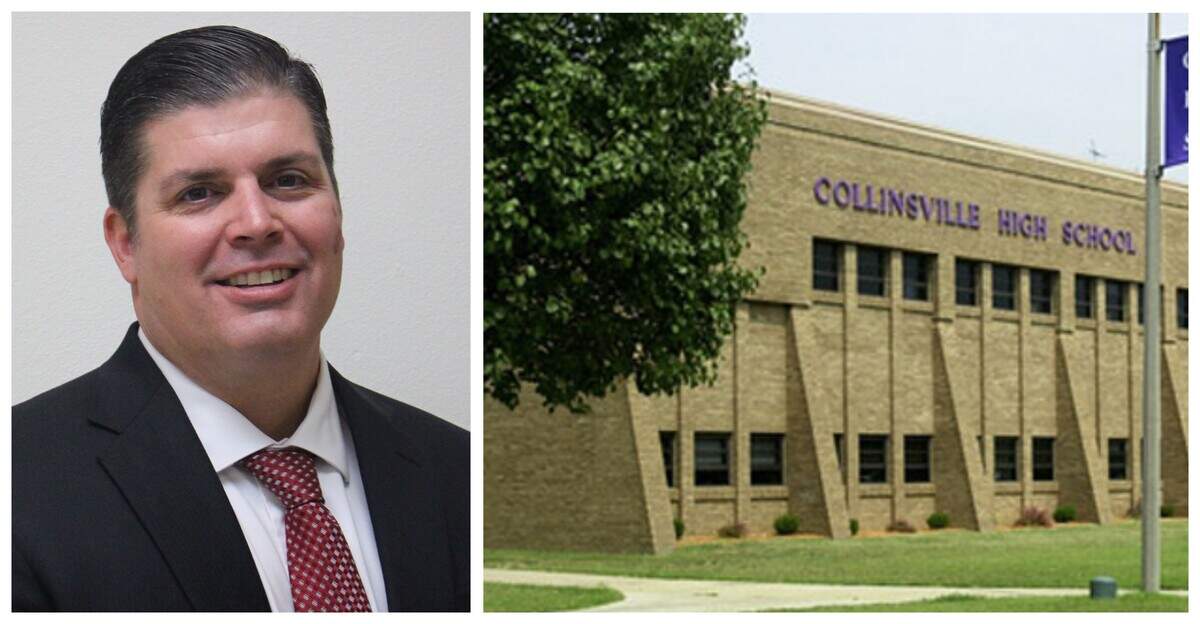
“I think we have to be prepared for lean years in school funding, and this comes on the heels of almost a decade worth of proration, so there is alarming concern,” said Brad Skertich, superintendent of Collinsville Community Unit School District 10 and member of the recently formed Illinois State Board of Education Remote Learning Advisory Group.
“Proration” refers to the former state practice of funding schools below an accepted “foundation level.” That caused particular problems for districts with lower property tax bases, many of which laid off employees and eliminated programs, services and activities.
In 2017, Illinois adopted an “evidence-based” formula designed to be an equalizer, providing more state funding to districts with fewer resources and more needs. Some began reinstating programs and making improvements.
“They were getting out of survival mode,” Skertich said.
Then the coronavirus hit, requiring additional state spending on health and emergency services, closing businesses that generate sales tax revenue and otherwise complicating the economic landscape.
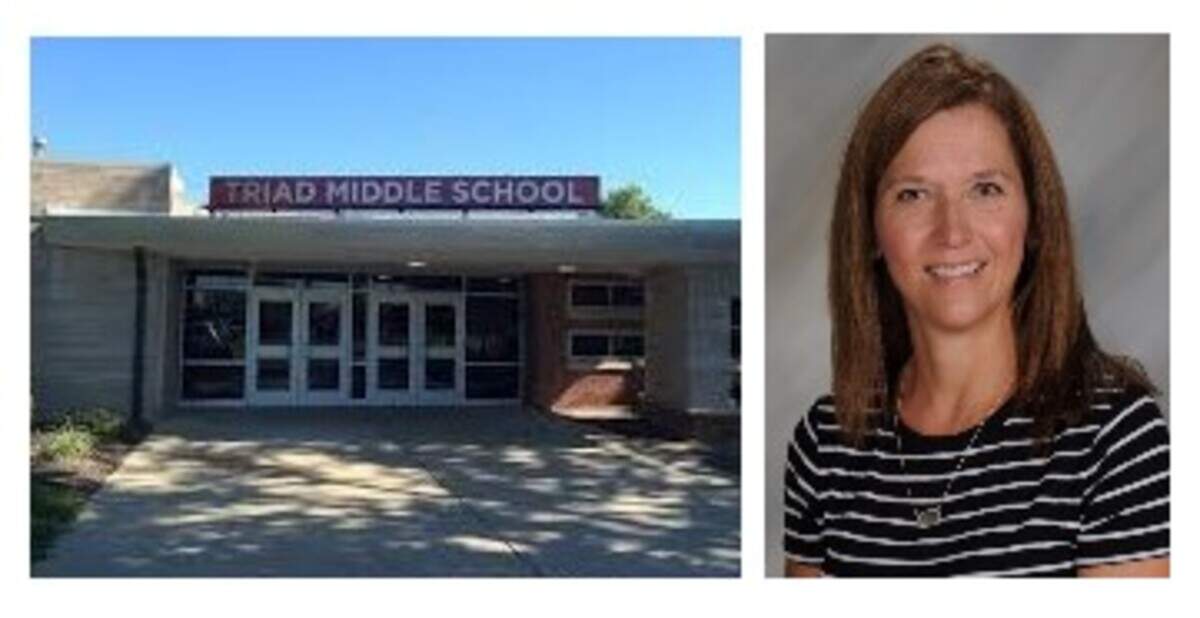
Some school districts are taking action now to give them flexibility in financial decision-making. Triad Community Unit School District 2 laid off 10 paraprofessionals on Monday night, Superintendent Leigh Lewis said. Belleville School District 118’s board voted Tuesday to authorize the borrowing of $5 million, if needed, against future tax revenues.
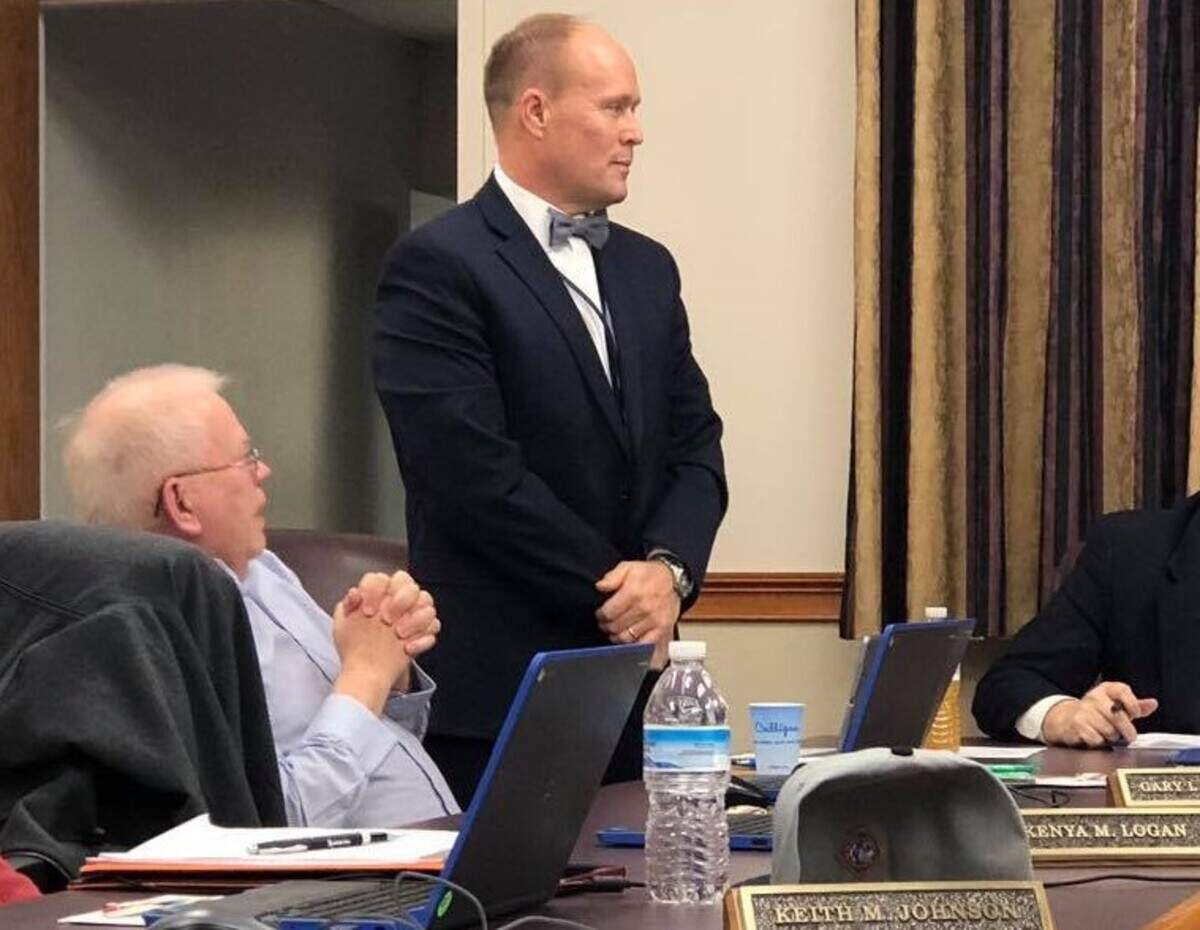
“There are a lot of unknowns,” said Superintendent Ryan Boike. “When the state changed to evidence-based funding, that really helped us. But the state is now projecting that it will receive less in tax revenues because of COVID-19, so that’s not favorable to us when we’re so reliant on state funding.”
Billions in state budget shortfalls
Pritzker closed schools across the state on March 17 to help slow the spread of coronavirus, which causes the respiratory disease COVID-19, and instructed school districts to implement remote-learning systems. He issued a stay-at-home order that took effect March 21, temporarily closing non-essential businesses and asking residents to avoid getting out as much as possible. That order was extended Thursday through the end of May.
On April 15, Pritzker projected that Illinois could see budget shortfalls of $2.7 billion for the fiscal year ending July 1 and up to $7.4 billion next fiscal year.
“Folks, you don’t have to be an epidemiologist to see that the virus is going to hit our budget hard,” he said in a daily news briefing.
The governor’s bleak projections mean different things to different school districts, depending on how much money they get from the state, local property taxes and the federal government. The latter comes largely through Title 1 grants, which are based on the number of students in low-income families and designed to ensure all children meet academic standards.
Belleville 118 gets about 59% of its funding from the state, 30% from property taxes and 11% from the federal government. It operates 11 schools with a $43 million annual budget.
Triad is almost the reverse, getting about 65% of its funding from property taxes, 30% from the state and 5% from the federal government. It operates six schools in Troy, Marine and St. Jacob with a $34 million annual budget.
“If the state has less money to distribute next year, it’s certainly going to impact the Triad school district,” Superintendent Lewis said. “But not the same as it’s going to impact other school districts.”
Collinsville gets 50% of its funding from property taxes, 41% from the state and 9% from the federal government. It operates 13 schools in Collinsville, Maryville and Caseyville with a $70 million annual budget.
East St. Louis School District 189, which has been under state oversight since 2013, gets 69% of its funding from the state, 16% from the federal government and 9% from property taxes. Last fall, Superintendent Arthur Culver asked the state for $6.5 million in supplemental funding to help cover a projected $9 million deficit in its $112 million budget for next fiscal year. It operates 10 schools.
Culver declined this week to answer questions or comment on how economic issues related to the COVID-19 pandemic will affect District 189.
CARES Act funding varies widely
School officials found some comfort in the Coronavirus Aid, Relief and Economic Security Act, passed by Congress to help the United States cope with unprecedented unemployment and other hardships caused by COVID-19. President Donald Trump signed it into law March 27.
Part of the $2 trillion stimulus package is earmarked for education, including an estimated $569.5 million for Illinois schools, according to Pritzker’s office. The amount going to each district will vary widely.
“I’m optimistic about the federal CARES Act,” Belleville 118 Superintendent Boike said, “but federal revenues aren’t that big of a chunk of funding for us.”
More than 90% of CARES money for Illinois schools will be divided among districts based on percentages of Title I assistance they receive, said Jackie Matthews, spokeswoman for the Illinois State Board of Education. It can be used for remote learning, mental health services, building sanitation and a wide variety of other needs created by the COVID-19 pandemic.
There will be no allocations for districts that didn’t receive Title I assistance for the 2019-20 fiscal year, including those in Albers, Aviston, Bartelso and Damiansville.
Other metro-east allocations will range from $6.2 million for East St. Louis 189 to $3.1 million for Cahokia 187, $1.7 million for Collinsville 10, $1.1 million for Belleville 118, $517,000 for Edwardsville 7, $233,000 for Triad 2, $61,000 for Millstadt 160 and $15,000 for Valmeyer 3, according to preliminary estimates (see more districts in table below).
About 9.5% of the CARES money for Illinois schools, or $54 million, will be distributed by the Illinois State Board of Education, headed by State Superintendent Carmen Ayala. Her staff will review proposals from districts outlining their needs.
“The superintendent has said she is going to prioritize increased access to technology and the internet,” Matthews said. “It will be similar to a grant process.”
Some property taxes delayed
Another unknown in the school-funding equation is how the COVID-19 pandemic will affect local property tax revenue in the short and long term. Assessed valuations and tax rates already have been set for the current billing cycle, but some payments to school districts will be delayed.
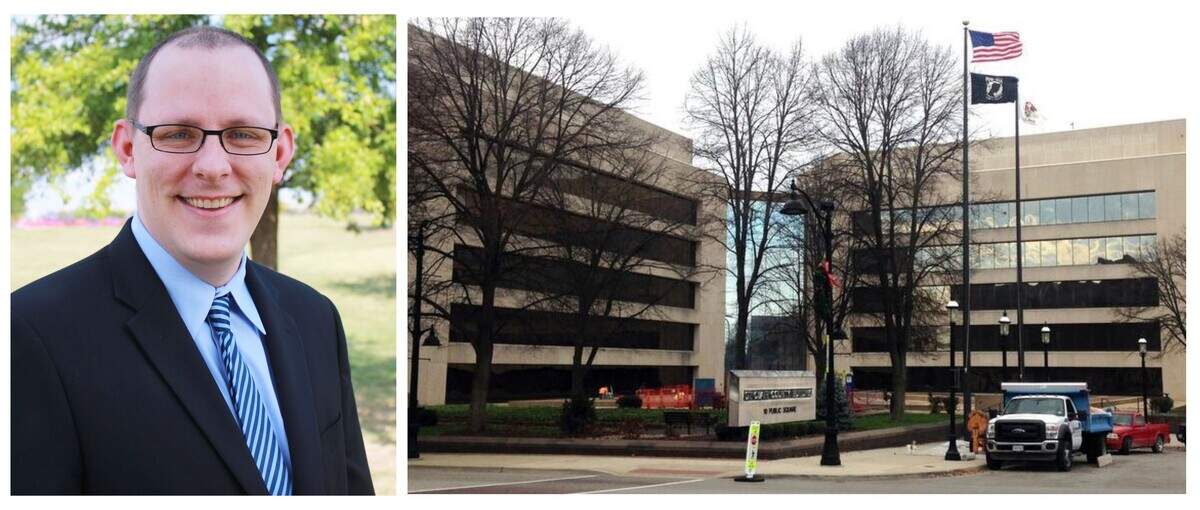
St. Clair County has postponed deadlines for property owners to pay their first tax installments from June 19 to July 30 and their second installments from Aug. 19 to Sept. 30. People won’t be charged late fees on first installments until after Aug. 31.
“We’re trying to make it easier for people who are struggling without negatively impacting schools, libraries, fire departments and other districts in our community,” said County Treasurer Andrew Lopinot.
The postponed deadlines are what prompted Belleville 118 to consider borrowing, Boike said. Officials already had budgeted about $800,000 that they expected to receive in July for use during the current fiscal year, creating a potential cash-flow problem.
Madison County didn’t change tax deadlines because it already allows property owners to pay in four installments, said Chief Deputy Treasurer Patrick McRae. But people experiencing hardship related to the coronavirus can ask to delay their first installments with no penalty. They don’t have to fill out forms or show proof. The county is using the “honor system.”
In both counties, treasurers are encouraging banks that collect and hold property taxes in escrow and residents who feel financially secure to go ahead and pay bills on time so funding can go where it’s needed.
Some officials wonder if communities will see drops in assessed valuations as a result of COVID-19, considering that some non-essential businesses may close permanently or decrease in value because of poor sales performances this spring.
“That ultimately affects how much in taxes the business pays,” said Madison County Clerk Debbie Ming-Mendoza. “Even for homeowners, if God forbid we would go into a recession, all sales of properties would stop and chances are, properties would be devalued. The lower the assessed value, the lower the amount of dollars that districts have the ability to collect.”
Triad Unit 2 is lucky, Lewis said, because most of its businesses, including those that sell food, hardware and gas, were deemed essential by the Pritzker administration, while some cities have more gift shops, clothing boutiques and small restaurants that were shuttered.
Lewis and Collinsville’s Skertich don’t expect this year’s property tax delays to cause big problems for their districts. But school officials can only guess how the coronavirus-related economic crisis will ultimately affect businesses, families and other taxpayers.
“Could this impact the amount of taxes that are collected because people don’t have the money to pay them?” Bioke asked. “We don’t know.”
Money isn’t the only concern
St. Clair County Regional Superintendent of Schools Susan Sarfaty agrees that the COVID-19 pandemic could have a “devastating” effect on school budgets, but local educators are now focused more on the safety, nutrition, academic progress and emotional well-being of students, she said.
Sarfaty pointed to the “digital divide” between students who do or don’t have computers, access to Wi-Fi and other tools to help them succeed with remote learning, as well as differences in home stability, economic status and parental support. Some children may not be eating regular meals. Others are outside playing instead of doing homework.
“As good as technology can be, and as creative as our teachers are, it’s not the same as being in a classroom,” Sarfaty said.
Superintendents Skertich, Boike and Lewis all say they’re working to operate their school districts as cost effectively as possible, but the vast majority of budgets go to pay personnel who are considered necessary to make remote learning work.
Triad is examining programs and services that could be eliminated or reduced if the financial situation demands it, Lewis said. One example is a day care center for employees and other residents who pay tuition.
Collinsville has put a hold on all spending that’s not grant-related or essential, but you can only save so much on toilet paper and athletic supplies, Skertich said.
“There are a lot of moving pieces, and to be honest and to be fair to our government leaders, school district leaders and community leaders, no one’s ever encountered something like this in their lifetimes,” he said. “We’re building the plane as we fly it. It’s pretty challenging.”
Sarfaty has found herself functioning not only as a resource for school districts, but also as a cheerleader during this challenging time in education and in life.
Superintendents don’t even know how many students will be back in the fall, as some have traveled out of town or out of state to shelter in place with relatives.
“I tell them that, ‘We’ve gotten through hard times, and we will get through this as well. We have had to do some really difficult things in the past, and we may have to do it again,’” Sarfaty said. “But we will get through this. We just have to keep focusing on the kids and what’s best for them.”
This story was originally published April 24, 2020 at 5:00 AM with the headline "How hard will the coronavirus pandemic hit Illinois school finances and for how long?."