Some southwest IL parents want to send their kids to school without masks. Here’s why
As students and teachers prepare to start another academic year with the coronavirus, a group of metro-east parents is pushing district leaders to let them send their children back to school this fall without a face covering.
Many of them think that masks compromised learning and mental health last year and that those concerns should take priority now that a vaccine is available.
Their group is called Speak for Students, and members have been making emotional appeals for mask-optional classrooms at recent school board meetings, some of them sharing their family’s experiences from 2020.
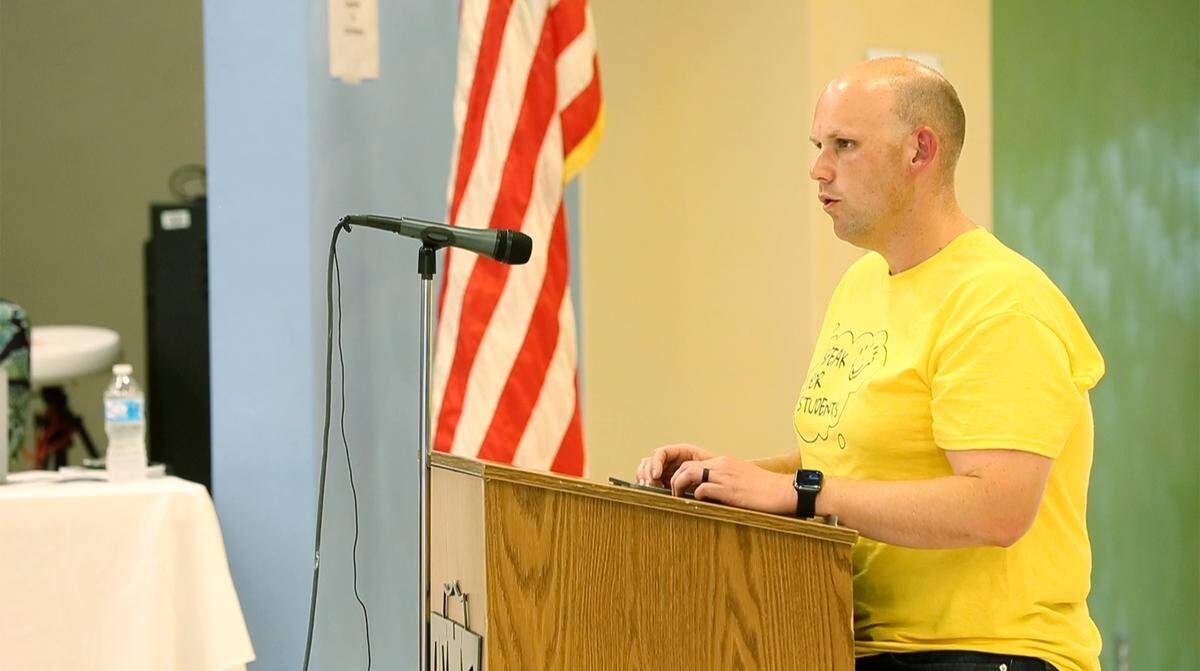
“My kids, unprompted, told me that school made them feel sad,” parent Megan Cunningham said Monday to board members for Triad Unit 2, where her children are enrolled. She and her husband Ryan started the Speak for Students group in June.
The Cunninghams say they’re not anti-mask or anti-vaccine. Both have been vaccinated against COVID-19, and Megan Cunningham said she still follows masking rules, including wearing one on a plane.
They think that parents should also be able to mask their children for school if they want to.
“We don’t feel that they’re warranted for us that don’t want them, but we don’t want to take anyone’s choice away,” Ryan Cunningham said in an interview Wednesday.
And state and federal health officials are largely leaving masking decisions to families, even as they highlight the growing prevalence of the delta variant, a more contagious version of the virus.
In response to the variant, the Centers for Disease Control and Prevention on Tuesday broadened a recommendation for who should wear masks in schools from only the unvaccinated to everyone. The CDC said it recently learned that even people vaccinated against COVID-19 can spread the delta variant.
The agency allows schools to make local decisions about mask mandates based on factors like student vaccination rates or infection rates in the community, for example.
Ryan Cunningham said Speak for Student’s position against mask mandates hasn’t changed since the CDC released the new recommendation and information about the variant this week.
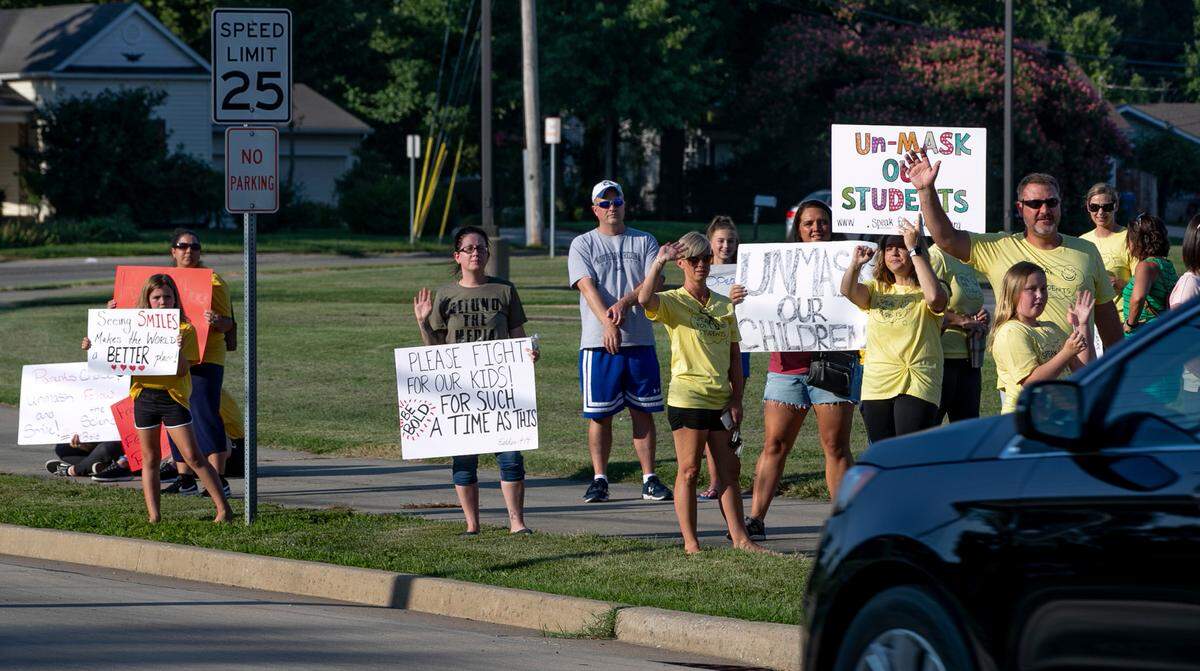
In the metro-east, districts have been including the CDC’s language in their back-to-school safety plans, “recommending” masks for students. Illinois officials have warned them that they could face liability risks if they don’t.
Some local districts have also laid out circumstances when they might ask students to briefly use masks, including when they get close together for assignments.
Many students aren’t eligible for the COVID-19 vaccine because they are under 12 years old.
The U.S. Food and Drug Administration hasn’t reviewed data from clinical trials in children younger than 12 to decide whether the vaccine is safe for them to take like it has for adolescents and adults.
Last year, schools generally avoided being the transmission hotspot that people feared they would be. But there were also universal masking mandates at that time, as well as other precautionary measures.
Students in most metro-east districts were not in-person every day for most of the year to keep buildings well below capacity. School days also were shortened so districts didn’t have to serve lunch in school, since they didn’t have the space to spread students out in cafeterias.
The expectation in Illinois schools this year is that students will be in-person five days a week for full school days. That means fuller building capacities and, by necessity, less social distancing, regardless of what the mask policy ends up being in a particular district.
“Parents have choice,” Triad Superintendent Leigh Lewis said of the mask policy in the district’s plan at the school board meeting Monday. “And we have a responsibility to keep students safe while they are in school.”
Like most districts, Triad is making masks mainly optional, but it will also offer classrooms for children of families that want the protection of mandatory face coverings.
Complaints about masks include mental health, learning challenges
Among parents’ complaints about masks are that they affect learning. They’re distracting, they make it harder to hear teachers and classmates or be heard, and they cover a person’s facial expressions, making it difficult to connect with people, parents say.
Parents have also mentioned that their children experienced mental health challenges in the last school year because they struggled to connect, keep up with lessons and deal with the stress of the pandemic.
Some said students who receive special education services, in particular, fell further behind their peers because of masks last fall.
Natasha Box, a parent in the Collinsville school district, shared with the school board that her son in speech therapy is taught to “model” off of how others move their mouths, but he can’t see that through a mask. She said his communication skills were affected.
Larger proportions of local students reported experiencing depression last year than students across the state did in 2018, according to an Illinois survey.
The largest percentages were among high school sophomores in the metro-east.
In St. Clair County, 48% of 10th graders who responded to the survey in spring 2020 said they experienced “feeling so sad or hopeless almost every day for two weeks or more in a row that you stopped doing some usual activities” during the past 12 months.
Almost 150 sophomores from three high schools in St. Clair County participated in the survey, which is conducted by the University of Illinois. Madison County sophomores reported a similar rate: 46% of the 1,000 students surveyed at four schools reported experiencing depression.
The university sends the results of the Illinois Youth Survey to the Illinois State Board of Education and Illinois Department of Human Services and publishes the results online at iys.cprd.illinois.edu.
Niki Grajewski, a child mental health expert in southern Illinois, said anxiety, fear and frustration are normal reactions to any “adverse experience,” including a pandemic.
She is the clinical manager for Centerstone’s family services program. Centerstone is a not-for-profit health system that specializes in mental health and substance abuse treatment
Grajewski said that recently Centerstone has seen an increase in concerns around anxiety and depression, including outbursts of anger from children, which can be a sign kids are struggling with mental health.
“The things that we’ve been seeing from kids and even from parents and families, even their anger towards things not going the way they want with school, that’s all completely explainable because of the circumstances that we’re all living in right now,” Grajewski said. “... I also think it’s given us all a chance to figure out how to deal with stress and anxiety in more healthy ways.”
She said there are three things parents and educators can do to support the mental health of children as they go back to school this fall: communicate, be flexible and nurture kids.
This story was originally published July 30, 2021 at 5:00 AM.