Looking for an edge in an NCAA tourney bracket pool? These 10 tips could help you win
READ MORE
2025 NCAA Selection Sunday preview
Click below for more of the Herald-Leader’s and Kentucky.com’s coverage previewing 2025 NCAA Tournament Selection Sunday for men’s and women’s college basketball on March 16.
Expand All
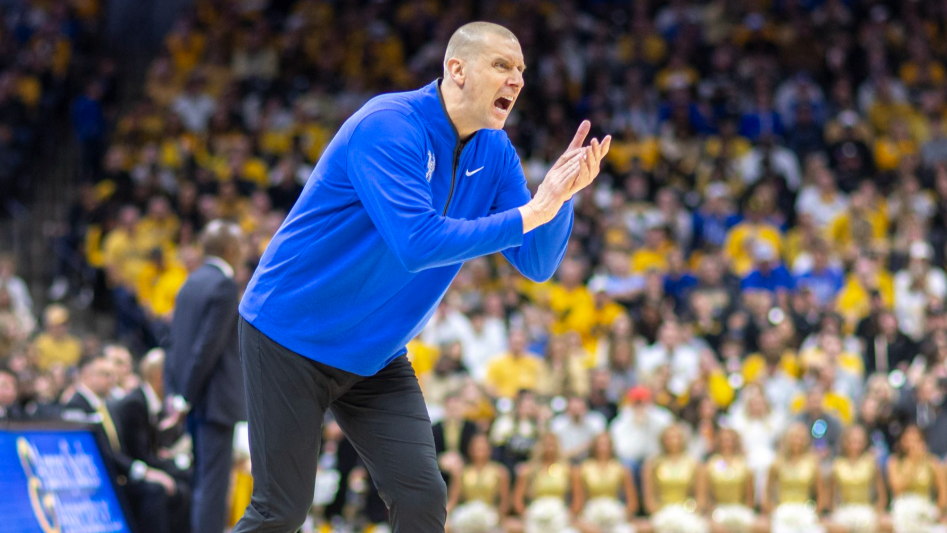
March Madness is back: Twelve questions (and answers) for the 2025 men’s NCAA Tournament

Twelve questions (and answers) ahead of the 2025 women’s NCAA Tournament
2025 NCAA Tournaments: Get blank men’s, women’s printable brackets before Selection Sunday

Looking for an edge in an NCAA tourney bracket pool? These 10 tips could help you win
With the Southeastern Conference expected to break the record for most teams from one league selected for a men’s basketball NCAA Tournament in 2025, how well you analyze the SEC could determine how you fare in your bracket pools.
Currently, the record for most teams from one conference in an NCAA Tournament is held by the (old) Big East, which put 11 members in the 2011 NCAA tourney.
Yet even though a Big East team, Connecticut, won the 2011 NCAA title, the league’s overall performance in that year’s tourney did not live up to the league’s Selection Sunday bounty.
In the 2011 NCAA tourney, the Big East lost nine of its 11 teams on the first weekend. Only No. 3 seed UConn and No. 11 seed Marquette made the round of 16, and Connecticut was the only team that advanced to the round of eight.
Now, with the SEC flirting with as many as 13 teams in the 2025 field of 68, can you trust the Southeastern Conference teams to back up their season-long hype?
Bear with me, and I’ll share my view.
Here are 10 tips that could — could — help you fill out a winning bracket:
1. What to make of conference tournament outcomes. The 2024 NCAA champion Connecticut Huskies won the Big East Tournament. Yet teams winning league tourney titles has not recently been a strong predictor of NCAA tourney champions.
Of the 10 most recent NCAA title winners, only three — UConn last year, Kansas in 2022 and Villanova in 2018 — won their conference tournaments. Since the NCAA Tournament bracket expanded to at least 64 teams in 1985, only 17 of 39 NCAA champs won their league tournament.
Rather than telling you who to pick, what conference tournaments actually do is tell you who not to choose.
Since 1985, no team that failed to win at least one game in its league tourney has gone on to win the NCAA championship.

2. Where to look for upsets. Over the past five years, most NCAA tourney upsets have come from three bracket lines — 4 vs. 13, 5 vs. 12 and 6 vs. 11.
A 13 seed has beaten a No. 4 in five of the past six NCAA tourneys. Over the last five tournaments, No. 13s are 5-15 vs. No. 4s.
Since 2019 (recall, there was no 2020 NCAA Tournament due to the coronavirus), No. 12s are 8-12 vs. No. 5s.
Over the same time frame, No. 11s are 10-10 vs. No. 6s.
3. Little reason to pick against top three seeds in round of 64. After Kentucky lost to No. 15 seed Saint Peter’s in 2022 and to No. 14 seed Oakland last season, the Big Blue Nation is all too aware that jaw-dropping upsets do happen in the NCAA Tournament.
Still, history says it’s not wise to pick against the top seeds in the round of 64.
Over the past five tourneys, No. 1 seeds are 19-1 vs. 16 seeds; No. 2 seeds are 17-3 vs. No. 15s; and No. 3s are 18-2 vs. No. 14s.

4. No. 1 seeds tend to make the Sweet 16. Last year, all four top seeds advanced to the round of 16. In the last five NCAA Tournaments, 16 of the 20 No. 1s have made the second week.
5. The recent NCAA tourney darlings. Since 2016, only four programs have won at least 20 NCAA Tournament games — Gonzaga (24), North Carolina (21), Kansas (20) and Villanova (20).
Alas, Villanova (18-13, 11-9 Big East) does not figure to be in the field of 68 unless it wins the Big East Tournament. North Carolina (20-12, 13-7 ACC) may need to win its league tournament to make the NCAAs, too.
While both are expected to be in the NCAA Tournament, neither Kansas (20-11, 11-9 Big 12) nor Gonzaga (23-8, 14-4 WCC) entered league tournament play having lived up to their preseason expectations.
6. No. 1 seeds tend to cut down the nets. Over the last seven NCAA Tournaments, a No. 1 seed has won the championship six times.
7. Picking the national champion I. Fifteen of the 22 NCAA champs since 2002 have ranked in the top 20 on Selection Sunday in both adjusted offensive and defensive efficiency in the Pomeroy Ratings.
Two years ago, there were four such teams — Houston (No. 11 adjusted offensive efficiency, No. 4 adjusted defensive efficiency); Alabama (No. 19, No. 4); UConn (No. 6, No. 18) and Texas (No. 18, No. 11).
Outcome: Alabama and Houston lost in the Sweet 16; Texas lost in the Elite Eight; and UConn won it all.
Last year, there were also four such teams — Connecticut (No. 1 in adjusted offensive efficiency, No. 11 in adjusted defensive efficiency); Houston (No. 17, No. 2); Auburn (No. 10, No. 4) and Arizona (No. 8, No. 12).
Outcome: Auburn lost in the round of 64; Arizona and Houston lost in the round of 16; and UConn won it all.
As of March 10, there were four “double qualifiers” in the Pomeroy Ratings: Duke (No. 2 adjusted offensive efficiency, No. 4 adjusted defensive efficiency); Auburn (No. 1, No. 14); Houston (No. 10, No. 2), and Florida (No. 3, No. 10) — and Tennessee (No. 22, No. 1) was close.
8. Picking the national champion II. Starting in 2004, every eventual NCAA champion has been ranked in the top 12 of the AP Top 25 poll on week six.
This year, those teams were: 1. Tennessee, 2. Auburn, 3. Iowa State, 4. Duke, 5. Kentucky, 6. Marquette, 7. Alabama, 8. Gonzaga, 9. Florida, 10. Kansas, 11. Purdue, 12. Oregon.
Notably absent from that 12 are Big 12 regular season champion Houston, Big Ten champ Michigan State and Big East winner St. John’s.
9. Believe in blue. When Connecticut, whose school colors are navy blue, gray and white, repeated as national champion last year, it continued a long-running trend: Since 2004, every team but two that has won the NCAA championship has had blue among its primary school colors.
The exceptions are Baylor (green and gold), which won in 2021, and Louisville (red, black and white), which won in 2013 — but subsequently vacated the national title due to NCAA rules violations.
Among this season’s four Pomeroy Ratings “dual qualifiers,” Duke (blue, white), Auburn (navy blue, orange) and Florida (blue, orange) incorporate blue into the color schemes.
Houston (red, silver, white) does not.
10. Can you trust the SEC? The Southeastern Conference in 2025 is strong in all ways. The SEC has elite teams. Five of the top 11 teams in the Pomeroy Ratings (through games of March 9) are from the SEC.
There is also robust depth in the SEC — 14 of the 16 teams are in the top 46 in the Pomeroy Ratings and all 16 teams are in the top 81.
What is worrisome for backers of SEC teams is the prospect that this week’s Southeastern Conference Tournament will be such a blood-letting among powerful teams that SEC squads will not have “any juice in the lemon” when the NCAA tourney starts.
That concern aside, I think the SEC is as good as its billing and is worthy of your trust on your brackets.
This story was originally published March 13, 2025 at 6:30 AM with the headline "Looking for an edge in an NCAA tourney bracket pool? These 10 tips could help you win."