City of Belleville gets stuck with demolition bills after investors neglect homes
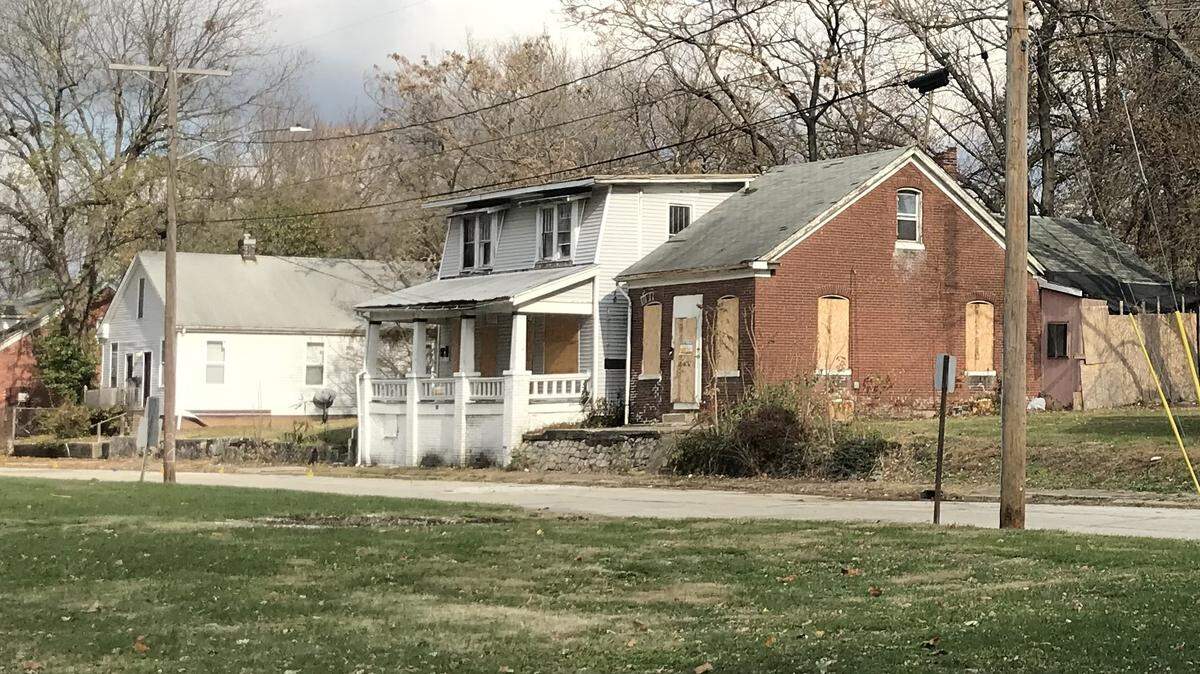
The story of two homes in Belleville provides a case study on the way some investors buy, sell, rent and neglect older buildings until they become so dilapidated that the city has to pay to demolish them.
It also shows how crime, poverty, housing codes and property values can play a role in determining which properties survive and which perish.
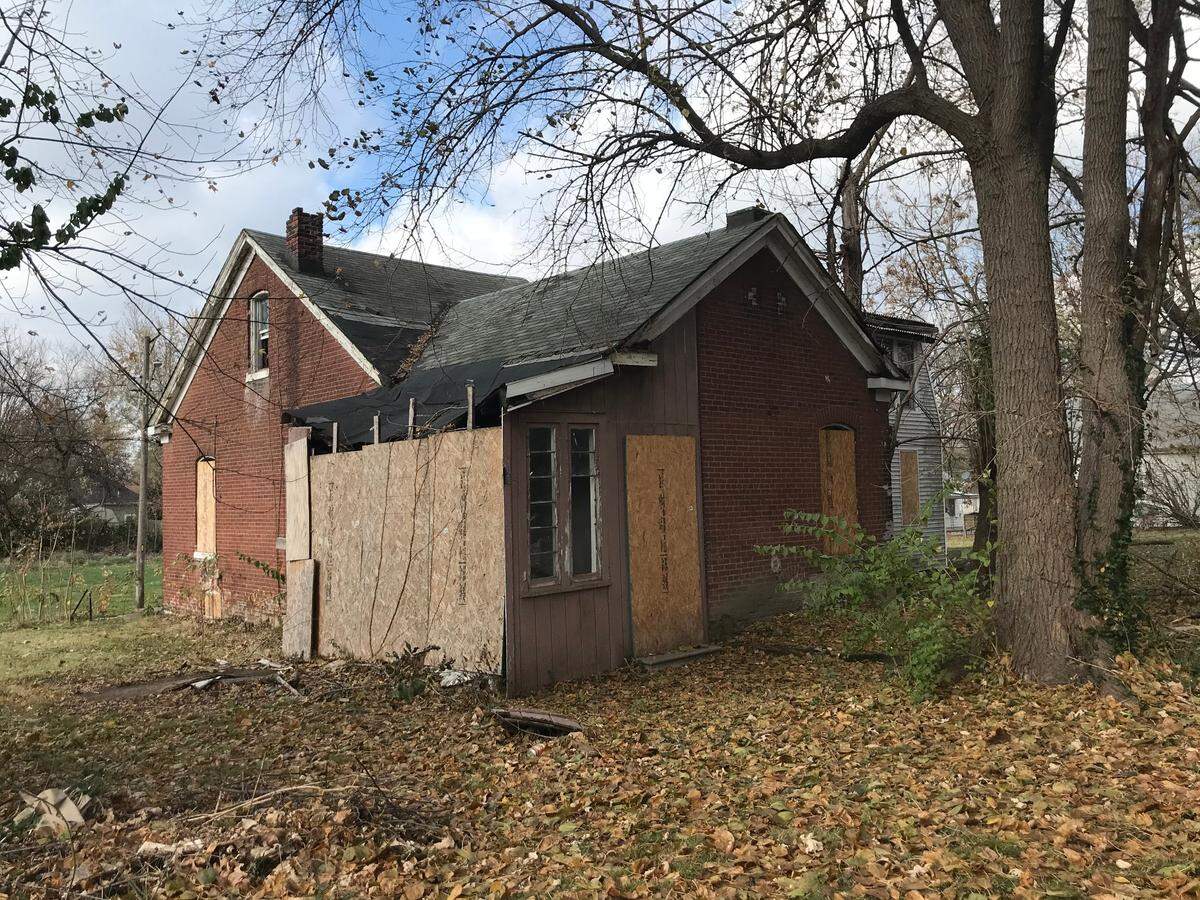
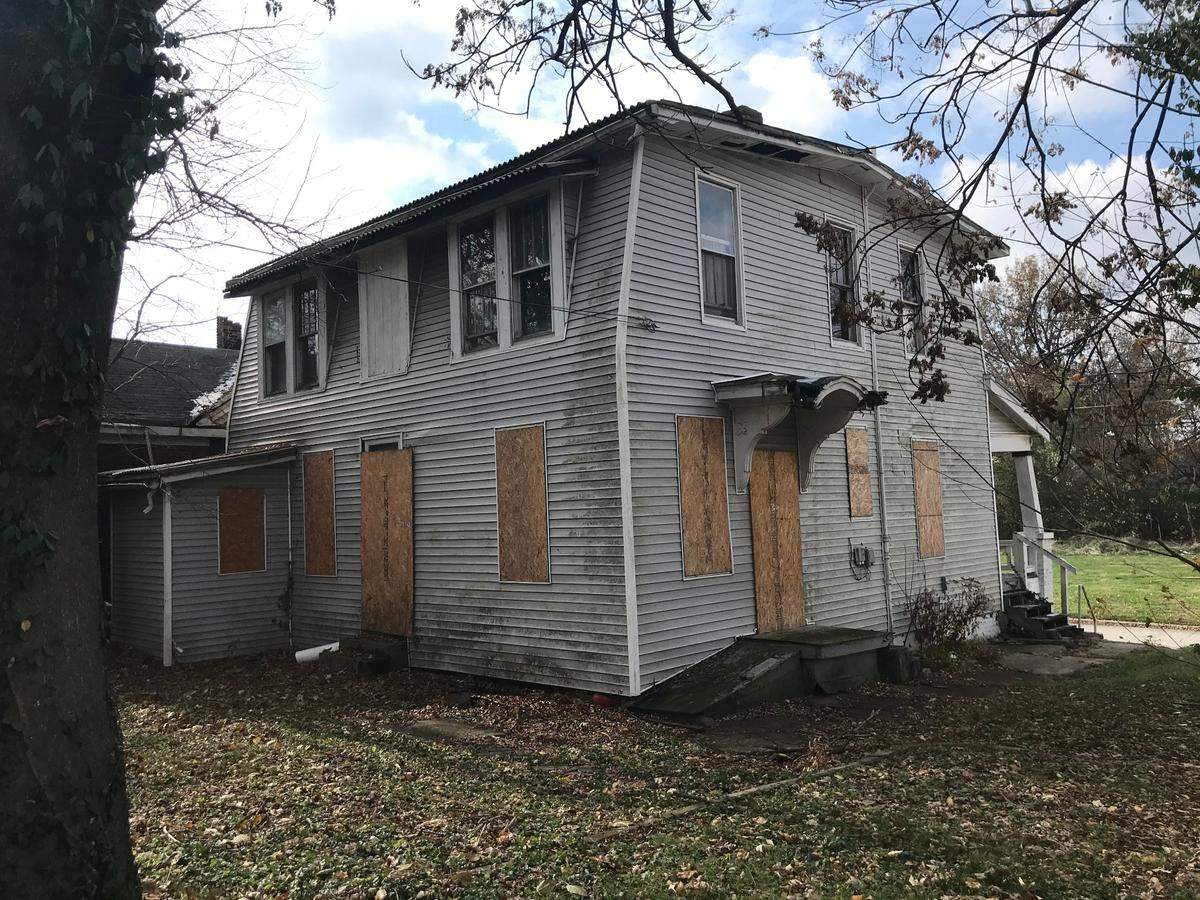
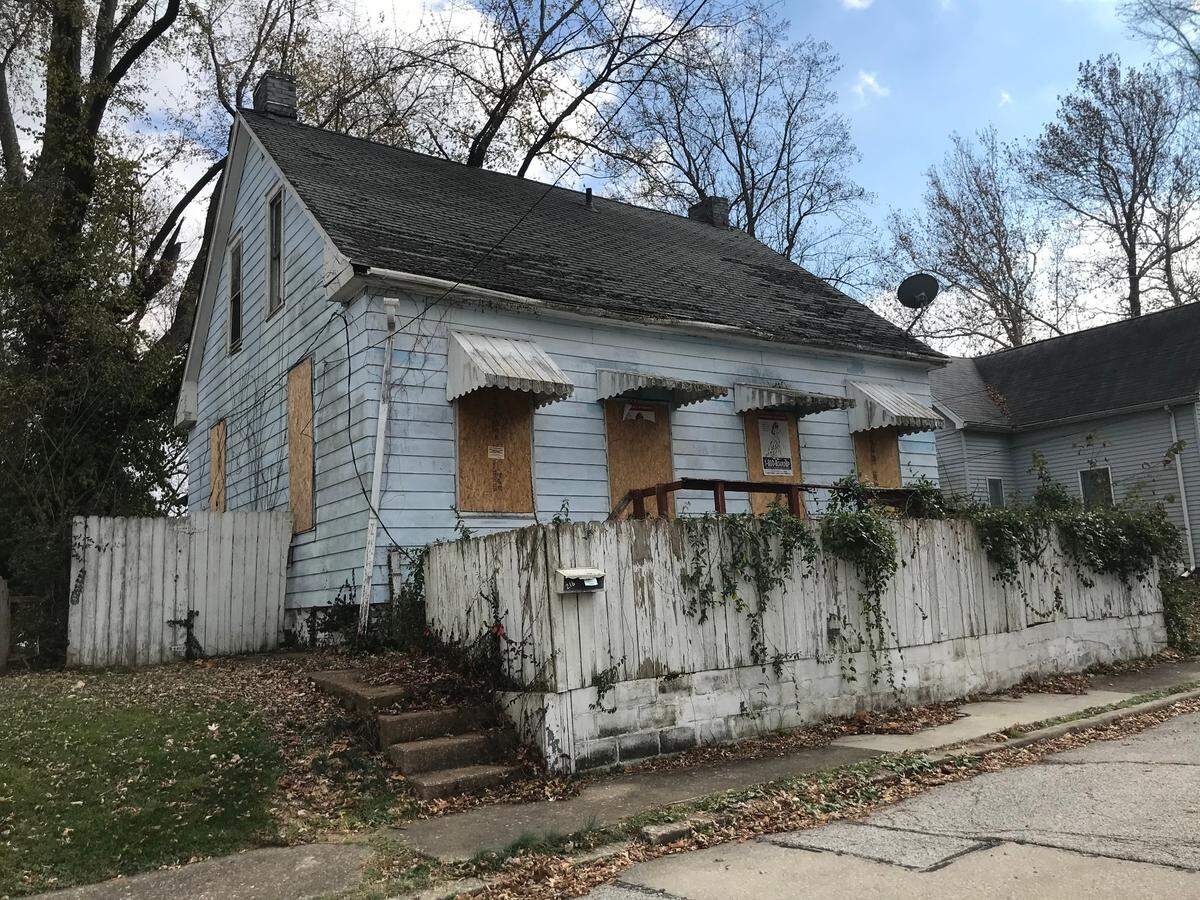
The home at 218 N. 11th St. is a frame two-story with gray vinyl siding and an expansive front porch. The one next door at 214 N. 11th St. is a small brick German American folk house.
Last year, the city condemned both of the vacant 19th century homes and boarded up windows after neighbors complained that squatters were living in them and breaking into cars and garages.
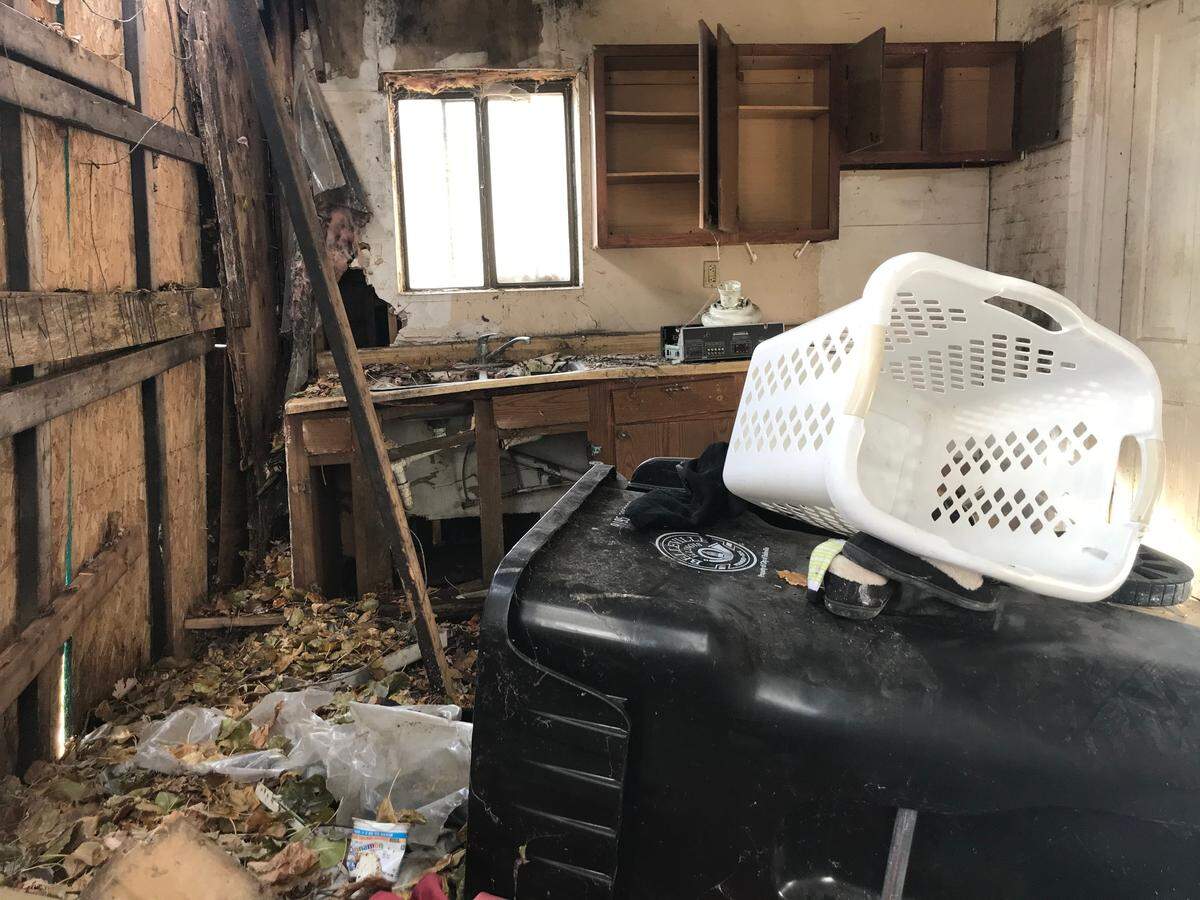
Inspectors found the homes wrecked on the inside and full of household junk, trash and buckets of human waste, according to Scott Tyler director of health, housing and building.
“We’ve got a group of people going from one empty house to another, some being homeless, some being drug addicts, and they are just a detriment to the neighborhood,” he said.
“At one point, they were inhabiting a garage, and they painted their name on the side. They’re very well-known to the Belleville Police Department. They’ve been doing this for quite some time.”
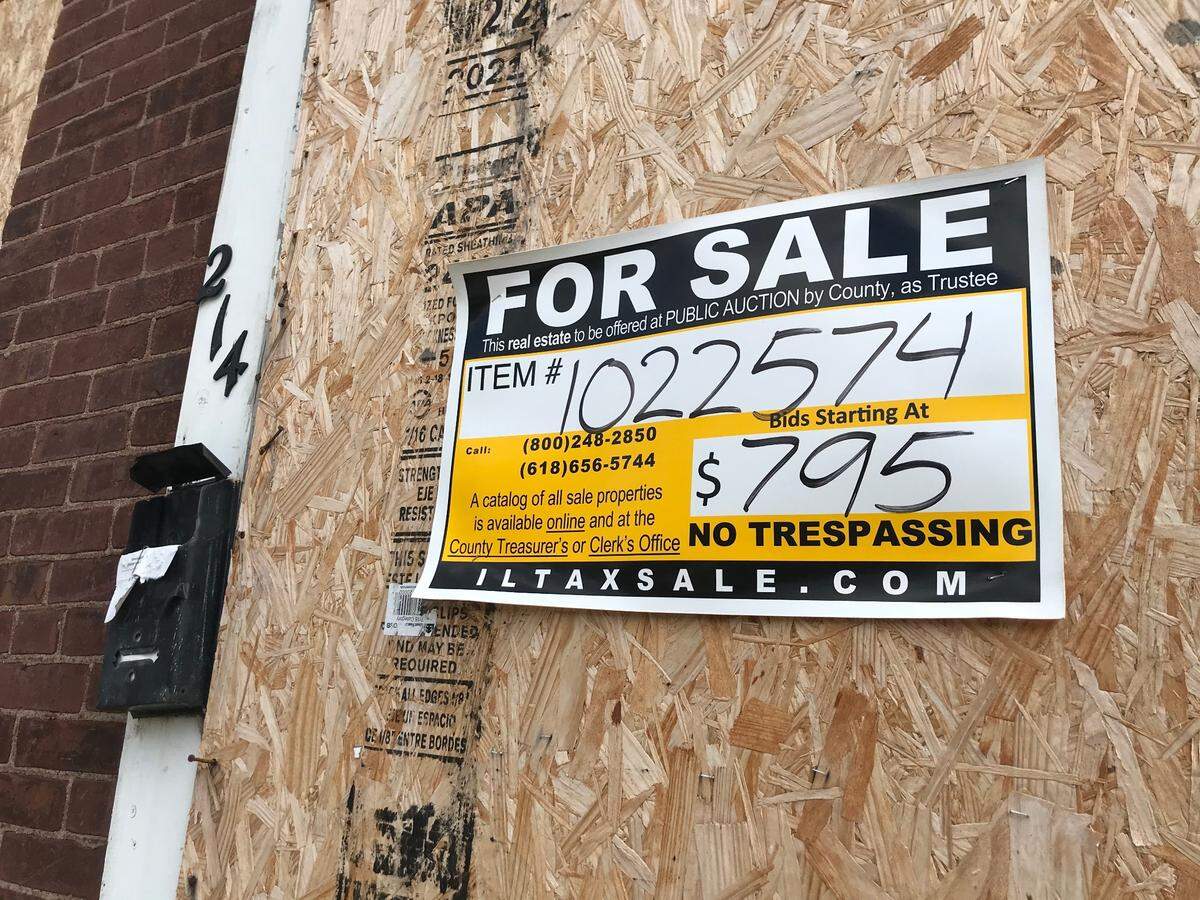
Sold at auction for $795
Last spring, the city of Belleville bought the two homes on North 11th Street at auction for $795 each from St. Clair County, which had taken possession after a local investment company stopped paying property taxes.
That followed nearly two decades of deterioration under the ownership of other limited-liability companies (LLCs), trusts and the county.
The homes now are being prepared for demolition, along with 17 other homes, one trailer and one outbuilding. This will add to the list of 67 structures the city has torn down in the past 10 years after buying them at county auction or going to court to acquire deeds.
Demolition costs range from $9,000 to $20,000 per building, depending on size and asbestos content, according to City Clerk Jenny Meyer.
The city can go to St. Clair County Circuit Court and try to force property owners to fix or demolish their own structures if they’ve been declared unsafe by inspectors, but that takes time and money for legal fees.
“A judge has to rule, and sometimes they’re able to prolong these cases for months and months,” Tyler said. “In the meantime, the property continues to deteriorate, and people continue to go inside of them.
“They steal the copper. They steal any kind of nice woodwork. They steal air conditioning, furnaces. They still everything.”
In the past year, Belleville Mayor Patti Gregory has implemented programs that require city staff to invite contractors to examine abandoned buildings in hopes of generating interest in renovation.
Gregory said she also is doing research on how other communities in the United States are dealing with aging structures.
“Every community that I’ve talked to, they come across with the same problem,” she said. “Of course, many of them are not 208 years old, so their properties maybe aren’t in as much disrepair as our properties.”
Belleville was named and established as the St. Clair County seat in 1814 and incorporated as a city in 1850.
Little or no maintenance
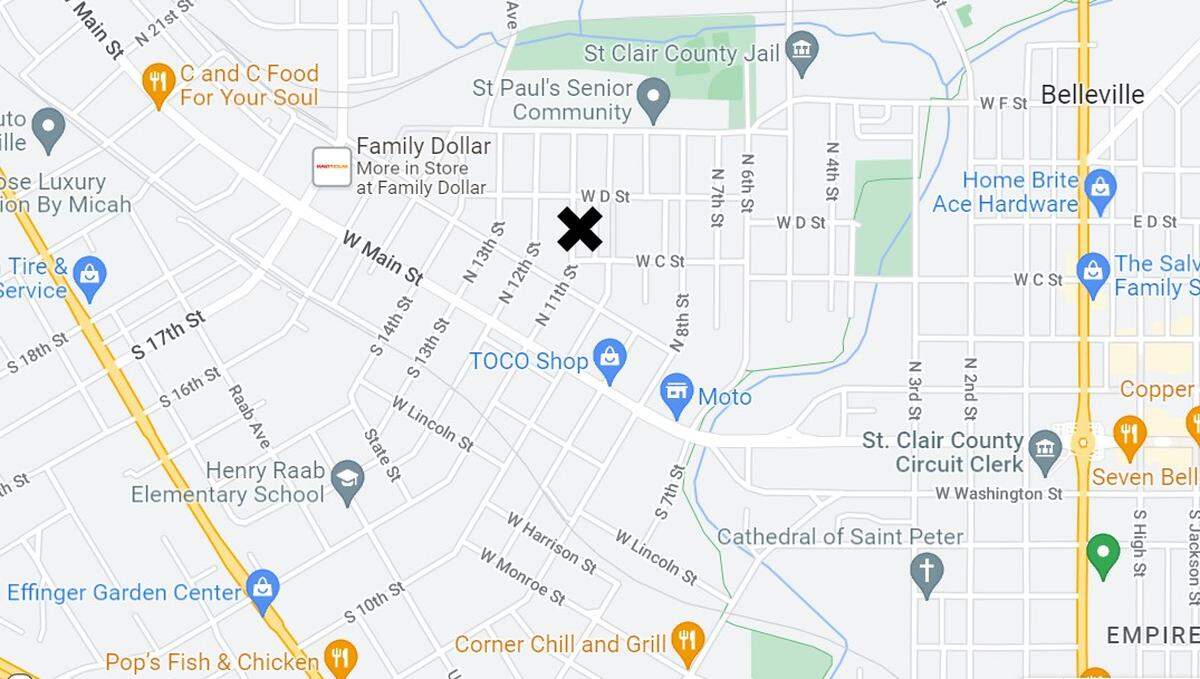
Tyler estimates that Belleville has hundreds of vacant homes in various stages of disrepair. Some are owned by people who pay property taxes and do just enough exterior maintenance and mowing to avoid code violations. Others are left to rot.
Investors who buy older homes to renovate and sell or rent sometimes conclude that projects will take too much time or cost too much money, and they walk away, particularly in low-income neighborhoods with decreasing property values.
Ward 4 Alderman Raffi Ovian places some of the blame for derelict homes on limited-liability companies that he describes as “slum” landlords. Many are based in states that allow principals to remain anonymous. Others live in foreign countries.
“Most of the time, the people who buy these homes do very little, other than to get them approved so somebody can move in and they can get rent,” Ovian said last month.
“That’s what they’re concerned about, as opposed to making sure they’re well-maintained and have the right people living in them who won’t tear them up.”
Gregory is no fan of out-of-town LLCs, either.
“The people who don’t live here, they don’t care,” she said. “They’re taking it as a tax write-off because they’re losing money every year that they don’t rent it. ... So the city and all the neighborhoods are basically being, for lack of a better term, dumped on.”
When homes become eyesores, Gregory said, it causes other neighbors to lose their sense of pride, too.
Neighborhood in decline
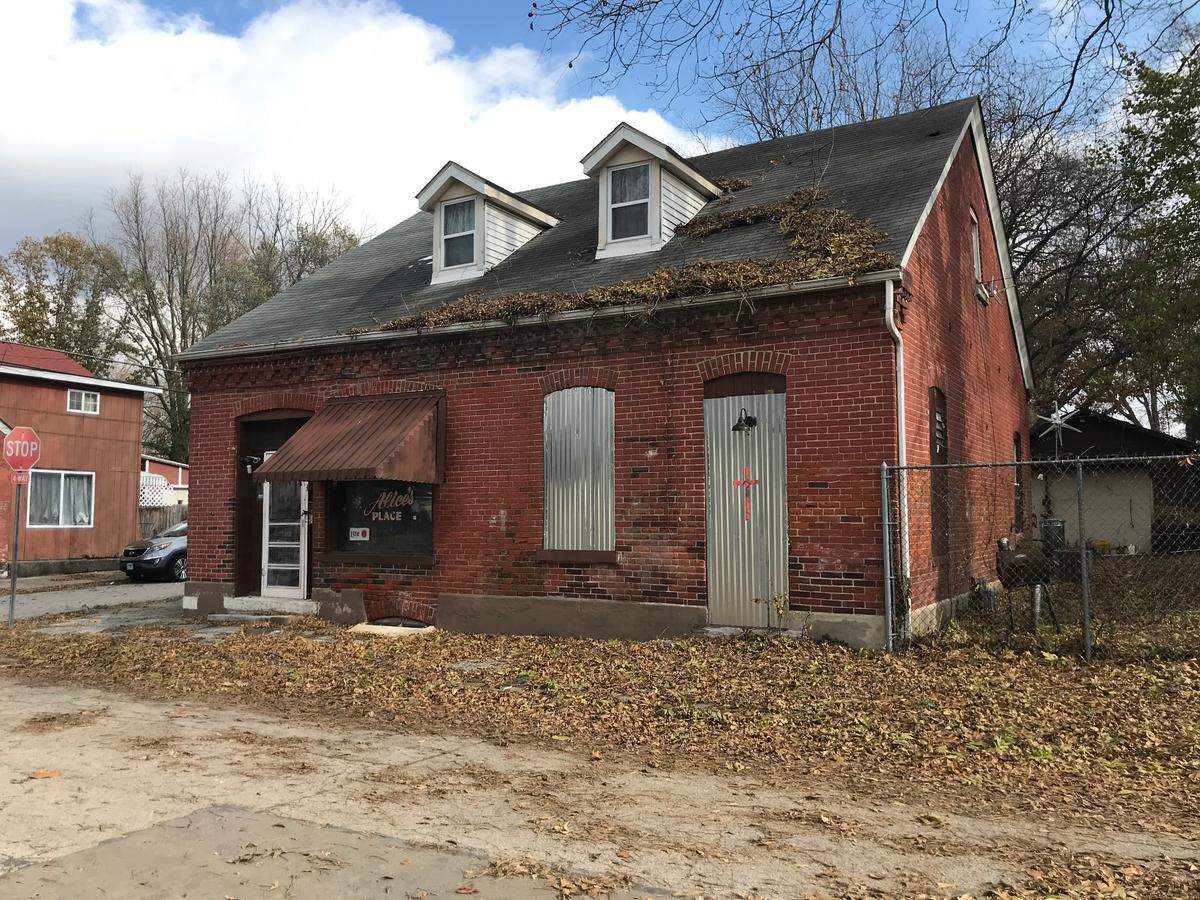
The 200 block of North 11th Street is between St. Paul’s Senior Community to the north and 10th Street Baking Co. to the south.
The neighborhood is characterized by small brick and frame homes built in the late 1800s and early 1900s, a few former businesses and a hodgepodge of vacant lots. “No trespassing” and “Private property” signs are plentiful on deteriorating and boarded-up structures.
One resident who has owned her home for 22 years remembers when Alice’s Place tavern operated on the corner. She described 214 and 218 N. 11th St. as “nice” in those days.
But the two rental homes became a hangout for drug addicts and criminals in the 2000s, according to the woman, who asked not to be identified by name for fear of being targeted. She and another neighbor expressed relief that they’re being demolished.
“Drug addicts have been living there for years and years,” the first woman said. “The police kick them out, and they move back in. They’ve found stolen property in there. Nothing good happens over there.”
Part of investor packages
Belleville Historical Society research shows that the brick German American folk house at 214 N. 11th St. was built in 1874 and owned by Italian immigrant Dominic Gannotte, who worked in the coal industry.
The two-story frame home at 218 N. 11th St. was built in 1875. It later served as the residence of Martin Schnipper, St. Clair County sheriff during Prohibition. His father had operated a saloon on site.
Recent St. Clair County property records show that:
- Ownership of the brick home went from John Harris to William Weeks to a trust at The Bank of Edwardsville in 1992. A trust transfer occurred in 2000.
- Robert and Donna Sims conveyed the frame home to a trust at The Bank of Edwardsville in 2000.
- Both homes were sold in 2008 to Stillwater Corp., which shared an address on West Main Street in Belleville with Jamar Properties, whose phone is now out of service.
- Stillwater Corp. sold both homes in 2014 as part of a package of 37 properties to a limited-liability company called Eclectic Assets Land Trust for $1,625,000. Most were older homes in Belleville.
- Eclectic sold both homes on North 11th Street in 2018 as part of a package of 10 properties to a limited-liability company called Trio Home Investments in Belleville for $200,000.
- No property taxes were paid for 214 or 218 after the sale, but Trio kept up to date on the other eight properties in the package.
- Trio sold one of the properties, a home on North Fourth Street, to an individual for $93,000 earlier this year. It had been recently renovated, according to real-estate listings.
- St. Clair County took possession of the two homes on North 11th Street for back taxes after the required three-year redemption period.
- The city of Belleville bought the homes at auction in May of this year with plans for demolition. The $795 cost for each represented the minimum bid of $750 plus a $50 recording fee.
- The city of Belleville owns 728 parcels of properties in St. Clair County, which includes municipal buildings, parks, other structures and lots.
‘Nothing like the pictures’
The scenario of investors buying older homes then abandoning them isn’t unusual, according to Tyler.
“We have LLCs all over the country buying houses and lots, and they find six or eight that they’re interested in fixing up, then they might have one or two that they don’t do anything with,” he said.
Some investors buy homes without seeing them in person, looking only at online photos that may not be current.
Tyler pointed to the recent experience of out-of-state residents who came to town to look at a home on Sycamore Street that they had bought and complained that it was “nothing like the pictures.”
“We tried to explain to them that the roof had been opened up for quite some time, and the sub-floors were sinking down from the second floor into the first floor,” Tyler said.
“It’s virtually impossible to put the investment into some of these properties and ever get your money back. They’re in that bad a shape.”
Last legal occupancy in 2013
The last time the city of Belleville issued occupancy permits for the homes at 214 and 218 N. 11th St. was 2013, according to Tyler.
Tom James, owner of 1st Alliance Real Estate in O’Fallon, was the principal behind Eclectic Assets Land Trust, which bought those homes and the 35 other properties from Stillwater Corp. in 2014.
“I’ve been doing this for 25 years, and that was the only deal I’ve ever done that I wish I could undo,” he said this month.
“Those properties were in such bad condition as a group that it basically ate up all of my operating capital for the next five years, trying to save them and fix them up. It just turned into a losing proposition.”
An elderly woman who had been renting the German American folk house on North 11th Street for about 20 years moved out shortly after the purchase. James had work done to prepare it for a new tenant, but it didn’t pass muster with city of Belleville code enforcers.
“They wanted us to make a bunch of improvements to the plumbing and electrical systems, and it was going to cost more than the house was worth,” James said. “At that point we decided to sell the place.
“We never even had tenants (in the frame home). Vagrants were living there, and they destroyed it. They did so much damage, it wasn’t worth fixing.”
Eliminating ‘dead weight’
James described the homes on North 11th Street as “dead weight” that he wanted to eliminate from his investment portfolio when he sold the North 11th Street homes and eight other properties to Trio in 2018.
“I gave them a couple of better buildings that were producing income, but along with that, they had to take some of the dead weight,” James said. “Maybe their solution for that was to keep the better properties and let the dead weight go back to the county.
“I wouldn’t do that. I wouldn’t want anyone to say, ‘Hey, this guy didn’t pay his taxes.’ But some people do that. I don’t even know if there are any ramifications from the city or the county or it’s just considered an avenue for releasing property.”
Trio principal Jontae Govan, of Belleville, said he and his wife, Tracy, intended to repair or renovate all 10 of the homes but could only handle one project at a time. They sold the North Fourth Street home in August, and they’re renting four of the others.
According to Jontae Govan, city officials “hounded” them with fines for violations such as grass not being cut often enough, limbs from a downed tree not being cleaned up fast enough, squatters breaking into homes and someone dumping trash in one of the yards.
“Two times a month (for mowing) was fine, especially for a house that’s only costing me money,” Govan said. “It wasn’t to the point where it was like a hazard or snakes were living there.
“I’m not a rich person. I was new to investing. I was just trying to get my foot in the door. We wanted to rehab these homes and help clean up the city, but they made that extremely hard.”
Govan also questioned why St. Clair County was charging nearly $3,000 a year for property taxes on the two North 11th Street homes, considering they were dilapidated and nearly worthless.
Govan said he and his wife became overwhelmed and gave the homes to someone else through a quit-claim deed, hoping that person could do something with them, but it was too late.
“I honest to God believe that (the system) is set up for the city to get those properties back,” Govan said.
Picking historic battles
Homes in the North 11th Street neighborhood are part of the National Register of Historic Places Town of West Belleville Historic District.
It’s different than the city’s other three historic districts in that exterior changes don’t have to meet rules outlined by ordinance and enforced by the Historic Preservation Commission.
“When the city established the Town of West Belleville Historic District, they didn’t put any restrictions on it,” said Larry Betz, president of Belleville Historical Society. “You can do anything to your house. You can put vinyl siding on it. You can have vinyl windows in front.
“The only advantage is that the owner can get a 20% federal tax credit if they rehab the building and keep it period-appropriate.”
Betz and local historian Bob Brunkow see the upcoming demolitions of older homes on North 11th Street and elsewhere as more losses in the overall effort to preserve the city’s heritage.
In particular, German American folk houses, also known as German American street houses, represent an architectural style that they consider key in Belleville. Five or six have been torn down in the past few years, and eight more are on the city’s current demolition list.
The historical society didn’t try to buy or renovate the North 11th Street homes, as it has done with several other buildings in the city. The organization has to pick its battles due to financial limitations, according to Betz.
When asked if the North 11th Street homes are “historically significant,” Brunkow referenced a running joke among historians about the frequency with which people make the claim “Lincoln slept here” when talking about 19th century buildings in Illinois.
“Abraham Lincoln didn’t sleep in the homes,” he said.
“But Abraham Lincoln didn’t sleep in a lot of places that are historically significant. They represented a time in the development of an area and reveal something about who the people were and what they did.”
This story was originally published November 22, 2022 at 6:00 AM.