
How did COVID-19 affect attendance in southwest Illinois schools last year?
One in five Illinois students were chronically absent from school last year during the COVID-19 pandemic, according to data published in October.
Last week, district- and school-level data was published by the Illinois State Board of Education, giving one of the first in-depth looks at how the pandemic impacted education in the metro-east, and how it compares to education around the state.
The Illinois State Board of Education collects and publishes the Illinois Report Card data each year; it covers everything from student achievement, to administrator diversity, to teacher experience.
Usually, the data is all published at once, but because of reporting and testing delays caused by COVID-19, state-level data was shared in October, with district- and school-level data being published Wednesday.
Based on preliminary assessment data, the student groups that were most likely to be chronically absent also suffered from some of the steepest rates of learning loss, the Illinois State Board of Education reported in October.
At the time, Chief Research and Evaluation Officer Brenda Dixon said that while it was a “good hypothesis” to assume the two were directly related, there hadn’t been any studies on the data to confirm.
Still, attendance rates and chronic absenteeism, in particular, serve as a way to gauge student engagement, especially during a period in which school looked entirely different from what most students were used to.
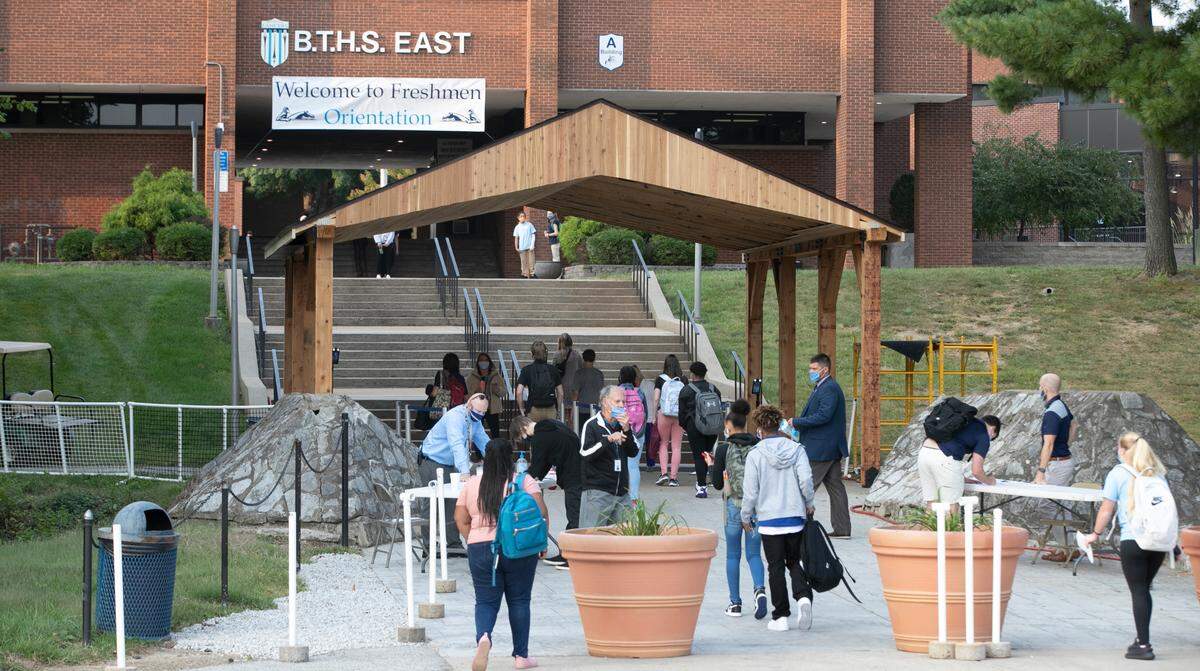
A student is considered chronically absent if they miss 10% or more of the school year. Statewide, the student groups that saw the biggest increases in chronic absenteeism included English learner students, students receiving special education services, low-income students, and Black and Hispanic students.
Statewide, 24% of English learner students were chronically absent. Collinsville CUSD 10, which has one of the largest English-learner student populations in the area, reported that 33% of English-learner students were chronically absent last year.
Other districts that had much smaller English-learner populations tended to report that a smaller percentage of those students were chronically absent. Belleville Township High School 201, for instance, reported that 6% of their English-learner students were chronically absent, but those students only make up 0.3% of the district’s population, compared to 12.9% in Collinsville.
Students who receive special education services or have a disability also suffered high rates of chronic absenteeism in the metro east. Reporting 30% and 28%, respectively, Edwardsville CUSD 7 matched state averages exactly.
Even in school districts where reported chronic absenteeism was well below state averages, students who receive special education services or have a disability still tended to be more likely to be absent more often than their peers. In Belleville 201, those students were twice as likely to be chronically absent compared to the general population, even while the district’s rates remained much lower than the state average.
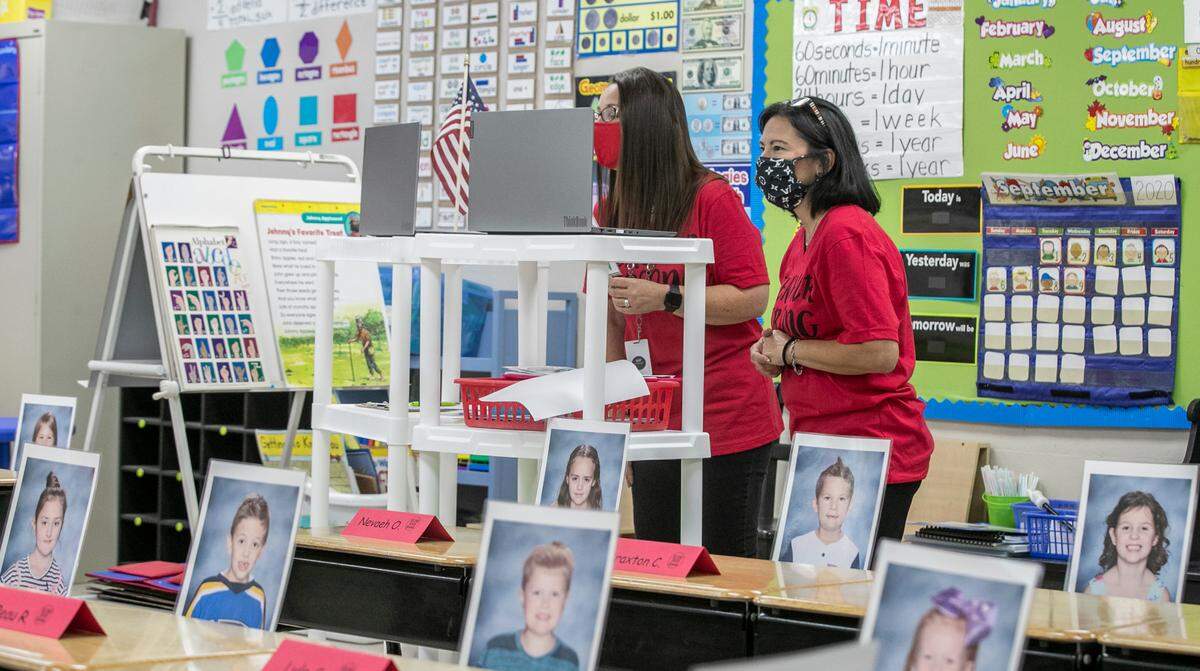
In nearly every metro-east district, Black students were more likely to be chronically absent than white students. The highest rates of chronic absenteeism for Black students, though, were in school districts that are majority-Black: East St. Louis School District 189 reported a rate of 58%, and Brooklyn USD 188 reported 74%.
Nationally, school districts that primarily serve Black and Hispanic students were the least likely to have in-person learning last year. Classes in District 189 remained fully remote well after other districts in St. Clair County reopened their classrooms, citing the hightesting positivity rates within the ZIP codes served.
Attendance data is flagged by the Illinois State Board of Education as having “possible data impact due to COVID-19.” When school districts were first forced to turn to remote learning in March 2020, they were largely left on their own to determine how to take attendance, whether they were conducting classes over Zoom or collecting printed work packets weekly, because of internet connection issues.
By the fall of 2020, the Illinois State Board of Education said there was a more consistent approach between districts for attendance.
As a result, some districts have chronic absenteeism rates that may be artificially deflated. Belleville 201, for instance, reported 7% of students were chronically absent, but in recent years that rate has been between 22% and 37%.
This story was originally published December 7, 2021 at 8:43 AM.