Is Belleville a safe city? Mayoral candidates have different visions for public safety
READ MORE
More on the election for Belleville mayor
Follow all the BND’s coverage of the Belleville mayoral race. Candidate responses are listed alphabetically.
Expand All
Crime is a common topic of conversation among candidates running for mayor of Belleville and this year, as three campaign for the April 6 election, is no different.
The BND has reviewed the crime statistics for the city and discussed the issue with those seeking the mayor’s office.
Both the number of crimes reported and the crime rate per 100,000 population have generally been dropping over recent years, according to statistics compiled by the Belleville Police Department and Illinois State Police.
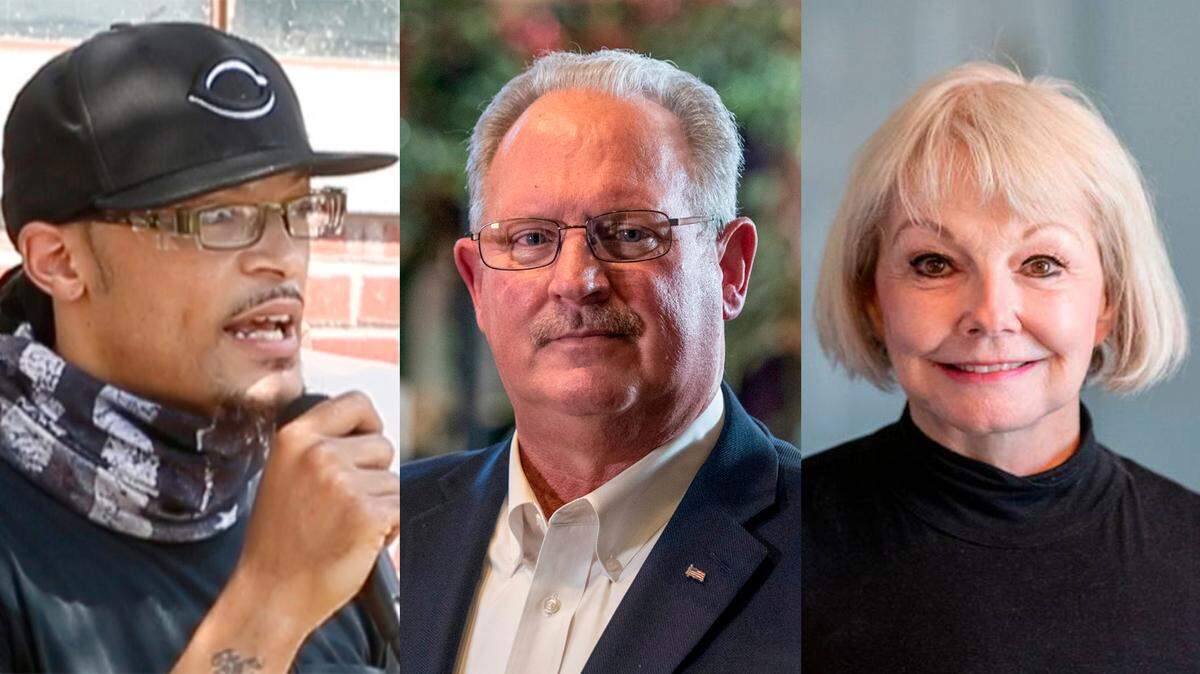
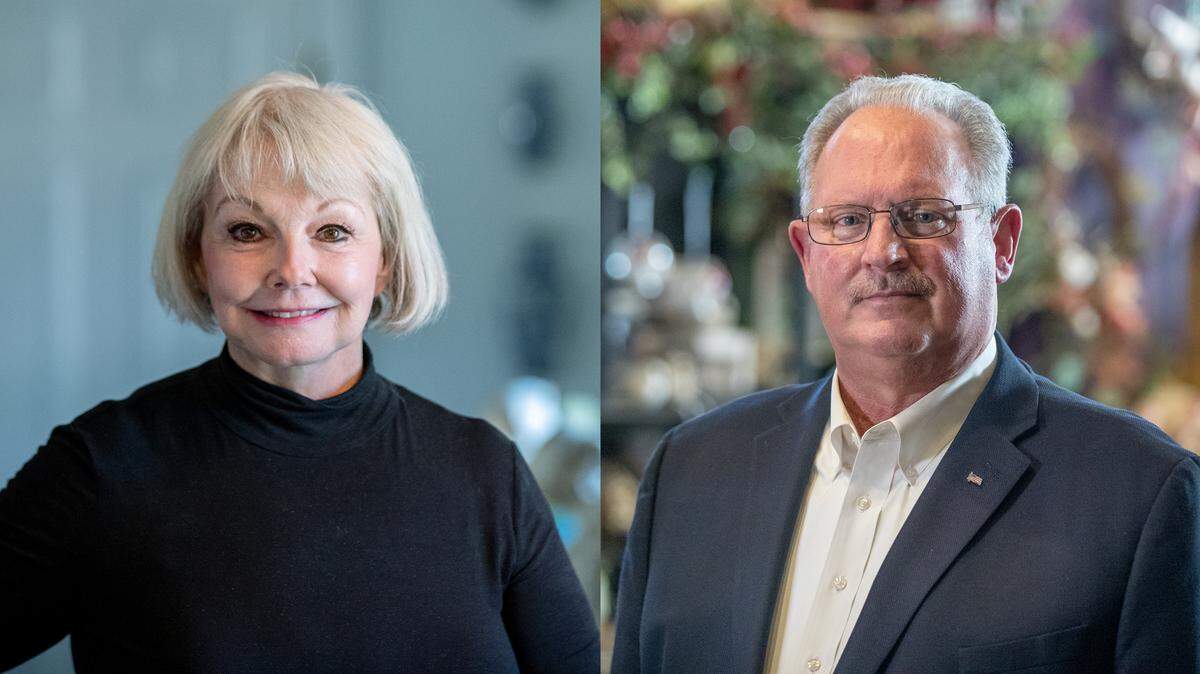
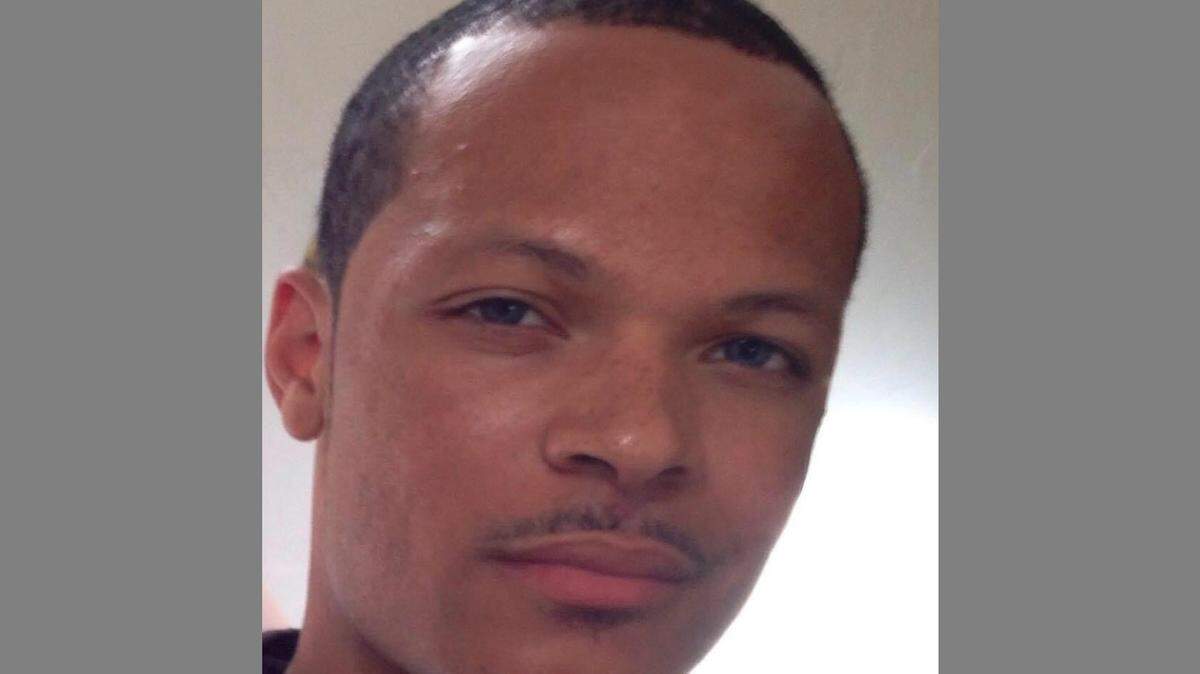
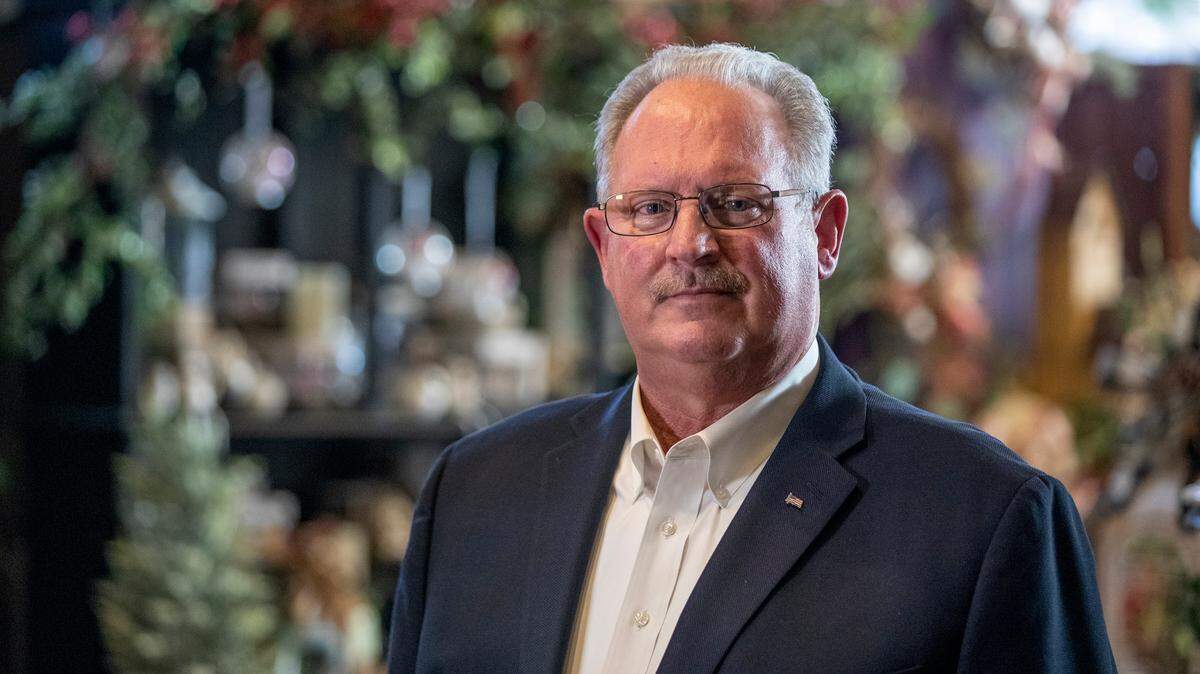
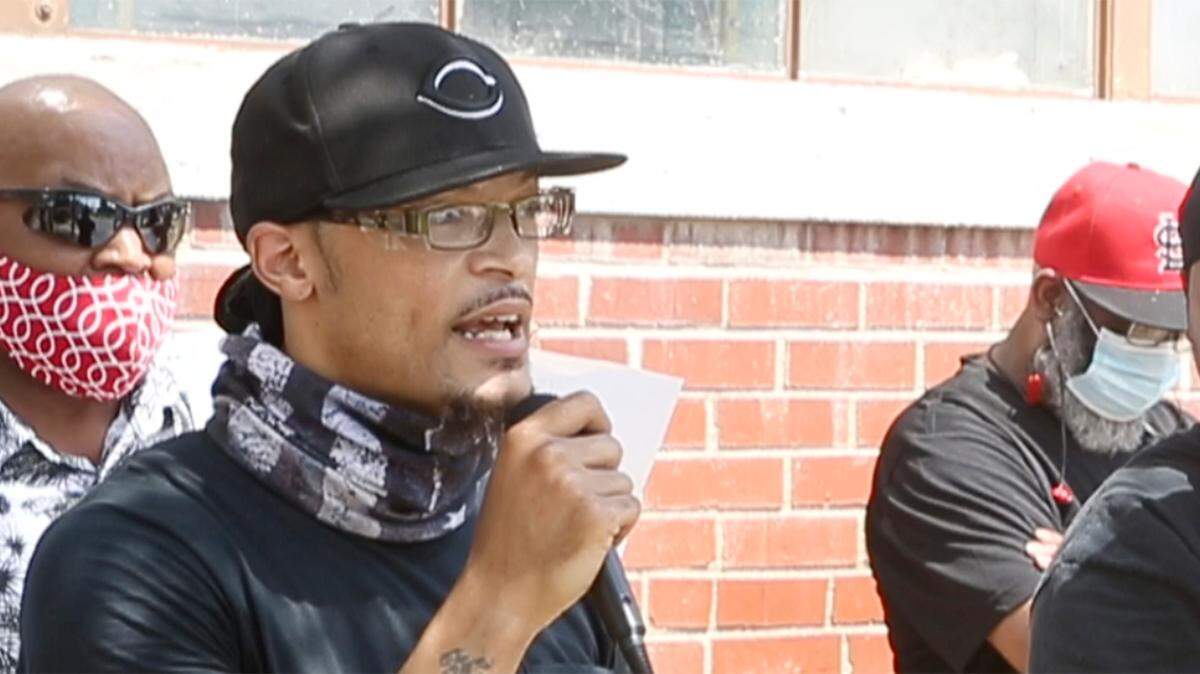
Mayor Mark Eckert is being challenged by Art on the Square founder Patty Gregory and write-in candidate Jeffrey “J.D.” Dixon.
Both Eckert and Gregory have said public safety and crime are their top priorities. Dixon said he wants to see social workers added to the police department, including Black social workers to work with Black residents.
If elected, Dixon said he would reduce the number of officers on patrol while Eckert and Gregory both want to increase the number of officers on the streets.
Eckert, who was appointed mayor in 2004, said the city has budgeted money for 78 police officers. As of Friday, the city had 72 officers on the payroll. Eckert added that potential new officers need to complete police academy training before they can be hired.
To give residents a look at the city’s crime statistics since Eckert became mayor, the BND collected the number of crimes reported from 2004 to 2020 in five categories: murder, criminal sexual assault, robbery, aggravated battery and burglary.
These statistics were gathered from reports compiled by the Belleville Police Department and Illinois State Police.
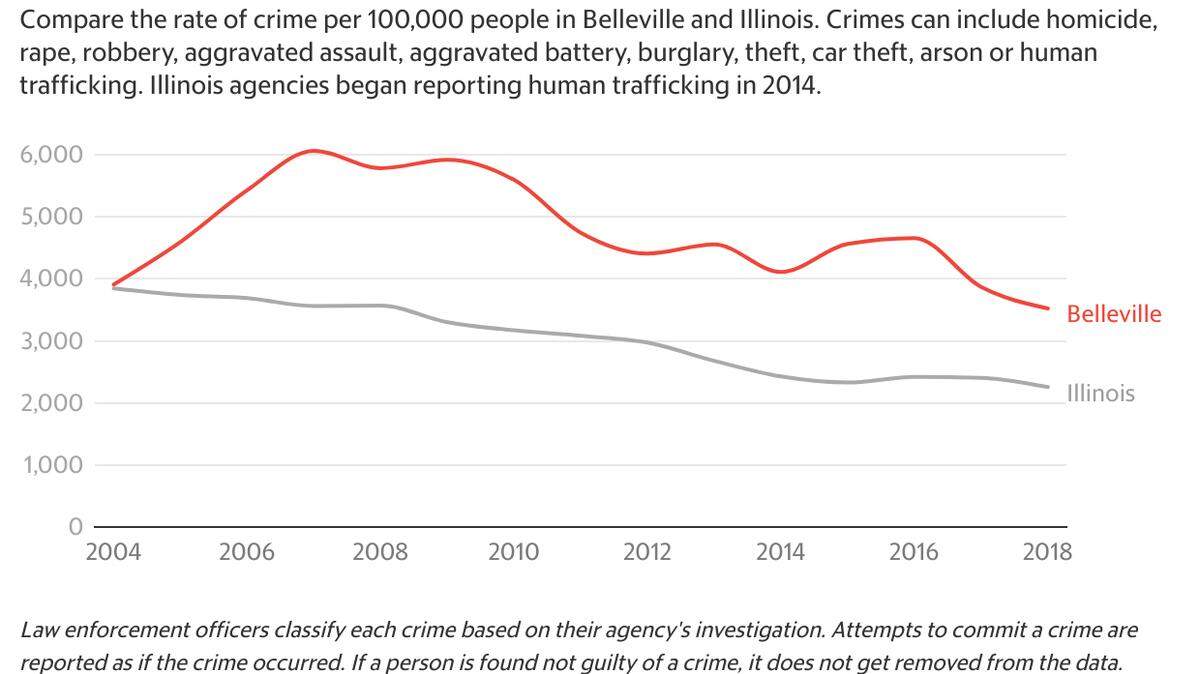
Also, the BND gathered information about the rate of crimes reported per 100,000 people for the city in several crime categories including homicide, rape, robbery, aggravated assault, aggravated battery, burglary, theft, car theft, arson and human trafficking. Illinois State Police released its most recent report in 2018.
Crimes reported
The number of murders, robberies, assaults, and burglaries are mostly either at or below the 17-year average number in the past four years in Belleville. The number of criminal sexual assaults were above the 17-year average in three of the previous four years.
Belleville has averaged two murders per year since 2004. The high was in 2005 with 12 and there were no homicides in 2006, 2011 and 2015.
As far as burglaries since 2004, Belleville had its lowest number last year during the coronavirus pandemic when residents tended to stay home in an effort to prevent the spread of the coronavirus.
Belleville had 162 burglaries in 2020, well below the 17-year average of 378. The numbers of burglaries in 2019, 2018 and 2017 also were below the 17-year average.
The 17-year average for sexual assaults is 35. There were 46 reported last year, down from 57 in the previous year. In 2017, there were 34 cases reported and 38 in 2018.
There were 35 robberies reported in 2020, below the 17-year average of 51. In 2019, there were 45 robberies, in 2018 there were 41 and 2017 had 57.
Crime rate
Illinois State Police compiles what’s called the Crime in Illinois Annual Uniform Crime Report.
As part of this report, you can find the rate of crime per 100,000 people for the state as well as cities and counties across the state. The rate is based on reported crimes including homicide, rape, robbery, aggravated assault, aggravated battery, burglary, theft, car theft, arson and human trafficking. Illinois agencies began reporting human trafficking in 2014.
The FBI provides Illinois State Police with population statistics received from U.S. Bureau of the Census for municipal, county and statewide populations used in the state police reports.
The rate per 100,000 population in Illinois and in Belleville has been trending downward in recent years.
In Illinois between 2004 and 2018, the highest rate was in 2004 when the rate was 3,844 crimes per 100,000 population. This rate has dropped all but two years during this time period. The lowest rate recorded was in 2018 when it was at 2,255 per 100,000 people.
Belleville’s rate for this time period followed a similar pattern as the state’s. The highest rate occurred in 2007 when it was 6,064 per 100,000. The lowest rate was recorded in 2018, which also was the same year Illinois had its lowest rate, when it was at 3,522 per 100,000 in Belleville.
What do the candidates say?
In interviews with the BND, Dixon, Eckert and Gregory each outlined their thoughts on public safety in Belleville.
Here are highlights of the candidates’ comments, listed in alphabetical order according to their last names:
Jeffrey ‘J.D.’ Dixon
Dixon, who is seeking to be the first Black mayor of Belleville, believes public safety in Belleville would be improved if the department had fewer patrol officers and, instead, used funding for the officers for social workers, including Black social workers to work with Black residents.
Dixon also would like to see current officers transferred to different duties.
“Social public safety is what I’ll call it,” Dixon said.
“They are not there to arrest or … detain, they’re there to help the situation and see what’s going on instead of escalating it into a crime.”
He said he would want the social workers to serve as a counselor and help solve the issues.
“When you talk to the Black community in Belleville, they’ll tell you the implicit and explicit racial tension, racial discrimination and racism that they face when it comes down to looking for public safety from the Belleville Police,” Dixon said.
“Here in Belleville, it is in different contrast between the Black community and the white community,” he said. “So it all depends on which community you really ask when it comes down to public safety and that shows right there that there’s a problem.”
Dixon, who served two years in the St. Clair County Jail and three years in the state prison for an armed robbery in Fairview Heights, also said he believes the city still needs a traditional police force and that people need to be held accountable for their actions like he was.
As far as social workers, Dixon said they would help residents having a mental health crisis or family problems.
Dixon, 33, said trained professionals would be called to respond “instead of always sending the police out there that undoubtedly, especially in the Black community, escalates a lot of situations that shouldn’t have been escalated in the first place because they’re not connected to the community or they don’t actually understand what’s going on because they don’t have that understanding of the Black community.”
Dixon said he watched Belleville Police officers during a traffic stop of a Black woman last year when he said eight or nine officers were on the scene. He said after about 30 minutes, the woman was allowed to leave.
“Did it take all of that force?” he asked.
“There is a stark contrast ... between how Black people and white people are treated by police officers and Belleville showed that prime example that day last summer when they did that.
“If that was a white woman, I 100% believe there wouldn’t have been that many squad cars, there wouldn’t have been that many police officers.”
“In order to improve public safety, especially in the Black community, we need police reform,” Dixon said. “We need the people in the police department that understands the plight of the Black community.
“They can’t look at it how it’s been looked at … for decades.”
Mark Eckert
Eckert, who is seeking to be elected a fifth time as mayor, said the crime rates in recent years have remained stable and that public safety remains one of his top priorities.
“We have seen no change in ... historical levels of crime in Belleville, when averaged over the last six years,” Eckert said. “We we have reduced the number of robberies, burglaries and criminal sexual assault crimes over the past year.”
Eckert, 65, said the Belleville Police Department has embraced new technologies to fight crime. He said he supports a new state law that calls for all police officers to wear body cameras by 2025.
“It’s going to be expensive,” Eckert said. “It’s probably gonna cost us at least $200,000 a year, but I do think it’s the right thing.”
This requirement would protect both the officers and residents, Eckert said.
“If somebody does overuse their power, or their force, then they need to be ... looked at,” he said.
Eckert said the police department headquarters that opened on West Main Street in 2016 has helped officers work more efficiently.
“Our police station has really added to the scientific way that we can approach our jobs,” he said.
Eckert said “new technology in our dispatch centers” along with in-car cameras, license plate readers, digital ticketing and surveillance cameras are tools officers use.
Eckert, who said he worked in law enforcement for a year and that his father was Belleville police sergeant for 25 years, praised the work of the police department.
“Crime is everywhere,” Eckert said. “Everybody has crime. And I will say this, I will put our police department up against any in the region for as how sharp our men and women are and how well trained and how well they solve these crimes.
“But you can have 100 police officers in this town, and you still can’t be everywhere you need to be and you’re not going to stop every crime because it just doesn’t happen. For example, you can’t stop domestic violence because many of the crimes that happen in Belleville happen inside a home. You can drive by, (but) you can’t see that there’s violence going on in the home until somebody calls the police.”
Eckert said the city’s budget planned for the fiscal year that starts May 1 totals about $28.6 million. About 60% of the general fund, which used for the day-to-day operations of the city, will go toward the police and fire departments.
Eckert said he works to give the police department leaders feedback from the City Council.
“I don’t have the luxury of overreacting. I’ve got to stay calm ... and give the example to the city as leadership that you know I have faith in our people to solve things. But yes, we do have crime. Do I worry? Yeah. I worry about our citizens every day. But all in all, I don’t feel like Belleville’s going backwards. I think that we got to continue to face our challenges but I think it’s a very good city and ... I will continue to work hard to recruit businesses and families to move here.”
Patty Gregory
Gregory conducted a poll of her supporters regarding their concerns and public safety topped the list.
And in a candidate questionnaire Gregory provided the BND, she identified public safety and crime as her top priority.
“Belleville is in a position that we are next to a city with very, very high crime,” Gregory said. “That gives the perception that we also have very high crime ... right or wrong.
“It is still an issue that needs to be addressed and, as I’ve said before, crime has no boundaries. We have many, many people that look for opportunities, especially in times of economic and ... pandemic crisis.”
Gregory praised Belleville police officers for the quality of their work but she said she wants the department to be more “transparent.”
“I do believe that when things go wrong, that citizens do want to hear from their police chief and the current administration, what they are doing about it, instead of hearing about it on” social media, she said. “So I think we need to be more transparent in that respect, about how we are addressing issues. It’s hard to fix something if nothing is ever questioned.”
Gregory also raised concerns about youths committing crimes.
It “seems like we have more violent crimes happening by people of a certain age group, a much younger age group,” she said. “In that respect, we need to be partnering with mentoring programs, with churches, with other organizations such as Big Brothers, Big Sisters, to really help give more direction to our youth. And we also need to have some recreational activity for our youth.”
She also noted that the city no longer has a municipal pool. Belleville closed its pool in 2012 because of high maintenance and repair costs.
Gregory, 67, said she would “love to see in the future a task force with youth involved.”
“There are ways that we can outreach through the schools, through working with college students, working with retired teachers, that maybe would donate time to tutor,” she said. “Because we need to build up self-esteem. We need to motivate. We need to make people feel worthy .... and try to give them a reason of why they need to become a productive citizen.
“I believe that if we ask people to help, they want to help. They want to be part of something,” Gregory said. “Everybody wants to be a part of something and feel like they’re making good things happen, that they’re moving forward in a good direction.”
Gregory said she would like to have a grant writer specifically for public safety, which would include both the police and fire departments.
If elected, Gregory said she wants to improve on the “follow-up” of complaints received by the city.
“I do believe there is a way that we could have more say so maybe through the different wards,” she said. “As far as concerns .... a lot of times people don’t report concerns that they have. And so how can we fix something if it’s not reported? And if it is reported, then it should be followed up.”
This story was originally published March 27, 2021 at 6:00 AM.