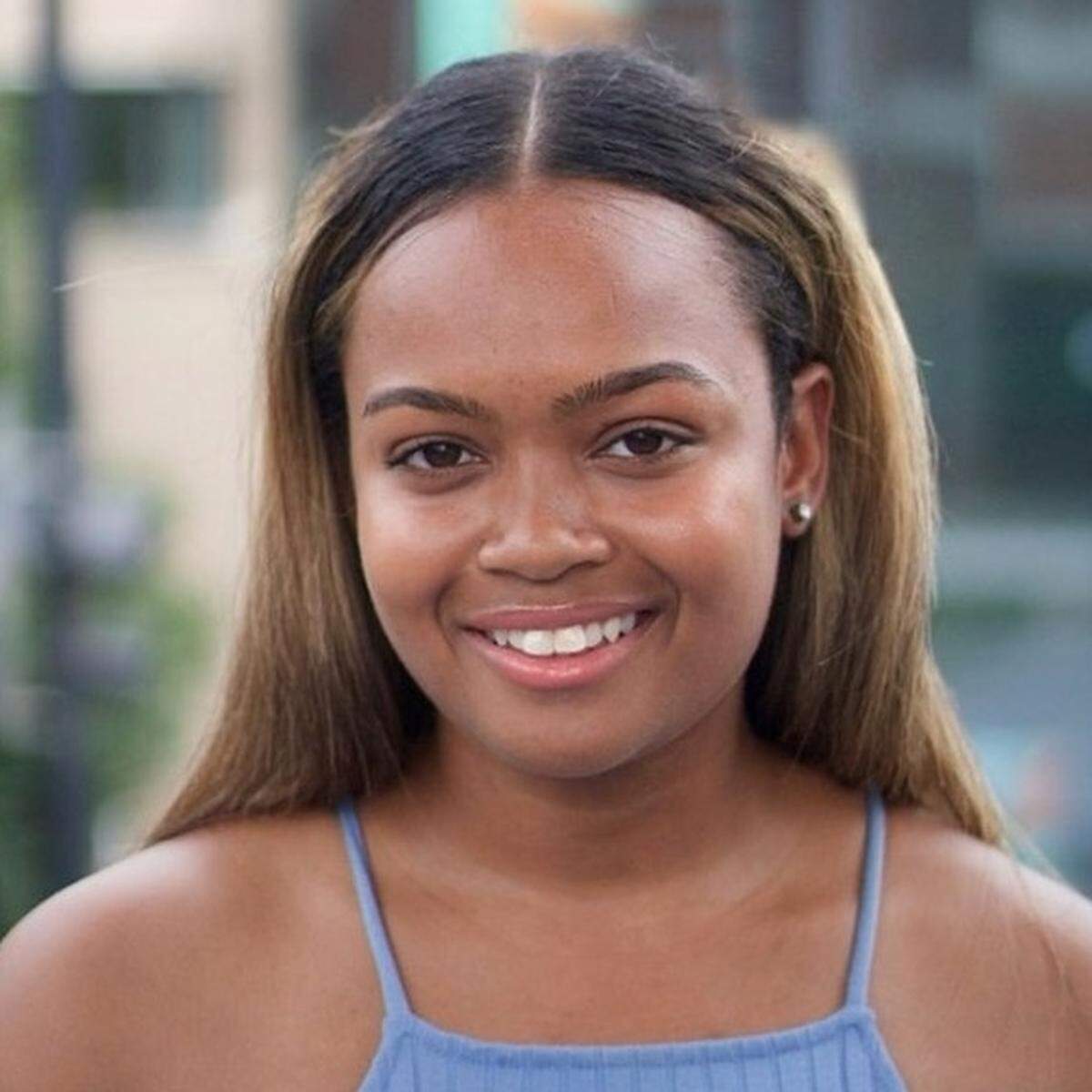
Taking music lessons in East St. Louis led this artist to write for ‘Hannah Montana’
READ MORE
More Coverage on Black Music Month
Read all of the BND’s articles that celebrate Black Music Month
Expand All
Last of a four-part series. This series originally was published in 2021
Arama Mara has her hands full.
Along with being a multi-platinum songwriter (she’s written for artists like Lil Wayne, Enrique Iglesias and Major Lazer), she’s also involved in her tech company Unomi, which she co-founded in 2019 . She’s a voting member for the Recording Academy and a part of music duo Daughters of Noise! She’s also working on her first project as a solo artist.
But Arama Mara knows how to balance her time between her many talents, thanks to working from home.
“I may wake up at 7:30 a.m. and do some coding for a couple of hours, and then I may start writing songs at 5 p.m.,” Mara said. “Because I’m not commuting or going somewhere, I just have more time in my day to work on things as I feel called to do.”
Doing things that she’s called to do is an appropriate descriptor for Arama Mara’s career. It’s a pattern that the East St. Louis native followed since she decided to pursue music professionally while in Asia. But it took for her to travel outside of the country to appreciate the caliber of talent present in her hometown. She wants more people to know about it.
“It’s just so much talent, natural talent, and I really want to see that get more of a platform,” Mara, who now lives in Los Angeles, said. “Like my hairstylist that I would go to ( in East St. Louis), she is better than anybody that I could come across in LA, and it’s true, but you wouldn’t know that. It took me going out in the world and seeing that we don’t need to sleep on our own talent here in East St. Louis. We have a lot of natural talent.”
For Black Music Month, the Belleville News-Democrat spoke to Arama Mara about her current music, her childhood in East St. Louis and her many “natural talents”:
How was your upbringing in East St. Louis?
“My most dominant memories of growing up in East St. Louis was the art and creativity that was always surrounding me. From the kids I would play with, my friends in my neighborhood, coming up with dances and things like that to my parents having me enrolled in dance class at Katherine Dunham (Center). I was doing that for years in addition to being in choirs, in addition to having piano lessons. I just had a very, very rich childhood, and I would attribute that to the arts being introduced to my life at an early age and just the community support that we had.”
“East St. Louis was small, so we all knew each other, and I just felt like it wasn’t just my parents and my grandparents that were raising me. It was my friends’ parents. Now when I think about that I realize how valuable and how special that experience was. I think a lot of time if people don’t know about East St. Louis, you hear a lot of the negatives, and honestly, it was such a rich upbringing. And you realize later that it was so many artists and athletes that came from East St. Louis.”
How did you get introduced to music there?
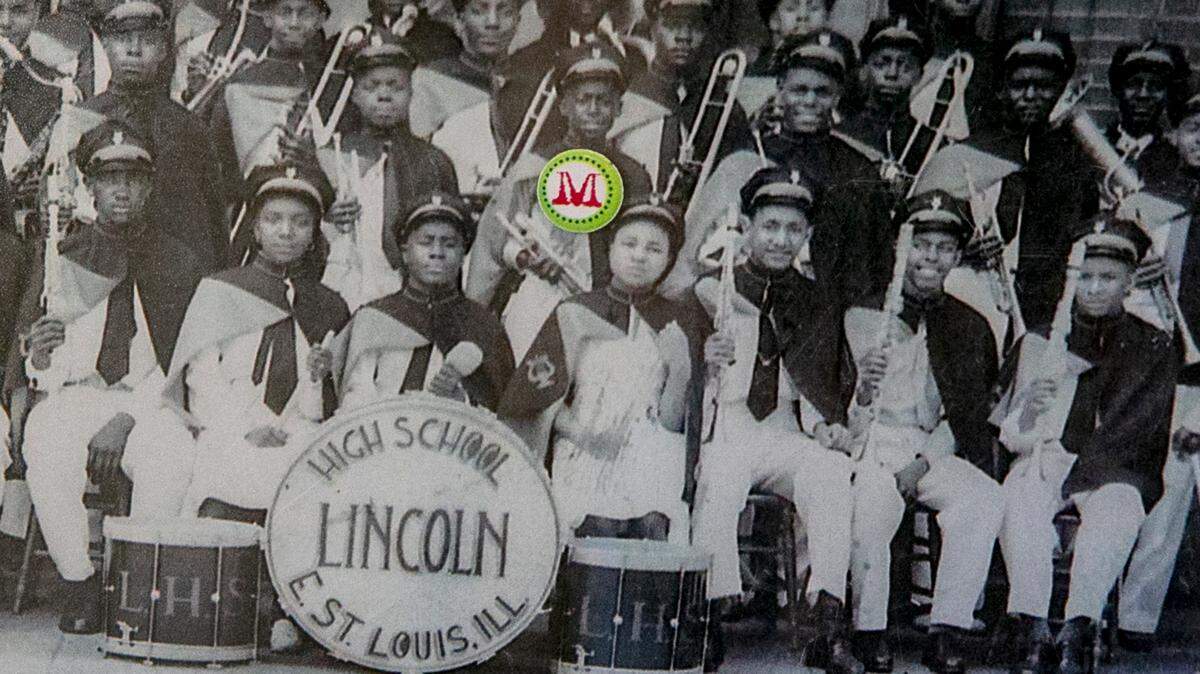
Arama Mara’s mom is Joan Brown, a former music teacher at East St. Louis Lincoln High School, and her dad is Edward Brown, a former dance teacher at the SIUE East St. Louis Center for the Performing Arts, which was founded by Katherine Dunham.
Although East St. Louis formed the basis of Arama Mara’s music education, it wasn’t until after graduating from college that she realized music was something she wanted to pursue professionally. She graduated from University of Illinois-Chicago around 2003 as a finance major.
“My mom was my music teacher, so it started very, very early. I think I took my first piano lesson at like three or something like that, so (music) was just always in the house whether it was her going over what music she was going to teach her students because she was a music teacher, and my dad was my dance teacher, so the only memories I have are me being enrolled in some kind of music course or dance course. All that was happening for me.”
“I enjoyed it, so it was nothing that was forced. It was something my parents introduced me to and something that I continued to commit to. I think the turning point for me that made me realize I wanted to do it seriously as a profession was probably when I graduated from college..I took a lot of music courses, but my parents encouraged me to learn another skill so that I could have something else. Finance was OK. I didn’t really love it, but I recognized the value in learning another skill, but when I graduated it was time for me to start looking for jobs. I remember going on interviews with banks and stuff, and I was like this doesn’t feel right. That was a really stressful time for me, so what I did instead was I left the country.”
Where did you go?
“I went to Asia. I went to, first, South Korea and was teaching English over there. While I was in South Korea, I would go to Japan to hang out on the weekends because it was just a very short plane ride, and I remember I would sing...at some of the venues, and I was spotted by a Canadian talent agent who offered me an opportunity to leave South Korea and move permanently to Japan on an entertainment visa.”
“...And so I did. After about (six months) in South Korea, I took him up on (that) offer and moved to Japan, and so basically for the next year, I would sing at different weddings and corporate events. It was mostly like Motown, Top 40 songs that people knew around the world, and that was awesome and that was fun, but I thought if music can find me in Asia and was not looking for it, then maybe that’s a clue for me to take it more seriously.”
How did that lead to your songwriting work?
Arama Mara left Japan in 2004 and temporarily moved back home before relocating to New York City during the same year. Her songwriting career developed not long after her move.
“Basically, New York, L.A. maybe Miami and Nashville have kind of been always like the music hubs in this country, so I knew it was going to be one of the places (for me) to relocate to. I chose New York particularly for the open mic scene because I didn’t have any connections in the music business. I didn’t even have any friends in New York. I had a friend of a friend who I was introduced to but basically, I sang everywhere I could.”
“There were so many places where musicians could go and just practice. You tell the house band what song you’re singing and what key. The audience will definitely let you know if you’re doing a good job or not, so I did a lot of that. Within the first month of me being in New York, I was spotted by a gentleman in the audience. He told me he was a part of a team of professional writers and wanted me to audition for a girl group that was on Epic Records at that time. I had made an appointment to meet with him and his writing partner, and that is what changed my life.”
“They taught me how to take lyrics or poems and how to make that into a song, so I got to be groomed by professionals while still getting on projects. It was just like a music house with all of these writers coming in and so I would do anything from doing some background harmonies to actually writing the lyrics on the song.”
What was the first mainstream project that you worked on?
Mara’s career picked up from that chance encounter. Along with working with R&B singer Jaheim, she also worked on Ciara’s hit single “Oh”, which was the third single from Ciara’s 2004 debut album “Goodies”.
“We would go to Philly and that was the first big project I worked on, but it was around the same time I was working with other people because you don’t know when a song is going to come out, so I was working with different artists, and things would come out at different times.”
“I think it was her breakthrough song “Oh” featuring Ludacris. That was a very long time ago. That was literally like my first month right after coming back from Asia. That was before I had any kind of publisher or lawyer. That was some songwriting, some background vocals, (some) arranging. I didn’t work with her. She was not in the studio. Sometimes you work with the artist when they’re in the studio, and sometimes they’re not. They learn the vocals from your recorded version, and in that particular case, she wasn’t in the studio, but she learned the song from my vocals.”
What’s the most rewarding or memorable experience you’ve had when working with an artist?
Her work on Disney Channel’s hit series “Hannah Montana” is one of them. Arama Mara worked as a songwriter on the show in its final seasons and co-wrote “Ordinary Girl,” the lead single for the show’s fourth and final season. She’s also proud of the work she’s done in the EDM scene.
“Every project or song I’ve been a part of is special to me for different reasons, but I would say one of the ones that kinda had the biggest platform and a lot of people would know was my stuff I did with Miley Cyrus for ‘Hannah Montana’. ‘Hannah Montana’ was such a big show on Disney, so I think that’s very special for me. It was great working with Miley Cyrus and just seeing that on TV and all of the fans of that show. It’s funny to see people now when they know that was a song and that was a part of their childhood. One of the songs I did was called “Ordinary Girl,” so that one is special to me.”
“I think, artistically, one of the ones I’m most proud of is the work I did with Major Lazer. That was a project with Diplo and Switch and a few other guys, and that just artistically was great for me to be a part of because they’re so edgy. They encourage stepping outside of the box and doing something different. I would say them and this band called TV on the Radio because it’s just awesome working with bands.”
What’s your favorite song that you’ve written for someone else?
“Most of my favorite songs probably haven’t come out yet. I was just listening the other night to TV on the Radio. It’s a song I did with them called “Nobody Else”. I was featured on that song and singing with them. A lot of times bands can be very insular and they don’t collaborate with a lot of people, but on that particular project I was featured on there as an artist and so was Kelis, so I’m very proud of that. That’s something that I listen to now, still.”
What are you working on now?
“I’m working on my solo project. I’m producing. I also have a band with an incredible writer, artist producer. Her name is Coco Morier. Our band is called Daughters of Noise! We put out a couple of music videos last year. She’s incredible. She’s like written some of my favorite songs, and it’s always great working with another woman in such a male-dominated space, so probably more Daughters of Noise! music coming, my solo stuff. About seven years ago I got into technology and coding so I also have an animation software company called Unomi, so my hands are pretty full these days, but definitely music will always be in my life. And now, I have tech in my life, which is awesome.”
What made you want to pursue a career in tech?
“Honestly, it was because of the up and down nature of entertainment. I’ve had a lot of success, and there have also been times where it felt incredibly stagnant. I feel like so much of the music business is luck. It is talent, but it’s also things that you can’t really control. I was never 100% comfortable with that, so I was like OK I see that you can have a song that’s No. 1 on the charts and then you may not have anything to come out for a couple of years. Also, I remember at the time I had a roommate who was a tech entrepreneur, and I would go to different workshops and stuff with her and it was like a big push at that time to get women and minorities into tech, so I was able to get a scholarship because of that.”
“My first course was IOS engineering, and that’s engineering with mobile apps. From there, I transitioned to regular stuff for like websites and applications, just learning multiple languages.”
Society often likes to pigeonhole Black artists, especially Black women artists, to strictly R&B. Your music doesn’t sound like that.
“I just think back to when I was younger, and that music that I was inspired by. Alanis Morrisette’s “Jagged Little Pill” was like my favorite album...and “(The) Miseducation of Lauryn Hill,” but it was just so many different influences. I listened to different artists, and I didn’t see Black women being the face of that, and so it was part of my mission artistically to make sure I always did what felt true to me. I know how important it is to see a reflection of yourself out in the world. I admire other women that do that like Kelis, and she was someone I got to work with actually. I love Kelis. I did a couple of songs with her album titled “Food,” and also Janelle Monáe. She’s someone I love. She pushes the boundary. Someone I’ve gotten to spend some time with as well.
“I think what allowed me to kind of make that transition and explore that space as well was the electronic music scene. A lot of times those producer DJs just want something cool written to their track. I think when you go through a label route, you may have more people to convince that this is something you can do and that people want to hear. I kind of hacked that whole system and just became friends with a lot of producer DJs in the EDM scene and I was able to start working on some of those left-of-center projects and it definitely informs my creativity.”
Your recent song Angel, which was released this year, is very dreamy. What was the process behind that?
“It was something that I did years ago initially for Janet Jackson. I don’t know if she recorded the song, but it was something that was a contender for her project, so (for) the style vocally, I had her in mind. I wasn’t really writing it for myself, so fast forward a few years later. The producers and I were saying ‘Well this is a good song and this is something we shouldn’t let collect dust, so let’s just put it out.’ And it was intentionally released around Valentine’s Day because it’s a love song.”
Are there aspects of East St. Louis that you take with you?
“In addition to just the exposure and the training to the arts, I just feel like I got such a strong foundation from the training that I got from all of the talented teachers in East St. Louis, like starting with my parents, and so the training was solid. It definitely prepared me for college, it prepared me for the entertainment business, but in addition to that, just the resilience, the remembering that I can get past anything that’s put in front of me.”
BEHIND THE STORY
MOREWho are our stars?
Help us tell more stories about people from the metro-east making an impact on the arts and culture scene in our region and beyond. Who are the emerging creative artists shaping the future of music, dance, the theater, film, sculpture, television, writing, photography and other arts? Tell us your ideas by completing this survey or contacting DeAsia Paige via email or phone 618-239-2624
This story was originally published June 27, 2021 at 5:00 AM.