
Grant to help Carriel Garden enhances learning lessons, life skills for O’Fallon students
To teach about nature and ecosystem interactions, Life Sciences teacher Amanda Mellenthin took the classroom outside at Carriel Junior High School several years ago, planting butterfly and vegetable gardens in a side yard, and later, a pollinator patch of native prairie grasses across the road.
Now, a prestigious grant awarded to the Carriel Garden will further promote and enhance those outdoor learning spaces. They have received an Emerson Excellence in Teaching Gold Star Grant Award of $10,000 plus a $5,000 donation to the employing school’s designated 501 (c)(3) entity.
Emerson’s Excellence in Teaching Awards program honors exceptional efforts in education throughout the region. They took note of the science program’s creative explorations and experiments in nature.
“We received many outstanding applications for this grant program from past recipients of Emerson’s Excellence in Teaching Award. This application demonstrated a deep commitment and passion for teaching and mentoring students and reflects the Emerson pillars of technology, innovation, and leadership,” Emerson officials shared.
Mellenthin is now in her 17th year of teaching science to seventh graders in the O’Fallon School District 90 and has been at Carriel since it opened in 2009. She always credits a community effort, especially the support from the administration, colleagues, parents and students, to make these ideas a reality.
She said this grant will provide teachers across subject areas opportunities for real-world problem-solving activities.
“This grant will provide materials to improve the use of our outdoor spaces in the following three areas: Enhanced outdoor seating, outdoor storage with grab-and-go resources, and a mobile ‘kitchen’ with reusable dishware,” she said.
“Through Emerson’s generous Gold Star Grant funding, we will be able to eliminate some of the barriers that currently hold staff back from accessing our garden space. Increased flexible seating options will allow teachers to adjust spaces to fit their lessons. Students can work individually or in groups and allow multiple classes to access our outdoor space at the same time,” she said.
An outdoor storage library of problem-based learning materials will give teachers easy opportunities to embrace inquiry activities, she said.
“Items like measuring tapes, magnifiers, clipboards, dry erase boards and yoga mats will become part of a library of resources that can be re-used many times,” Mellenthin said. “Other ‘kit’ type materials with instruction cards will allow classes to participate in prepared garden themes from worm composting to food preparation, to our farmers market sales.”
She said she looks forward to getting “big ticket items” like replacing the storage sheds, and to make seating easier with yoga mats — and even towels — so kids are not sitting in dew/moisture.
Like everyone in education, O’Fallon teachers had to pivot during the global coronavirus pandemic. For the garden, a year without regular foot traffic, investigation and curiosity meant switching the focus. However, new ideas sprang forth, particularly on life skills, she said.
“The COVID-19 pandemic opened our eyes to the social-emotional needs of our students,” she said.
Connecting students with the environment can promote the development of executive functioning skills, time management, responsibility, interdependence, and respect for life, she said.
“These are the life skills that will create emotionally healthy citizens. Research suggests that connections to nature help students reset and reconnect, improve concentration, and lead to increased test scores in a variety of subjects. Students learn best when they are allowed to observe, explore, experiment, and become involved in authentic problem-based activities,” Mellenthin said.
In recent years, the garden’s hands-on learning has extended to speech pathology. Teacher Jami Bossart incorporates lessons — especially cooking — into her curriculum, and that helps communication skills.
Total team effort
The garden provides connections to society and citizenship, with parents and community helping on Work Days, in addition to selling plants at the Vine Street Market, and civic involvement.
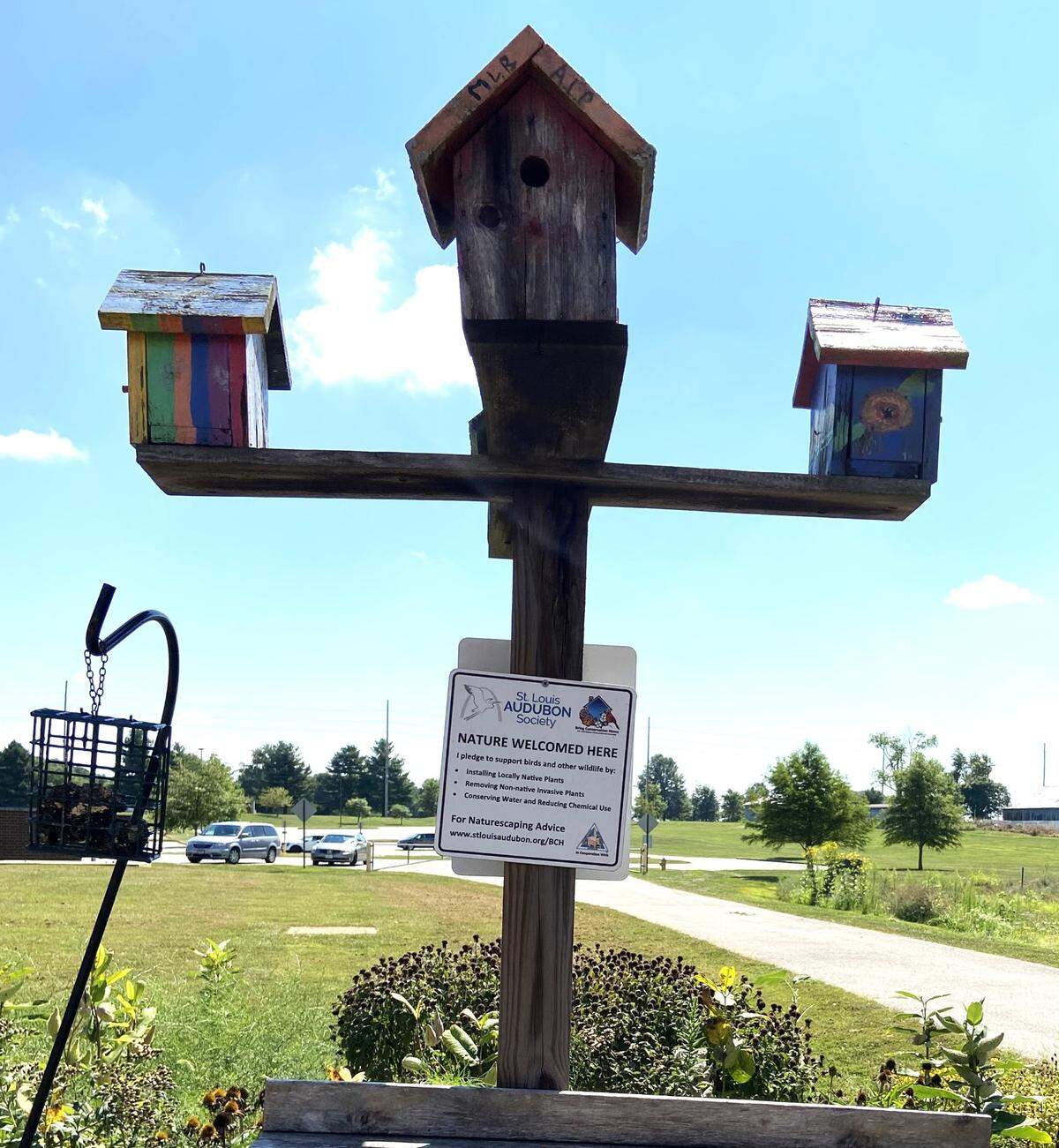
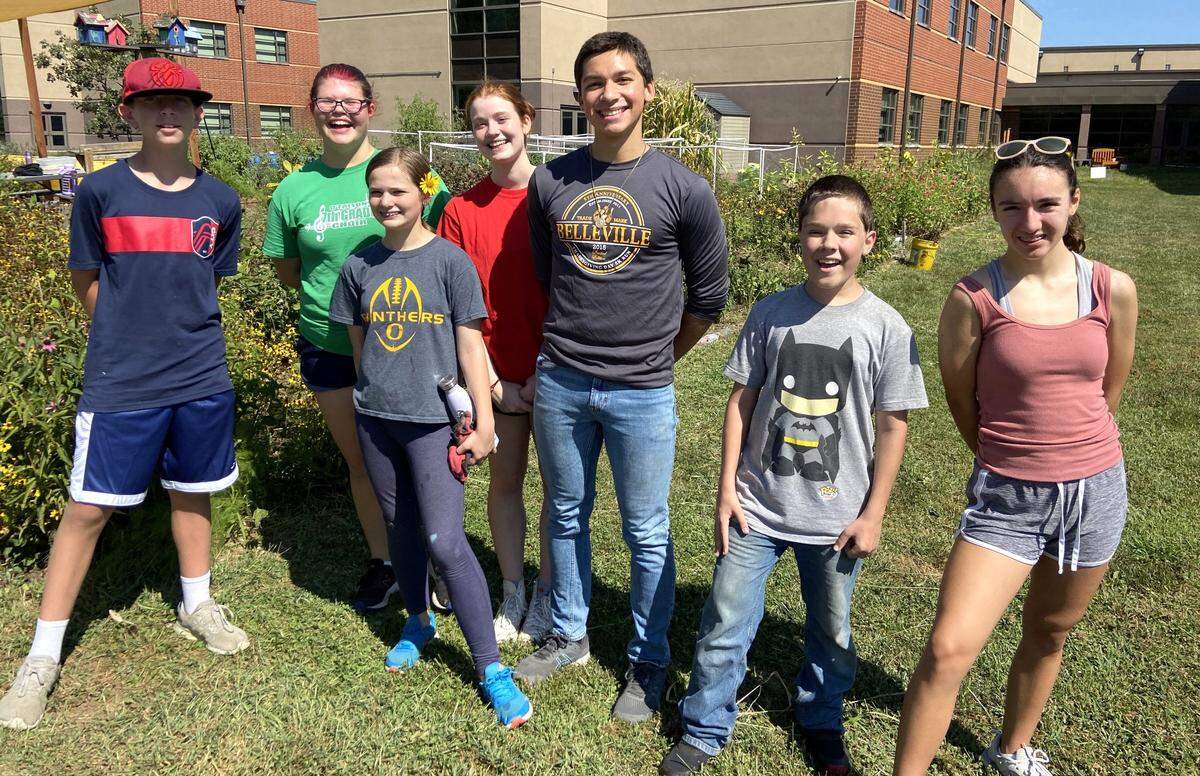
The Art Club painted the birdhouses. Boy Scouts came up with the deer-proof fencing around the vegetable beds. The O’Fallon Garden Club helps. A group of sixth, seventh and eighth graders make up the Eco Team that helps with maintenance of the garden. They meet from 3-4 p.m. Wednesdays.
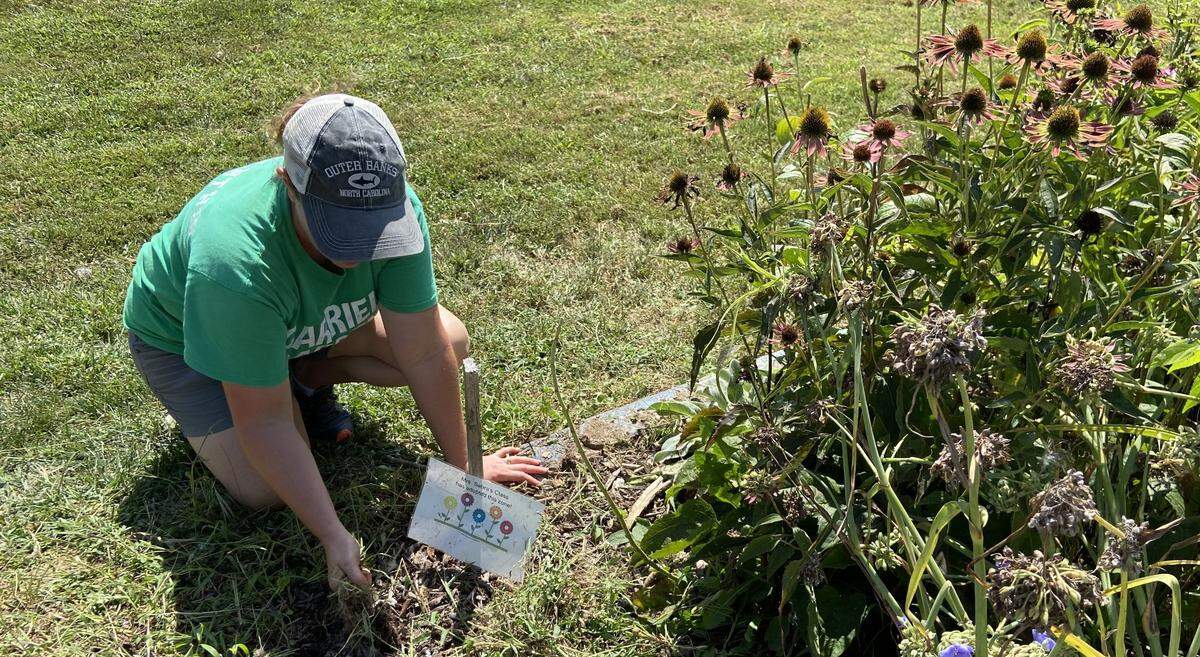
On a recent Saturday morning “Work Day,” 35 parents and students showed up to help for two hours, pulling weeds and attending to other tasks.
After working under a hot sun, some of the students went inside to see the caterpillars in the classroom.
While enjoying a popsicle treat when finished, talk turned to planning for an eclipse lesson in 2024. And the impromptu brainstorm yielded ideas for teachable moments, including “Eclipse packets.”
A group of students tending to the clean-up mentioned the “tons of lessons” from hands-on learning and how it has helped them grow things at home.
“I hardly killed any flowers,” one said.
The Worm Farm started it all
The garden includes the Worm Farm, a composting program where students care for several thousand earthworms that eat the school lunch waste and create fertile soil for the garden. It was the first project, starting students attending to the worm beds.
They learned about recycling and compost by the worms eating school lunch scraps from students collecting the fruit and vegetable scraps daily. That compost is then turned into soil. There are Daily Worm Data Sheets and temperature controls to monitor.
“We check the temperature of the worms and get an alert when it’s too hot or too cold. It’s a very technical set-up. We use Christmas lights to raise the temperature in there if it’s too cold,” Mellenthin said.
A functioning garden was next, with advice from the O’Fallon Garden Club. They helped till the soil and students planted rows. Later, they added raised beds. The students plant vegetables in the spring, and those are harvested in the summer months. Students, staff and anyone helping partake in the bounty.
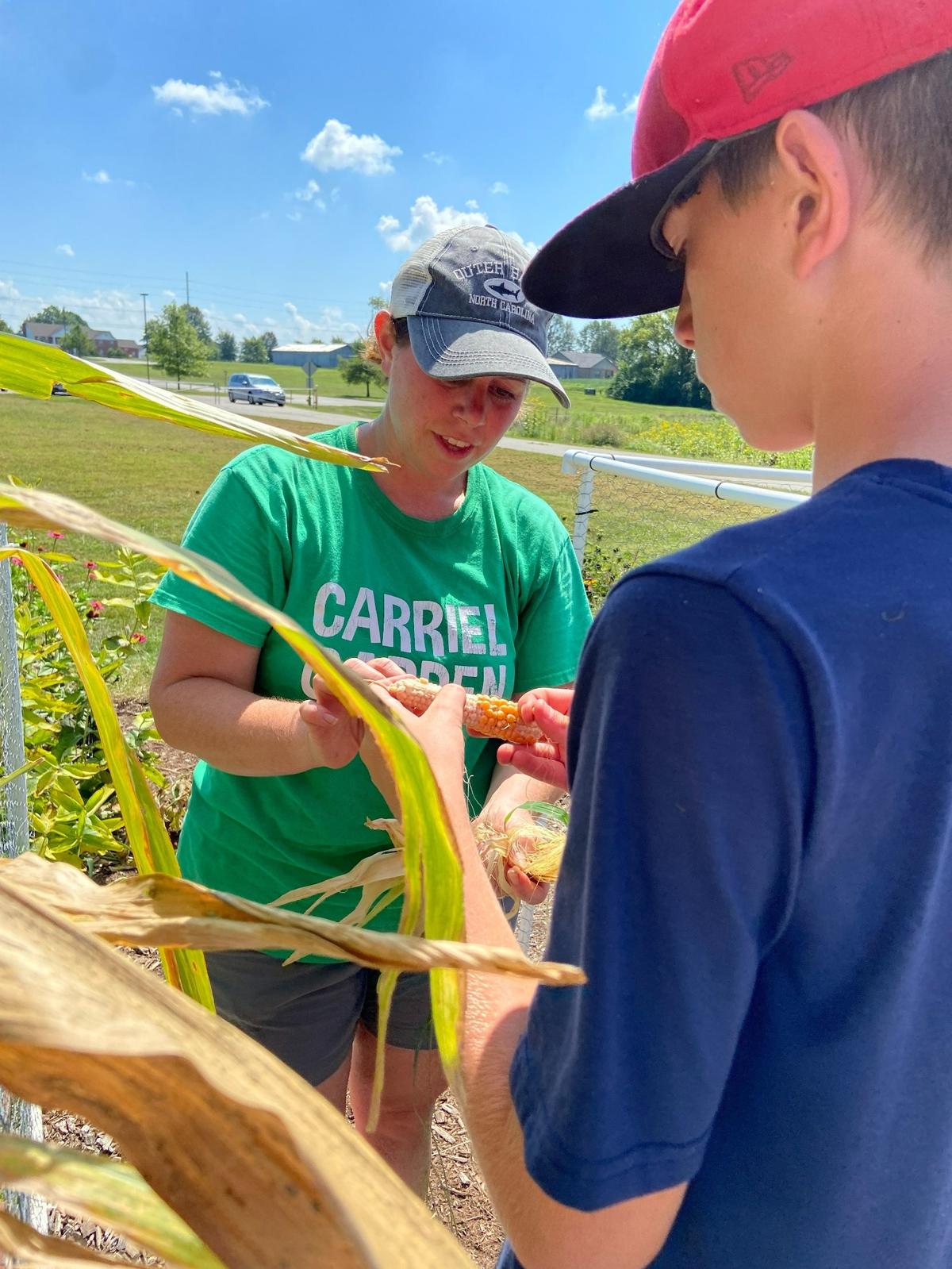
“Some kids have never seen anything grow before,” she said. “It’s fun for me, fun to do and provides memories for the kids.”
In 2017, they put in a greenhouse, thanks to funding from another Emerson Gold Star Award grant.
‘Their travel patter is considered a phenomenon’
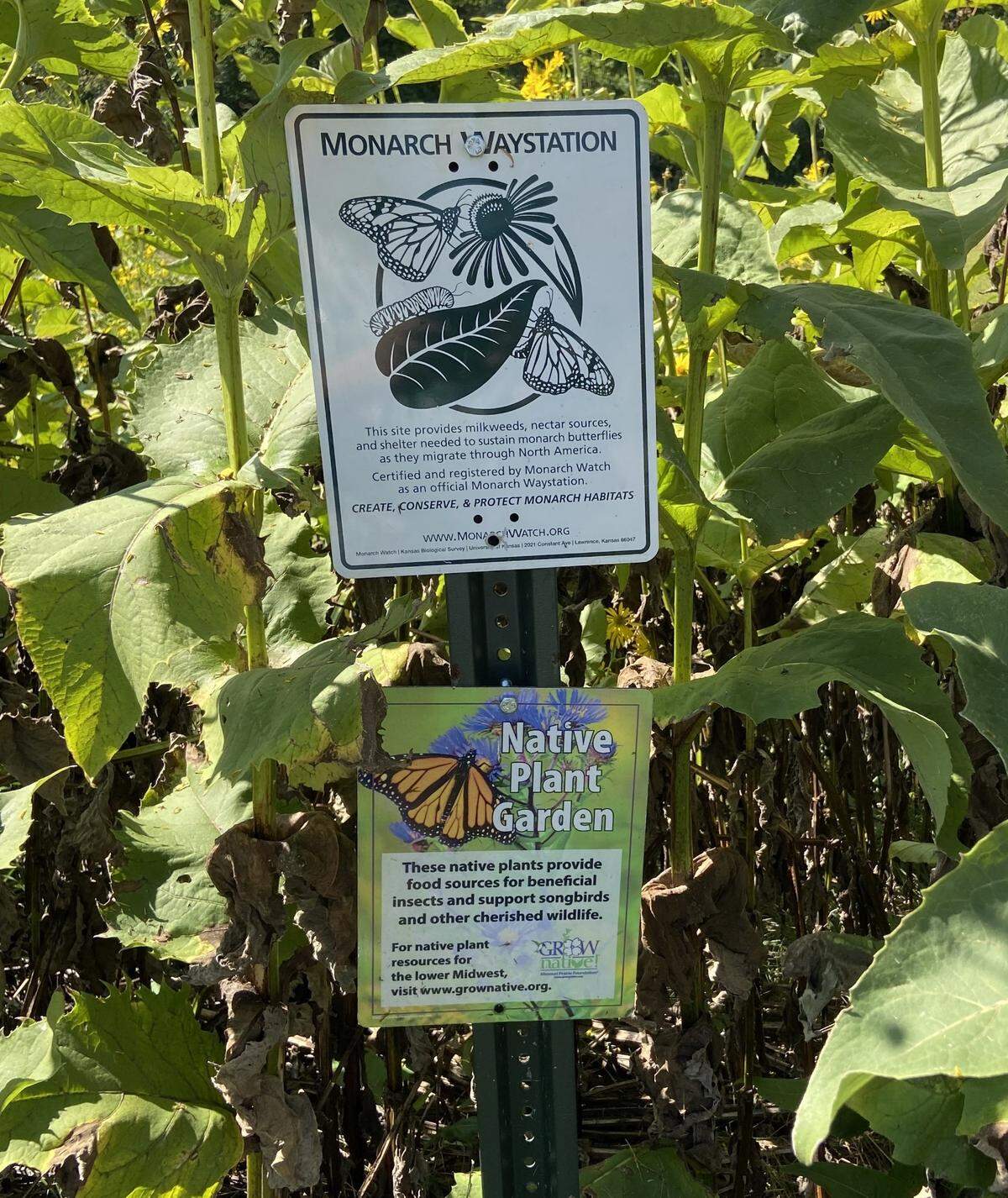
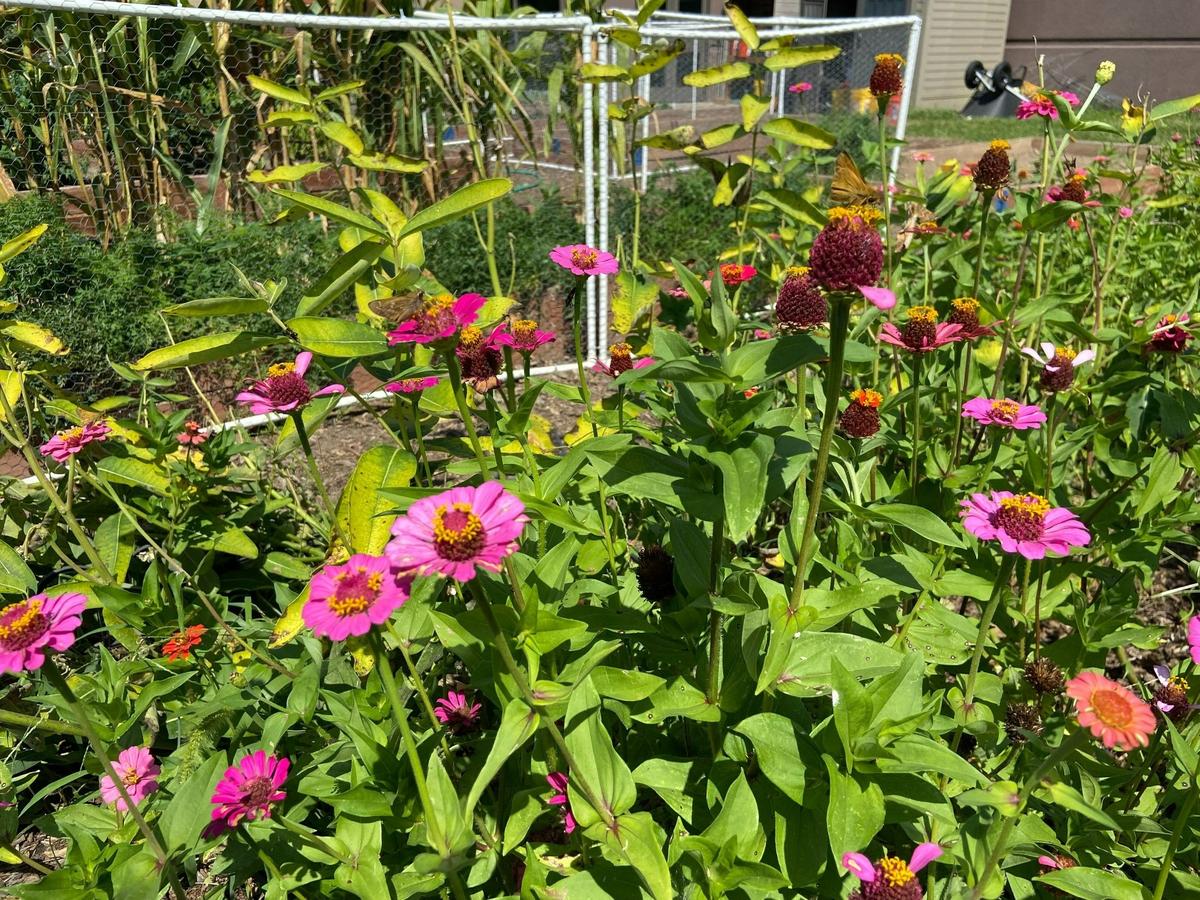
The students grew hundreds of native milkweed plants for monarch butterflies, and have zinnias, marigolds and other nectaring plants on site. One of the class’s biggest projects is participating in the Monarch Butterfly Watch, and the Carriel Garden is considered a way station for the butterflies.
“Their travel pattern is considered a phenomenon. They are the only insect to go that distance, starting in the summer in Canada,” she said.
Mellenthin said students also tagged the butterflies so they can be identified on their journey.
In the classroom, the students have seen the butterflies hatch from their chrysalis state.
“They learn more about the life cycle,” she said. “It’s fun for them to see how their wings unfold.
“You can’t substitute first-hand experiences for kids. I have found many teachable moments,” she said. “They see nature take its course and learn from it.”
Lifelong Love of Science
Mellenthin grew up on a farm in Bunker Hill and her mother was a special education teacher in Staunton.
At an early age, she discovered her love of science. After earning a degree in elementary education at Eastern Illinois University — with a specialization in science — she taught in Shelbyville for two years. She eventually earned a master’s degree in education administration at Southern Illinois University Edwardsville. She and her husband have three children and live in O’Fallon.
People can follow the progress reports on the Carriel Garden on Facebook. They put out to-do lists every season and announce Work Days. And there is a “wish list” posted on the garden’s bulletin board.
This story was originally published August 30, 2022 at 1:58 PM.