How fast can metro-east stores maintain stock as shoppers prepare for coronavirus?
READ MORE
Keep up with all the coronavirus news in southwestern Illinois
Stay updated with the events in southwestern Illinois that have been canceled or postponed because of coronavirus concerns.
Expand All
As residents in Illinois and the metro-east prepare themselves for social distancing to thwart the spread of COVID-19, or coronavirus, local grocery stores have been forced to close early to keep up with demand for daily essentials.
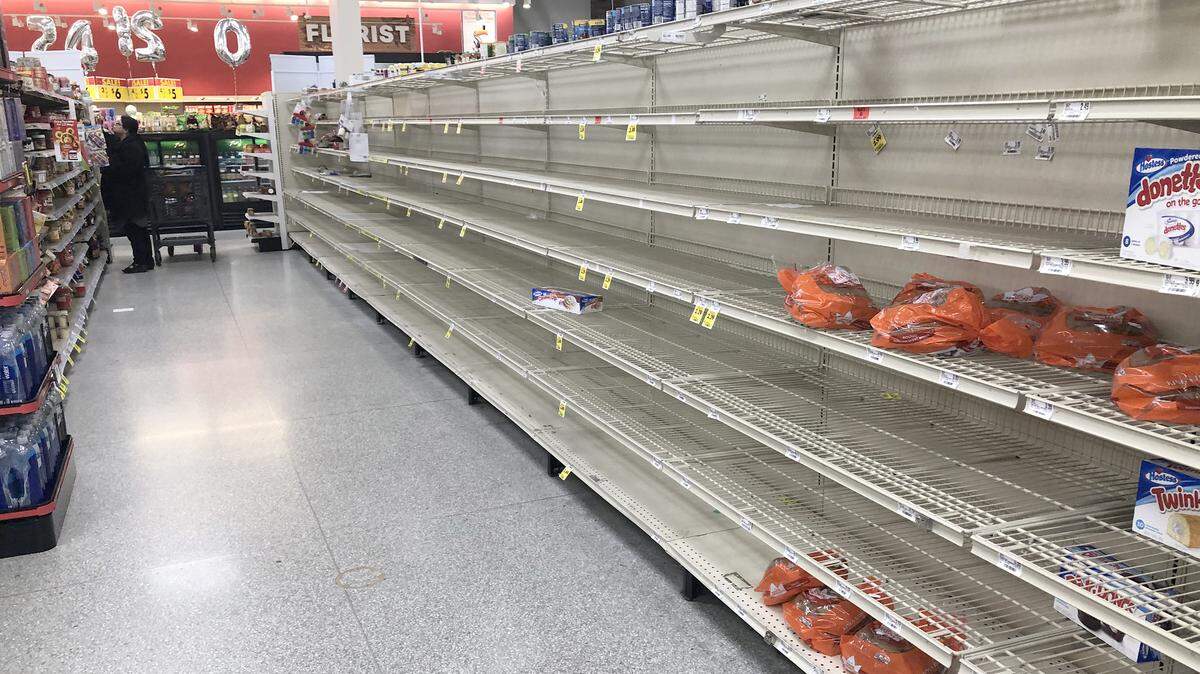
Items like hand sanitizer, toilet paper, paper towels, disinfecting wipes and packaged bottles of water have been flying off the shelves at the Greenmount Commons Wal-Mart, said customer service manager Kiara Mosley on Sunday.
“Pretty much anything they can get their hands on as soon as it hits the shelves,” Mosley said.
The store has run out of hand sanitizer, disinfectant wipes and hand soap and is waiting on deliveries of those products to restock.
Mosley said the Walmart Super Center, which usually is open 24 hours day, has changed its hours from 6 a.m. to 11 p.m. so employees can focus on restocking shelves overnight. Employees have been working their same shifts, she said. That adjustment will remain in effect until further notice.
Since Friday, Mosley said customers have been in line outside the store at opening time to grab the restocked items before they’re cleared out again, usually that same morning.
Similar concerns have forced Schnucks grocery stores to change their hours as well.
In a statement Sunday, the company said it would temporarily reduce hours. Schnucks stores that are usually open 24 hours will close at midnight, while all other stores will close at 10 p.m.
“We are continuing to see an increase in customers and this temporary reduction in hours will allow us time to focus solely on store cleanliness and product availability,” the statement said. “Our supply partners and warehouse teams continue to work around the clock to ensure that product is available to our customers as quickly as possible.”
In an email to the BND, Schnucks media relations team said the fast-selling products include cleaning supplies, hand sanitizer and toilet paper.
CEO Todd Schnuck said in an open letter Friday night that the company is also suspending food sampling temporarily and has shared Center for Disease Control safety measures with its employees.
Though the same problems have plagued the Dierbergs store at Greenmount Crossing Drive, store manager Chris Schaefer said Sunday it will continue operating as normal for the time being.
“We’re just taking it day by day,” he said.
Schaefer said the store receives deliveries nightly and that employees are stocking shelves to the best of their abilities, but items like hand sanitizer have not been available to restock.
“You never know when it’s supposed to be coming,” he said.
Local Target and Sam’s Club stores referred media questions to their corporate offices, which did not immediately respond Sunday.
Target issued a statement on its website and in social media stating that it is restocking items as quickly as possible and has instituted limits on how much toilet paper, hand sanitizer and other “key products” customers can purchase in a day.
Those limits may vary by store and will be adjusted according to demand, the statement said. The Minnesota-based retailer also said it is increasing staff at its drive-up facilities and drop-off services to mitigate exposure to other shoppers.
“We’ll continue to make adjustments to limits as needed, and would ask all guests to consider their immediate needs, understanding that many shoppers are hoping to stock up on the same items,” the retailer’s statement says.
On Saturday, the Illinois Department of Public Health announced that two women from St. Clair County tested positive for coronavirus. County Board Chairman Mark Kern declared an emergency proclamation for the county shortly after.
The cases are the first positive COVID-19 cases in the metro-east. The two women, one in her 60s and the other in her 70s, had traveled to Europe and Asia, but it was not clear which countries they had visited. Both women had “light symptoms” and were being treated at home.
This story was originally published March 15, 2020 at 2:33 PM.
.jpg)