Why aren’t southwestern Illinois officials releasing more about coronavirus patients?
READ MORE
Keep up with all the coronavirus news in southwestern Illinois
Stay updated with the events in southwestern Illinois that have been canceled or postponed because of coronavirus concerns.
Expand All
Public health officials in southwestern Illinois are just beginning to reveal which towns are home to people who tested positive for COVID-19.
As the number of cases in the metro-east rose from two to 82 between March 14 and March 31, the region’s health officials followed the state’s lead and limited the release of information to each patient’s county of residence, gender and age range. The lack of details frustrates some residents who want to know where those infected with the new coronavirus live and which businesses they’ve visited.
Some health departments in Missouri provided that information weeks ago.
Until recently, the health department in Randolph County, Illinois, was releasing even less information: just the number of patients in the county.
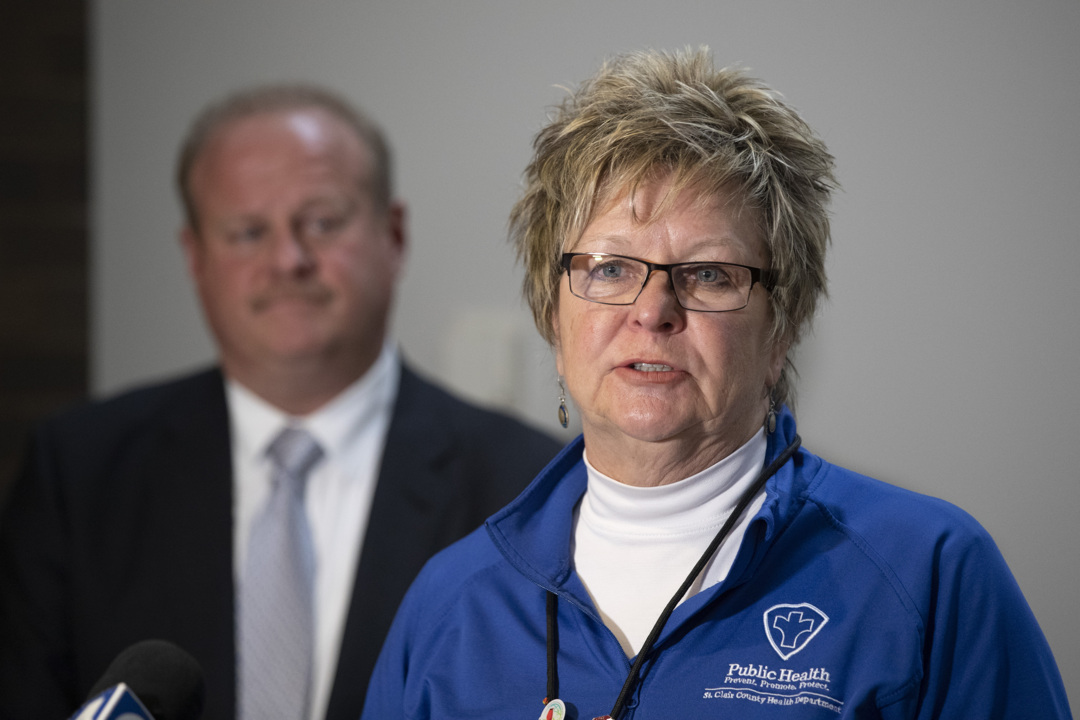
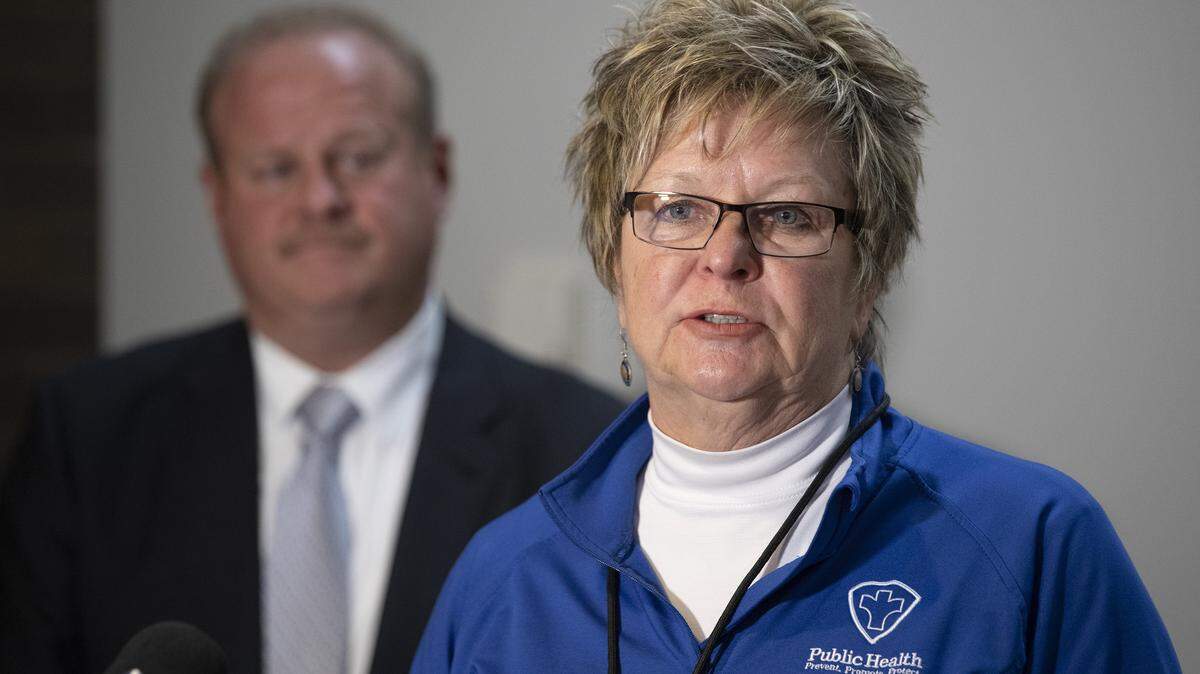
Randolph County Health Department Administrator Angela Oathout said the agency didn’t release age or gender to prevent people from identifying patients in small towns, where everyone knows each other, and ostracizing or threatening them. Its village of Kaskaskia, for instance, had a population of only 14 in the last census.
“The recommendation we keep hearing is, ‘Don’t share anything. Don’t share anything,’” Oathout said in an interview.
But she said the public is “on edge.”
So on April 1, when Randolph County reached nine patients, it started sharing community-level information about where the virus that causes COVID-19 has spread by ZIP code.
A day after Randolph County released its first affected ZIP codes, St. Clair County Board Chairman Mark Kern announced that the health department was working on a plan to release that data, too.
St. Clair County delivered on that promise Monday afternoon, announcing there have been COVID-19 patients in ZIP codes covering Belleville, Swansea, Fairview Heights, O’Fallon, Shiloh, Cahokia, Centreville and Sauget. It was the same day the Illinois Department of Public Health began reporting the number patients by ZIP code statewide, except for the areas that have five patients or fewer “due to privacy concerns and the concern for identifying an individual,” according to Dr. Ngozi Ezike, director of the department.
The new state data is available at dph.illinois.gov/covid19/statistics.
Oathout hopes sharing more detail will make residents pay attention to health departments’ recommendations to keep their distance from each other, because the virus is spreading from person to person through coughs and sneezes.
Illinois is under a stay-at-home order until April 30. Still, some churches have reportedly held services. Children have gathered in parks. And grocery stores have had to limit customers to one shopper per household to cut down on crowds.
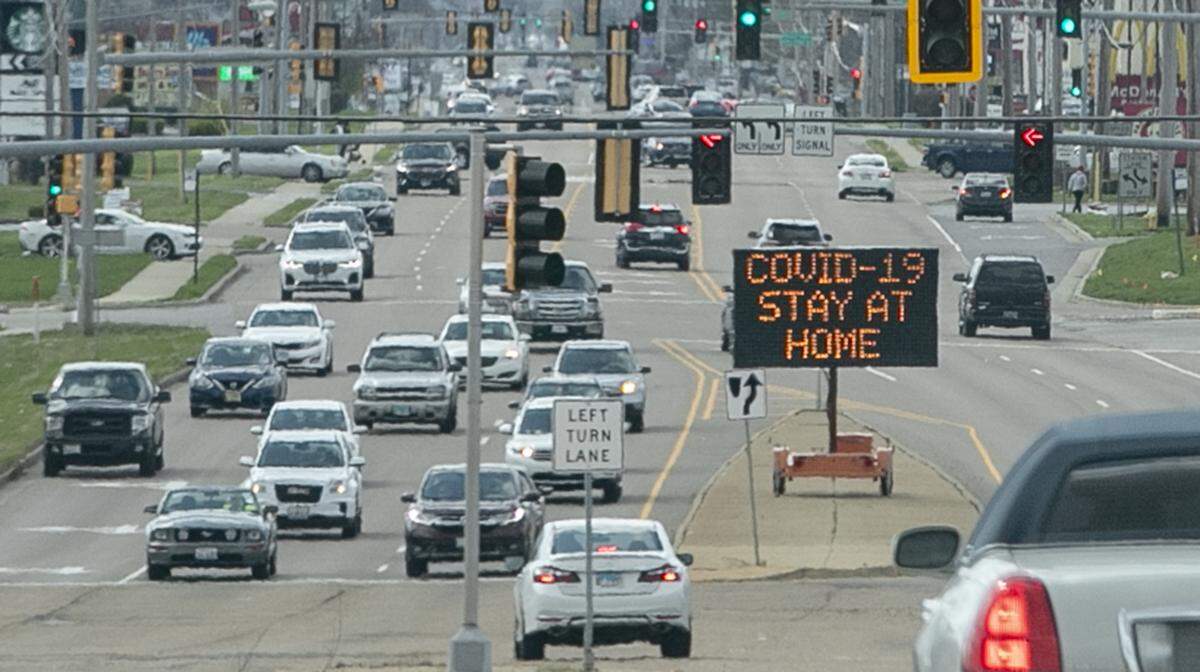
As of Monday, the cities of Chester, Red Bud and Sparta and the villages of Steeleville, Prairie du Rocher, Ruma and Kaskaskia have all had COVID-19 patients, according to the Randolph County Health Department.
Local and state health officials emphasize that people should interact with everyone as if they have the virus, even if no cases of COVID-19 have been reported in their community.
“It is likely we are encountering individuals with this virus who do not know they have it whenever we go out,” Sean Eifert, administrator for both Clinton and Bond counties’ health departments, said in a statement to the Belleville News-Democrat.
Most people who are infected have mild symptoms. But COVID-19, a respiratory disease, can cause more severe symptoms for people who are 65 years old and older and people with underlying medical conditions — from asthma and diabetes to immune deficiencies and cancer, according to the Centers for Disease Control and Prevention.
Fairview Heights resident Angel K. Freely said agencies shouldn’t assume that people will think they’re safe to go out in their communities if their ZIP code doesn’t have a COVID-19 patient.
“That is not for the government to decide,” she said. “They can’t make these arbitrary inferences about how people are going to process this information. ... That’s just not right.
“Is the implication that other health departments that do release that information, are they putting their citizens at risk?”
Shiloh resident Anjelica McMurphy said she thinks having more information would relieve some of the public’s fears.
“I think there just needs to be more transparency,” McMurphy said.
Deciding how much to release
Local health officials all cited the Health Insurance Portability and Accountability Act, commonly known as HIPAA, or privacy concerns generally as the reason they don’t reveal the towns where COVID-19 patients live, according to statements they provided to the BND.
The BND contacted the agencies in St. Clair, Madison, Monroe, Clinton, Randolph and Washington counties.
HIPAA’s Privacy Rule, a federal law, allows agencies to release “general” information about patients, such as gender, age and ZIP code, when there is a public health issue like the coronavirus pandemic, as long as they aren’t violating any state laws by doing so, according to law professor Rob Gatter of Saint Louis University’s Center for Health Law Studies.
But HIPAA and Illinois law both offer “fairly ambiguous” directions about how much to share, leaving local health officials to make a judgment call, Gatter said.
“Certainly it would prohibit handing out someone’s name, but it doesn’t prohibit providing generalized information that doesn’t identify the person,” Gatter said. “... The only question is how much information is so much information that it could reasonably result in identifying someone?”
Comparing communities in Illinois, Missouri
As early as March 16, Cass County in western Missouri included the city where each COVID-19 patient lived, but not their gender or age, in news releases about its first six diagnoses.
Of the cities Cass County mentioned in its news release about COVID-19 patients, Creighton, Missouri, had the smallest population at 349 residents.
In Illinois, Monroe County Health Department Administrator John Wagner said the agency hasn’t released information about where COVID-19 patients live in addition to the demographic details it provides because some of its communities are small and rural. Creighton is 13 times larger than the village of Fults in Monroe County, for example.
“Any additional information would allow the public to narrow down the pool and potentially identify the individual,” he said in a statement.
All of the southwestern Illinois counties have villages with fewer than 300 residents. St. Clair County has Sauget. For Madison County, it’s Williamson. For Clinton County, Huey. And Washington County has Venedy.
Elsewhere in Missouri, Greene County told its residents on March 18 where COVID-19 patients had been out to eat and may have exposed others to the virus from March 5-13.
Wagner said the Monroe County Health Department would release information about places patients visited, too, if it needed to figure out who may have had contact with them.
Brenda Fedak, a spokeswoman for the St. Clair County Health Department, said March 30 that it would consider providing details like Cass and Greene counties in Missouri did “if the Illinois Department of Public Health released such information.”
Sometimes, other agencies release more information
Announcements about where COVID-19 patients work in the metro-east, including schools, a hospital and Scott Air Force Base, have come from agencies other than health departments.
Mascoutah School District 19, for example, sent a letter to parents about a food service employee who tested positive for COVID-19 after helping to fill sack lunches. Superintendent Craig Fiegel said that notification wasn’t required by the St. Clair County Health Department.
“They suggested we would not have to send out a letter, but in an effort to be transparent and all that, we did,” Fiegel said in an interview. “We want our people to understand that we are now starting to see it in our community, wanted them to be aware of that.”
Even if the health department isn’t reporting where patients work or travel in their county, officials are investigating who they may have exposed to the virus behind the scenes.
“What we’re doing as a health department to protect the public is we know who those individuals are; we’re in contact, and we have been in contact with those individuals to make sure they’re quarantined and receiving not only the health information and education, but they’re out of the general public,” Barb Hohlt, executive director of the St. Clair County Health Department, said in a March 14 news conference, announcing the county’s first two patients.
“They’re not in the general populous, as well as their contacts. So that’s our way of protecting them and their privacy, as well as protecting the community.”
Fiegel said those who worked with the food service employee on March 22 weren’t scheduled to return for two weeks, which is how long experts believe it takes an infected person to show symptoms. The district’s food service employees prepare a week’s worth of sack lunches on Sundays. They have a staggered schedule so not every employee is working each Sunday.
The letter from the school district stated that families who received the meals prepared on March 22 had “a very low risk” of exposure to the coronavirus. The food service employees were wearing gloves, and the food was all prepackaged, Fiegel said.
What’s released as number of patients grows
Some communities have shifted their daily updates from details about each COVID-19 patient to generalized data.
Even Cass County, the western Missouri agency that initially provided the city where each coronavirus patient lived, stopped reporting that information when the cases became widespread, according to spokeswoman Sarah Czech.
Madison County stopped releasing the gender and age of individual patients when it reached six diagnoses on March 26.
By March 28, it reached 10 and began releasing demographics for all of its patients: six women and four men in the 30-70 age range. Later, it started reporting how many people were tested for COVID-19, how many patients are hospitalized and how many have recovered.
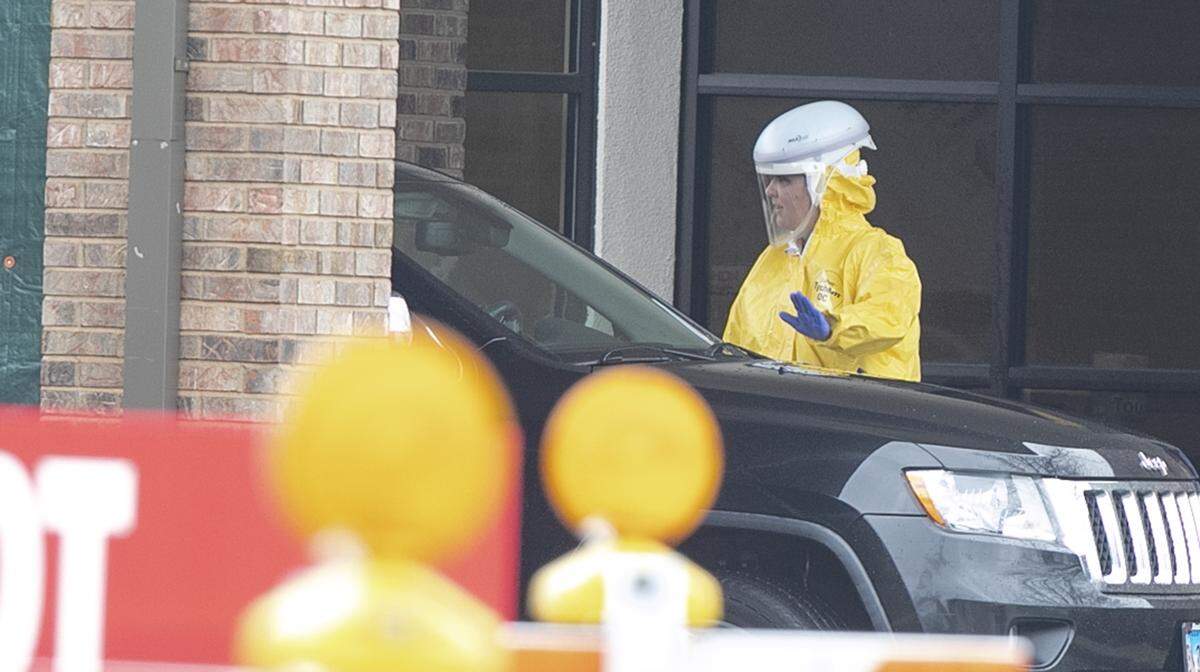
Clinton County also stopped providing specific details for each patient when it reached six diagnoses on March 29. It started offering overall demographics, along with other information: three women and three men in the 10-60 age range, all in home quarantines, none of whom contracted the virus through travel where there was an outbreak. The county has also added the number of patients to recover from COVID-19 to its daily updates.
In St. Clair County, officials have updated the public through daily news conferences at 3:30 p.m. broadcast on the St. Clair County Emergency Management Agency’s Facebook page. They provide the total number of people tested and new patients’ gender, age, and often, how they contracted the virus.
BND reporter Mike Koziatek contributed information for this article.
This story was originally published April 6, 2020 at 1:54 PM.